• Pittsburgh Penguins Power Play Performance

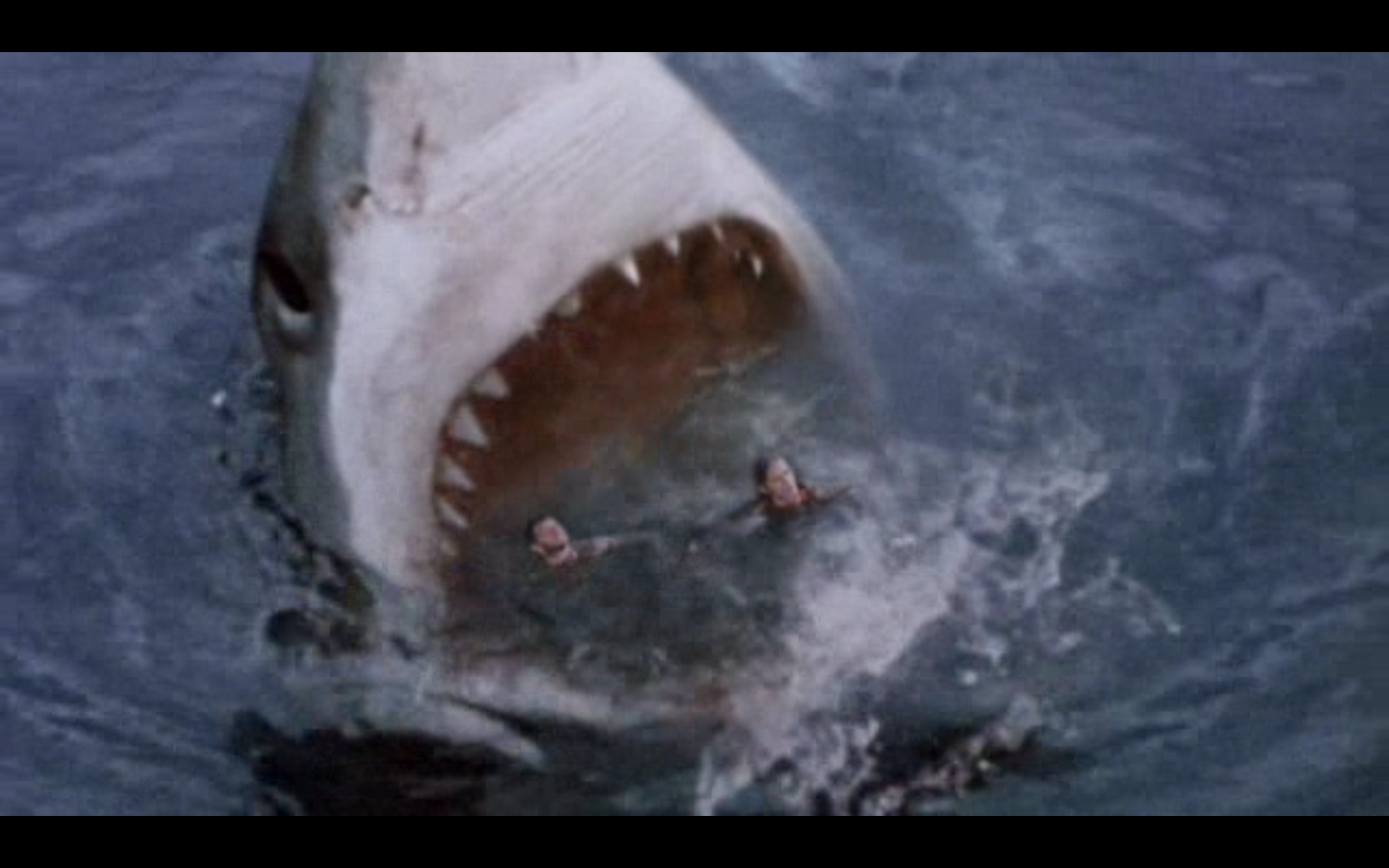
    Major T.J. “King” Kong says, “Dag burnit, stay on the power play, boys! We’ll get the puck in the net if it’s the last thing we do. Aaaaaa hoooo! Waaaaa haaaawwwww!!!!

  • Andrew C. McCarthy on Islam (NRO)


    Not for the Faint of Heart


    Robert Spencer asks the hard questions about Islam…and answers them.

    The Politically Incorrect Guide to Islam (and the Crusades), by Robert Spencer (Regnery, 233 pp., $19.95)

    It is often said that in order to keep polite company polite, we must refrain from speaking of religion and politics. Yet, the two are not equals in the hierarchy of politesse. Political debate may be unwelcome in many settings, but no one clears the room by observing that the great totalitarian evils of the 20th century, Communism and fascism, were directly responsible for incalculable carnage.
    Not so when it comes to religion — or, at least, one particular religion. The past three decades have borne witness to a rising, global tide of terrorist atrocities, wrought by Muslims who proclaim without apology — indeed, with animating pride — that their actions are compelled by Islam. Nonetheless, the quickest ticket to oblivion on PC’s pariah express is to suggest that the root cause of Islamic terrorism might be, well, Islam.
    That the possibility is utterable at all today owes exclusively to the sheer audacity of Muslim legions, who have rioted globally, on cue, based on what even their exhausted defenders must now concede are trifles (newspaper cartoons and a tall tale of Koran abuse at Guantanamo Bay leap to mind). But the largest obstacle to any examination of creed — larger even than a growing alphabet soup of Muslim interest groups — has been the same Western elites who are the prime targets of jihadist ire. In the most notable instance, President Bush absolved Islam of any culpability even as fires raged at the remains of the World Trade Center on September 11, 2001. And, although attacks before and after that date have been numerous and widespread, it has become nearly as much an oratorical staple as “My fellow Americans” for U.S. politicians to begin any discussion of our signal national security challenge with the observation that Islam is a “religion of peace” — a religion that has surely been perverted, “hijacked,” and otherwise misconstrued by terrorists.
    No more, insists Robert Spencer, the intrepid author and analyst behind the Jihad Watch website. Spencer’s theory is as logical as it is controversial: when the single common thread that runs through virtually all of the international terrorism of the modern era is that its perpetrators are Muslims, and when the jihadists themselves tell us that their religion is the force that drives them, we should seriously consider the probability that Islam is a causative agent, even the principal causative agent, of their terrorist actions. This he undertakes to do in The Politically Incorrect Guide to Islam (and the Crusades)..
    One might once have assumed it inarguable that an ideological battle cannot be fought with complete inattention to ideology. But that has been the case with the war on terror, and Spencer’s mission is to rectify that with a simple, user-friendly volume that walks the reader through elementary facts about Islam — its tenets, its scriptures, and its history, including most prominently the Koran and the life and deeds of the Prophet Mohammed. It is a tutorial shorn of wishful thinking.
    While Spencer does not declare that anyone adhering to Islam is a terrorist waiting to happen, he clearly believes it is a perilous belief system. Make no mistake: This is a disturbing account. And most disturbing is that the truly arresting passages are not the author’s contentions and deductions. They are the actual words of Islamic scripture and the accounts of several revered events in Islamic tradition.
    The story by which Islam achieves hegemony over much the world and the loyalty of millions of worshippers, very nearly extending its dominion throughout Europe, is a story of military conquest. Mohammed, deemed the final Messenger of Allah — superseding the prophets of the Judeo-Christian tradition, a group in which Muslims include Jesus — was a warrior, in addition to wearing the hats of poet, philosopher, and economist, among others.
    The Koran, Spencer argues, does not teach tolerance and peace. At best, he explains, there are isolated sections which urge Muslims to leave unbelievers alone in their errant ways, and which counsel that forced conversion is forbidden. But these must be considered in context with other verses, such as those directing that Mohammed “make war on the unbelievers and the hypocrites and deal rigorously with them,” and that the faithful “slay the idolaters wherever ye find them, and take them captive, and besiege them,” and so on.
    What are we to make of the seeming contradiction? Obviously, self-professed moderate Muslims point often to the benign passages, while terrorists echo the belligerent ones. Who is right? Spencer vigorously contends that the militants have the better of the argument. The Koran, which is not arranged chronologically but according to the length of its chapters (or “suras”), is theologically divided between Mohammed’s Meccan and Medinan periods. The former, from the early part of the Prophet’s ministry when he was calling inhabitants of Mecca to Islam, are the soothing, poetic verses. The latter, written in Medina after Mohammed was ousted from Mecca, are the more bellicose. The Medinan scriptures come later in time and, sensibly, overrule their predecessors.
    This is bracing in at least two ways. First, even if there were a logical counterargument to this (and let us pray that someone comes up with a compelling one soon), it underscores the seeming impossibility of proving wrong those who commit atrocities in the name of Islam. When they claim justification in their religion for merciless attacks and other brutalities (such as beheadings), they are not imagining it out of thin air — it’s right there in black-and-white. The reformers may try gamely to minimize or reinterpret, but they cannot make the words go away.
    Second, those words are taken to be the words of God Himself. The Koran is not like the books of the Old and New Testaments. It is not thought to be “inspired,” to be related through intermediaries whose assumed human gloss opens up possibilities of reinterpretation or correction. Muslims believe the Koran contains the unvarnished teachings of Allah, dictated directly to Mohammed by the archangel Gabriel. This renders all the more challenging (to put it mildly) the burden of discrediting terrorist operatives who claim to be doing precisely what they have been divinely instructed to do — and doing it in the service of jihad, the “striving” which, Spencer explains, is a bedrock obligation of all Muslims.
    Islam, Spencer elaborates, aims at nothing less than total domination — first, unrivalled supremacy in any territory that is (or was at any time) under its sway, and, ultimately, spreading throughout the world — whether by persuasion or by sheer force. The bleak choices presented to non-believers in the Muslim lands are to accept Islam (and its attendant social system, which is particularly oppressive of women); to live the grim life of dhimmitude by submitting to the authority of the Islamic state (permitted to practice other religions under tight regulations and only if the jizya, or poll-tax on non-Muslims, is paid); or to die. The bleak future for non-believers in the rest of the world is a state of war until they are subdued, as — beginning in the seventh century — were the Byzantine Empire, Persia and the Christian strongholds of Constantinople, Alexandria, Antioch, and Jerusalem.
    Consistent with the “Politically Incorrect” model, Spencer spends much of his time deconstructing “PC Myths.” These involve not only the sugar-coated conventional wisdom about Muslim doctrine but also what he sees as the cognate project to revise Islamic history.
    The “Golden Age” of Islam, for example, is, according to the author, a gross exaggeration. He does not deny that there were grand achievements under caliphates that ruled various places from the tenth through the fourteenth centuries, and Muslims themselves, he acknowledges, were responsible for important advances in mathematics and, to a lesser extent, medicine. Nonetheless, Spencer counters that many of the epoch’s achievements either occurred despite Islam (particularly in the areas of literature, art, and music) or are better understood as the accomplishments (especially in science and architecture) of better educated peoples whom Muslims conquered.
    Islamic culture, for Spencer, thwarted great possibilities. Muslim philosophers were singularly responsible for preserving and explicating the work of Aristotle — but over time, these philosophers were read primarily in the West, because waves of anti-intellectualism and a conceit that rote study of the Koran was sufficient education overtook the Islamic world. Medical advance was stymied because of traditions that forbade or discouraged dissections and artistic representations of the human body. Spencer does credit Islam with causing the Renaissance and the discovery of the New World — but only indirectly. The conquest of Constantinople caused Europeans (like Columbus) to seek new trade routes to the East and hastened the flight of Greek intellectuals to Western Europe.
    A final “Myth” Spencer endeavors to explode is the legacy of the Crusades. While not gainsaying Christian excesses and brutality, the story, he asserts, is far from one-sided. It is just that, consistent with today’s victimology leitmotif, only one side gets told anymore.
    The comprehensive narrative, Spencer insists, stretches back for 450 years before the supposed eleventh century start of the Crusades — back to the conquest of Jerusalem in 638. “The sword spread Islam” and ultimately repressed the formerly predominant non-Muslim populations that are tiny minorities in what are now Islamic countries. The Crusades, Spencer relates, were largely defensive struggles to protect threatened Christians. He does not dispute that the political agenda of recapturing what had been eastern Christendom loomed large, but he does contend that the legends of forced conversions, insatiable looting, and mindless atrocities are largely overblown.
    This is not a book for the faint of heart. Nonetheless, it is well done and extremely important. Much of current American policy hinges on the notions that there is a vibrant moderate Islam and that it must simply be possessed of the intellectual firepower necessary to put the lie to the militants. These are the premises behind the ambitious projects to democratize the Middle East, to establish a Palestinian state that will peacefully coexist with its Israeli neighbor, and to win the vast majority of the world’s billion-plus Muslims over to our side in the War on Terror.
    They are, however, premises that are more the product of assumption than critical thought. In this highly accessible, well-researched, quick-paced read, Robert Spencer dares to bring that critical thought to the equation. The result is not a promising landscape, but it’s a landscape we must understand. You really can’t fight an ideological battle without grappling with the ideology.
    Andrew C. McCarthy, a former federal prosecutor, is a senior fellow at the Foundation for the Defense of Democracies.

  • Steve Irwin – The Crocodile Hunter – You Are Missed!


    God bless you Steve! I will never forget your wonderful programs and your zest for life and appreciation of God’s wonderful creation. Good on ya mate!

  • Yasoo3 ya ibn Allah!

    Shookran Taree2 Yasoo3! Amin! Al Ma7ee!

    Here is a great song (tarneema) by (Rogé [Roger] Bahu) :

    Ya Yasou ya ibn Allah
    Download the full recording ->
    or hear streaming audio ->
  • Full Moon Cut (Engetsu-giri)

    “You will die…
    …by the time my sword completes the circle.”

    From the Hagakure Kikigaki:

    “It is a principle of the art of war that one should simply lay down his life and strike. If one’s opponent also does the same, it is an even match. Defeating one’s opponent is then a matter of faith and destiny.”

    Engetsu-giri is one of my favorite chambara film series. The series follows the travels of Kyoshiro Nemuri, a ronin who lives by his sword and wits.

  • The Real History of the Crusades

    The Real History of the Crusades
    By Thomas F. Madden
    April 1, 2002

    With the possible exception of Umberto Eco, medieval
    scholars are not used to getting much media attention.
    We tend to be a quiet lot (except during the annual
    bacchanalia we call the International Congress on
    Medieval Studies in Kalamazoo, Michigan, of all
    places), poring over musty chronicles and writing dull
    yet meticulous studies that few will read. Imagine,
    then, my surprise when within days of the September 11
    attacks, the Middle Ages suddenly became relevant.

    As a Crusade historian, I found the tranquil solitude
    of the ivory tower shattered by journalists, editors,
    and talk-show hosts on tight deadlines eager to get
    the real scoop. What were the Crusades?, they asked.
    When were they? Just how insensitive was President
    George W. Bush for using the word “crusade” in his
    remarks? With a few of my callers I had the distinct
    impression that they already knew the answers to their
    questions, or at least thought they did. What they
    really wanted was an expert to say it all back to
    them. For example, I was frequently asked to comment
    on the fact that the Islamic world has a just
    grievance against the West. Doesn’t the present
    violence, they persisted, have its roots in the
    Crusades’ brutal and unprovoked attacks against a
    sophisticated and tolerant Muslim world? In other
    words, aren’t the Crusades really to blame?

    Osama bin Laden certainly thinks so. In his various
    video performances, he never fails to describe the
    American war against terrorism as a new Crusade
    against Islam. Ex-president Bill Clinton has also
    fingered the Crusades as the root cause of the present
    conflict. In a speech at Georgetown University, he
    recounted (and embellished) a massacre of Jews after
    the Crusader conquest of Jerusalem in 1099 and
    informed his audience that the episode was still
    bitterly remembered in the Middle East. (Why Islamist
    terrorists should be upset about the killing of Jews
    was not explained.) Clinton took a beating on the
    nation’s editorial pages for wanting so much to blame
    the United States that he was willing to reach back to
    the Middle Ages. Yet no one disputed the
    ex-president’s fundamental premise.

    Well, almost no one. Many historians had been trying
    to set the record straight on the Crusades long before
    Clinton discovered them. They are not revisionists,
    like the American historians who manufactured the
    Enola Gay exhibit, but mainstream scholars offering
    the fruit of several decades of very careful, very
    serious scholarship. For them, this is a “teaching
    moment,” an opportunity to explain the Crusades while
    people are actually listening. It won’t last long, so
    here goes.

    Misconceptions about the Crusades are all too common.
    The Crusades are generally portrayed as a series of
    holy wars against Islam led by power-mad popes and
    fought by religious fanatics. They are supposed to
    have been the epitome of self-righteousness and
    intolerance, a black stain on the history of the
    Catholic Church in particular and Western civilization
    in general. A breed of proto-imperialists, the
    Crusaders introduced Western aggression to the
    peaceful Middle East and then deformed the enlightened
    Muslim culture, leaving it in ruins. For variations on
    this theme, one need not look far. See, for example,
    Steven Runciman’s famous three-volume epic, History of
    the Crusades, or the BBC/A&E documentary, The
    Crusades, hosted by Terry Jones. Both are terrible
    history yet wonderfully entertaining.

    So what is the truth about the Crusades? Scholars are
    still working some of that out. But much can already
    be said with certainty. For starters, the Crusades to
    the East were in every way defensive wars. They were a
    direct response to Muslim aggression—an attempt to
    turn back or defend against Muslim conquests of
    Christian lands.

    Christians in the eleventh century were not paranoid
    fanatics. Muslims really were gunning for them. While
    Muslims can be peaceful, Islam was born in war and
    grew the same way. From the time of Mohammed, the
    means of Muslim expansion was always the sword. Muslim
    thought divides the world into two spheres, the Abode
    of Islam and the Abode of War. Christianity—and for
    that matter any other non-Muslim religion—has no
    abode. Christians and Jews can be tolerated within a
    Muslim state under Muslim rule. But, in traditional
    Islam, Christian and Jewish states must be destroyed
    and their lands conquered. When Mohammed was waging
    war against Mecca in the seventh century, Christianity
    was the dominant religion of power and wealth. As the
    faith of the Roman Empire, it spanned the entire
    Mediterranean, including the Middle East, where it was
    born. The Christian world, therefore, was a prime
    target for the earliest caliphs, and it would remain
    so for Muslim leaders for the next thousand years.

    With enormous energy, the warriors of Islam struck out
    against the Christians shortly after Mohammed’s death.
    They were extremely successful. Palestine, Syria, and
    Egypt—once the most heavily Christian areas in the
    world—quickly succumbed. By the eighth century, Muslim
    armies had conquered all of Christian North Africa and
    Spain. In the eleventh century, the Seljuk Turks
    conquered Asia Minor (modern Turkey), which had been
    Christian since the time of St. Paul. The old Roman
    Empire, known to modern historians as the Byzantine
    Empire, was reduced to little more than Greece. In
    desperation, the emperor in Constantinople sent word
    to the Christians of western Europe asking them to aid
    their brothers and sisters in the East.

    That is what gave birth to the Crusades. They were not
    the brainchild of an ambitious pope or rapacious
    knights but a response to more than four centuries of
    conquests in which Muslims had already captured
    two-thirds of the old Christian world. At some point,
    Christianity as a faith and a culture had to defend
    itself or be subsumed by Islam. The Crusades were that
    defense.

    Pope Urban II called upon the knights of Christendom
    to push back the conquests of Islam at the Council of
    Clermont in 1095. The response was tremendous. Many
    thousands of warriors took the vow of the cross and
    prepared for war. Why did they do it? The answer to
    that question has been badly misunderstood. In the
    wake of the Enlightenment, it was usually asserted
    that Crusaders were merely lacklands and
    ne’er-do-wells who took advantage of an opportunity to
    rob and pillage in a faraway land. The Crusaders’
    expressed sentiments of piety, self-sacrifice, and
    love for God were obviously not to be taken seriously.
    They were only a front for darker designs.

    During the past two decades, computer-assisted charter
    studies have demolished that contrivance. Scholars
    have discovered that crusading knights were generally
    wealthy men with plenty of their own land in Europe.
    Nevertheless, they willingly gave up everything to
    undertake the holy mission. Crusading was not cheap.
    Even wealthy lords could easily impoverish themselves
    and their families by joining a Crusade. They did so
    not because they expected material wealth (which many
    of them had already) but because they hoped to store
    up treasure where rust and moth could not corrupt.
    They were keenly aware of their sinfulness and eager
    to undertake the hardships of the Crusade as a
    penitential act of charity and love. Europe is
    littered with thousands of medieval charters attesting
    to these sentiments, charters in which these men still
    speak to us today if we will listen. Of course, they
    were not opposed to capturing booty if it could be
    had. But the truth is that the Crusades were
    notoriously bad for plunder. A few people got rich,
    but the vast majority returned with nothing.

    * * *

    Urban II gave the Crusaders two goals, both of which
    would remain central to the eastern Crusades for
    centuries. The first was to rescue the Christians of
    the East. As his successor, Pope Innocent III, later
    wrote:

    How does a man love according to divine precept his
    neighbor as himself when, knowing that his Christian
    brothers in faith and in name are held by the
    perfidious Muslims in strict confinement and weighed
    down by the yoke of heaviest servitude, he does not
    devote himself to the task of freeing them? …Is it
    by chance that you do not know that many thousands of
    Christians are bound in slavery and imprisoned by the
    Muslims, tortured with innumerable torments?

    “Crusading,” Professor Jonathan Riley-Smith has
    rightly argued, was understood as an “an act of
    love”—in this case, the love of one’s neighbor. The
    Crusade was seen as an errand of mercy to right a
    terrible wrong. As Pope Innocent III wrote to the
    Knights Templar, “You carry out in deeds the words of
    the Gospel, ‘Greater love than this hath no man, that
    he lay down his life for his friends.’”

    The second goal was the liberation of Jerusalem and
    the other places made holy by the life of Christ. The
    word crusade is modern. Medieval Crusaders saw
    themselves as pilgrims, performing acts of
    righteousness on their way to the Holy Sepulcher. The
    Crusade indulgence they received was canonically
    related to the pilgrimage indulgence. This goal was
    frequently described in feudal terms. When calling the
    Fifth Crusade in 1215, Innocent III wrote:

    Consider most dear sons, consider carefully that if
    any temporal king was thrown out of his domain and
    perhaps captured, would he not, when he was restored
    to his pristine liberty and the time had come for
    dispensing justice look on his vassals as unfaithful
    and traitors…unless they had committed not only
    their property but also their persons to the task of
    freeing him? …And similarly will not Jesus Christ,
    the king of kings and lord of lords, whose servant you
    cannot deny being, who joined your soul to your body,
    who redeemed you with the Precious Blood…condemn you
    for the vice of ingratitude and the crime of
    infidelity if you neglect to help Him?

    The reconquest of Jerusalem, therefore, was not
    colonialism but an act of restoration and an open
    declaration of one’s love of God. Medieval men knew,
    of course, that God had the power to restore Jerusalem
    Himself—indeed, He had the power to restore the whole
    world to His rule. Yet as St. Bernard of Clairvaux
    preached, His refusal to do so was a blessing to His
    people:

    Again I say, consider the Almighty’s goodness and pay
    heed to His plans of mercy. He puts Himself under
    obligation to you, or rather feigns to do so, that He
    can help you to satisfy your obligations toward
    Himself…. I call blessed the generation that can
    seize an opportunity of such rich indulgence as this.

    It is often assumed that the central goal of the
    Crusades was forced conversion of the Muslim world.
    Nothing could be further from the truth. From the
    perspective of medieval Christians, Muslims were the
    enemies of Christ and His Church. It was the
    Crusaders’ task to defeat and defend against them.
    That was all. Muslims who lived in Crusader-won
    territories were generally allowed to retain their
    property and livelihood, and always their religion.
    Indeed, throughout the history of the Crusader Kingdom
    of Jerusalem, Muslim inhabitants far outnumbered the
    Catholics. It was not until the 13th century that the
    Franciscans began conversion efforts among Muslims.
    But these were mostly unsuccessful and finally
    abandoned. In any case, such efforts were by peaceful
    persuasion, not the threat of violence.

    The Crusades were wars, so it would be a mistake to
    characterize them as nothing but piety and good
    intentions. Like all warfare, the violence was brutal
    (although not as brutal as modern wars). There were
    mishaps, blunders, and crimes. These are usually
    well-remembered today. During the early days of the
    First Crusade in 1095, a ragtag band of Crusaders led
    by Count Emicho of Leiningen made its way down the
    Rhine, robbing and murdering all the Jews they could
    find. Without success, the local bishops attempted to
    stop the carnage. In the eyes of these warriors, the
    Jews, like the Muslims, were the enemies of Christ.
    Plundering and killing them, then, was no vice.
    Indeed, they believed it was a righteous deed, since
    the Jews’ money could be used to fund the Crusade to
    Jerusalem. But they were wrong, and the Church
    strongly condemned the anti-Jewish attacks.

    Fifty years later, when the Second Crusade was gearing
    up, St. Bernard frequently preached that the Jews were
    not to be persecuted:

    Ask anyone who knows the Sacred Scriptures what he
    finds foretold of the Jews in the Psalm. “Not for
    their destruction do I pray,” it says. The Jews are
    for us the living words of Scripture, for they remind
    us always of what our Lord suffered…. Under
    Christian princes they endure a hard captivity, but
    “they only wait for the time of their deliverance.”

    Nevertheless, a fellow Cistercian monk named Radulf
    stirred up people against the Rhineland Jews, despite
    numerous letters from Bernard demanding that he stop.
    At last Bernard was forced to travel to Germany
    himself, where he caught up with Radulf, sent him back
    to his convent, and ended the massacres.

    It is often said that the roots of the Holocaust can
    be seen in these medieval pogroms. That may be. But if
    so, those roots are far deeper and more widespread
    than the Crusades. Jews perished during the Crusades,
    but the purpose of the Crusades was not to kill Jews.
    Quite the contrary: Popes, bishops, and preachers made
    it clear that the Jews of Europe were to be left
    unmolested. In a modern war, we call tragic deaths
    like these “collateral damage.” Even with smart
    technologies, the United States has killed far more
    innocents in our wars than the Crusaders ever could.
    But no one would seriously argue that the purpose of
    American wars is to kill women and children.

    By any reckoning, the First Crusade was a long shot.
    There was no leader, no chain of command, no supply
    lines, no detailed strategy. It was simply thousands
    of warriors marching deep into enemy territory,
    committed to a common cause. Many of them died, either
    in battle or through disease or starvation. It was a
    rough campaign, one that seemed always on the brink of
    disaster. Yet it was miraculously successful. By 1098,
    the Crusaders had restored Nicaea and Antioch to
    Christian rule. In July 1099, they conquered Jerusalem
    and began to build a Christian state in Palestine. The
    joy in Europe was unbridled. It seemed that the tide
    of history, which had lifted the Muslims to such
    heights, was now turning.

    * * *

    But it was not. When we think about the Middle Ages,
    it is easy to view Europe in light of what it became
    rather than what it was. The colossus of the medieval
    world was Islam, not Christendom. The Crusades are
    interesting largely because they were an attempt to
    counter that trend. But in five centuries of
    crusading, it was only the First Crusade that
    significantly rolled back the military progress of
    Islam. It was downhill from there.

    When the Crusader County of Edessa fell to the Turks
    and Kurds in 1144, there was an enormous groundswell
    of support for a new Crusade in Europe. It was led by
    two kings, Louis VII of France and Conrad III of
    Germany, and preached by St. Bernard himself. It
    failed miserably. Most of the Crusaders were killed
    along the way. Those who made it to Jerusalem only
    made things worse by attacking Muslim Damascus, which
    formerly had been a strong ally of the Christians. In
    the wake of such a disaster, Christians across Europe
    were forced to accept not only the continued growth of
    Muslim power but the certainty that God was punishing
    the West for its sins. Lay piety movements sprouted up
    throughout Europe, all rooted in the desire to purify
    Christian society so that it might be worthy of
    victory in the East.

    Crusading in the late twelfth century, therefore,
    became a total war effort. Every person, no matter how
    weak or poor, was called to help. Warriors were asked
    to sacrifice their wealth and, if need be, their lives
    for the defense of the Christian East. On the home
    front, all Christians were called to support the
    Crusades through prayer, fasting, and alms. Yet still
    the Muslims grew in strength. Saladin, the great
    unifier, had forged the Muslim Near East into a single
    entity, all the while preaching jihad against the
    Christians. In 1187 at the Battle of Hattin, his
    forces wiped out the combined armies of the Christian
    Kingdom of Jerusalem and captured the precious relic
    of the True Cross. Defenseless, the Christian cities
    began surrendering one by one, culminating in the
    surrender of Jerusalem on October 2. Only a tiny
    handful of ports held out.

    The response was the Third Crusade. It was led by
    Emperor Frederick I Barbarossa of the German Empire,
    King Philip II Augustus of France, and King Richard I
    Lionheart of England. By any measure it was a grand
    affair, although not quite as grand as the Christians
    had hoped. The aged Frederick drowned while crossing a
    river on horseback, so his army returned home before
    reaching the Holy Land. Philip and Richard came by
    boat, but their incessant bickering only added to an
    already divisive situation on the ground in Palestine.
    After recapturing Acre, the king of France went home,
    where he busied himself carving up Richard’s French
    holdings. The Crusade, therefore, fell into Richard’s
    lap. A skilled warrior, gifted leader, and superb
    tactician, Richard led the Christian forces to victory
    after victory, eventually reconquering the entire
    coast. But Jerusalem was not on the coast, and after
    two abortive attempts to secure supply lines to the
    Holy City, Richard at last gave up. Promising to
    return one day, he struck a truce with Saladin that
    ensured peace in the region and free access to
    Jerusalem for unarmed pilgrims. But it was a bitter
    pill to swallow. The desire to restore Jerusalem to
    Christian rule and regain the True Cross remained
    intense throughout Europe.

    The Crusades of the 13th century were larger, better
    funded, and better organized. But they too failed. The
    Fourth Crusade (1201-1204) ran aground when it was
    seduced into a web of Byzantine politics, which the
    Westerners never fully understood. They had made a
    detour to Constantinople to support an imperial
    claimant who promised great rewards and support for
    the Holy Land. Yet once he was on the throne of the
    Caesars, their benefactor found that he could not pay
    what he had promised. Thus betrayed by their Greek
    friends, in 1204 the Crusaders attacked, captured, and
    brutally sacked Constantinople, the greatest Christian
    city in the world. Pope Innocent III, who had
    previously excommunicated the entire Crusade, strongly
    denounced the Crusaders. But there was little else he
    could do. The tragic events of 1204 closed an iron
    door between Roman Catholic and Greek Orthodox, a door
    that even today Pope John Paul II has been unable to
    reopen. It is a terrible irony that the Crusades,
    which were a direct result of the Catholic desire to
    rescue the Orthodox people, drove the two further—and
    perhaps irrevocably—apart.

    The remainder of the 13th century’s Crusades did
    little better. The Fifth Crusade (1217-1221) managed
    briefly to capture Damietta in Egypt, but the Muslims
    eventually defeated the army and reoccupied the city.
    St. Louis IX of France led two Crusades in his life.
    The first also captured Damietta, but Louis was
    quickly outwitted by the Egyptians and forced to
    abandon the city. Although Louis was in the Holy Land
    for several years, spending freely on defensive works,
    he never achieved his fondest wish: to free Jerusalem.
    He was a much older man in 1270 when he led another
    Crusade to Tunis, where he died of a disease that
    ravaged the camp. After St. Louis’s death, the
    ruthless Muslim leaders, Baybars and Kalavun, waged a
    brutal jihad against the Christians in Palestine. By
    1291, the Muslim forces had succeeded in killing or
    ejecting the last of the Crusaders, thus erasing the
    Crusader kingdom from the map. Despite numerous
    attempts and many more plans, Christian forces were
    never again able to gain a foothold in the region
    until the 19th century.

    * * *

    One might think that three centuries of Christian
    defeats would have soured Europeans on the idea of
    Crusade. Not at all. In one sense, they had little
    alternative. Muslim kingdoms were becoming more, not
    less, powerful in the 14th, 15th, and 16th centuries.
    The Ottoman Turks conquered not only their fellow
    Muslims, thus further unifying Islam, but also
    continued to press westward, capturing Constantinople
    and plunging deep into Europe itself. By the 15th
    century, the Crusades were no longer errands of mercy
    for a distant people but desperate attempts of one of
    the last remnants of Christendom to survive. Europeans
    began to ponder the real possibility that Islam would
    finally achieve its aim of conquering the entire
    Christian world. One of the great best-sellers of the
    time, Sebastian Brant’s The Ship of Fools, gave voice
    to this sentiment in a chapter titled “Of the Decline
    of the Faith”:

    Our faith was strong in th’ Orient,

    It ruled in all of Asia,

    In Moorish lands and Africa.

    But now for us these lands are gone

    ‘Twould even grieve the hardest stone….

    Four sisters of our Church you find,

    They’re of the patriarchic kind:

    Constantinople, Alexandria,

    Jerusalem, Antiochia.

    But they’ve been forfeited and sacked

    And soon the head will be attacked.

    Of course, that is not what happened. But it very
    nearly did. In 1480, Sultan Mehmed II captured Otranto
    as a beachhead for his invasion of Italy. Rome was
    evacuated. Yet the sultan died shortly thereafter, and
    his plan died with him. In 1529, Suleiman the
    Magnificent laid siege to Vienna. If not for a run of
    freak rainstorms that delayed his progress and forced
    him to leave behind much of his artillery, it is
    virtually certain that the Turks would have taken the
    city. Germany, then, would have been at their mercy.

    Yet, even while these close shaves were taking place,
    something else was brewing in Europe—something
    unprecedented in human history. The Renaissance, born
    from a strange mixture of Roman values, medieval
    piety, and a unique respect for commerce and
    entrepreneurialism, had led to other movements like
    humanism, the Scientific Revolution, and the Age of
    Exploration. Even while fighting for its life, Europe
    <!– D(["mb","was preparing to expand on a global scale. The Protestant Reformation, which rejected the papacy and the doctrine of indulgence, made Crusades unthinkable for many Europeans, thus leaving the fighting to the Catholics. In 1571, a Holy League, which was itself a Crusade, defeated the Ottoman fleet at Lepanto. Yet military victories like that remained rare. The Muslim threat was neutralized economically. As Europe grew in wealth and power, the once awesome and sophisticated Turks began to seem backward and pathetic—no longer worth a Crusade. The "Sick Man of Europe" limped along until the 20th century, when he finally expired, leaving behind the present mess of the modern Middle East. From the safe distance of many centuries, it is easy enough to scowl in disgust at the Crusades. Religion, after all, is nothing to fight wars over. But we should be mindful that our medieval ancestors would have been equally disgusted by our infinitely more destructive wars fought in the name of political ideologies. And yet, both the medieval and the modern soldier fight ultimately for their own world and all that makes it up. Both are willing to suffer enormous sacrifice, provided that it is in the service of something they hold dear, something greater than themselves. Whether we admire the Crusaders or not, it is a fact that the world we know today would not exist without their efforts. The ancient faith of Christianity, with its respect for women and antipathy toward slavery, not only survived but flourished. Without the Crusades, it might well have followed Zoroastrianism, another of Islam\'s rivals, into extinction. Thomas F. Madden is associate professor and chair of the Department of History at Saint Louis University. He is the author of numerous works, including A Concise History of the Crusades, and co-author, with Donald Queller, of The Fourth Crusade: The Conquest of Constantinople.

    “,0] ); //–>was preparing to expand on a global scale. The
    Protestant Reformation, which rejected the papacy and
    the doctrine of indulgence, made Crusades unthinkable
    for many Europeans, thus leaving the fighting to the
    Catholics. In 1571, a Holy League, which was itself a
    Crusade, defeated the Ottoman fleet at Lepanto. Yet
    military victories like that remained rare. The Muslim
    threat was neutralized economically. As Europe grew in
    wealth and power, the once awesome and sophisticated
    Turks began to seem backward and pathetic—no longer
    worth a Crusade. The “Sick Man of Europe” limped along
    until the 20th century, when he finally expired,
    leaving behind the present mess of the modern Middle
    East.

    From the safe distance of many centuries, it is easy
    enough to scowl in disgust at the Crusades. Religion,
    after all, is nothing to fight wars over. But we
    should be mindful that our medieval ancestors would
    have been equally disgusted by our infinitely more
    destructive wars fought in the name of political
    ideologies. And yet, both the medieval and the modern
    soldier fight ultimately for their own world and all
    that makes it up. Both are willing to suffer enormous
    sacrifice, provided that it is in the service of
    something they hold dear, something greater than
    themselves. Whether we admire the Crusaders or not, it
    is a fact that the world we know today would not exist
    without their efforts. The ancient faith of
    Christianity, with its respect for women and antipathy
    toward slavery, not only survived but flourished.
    Without the Crusades, it might well have followed
    Zoroastrianism, another of Islam’s rivals, into
    extinction.

    Thomas F. Madden is associate professor and chair of
    the Department of History at Saint Louis University.
    He is the author of numerous works, including A
    Concise History of the Crusades, and co-author, with
    Donald Queller, of The Fourth Crusade: The Conquest of Constantinople.

  • Pens vs Senators

    Midway Open Ice

    Always good advice.


    Lemieux + Jagr = $$$

    Drop the puck!

    Faceoff.

    Jagr scores!

    GOAL! MARIO BEAT HIM LIKE A RENTED MULE!

    Tied game. Computer crashed so no 3rd period 😦

    Stats.

  • Alles Gute zum Geburtstag Mozart !

    Wolfgang Amadaeus Mozart
    January 27, 1756December 5, 1791


    All rights reserved (c) 2006.

    Happy Birthday Wolfie! Totoro also love this great Austrian composer ^_^
    I created this image to commemorate the 250th anniversary of Mozart’s birth.
    Please click the image to see the full sized version.

  • となりのトトロ

    Tonari no Totoro
    Totoro Totoro, Totoro Totoro
    My neighbor Totoro
    Totoro Totoro, Totoro Totoro
    Dareka ga kossori
    Komichi ni Konomi uzumete
    Chiisana me haetara himitsu no ango
    Mori e no pasupooto
    Sutekina booken hajimeru
    Someone secretly
    Buries berries in the path
    When a tiny sprout grows you’ll find a secret cipher
    A passport to the woods
    A splendid adventure will begin
    Tonari no Totoro Totoro, Totoro Totoro
    Mori no naka ni mukashi kara sunderu
    Tonari no Totoro Totoro, Totoro Totoro
    Kodomo no toki ni dake anata ni otozureru
    Fushigina deai
    My neighbor Totoro Totoro, Totoro Totoro
    Living inside the forest since the ancient times
    My neighbor Totoro Totoro, Totoro Totoro
    It is only when you are a child that you can visit
    A mysterious meeting
    Ame furi basutei
    Zubunure obake ga itara
    Anata no amagasa sashite agemasho
    Mori e no pasupooto
    Mahoo no tobira akimasu
    The rain falls at the bus stop
    If there’s a wet creature
    Raise up your umbrella for it
    Your passport to the forest
    The magic door opens
    Tonari no Totoro Totoro, Totoro Totoro
    Tsukiyo no ban ni okarina fuiteru
    Tonari no Totoro Totoro, Totoro Totoro
    Moshimo aeta nara sutekina shiawase ga
    Anata ni kuru wa
    My neighbor Totoro Totoro, Totoro Totoro
    On a moonlit evening plays the ocarina
    My neighbor Totoro Totoro, Totoro Totoro
    If you meet, wonderful things
    Will come to you
    Tonari no Totoro Totoro, Totoro Totoro
    Mori no naka ni mukashi kara sunderu
    Tonari no Totoro Totoro, Totoro Totoro
    Kodomo no toki ni dake anata ni otozureru
    Fushigina deai
    My neighbor Totoro Totoro, Totoro Totoro
    Living inside the forest since the ancient times
    My neighbor Totoro Totoro, Totoro Totoro
    It is only when you are a child that you can visit
    A mysterious meeting
    Totoro Totoro, Totoro Totoro
    Totoro Totoro, Totoro Totoro
    Totoro Totoro, Totoro Totoro
    Totoro Totoro, Totoro Totoro

  • Dai-Totoro