-
Cooking With Love
My Gramma cooked with love
Her inspiration came from aboveHer galumpkis were the best
Better than all the restI loved her kapusta and pierogi too
None of her food did I eschewGramma’s halushki and baked ham were out of sight
A true culinary delightHer stuffed peppers couldn’t be beat
They were a real treatI miss her delicious food it’s true
But most of all Gramma, I miss youby Zachary Uram
(C) 2024 -
A Winter Flight
I take flight
On a cold winter’s nightI sail through the air
Without a careDown below
I see a canopy of snowI race up and down
All over townI perch on a pine tree
It feels ChristmassyI rest on a creche so bright
I see the lightIt is Christ the Lord’s birthday
I sing His praises todayby Zachary Uram
(C) 2024 -
Down in The Dumps
I have no energy
I’m full of lethargyI am not okay
I’m full of dismayI lay in bed all day
I have nothing to sayI long for strength and vigor
I am a sad figureI have nothing to do
Activities I do eschewI will lay in bed and read a tale
I am tragically like a beached whaleby Zachary Uram
(C) 2024 -
From Darkness to Life: Roman Catholicism in My Family
Both sides of my extended family have been Roman Catholic for at least hundreds of years. My parents were raised Roman Catholic. My Daddy was an altar boy in the Latin Mass (before Vatican 2).
Through God’s mercy and sovereign grace, my parents are Elect. In college they repented of their sins, and believed the gospel and trusted in Christ alone. They were born again!
Those events (my parents getting saved) set the trajectory of my two sisters and my lives. We were raised in a Christian (Protestant) home. I was born again at age 7 after hearing the gospel. I repented of my sins, and trusted in Christ alone. My two sisters, Violet and Tanya, also were born again. Praise God!
Looking back, I see how much courage it took for my parents to break free from the bondage of Roman Catholicism. Their parents were very angry. They were ostracized. My Roman Catholic relatives (aunts, uncles, and first cousins) shun us. We have three strikes against us in their wicked view: we are poor (due to mental disabilities), we can’t work, and we are not Roman Catholics. Our Roman Catholic relatives are wealthy, yet even when Vi and I were starving, they refused to help us.
I pray for my Roman Catholic relatives to be born again and set free!
Roman Catholic theology places a heavy spiritual yoke on its adherents. They have no real peace, because they reject assurance of salvation. Roman Catholic theology teaches that every time a Catholic commits a mortal sin, they lose their salvation, until they go to confession to a priest. Then they regain salvation, only to lose it again the next time they sin! Over the course of a Catholic’s lifetime they will flip between saved and unsaved thousands of times! This is madness. It is not what Scripture teaches.
-
Towards A Biblical Society: Patriarchy Forever
For as long as man has existed, society has been structured around patriarchy. Thus patriarchy goes back to Adam and Eve.
Sadly after nearly 6,000 years of being the way societies were ordered, in the past 60 years, Western societies have drifted away from patriarchy. The mere term has become a profanity to the woke crowd.
Societies have changed so much, on gender roles, that now if you assert that a father shouldn’t change diapers, cook meals, or clean the house, you are met with fierce opposition from Christian women and men. We have fallen so far from the biblical standard for gender roles, that several generations of Christians were raised in homes where biblical gender roles were not being honored.
This change can be attributed to the rise in feminism. You can see a direct correlation in the data.
There is not a single instance in Scripture of a married Jewish or Christian man cooking dinner for his wife and children, changing a soiled diaper, or cleaning their home.
We know from extrabiblical sources that these things just did not happen in patriarchal societies.
We must return to strict, biblical gender roles!
Sadly, many Christians who affirm nonbiblical gender roles, have been influenced into that position by their pastors and elders!
These men have gone against Scripture and should be deposed.
If I am ever a father I will have the following guidelines in place:
- I shall not change a diaper, ever.
- I shall not check on a crying infant late at night.
- I shall not do any cooking.
- I shall not do any cleaning.
- My wife will dote on me, and pamper me.
- My wife will obey my commands.
- My children will be well disciplined.
- I will give my wife a weekly allowance.
- My wife will never yell at me.
- I will discipline my wife if she misbehaves.
- The children will receive corporal punishment.
-
When Did Jesus Die?

If we work the math forward from Daniel’s prophecy in Daniel 9:25-26, the “seven weeks and sixty-two weeks” conclude with the triumphal entry of Jesus on March 30, AD 33, which would have been Monday Nisan 10 in the Passion Week. Four days later would take us to Friday, April 3rd, AD 33.
-
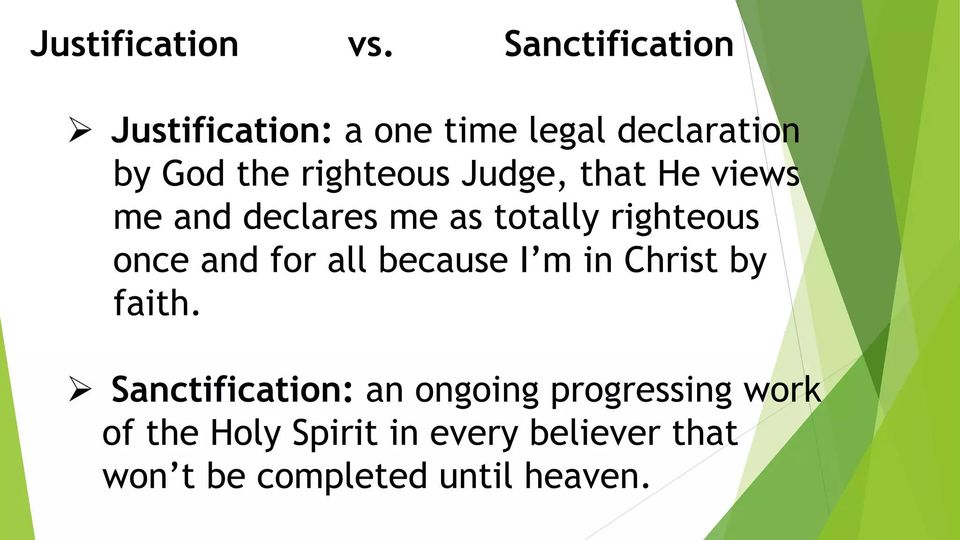
Roman Catholics Conflate Justification With Sanctification
LET’S CLARIFY MERITIVE AND SALVING
A response to Catholics who say they are saved by faith and that good works are not salvific and meritorious. Your denomination teaches that the practice of good works is necessary for salvation and that the Christian under the influence of grace deserves for himself and others the graces to sanctify and save himself.
Stop gaslighting Biblical Christians by lying and changing Rome’s doctrine in your comments on fb groups trying to make it appear less unbiblical than it is. This trick will not work.1. Catechism of Pius X
39 Q. What are the conditions necessary to OBTAIN HEAVEN?
A. The conditions necessary to obtain Heaven are the grace of God, THE PRACTICE OF GOOD WORKS, and perseverance until death in His holy love.2. Catechism Catholic Church
2010 Since the initiative belongs to God in the order of grace, no one can merit the initial grace of forgiveness and justification, at the beginning of conversion. Moved by the Holy Spirit and by charity, WE CAN THEN MERIT FOR OURSELVES AND FOR OTHERS THE GRACES NEEDED FOR OUR SANCTIFICATION, FOR THE INCREASE OF GRACE AND CHARITY, AND FOR THE ATTAINMENT OF ETERNAL LIFE. Even temporal goods like health and friendship can be merited in accordance with God’s wisdom. These graces and goods are the object of Christian prayer. Prayer attends to the grace we need for MERITORIOUS ACTIONS.3. Compendium of the Catechism of Catholic Church
426. What is merit?
In general merit refers to the right to recompense for a good deed. With regard to God, we of ourselves are not able to merit anything, having received everything freely from him. However, GOD GIVES US THE POSSIBILITY OF ACQUIRING MERIT through union with the love of Christ, who is the source of OUR MERITS BEFORE GOD. The MERITS FOR GOOD WORKS, therefore must be attributed in the first place to the grace of God and THEN TO THE FREE WILL OF MAN.
427. What are the goods that we can merit?
Moved by the Holy Spirit, WE CAN MERIT FOR OURSELVES AND FOR OTHERS THE GRACES NEEDED FOR OUR SANCTIFICATION AND FOR THE ATTAINMENT OF ETERNAL LIFE. Even temporal goods, suitable for us, can be merited in accordance with the plan of God. No one, however, can merit the initial grace which is at the origin of conversion and justification.According to Catholic doctrine, man has a true merit before God, which is given to him by the merit of Christ, but ultimately salvation still depends on his collaboration with action. There are things to do that if they are not done, will cause one to lose salvation. It is not a continuous gift from God from beginning to end.
Let’s instead see the true biblical doctrine on good works:
Q. 70. What is justification?
A. Justification is an act of God’s free grace unto sinners, in which he pardoneth all their sins, accepteth and accounteth their persons righteous in his sight; not for any thing wrought in them, or done by them, but only for the perfect obedience and full satisfaction of Christ, by God imputed to them, and received by faith alone.
Rom. 3:22, 24-25; Rom. 4:5; 2 Cor. 5:19, 21; Rom. 3:22, 24-25, 27-28; Titus 3:5, 7; Eph. 1:7; Rom. 5:17-19; Rom. 4:6-8; Acts 10:43; Gal. 2:16; Phil. 3:9.Q. 71. How is justification an act of God’s free grace?
A. Although Christ, by his obedience and death, did make a proper, real and full satisfaction to God’s justice in the behalf of them that are justified; yet in as much as God accepteth the satisfaction from a surety, which he might have demanded of them, and did provide this surety, his own only Son, imputing his righteousness to them, and requiring nothing of them for their justification but faith, which also is his gift, their justification is to them of free grace.
Rom. 5:8-10, 19; 1 Tim. 2:5-6; Heb. 10:10; Matt. 20:28; Dan. 9:24, 26; Isa. 53:4-6; Isa. 53:10-12; Heb. 7:22; Rom. 8:32; 1 Pet. 1:18-19; 2 Cor. 5:21; Rom. 3:24-25; Eph. 2:8; Eph. 1:7.Q. 72. What is justifying faith?
A. Justifying faith is a saving grace, wrought in the heart of a sinner, by the Spirit and Word of God, whereby he, being convinced of his sin and misery, and of the disability in himself and all other creatures to recover him out of his lost condition, not only assenteth to the truth of the promise of the gospel, but receiveth and resteth upon Christ and his righteousness therein held forth, for pardon of sin, and for the accepting and accounting of his person righteous in the sight of God for salvation.
Heb. 10:39; 2 Cor. 4:13; Eph. 1:17-19; Rom. 10:14, 17; Acts 2:37; Acts 16:30; John 16:8-9; Rom. 5:6; Eph. 2:1; Acts 4:12; Eph. 1:13; John 1:12; Acts 16:31; Acts 10:43; Phil. 3:9; Acts 15:11.Q. 73. How doth faith justify a sinner in the sight of God?
A. Faith justifies a sinner in the sight of God, not because of those other graces which do always accompany it, or of good works that are the fruits of it, nor as if the grace of faith, or any act thereof, were imputed to him for his justification; but only as it is an instrument by which he receiveth and applieth Christ and his righteousness.
Gal. 3:11; Rom. 3:28; Rom. 4:5; Rom. 10:10; John 1:12; Phil. 3:9; Gal. 2:16.Q. 74. What is adoption?
A. Adoption is an act of the free grace of God, in and for his only Son Jesus Christ, whereby all those that are justified are received into the number of his children, have his name put upon them, the Spirit of his Son given to them, are under his fatherly care and dispensations, admitted to all the liberties and privileges of the sons of God, made heirs of all the promises, and fellow-heirs with Christ in glory.
1 John 3:1; Eph. 1:5; Gal. 4:4-5; John 1:12; 2 Cor. 6:18; Rev. 3:12; Gal. 4:6; Ps. 103:13; Prov. 14:26; Matt. 6:32; Heb. 6:12; Rom. 8:17.Q. 75. What is sanctification?
A. Sanctification is a work of God’s grace, whereby they whom God hath before the foundation of the world chosen to be holy, are in time through the powerful operation of his Spirit, applying the death and resurrection of Christ unto them, renewed in their whole man after the image of God; having the seeds of repentance unto life, and all other saving graces, put into their hearts, and those graces so stirred up, increased, and strengthened, as that they more and more die unto sin and rise unto newness of life.
Eph. 1:4; 1 Cor. 6:11; 2 Thess. 2:13; Rom. 6:4-6; Eph. 4:23-24; Acts 11:18; 1 John 3:9; Jude 1:20; Heb. 6:11-12; Eph. 3:16-19; Col. 1:10-11; Rom. 6:4, 6, 14; Gal. 5:24.Q. 76. What is repentance unto life?
A. Repentance unto life is a saving grace, wrought in the heart of a sinner by the Spirit and word of God, whereby, out of the sight and sense, not only of the danger, but also of the filthiness and odiousness of his sins, and upon the apprehension of God’s mercy in Christ to such as are penitent, he so grieves for and hates his sins, as that he turns from them all to God, purposing and endeavouring constantly to walk with him in all the ways of new obedience.
2 Tim. 2:25; Zech. 12:10; Acts 11:18, 20-21; Ezek. 18:28, 30, 32; Luke 15:17-18; Hos. 2:6-7; Ezek. 36:31; Isa. 30:22; Joel 2:12-13; Jer. 31:18-19; 2 Cor. 7:11; Acts 26:18; Ezek. 14:6; 1 Kings 8:47-48; Ps. 119:6, 59, 128; Luke 1:6; 2 Kings 23:25.Q. 77. Wherein do justification and sanctification differ?
A. Although sanctification be inseparably joined with justification, yet they differ, in that God in justification imputeth the righteousness of Christ; in sanctification his Spirit infuseth grace, and enableth to the exercise thereof; in the former, sin is pardoned; in the other, it is subdued; the one doth equally free all believers from the revenging wrath of God, and that perfectly in this life, that they never fall into condemnation; the other is neither equal in all, nor in this life perfect in any, but growing up to perfection.
1 Cor. 6:11; 1 Cor. 1:30; Rom. 4:6, 8; Ezek. 36:27; Rom. 3:24-25; Rom. 6:6, 14; Rom. 8:33-34; 1 John 2:12-14; Heb. 5:12-14; 1 John 1:8, 10; 2 Cor. 7:1; Phil. 3:12-14.Q. 78. Whence ariseth the imperfection of sanctification in believers?
A. The imperfection of sanctification in believers ariseth from the remnants of sin abiding in every part of them, and the perpetual lustings of the flesh against the spirit; whereby they are often foiled with temptations, and fall into many sins, are hindered in all their spiritual services, and their best works are imperfect and defiled in the sight of God.
Rom. 7:18, 23; Mark 14:66-72; Gal. 2:11-12; Heb. 12:1; Isa. 64:6; Ex. 28:38.Q. 79. May not true believers, by reason of their imperfections, and the many temptations and sins they are overtaken with, fall away from the state of grace?
A. True believers, by reason of the unchangeable love of God, and his decree and covenant to give them perseverance, their inseparable union with Christ, his continual intercession for them, and the Spirit and seed of God abiding in them, can neither totally nor finally fall away from the state of grace, but are kept by the power of God through faith unto salvation.
Jer. 31:3; 2 Tim. 2:19; Heb. 13:20-21; 2 Sam. 23:5; 1 Cor. 1:8-9; Heb. 7:25; Luke 22:32; 1 John 3:9; 1 John 2:27; Jer. 32:40; John 10:28; 1 Peter 1:5.Q. 80. Can true believers be infallibly assured that they are in the estate of grace, and that they shall persevere therein unto salvation?
A. Such as truly believe in Christ, and endeavor to walk in all good conscience before him, may, without extraordinary revelation, by faith grounded upon the truth of God’s promises, and by the Spirit enabling them to discern in themselves those graces to which the promises of life are made, and bearing witness with their spirits that they are the children of God, be infallibly assured that they are in the estate of grace and shall persevere therein unto salvation.
1 John 2:3; 1 Cor. 2:12; 1 John 3:14, 18-19, 21, 24; 1 John 4:13, 16; Heb. 6:11-12; Rom. 8:16; 1 John 5:13.Q. 81. Are all true believers at all times assured of their present being in the estate of grace, and that they shall be saved?
A. Assurance of grace and salvation not being of the essence of faith, true believers may wait long before they obtain it; and, after the enjoyment thereof, may have it weakened and intermitted, through manifold distempers, sins, temptations, and desertions; yet are they never left without such a presence and support of the Spirit of God, as keeps them from sinking into utter despair.
Eph. 1:13; Isa. 1:10; Ps. 88:1-18; Ps. 77:1-12; Song of Songs 5:2-3, 6; Ps. 51:8, 12; Ps. 31:22; Ps. 22:1; 1 John 3:9; Job 13:15; Ps. 73:15, 23; Isa. 54:7-10. -
The Lord’s Supper: The Real Presence of Christ
I used to believe in the Real Presence of Christ in the Lord’s Supper (communion). I now believe the Lord is present, but not in a physical way, rather it is spiritual. Communion is spiritual food to nourish our souls.
I held to the Roman Catholic view that during consecration the bread and wine become the true Body and Blood of Christ. Further, in the mass, we participate in the once and for all sacrifice of Christ at Calvary. It is an unbloody sacrifice. Rome teaches that Christ’s presence in the sacrament of communion is to be explained in terms of the doctrine of transubstantiation. The doctrine of transubstantiation asserts that when the priest says the words of consecration, the substance of the bread and wine is transformed into the substance of the body and blood of Christ.
The accidens (that is, the incidental properties) of the bread and wine remain the same. Rome also teaches that the Eucharist is a propitiatory sacrifice; in fact, the same sacrifice Christ offered on the cross. The Eucharistic sacrifice is offered for the sins of the living and the dead.
The Reformers were united in their rejection of both aspects of Rome’s doctrine of the Lord’s Supper. They rejected transubstantiation, and they rejected the idea that the Lord’s Supper is a propitiatory sacrifice.
Lutherans adopted consubstantiation to explain the doctrine of communion. In this view, Christ is present in/with/under the bread and wine.
I now reject both the Roman Catholic and Lutheran views on the Lord’s Supper. I favor the view of John Calvin. For him the communion gifts are more than a mere symbol (Zwingli’s view), yet transubstantiation and consubstantiation are both false. The Lord’s Supper is spiritual food. Christ is present in a real way in the sacrament, just not in a carnal (physical) manner. The Holy Spirit mediates our participation in the Lord’s Supper. And through the Holy Spirit we have union with Christ.
“Whoever feeds on my flesh and drinks my blood has eternal life, and I will raise him up on the last day. For my flesh is true food, and my blood is true drink. Whoever feeds on my flesh and drinks my blood abides in me, and I in him” (vv. 54–56).
The context of this passage shows us that to eat and drink Christ’s flesh and blood is not a carnal act but rather a spiritual act of trusting in Jesus. John 6:22–59 parallels the eating that leads to eternal life with belief, making the two things identical. The Lord’s Supper signs and seals this belief, showing that the One in whom we believe is both God and man, having a true human body. We need the humanity of Christ no less than we need His deity, and the physical elements of the supper impress this on our hearts and minds.
John Calvin comments, “There is no other way in which he can become ours, than by our faith being directed to his flesh.” The bread and wine of the supper are God’s seal that those who believe that the God-man suffered as a man and was raised from the dead will live forever. When we take the supper in faith, we are communing with Christ and marked as those who will inherit eternal life.”
The following comes from John Calvin’s Short Treatise on the Lord’s Supper. The importance of the real, spiritual presence of Christ in communion:
12. HOW THE BREAD IS CALLED THE BODY, AND THE WINE THE BLOOD OF CHRIST. We begin now to enter on the question so much debated, both anciently and at the present time — how we are to understand the words in which the bread is called the body of Christ, and the wine His blood. This may be disposed of without much difficulty; if we carefully observe the principle which I lately laid down, namely, that all the benefit which we should seek in the Supper is annihilated if Jesus Christ be not there given to us as the substance and foundation of all. That being fixed, we will confess, without doubt, that to deny that a true communication of Jesus Christ is presented to us in the Supper, is to render this holy sacrament frivolous and useless — an execrable blasphemy unfit to be listened to.
13. WHAT IS REQUISITE IN ORDER TO LIVE IN JESUS CHRIST. Moreover, if the reason for communicating with Jesus Christ is to have part and portion in all the graces which He purchased for us by His death, the required thing must be not only to be partakers of His Spirit, but also to participate in His humanity, in which He rendered all obedience to God His Father, in order to satisfy our debts, although, properly speaking, the one cannot be without the other; for when He gives Himself to us, it is in order that we may possess Him entirely. Hence, as it is said that His Spirit is our life, so He Himself, with His own lips, declares that His flesh is meat indeed, and His blood drink indeed (John 6:55). If these words are not to go for nothing, it follows that in order to have our life in Christ our souls must feed on His body and blood as their proper food. This, then, is expressly attested in the Supper, when of the bread it is said to us that we are to take it and eat it, and that it is His body, and of the cup that we are to drink it, and that it is His blood. This is expressly spoken of the body and blood, in order that we may learn to seek there the substance of our spiritual life.
14. HOW THE BREAD AND WINE ARE THE BODY OF JESUS CHRIST. Now, if it be asked whether the bread is the body of Christ and the wine His blood, we answer, that the bread and the wine are visible signs, which represent to us the body and blood, but that this name and title of body and blood is given to them because they are as it were instruments by which the Lord distributes them to us. This form and manner of speaking is very appropriate. For as the communion which we have with the body of Christ is a thing incomprehensible, not only to the eye but to our natural sense, it is there visibly demonstrated to us. Of this we have a striking example in an analogous case. Our Lord, wishing to give a visible appearance to His Spirit at the baptism of Christ, presented Him under the form of a dove. St. John the Baptist, narrating the fact, says, that he saw the Spirit of God descending. If we look more closely, we shall find that he saw nothing but the dove, in respect that the Holy Spirit is in His essence 2 invisible. Still, knowing that this vision was not an empty phantom, but a sure sign of the presence of the Holy Spirit, he doubts not to say that he saw it (John 1:32), because it was represented to him according to his capacity.
The Real, Spiritual Presence of Christ in the Lord’s Supper From John Calvin, Tracts, Vol. II, trans. Henry Beveridge (Edinburgh: Calvin Translation Society, 1849), 170-171, English updated and emphasis added.
My view on the Lord’s Supper now aligns most closely with Clavin’s! Let us be always reforming and aligning our views with God’s precious Word!
-
Vietnam
To the soldiers
Of Vietnam
I wish you
A sincere salaamYou bravely fought
The NVA and VC too
Yet when you came home
Many people eschewed youYou battled
In humid jungles far away
Why did the war happen
I cannot sayOver 50,000 of you
Died in combat
These Americans sacrificed their lives
Yet, not a single diplomatThese gallant boys
Were still teens
Instead of having fun
They reloaded M-16 magazinesWhen they came home
Many were treated bad
Oh the humanity
This makes me truly sadWe should never forget
Those who served so far from home
In Vietnam today
Their spirits still roamby Zachary Uram
(C) 2024 -
My Best Friend
Vi is so dreamily
She is compassionate and carefreeVi helps my itchy bum
It’s better than rumVi washes my legs and feet
Her loving kindness can’t be beatVi cooks me up yummy food
She is never rudeVi washes my laundry
She is never naughtyby Zachary Uram
(C) 2024
-
Subscribe
Subscribed
Already have a WordPress.com account? Log in now.
 Zach Uram's Blog