-
Christmas Reflections
In the Garden
Man had fallen from grace
It doomed the human raceMan was lost
In hopelessness and pain
Sin and death would now reignBecause of divine love
There formed a plan
To save wretched manA Savior was needed
A spotless Lamb
The great I AMGod the Son would come
To set mankind free
From his estate lowlyGod chose
A humble Jewish girl
She was specialMary served the Lord
She agreed to God’s fiat
In her womb the Messiah satA true miracle
This virgin most fair
The Christ child she would bareIn a remote city of Bethlehem
Mary and Joseph did sojourn
The world would soon turnNo room in the inn
Christ was born in a stable
This was no fableThe animals looked on
The God Man was alive
Our hope did surviveRejoice I say
Behold Israel’s King
Let choirs of angels singGloria Gloria Gloria
Hosanna in excelsis
Emmanuel – God with usThe very universe sings
A cosmic celebration
Of Jesus’s incarnationThirty-three years later
Christ would pay our penalty
From sin we’d be set freeHumiliated and brutalized
Such pain He endured for us
What an astounding witnessOn the rocky hill of Golgotha
The time struck three midday
Such a loving displayJesus bore God’s full wrath
Christ gave up His spirit
His life did He forfeitMary wept
Was this the last act
Did Christ succumb to Satan’s attackNo this was not the end
For on the third day Christ rose
It was us He choseDeath could not hold Him
The fabric of spacetime did bend
This was not His endChrist conquered death
As He rose again so shall we
Who can fathom such a mysterySo repent
And believe the Good News
Your heart of stone you’ll loseA new creation in Christ
Saved by grace through faith alone
In the Book of Life your name is knownMerry Christmas to all
On this day our salvation had begun
No more from God will you runWe look ahead to Calvary
Christmas mirth
Foreshadows our new birthA single love story
From Mary’s womb
To the Easter tombSnow is falling
I hear carolers sing
It’s time for an awakeningDon’t delay
Trust in Christ alone
For us He did atoneYou’ll receive the Comforter
In your heart He will dwell
Blessed assurance you cannot dispelWalk by the Spirit
In all that you do
Rejoice you’re one of the fewby Zachary Uram (c) 2021
-
Anthony Hopkins
In my estimation, Sir Anthony Hopkins is the greatest actor of his generation! And one of the top 5 best actors of all time.
I recall watching him as an 8 year old child in 1984, he starred opposite Mel Gibson in The Bounty as William Bligh. He played captain of the Royal Navy ship HMS Bounty. It’s a far more authentic and accurate story of the mutiny on the Bounty. Even as a child I was impressed by his charisma and dedication to his role. This was my first Hopkins film I’d seen.
In 1991, came Hopkin”s performance in the film Silence of the Lambs as the brilliant, but utterly evil forensic psychiatrist Dr. Hannibal Lecter who became a serial killer. He was known for cannibalizing his victims (Hannibal the Cannibal as the press at the time said). This was an amazing performance by Hopkins opposite Jodie Foster. Foster gives a very strong performance as a young and inexperienced FBI profiler. Dr. Lecter relishes his interactions with her and toying with her psychologically. There’s is a strictly quid pro quo relationship And one where Hopkin’s character is the master, and Foster’s is the apt student. I don’t think I’ve come across a more sinister, yet multifaceted film character’s as Hopkin’s Dr. Lecter. Hopkins won a Best Actor Oscar for his role in this film.
Hopkin’s would reprise his role of Dr. Lecter in the films Hannibal in 2001 and Red Dragon in 2002. These films were less subtle in their depiction of evil. There is more gore and less nuance. Yet Hopkin’s delivers extremely strong peformances in these films. He seems to relish being able to flesh out the role of Dr. Lecter more.
I saw him in 1992, he starred opposite Emma Thompson in Howard’s End which was set in Victorian England. This was an outstanding performance by Thompson (she won an Oscar). But Hopkins playing the amoral capitalist and was toe to toe with Thompson.
In 1993 I saw Hopkins in The Remains of the Day again opposite Emma Thompson. He plays an English butler who felt betrayed and his sacrifices for his aristocratic employer to be in vain. Thompson and he have a definite screen chemistry which, I believe, works so well in this film.
In 1995, I saw Hopkins in the film Nixon playing the American President. I read a good bit about Nixon and Watergate and I felt Hopkins captured his deep seated insecurity and fearfulness. Another top 10 performance.
Hopkins did steady work in a variety of films throughout the 90s and through the 00s and 10s. He also did some fine TV work, most notably in 2016-2018 series Westworld.
Fast forward to 2020 and we find Hopkins in the film The Father. He gives a deeply moving and emotionally complex performance of a man who is losing his memory and thus his entire identity as he inexorably succumbs to dementia It’s a sad seeing the ravages of age, but Hopkins infuses dignity into the character and defiance. As someone who suffers from severe mental illness, including psychosis, I could relate to Hopkin’s characters tenuous grip on reality at times. At age 81 when the film was shot, Hopkins won a second Best Actor Oscar for his role, making him the oldest person to win an acting Oscar.
At age 83, Hopkins continues to be a highly sought after and in demand actor, who shows no signs of slowing down! I look forward to more work from him. What an amazing and brilliant acting career he’s had.
I would like to add that I’m very inspired by Hopkins celebrating recently 46 years of sobriety from alcoholism. My dear mother is a recovered alcoholic, so I’m intimately acquainted with how damaging addiction can be. It was through his experiences at becoming sober at an AA (Alcoholics Anonymous) meeting that the former devout atheist Hopkins came to believe in God. My mother also found sobriety by attending AA meetings and with the help of her Christian faith. Hopkins repented of his sins and trusts in Christ alone now.
Hopkin’s addiction started because of theatre life. As he said, “that’s what you do in theater, you drink.” “But I was very difficult to work with, as well, because I was usually hungover.”
But by 1975, his social drinking had given way to frequent heavy drinking. His drinking had spiraled out of his control.
“I was hell-bent on destruction,” Hopkins said. “It was like being possessed by a demon, an addiction, and I couldn’t stop. And there are millions of people around like that.”
“I was heading for disaster, I was drinking myself to death. I’m not preachy but I got a message, a little thought, ‘Do you want to live or die?’ I wanted to live and suddenly relief came and my life has been amazing.”
During an AA meeting in 1975, a woman asked him a simple straightforward question: “Why don’t you just trust in God?” Hopkins was desperate and thought to himself, “Well, why not?” Slowly things began to change in his life. “I could not stop [drinking], but I just asked for a little bit of help and suddenly, pow. It was just like, bingo,” Hopkins recalled.
His deep cravings for alcohol literally vanished overnight, “never to return again.” And he’s believed in God ever since. This is truly miraculous and shows God’s power if we submit to Him.
Hopkins has a hopeful message for those struggling with addiction: “Don’t give up. Just keep in there. Keep fighting. Be bold and mighty forces will come to your aid. That sustained me through my life.”
Hopkins advice to high school and college students:
“If you chase the money, it’s not gonna work. And if you chase success, it’s not gonna work.” “You know, I meet young people, and they want to act and they want to be famous,” Hopkins explained. “And I tell them, when you get to the top of the tree, there’s nothing up there. Most of this is nonsense, most of this is a lie. Accept life as it is. Just be grateful to be alive.” “I believe that we are capable of so much,” Anthony said to the students. “From my own life, I still cannot believe that my life is what it is because I should have died in Wales, drunk or something like that. … We can talk ourselves into death or we can talk ourselves into the best life we’ve ever lived. None of it was a mistake. It was all a destiny.” Before getting saved, Hopkins was a hardcore atheist. But now he feels sorry for atheists, comparing a life of disbelief to “living in a closed cell with no windows.” “I’d hate to have to live like that, wouldn’t you?” Hopkins asked poignantly.
By the way, Hopkins is also an accomplished musical composer! Here is André Rieu and his Johann Strauss Orchestra performing a waltz which Hopkins wrote.
-
A Christmas Canticle

Christ was born in a manger
One frosty nightOnly straw for a bed
What a plightThe heavenly hosts proclaimed
Gloria in excelsis DeoIn His crib
Christ’s face did glowThe animals kept watch
As the holy infant sleptHow could this be
His secret Joseph and Mary keptThis eternal Son dreamed
Of what He’d do one dayThe Emmanuel – God with us
The holy couple did prayThe Messiah came out of love
For mankind lost in sinHe would one day make
A propitiationOn the Cross
He’d give His lifeAs a ransom for us
To end our eternal strifeChrist was a sinless substitute
He won us second birthHis sacrifice
Was one of infinite worthOn the third day
The light streamed out the tombLike a newborn baby
From the wombJesus was resurrected
The greatest event in all spacetimeSuch a monumental moment
A victory so sublimeDeath had lost its sting
The grave had been deniedThe God Man lived
He who was prophesiedBecause of that moment
We can live forevermoreOur path is certain
Our eternal fate secureAre you tired of darkness
Of living in sin so blackRepent in your heart today
There’s no going backBelieve the Gospel
It is your only hopeDon’t trust in man
Or even a popeYou are a new creation
The old life is goneYour depravity and wickedness
Is truly doneSo walk in the Spirit
And live for Christ each dayBecause of sovereign grace
You don’t have to dismayby Zachary Uram (c) 2021
-
The Very Bloody History of Communism

After being thought up by Karl Marx in the 19th century, communism came to the forefront in the early part of the 20th century in Russia. Lenin led a so-called workers revolution (the noble proletariat) who was going to centralize the economy and abolish capitalism in favor of socialism, abolish private property, and replace the thousand plus years of Christianity with godless atheism. What was achieved was a totalitarian state where the State replaced God. And the Party replaced religion. The former Russian territories became the Union of Soviet Socialist States (USSR). The Soviet state absolutely crushed religion, anything associated with the bourgeois rule such as culture, religion, learning, the arts and literature. Everything would be remade in accordance with communist dictates.The practical effect was the total erosion of human rights and personal freedom and liberties. There were problems with the Tsarist rule of Russia, serious problems even. But the solution was not to replace one problem with a system which was exponentially worse.
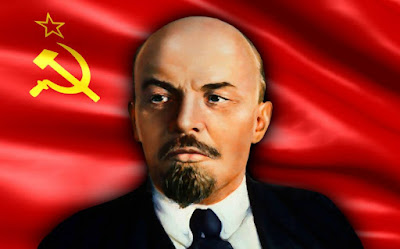
The Bolsheviks, led by Lenin, killed around 2-3 million people in the Bolshevik revolution and ensuing civil war between 1917-1922. Many priests, bishops, professors, teachers, artists were murdered in cold blood.
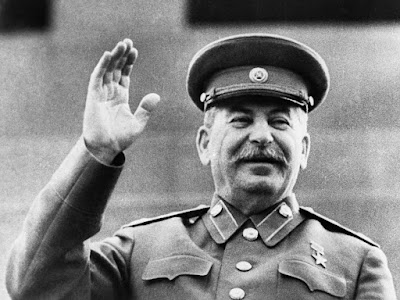
Under the leadership of Stalin, who assumed power after Lenin died, tens of millions of people would die. I quote this article:
In his acclaimed book “The Great Terror: Stalin’s Purge of the Thirties,” Anglo-American historian Robert Conquest said: “We get a figure of 20 million dead [under Stalin], which is almost certainly too low and might require an increase of 50 percent or so.”
Quotes attributed to Stalin reflected his utter disregard for human life. Among other bons mots, he allegedly declared: “Death is the solution to all problems. No man — no problem,” and “One death is a tragedy; one million is a statistic.”
Part of the problem with counting the total loss of life lies with the incompleteness and unreliability of Soviet records. A more troubling dilemma has to do with the fact that many some deaths – like starvation from famines – may or may not have been directly connected to Stalin’s policies.
In any case, if the figure of 60 million dead is accurate that would mean that an average of 2 million were killed during each year of Stalin’s horrific reign – or 40,000 every week (even during “peacetime”).
If the lower estimate of 20 million is the true number, that still translates into 1,830 deaths every single day.
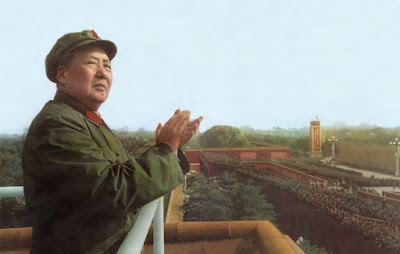
In Communist China, Mao Zedong killed 42-105 million people. 11 million due to the great famine he caused with the collectivization of all farms in China, and over 7-45 million due to the Great Leap Forward. And another 20-30 million deaths due to the decade long Cultural Revolution. A further 27 million died in the Laogai camps.These deaths were largely due to famine, execution, and forced labor, as well as economic and environmental destruction were solely the fault of the Chinese Communist Party. According to this article, 130 million dead in the 20th century due to Communism. Most of these deaths were through government induced famines and associated diseases which accounts for 100 million deaths. Another 30 million died in communist led wars and rebellion such as in Korea and Vietnam. However I found another article which states that:
According to the late Rudolph Rummel, the demographer of government mass murder, estimated the human toll of twentieth-century socialism to be about 61 million in the Soviet Union, 78 million in China, and roughly 200 million worldwide. These victims perished during state-organized famines, collectivization, cultural revolutions, purges, campaigns against “unearned” income, and other devilish experiments in social engineering. In its monstrosity, this terror is unrivaled in the course of human history.
Nearly 2 million died in the Killing Fields of Cambodia under the Khmer Rouge, the Communists who led the civil war. But there have been other killings by Communist regimes, such as the nearly 2 million killed in China’s continued occupation of Tibet. You can read further figures in the Wikipedia article.

Academics have debated the exact numbers, but new research shows the previous death tolls due to communism in China under Mao were significantly understated and the real totals are much higher. So the 130-200 million dead globally due to Communism is likely more accurate than not.
More people died due to Communism than any other power, ideological system, government, or movement in world history! Yet even today China is still Communist and thanks to a booming economy is flexing its muscles and aims to be a world superpower. It would not be as benevolent as America has been as a superpower. China’s Communist Party seems hellbent on world domination. They’re using their economic might, but in the future that could easily shift to a conventional war whether over Taiwan or North Korea or some other trigger. China is NOT our friend. They have been our enemy and they will continue to be our enemy until the Chinese people manage to finally free themselves from the heavy yoke of Communism!
Today China is a surveillance society, citizens are tracked and their every action, transaction, purchase, achievement quantified and assigned value in the social credit system. It is George Orwell’s prophetic book 1984 come to life in all its sinister evil!

Further I should note that these death figures for China did not take take into account the forced abortions. According to this article, in the past 50 years alone there have been a staggering 336 million forced abortions in China. There were also during that time period 222 million forced sterilizations in China. So the true death total due to Communism could easily top half a billion lives! This Communist regime in China is utterly Satanic and we should do everything we can to oppose this great evil.

It disgusts me that our Western countries trade heavily with China when we should be imposing economic sanctions on them for crimes against humanity! And for the 2nd time in the past 13 years China will be hosting the Olympics! The US boycotted the Olympics when it was held in the Soviet Union, yet our politicians and business leaders cowtow to China’s bloody regime all for the money they make!! The Chinese Communist Party heavily persecutes Christians in China to this day. We need to demand our leaders change how they deal with China. This must be organized at European Union, US, Canada, and NATO levels. I honestly don’t think anything will change until China is in a war with us. They’re already waging an effective cyber-war against us!

I feel compelled to also mention the fact that recent polling shows over half of Millennials in America have a positive view of Communism, and are totally ignorant of its bloody history! This is a result of our Leftist public schools indoctrinating students. This is utterly un-American and should be opposed in the strongest possible terms. Democrats in America now have repackaged socialism calling it the innocuous sounding “democratic socialism”. But it’s the same sinister path to a Communist takeover of America! Here is an eye opening article on 15 ways America has succumbed to Communism. We must take bold action now before it’s too late. As President Reagan said, “Freedom is never more than one generation away from extinction.”
I have seen the rise of fascism and communism. Both philosophies glorify the arbitrary power of the state… But both theories fail. Both deny those God-given liberties that are the inalienable right of each person on this planet, indeed, they deny the existence of God. — President Ronald Reagan

I agree with President Reagan. Communism fell in Russia and if we all work hard it would fail in China as well. As China continues to rape, murder, imprison, beat and oppress Christians it will come under God’s Wrath! MARANATHA!
Here is a wonderful and insightful 2 hour documentary on the horrors of Communism.
-
Advent Reflections Poem

In grievous sin man was lost
To redeem him what would it cost?God became man
It was all according to His planThe God Man came
To cast out demons and heal the lameBut the real reason Christ came was love
He had mercy on us from aboveThe virgin Mary would bear Jesus the Lord
He would save us from sin and the Satanic hordeThe Holy Spirit overshadowed Mary, for 9 months she bore the Christ child
This holy infant so tender and mildA humble stable in Bethlehem held the newborn babe and His divinity
A donkey and lamb kept watch in this precious nativityJesus would be our sinless sacrifice
He hung on the cross while, for His garments, the soldiers played diceFor our vice and depravity
Christ would suffer most acutelyHe was crushed for our iniquity, and endured God the Father’s full wrath
Jesus chose this pathHe cried out, “It is finished!”, and gave up His spirit. Such was the death of the Son
But Jesus was not defeated. This hill of Calvary is where our salvation was wonDeath could not hold Him. Now rang the celestial bell
He descended into HellChrist preached to the lost, and set the righteous of old free
No longer would His Elect be eternally condemned for our iniquityThree days later Christ’s rocky tomb shone with bright light
Behold, the Lamb of God was resurrected by His mightThe grave could not hold the living Word of God
Satan and death were defeated, the Messiah we shall praise forever and laudBecause of Christ’s resurrection, we the spiritually blind shall see
By God’s amazing grace through faith we are saved and set freeWe must be born again you see
It’s a fundamental change in our realityWe are given second birth
This is cause for much rejoicing and mirthIn Christ we are truly a new creation
This fills me with thanksgiving and elationSo sing Hallelujah and be always ready for the Lord’s return
He will rapture His Church before the world will burnTrust in Christ alone and preach the Gospel of sovereign grace
Let all people hear the Good News, until that happy day we shall see Him face to face
by Zachary Uram (c) 2021
-
The 5 Points of Calvinism Poem
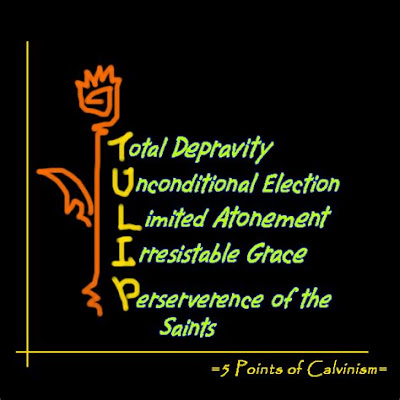
We are born lost in sin you see
Totally wicked
We are mired in depravityOur heart is desperately wicked
That is the truth
Sin is our bedGod chose us to redeem
From the foundation of the world
What a marvelous dreamNot elected based on anything in us
It was simply God’s good pleasure
For His purposeChrist died at Calvary
His propitiation was complete
This is salvation historyHe died for a select few
Only the Elect
The others He did eschewWe were quickened by the Holy Ghost
It was grace we could not resist
We have nothing of our own to boastThis grace was irresistible
God loved us so
We are no longer miserableWe’re given a heart of flesh
We are made new
Our new life starts afreshOur salvation cannot be lost
Christ will keep us on the right path
Persevering until our mortal life is pastby Zachary Uram (c) 2021
-
Apocrypha
The Apocrypha (απόκρυφα means “hidden”) is a set of books written between approximately 400 B.C. and the time of Christ. These books are Tobit, Judith, 1 and 2 Maccabees, Wisdom of Solomon, Sirach (also known as Ecclesiasticus), and Baruch.
The Roman Catholic, Orthodox, and Protestant churches all have Bibles with varying lengths. These different canons include 39 books of the Old Testament for the Protestant canon, 46 books of the Old Testament for the Roman Catholic canon, and up to 54 books of the Old Testament for the Orthodox canon. Thee 7 additional Old Testament books in the Roman Catholic canon is known as the deuterocanonicals or Apocrypha. We Protestants reject the Apocrypha.
The Apocrypha teaches several erroneous doctrines:
The pre-existence of the soul.
The belief that the kind of body one now has is determined by the character of his soul in a previous life: “Now I was a goodly child, and a good soul fell to my lot; Nay rather, being good, I came into a body undefiled” (Wisdom of Solomon 8:19-20).This was a common belief among heathen peoples, but certainly it is contrary to the biblical view that the soul of man is formed with him at conception (Psa. 139:13-16; Zech. 12:1).
Praying for the dead.
“Wherefore he made the propitiation for them that had died, that they might be released from their sins” (2 Maccabees 12:45).
Roman Catholics cite this passage to find support for their dogma of praying for the dead to be released from purgatory, but the effort is vain. Obviously there’s no New Testament passage to support the notion.Alms for Sins:
The Apocrypha suggests that one may atone for his sins by the giving of alms: “It is better to give alms than to lay up gold: alms doth deliver from death, and it shall purge away all sin” (Tobit 12:9).
The Morality of the Apocrypha
The moral tone of the Apocrypha is far below that of the Bible (66 book canon). Some examples:
Suicide Noble? The apocrypha applauds suicide as a noble and manful act. Second Maccabees tells of one Razis who, being surrounded by the enemy, fell upon his sword, choosing “rather to die nobly” than to fall into the hands of his enemy. He was not mortally wounded, however, and so threw himself down from a wall and “manfully” died among the crowds (14:41-43).
Magical Potions: It describes magical potions which are alleged to drive demons away (Tobit 6:1-17).
Tobit 6:5-7, “Then the angel said to him: Take out the entrails of this fish, and lay up his heart, and his gall, and his liver for thee: for these are necessary for useful medicines. 6 And when he had done so, he roasted the flesh thereof, and they took it with them in the way: the rest they salted as much as might serve them, till they came to Rages the city of the Medes. 7 Then Tobias asked the angel, and said to him: I beseech thee, brother Azarias, tell me what remedies are these things good for, which thou hast bid me keep of the fish? 8 And the angel, answering, said to him: If thou put a little piece of its heart upon coals, the smoke thereof driveth away all kind of devils, either from man or from woman, so that they come no more to them.”
Is it true that the smoke from a fish’s heart, when burned, drives away evil spirits? Of course not. Such a superstitious teaching has no place in the word of God.
Murder Applauded: The murder of the men of Shechem (Gen. 34), an act of violence which is condemned in the Scriptures (cf. Gen. 49:6-7), is commended and is described as an act of God (Judith 9:2-9).
The Apocrypha also has Historical Errors
- Judith 1:5, “Now in the twelfth year of his reign, Nabuchodonosor, king of the Assyrians, who reigned in Ninive the great city, fought against Arphaxad and overcame him.”
- Baruch 6:2, “And when you are come into Babylon, you shall be there many years, and for a long time, even to seven generations: and after that I will bring you away from thence with peace.”
The book of Judith incorrectly says that Nebuchadnezzar was the king of the Assyrians when he was the king of the Babylonians.
Baruch 6:2 says the Jews would serve in Babylon for seven generations where Jer. 25:11 says it was for 70 years. “And this whole land shall be a desolation and a horror, and these nations shall serve the king of Babylon seventy years.”
These, along with various other considerations, lead only to the conclusion that the Apocrypha cannot be included in the volume of sacred Scripture. ..Apocryphal Books Do Not Claim Inspiration: It must be observed that the apocryphal books, unlike the canonical books of the Old Testament, make no direct claims of being inspired of God.
Not once is there a, “thus says the Lord,” or language like, “the word of the Lord came unto me, saying …” In fact, some of the documents actually confess non-inspiration! In the prologue of Ecclesiasticus, the writer states:
“Ye are entreated therefore to read with favour and attention, and to pardon us, if in any parts of what we have laboured to interpret, we may seem to fail in some of the phrases.”…The Hebrew canon of the Jews never included the Apocrypha. Jesus and the New Testament authors never directly quote the Apocrypha. Neither do they introduce it with labels that would suggest inspiration, such as “as it is written” or “as the Scripture says.” Many echoes and allusions have been detected in the New Testament, but no direct quotes or obvious paraphrases appear in the New Testament. Jerome (who translated the complete Bible into Latin, the Latin Vulgate) did not believe the Apocrypha were canonical. Augustine however did believe them to be canonical. The Council of Carthage (AD 397) sided with Augustine, but the two views remained in the church until the Reformation period. During the Reformation period the Roman Catholic church called the Council of Trent (1546) included most of the books of the Apocrypha. It’s important to note that, contrary to what many Roman Catholic apologists claim, Rome had NO FIXED CANON until Trent.
Here we see 3 Reformed documents commenting on the nature of the Apocrypha:
Thirty-nine Articles (1571), article 6: “And the other Books (as Jerome saith) the Church doth read for example of life and instruction of manners; but yet doth it not apply them to establish any doctrine.”
Belgic Confession (1561) 6: “The church may certainly read these books and learn from them as far as they agree with the canonical books. But they do not have such power and virtue that one could confirm from their testimony any point of faith or of the Christian religion. Much less can they detract from the authority of the other holy books.”
Westminster Confession of Faith (1647) 1.3: “The books commonly called Apocrypha, not being of divine inspiration, are no part of the canon of the Scripture, and therefore are of no authority in the church of God, nor to be any otherwise approved, or made use of, than other human writings.”
As we have seen there are numerous problems with the 7 Apocryphal books and they are clearly not inspired Scripture. We can read them, but cannot base doctrine on them!
-
What is the Rock?
Here is a quick summary of the way that the Church Fathers interpreted that verse “Thou are Peter and upon this rock….” (Matthew 16:18)
Archbishop Kenrick, who was one of America’s extraordinary bishops, was opposed to the doctrine of papal infallibilty and at the First Vatican Council in 1869 he voted against it. He wanted to deliver a speech against the proposed doctrine at the Council but instead he ceased to attend the Council meetings. He published his speech in Naples the following year. It is important because he lists the five different patristic interpretations of Matthew 16:18.
Let’s look at how the Church Fathers line up over this verse:
- “That St. Peter is the Rock” is taught by seventeen (17) Fathers.
- That the whole Apostolic College is the Rock, represented by Peter as its chief, is taught by eight (8 ) Church Fathers.
- That St. Peter’s faith is the Rock, is taught by forty-four (44) Church Fathers.
- That Christ is the Rock, is taught by sixteen Fathers (16)
Archbishop Kenrick summarises:
“If we are bound to follow the greater number of Fathers in this matter, then we must hold for certain that the word “Petra” means not Peter professing the Faith, but the faith professed by Peter.”This is an important point by Archbishop Kenrick and it should be given its full weight. It is Roman Catholic doctrine that where there is something disputed the choice must be made for the consensus of the Fathers, the consensus patrum. You can look this up and check that I have it accurately in Friedrich, Docum ad illust. Conc. Vat. 1, pp. 185-246 As to who Archbishop Kenrick was. Please see the Catholic Encyclopedia here.
Peter’s confession as the rock was the majority view in the Early Church:
“In a remarkable pamphlete printed in fac-simile of manuscript and presented to the fathers almost two months ago, we find five different interpretations of the word “rock”, in the place cited; “the first of which declares (I transcribe the words) “that the church was built on Peter; and this interpretation is followed by seventeen fathers, among them, by Origen, Cyprian, Jerome, Hilary, Cyril of Alexandria, Leo the Great, Augustine.
“The second interpretation understands from these words ‘on this rock will I build my church’, that the church was built on all the apostles, whom Peter represented by virtue of the primacy. And this opinion is followed by eight fathers – among them, Origen, Cyprian, Jerome, Augustine, Theodoret.
“The third interpretation asserts that the words, ‘on this rock’, etc, are to be understood of the faith which Peter had professed – that this profession of faith, by which we believe Christ to be the Son of the Living God, is the everlasting and immovable foundation of the church. This interpretation is the weightiest of all, since it is followed by forty-four fathers and doctors; among them, from the East, are Gregory of Nyssa, Cyril of Alexandria, Chrysostom, Theophylact; from the West, Hilary, Ambrose, Leo the Great; from Africa, Augustine.
The fourth interpretation declare that the words ‘on this rock’, etc, are to be understood of the rock which Peter had confessed, that is, Christ – that the church was built upon Christ. This interpretation is followed by sixteen fathers and doctors.
The fifth interpretation of the fathers understands by the name of ‘the rock’, the faithful themselves, who, believing Christ to be the Son of God, are constituted living stones out of which the church is built.
From this it follows, either that no argument at all, or one of the slenderest probability, is to be derived from the words, ‘on this rock will I build my church’, in support of the primacy. Unless it is certain that by ‘the rock’ is to be understood the apostle Peter in his own person, and not in his capacity as the chief apostle speaking for them all, the word supplies no argument whatever, I do not say in proof of papal infallibility, but even in support of the primacy of the bishop of Rome. If we are bound to follow the majority of the fathers in this thing, then we are bound to hold for certain that by ‘the rock’ should be understood the faith professed by Peter, not Peter professing the faith.”
— Archbishop Kenrick in “An Inside View of the Vatican Council”Most Roman Catholics are surprised to find that the majority of the Early Church Fathers taught the other interpretations of Matthew 16:18. This information was compiled by Catholic scholars prior to Vatican I.
Thus we see that it is clear the majority view of the Early Church Fathers was that the Rock was Peter’s confession that Jesus is the Christ or that the Rock is Christ Himself. The view that the Rock represents Peter is a minority view. This just shows how selective Roman Catholics are with data which doesn’t fit their position.
-
Doctrines of Grace in the Early Church Fathers
Contrary to what Roman Catholics and Orthodox apologists assert, the doctrines of grace (the 5 points of Calvinism — TULIP) did not originate in the 16th century! They were believed by the Early Church. They may not have used the exact terminology which later writers would employ, but it’s clear from the quotes below that they absolutely believed in them.
The following quotes are taken from the Appendix of Michael Horton’s Book, “Putting Amazing Back into Grace.” They have no citations.
TOTAL DEPRAVITY
Barnabas (A.D. 70): “Learn: before we believed in God, the habitation of our heart was corrupt and weak.”
Ignatius (A.D. 110): “They that are carnal cannot do the things that are spiritual…Nor can the unbelievers do the things of belief.”
Justin Martyr (A.D. 150): “Mankind by Adam fell under death, and the deception of the serpent; we are born sinners…No good thing dwells in us…For neither by nature, nor by human understanding is it possible for me to acquire the knowledge of things so great and so divine, but by the energy of the Divine Spirit…Of ourselves it is impossible to enter the kingdom of God…He has convicted us of the impossibility of our nature to obtain life…Free will has destroyed us; we who were free are become slaves and for our sin are sold…Being pressed down by our sins, we cannot move upward toward God; we are like birds who have wings, but are unable to fly.”
Clement Of Alexandria (A.D. 190): “The soul cannot rise nor fly, nor be lifted up above the things that are on high, without special grace.”
Origen: “Our free will…or human nature is not sufficient to seek God in any manner.”
Eusebius (A.D. 330): “The liberty of our will in choosing things that are good is destroyed.”
Augustine (A.D. 370): “If, therefore, they are servants of sin (2 Cor. 3:17), why do they boast of free will?…O, man! Learn from the precept what you ought to do; learn from correction, that it is your own fault you have not the power…Let human effort, which perished by Adam, here be silent, and let the grace of God reign by Jesus Christ…What God promises, we ourselves do not through free will of human nature, but He Himself does by grace within us…Men labor to find in our own will something that is our own, and not God’s; how can they find it, I know not.”
UNCONDITIONAL ELECTION
Clement Of Rome (A.D. 69): “Let us therefore approach Him in holiness of soul, lifting up pure and undefiled hands unto Him, with love towards our gentle and compassionate Father because He made us an elect portion unto Himself…Seeing then that we are the special elect portion of a Holy God, let us do all things that pertain unto holiness…There was given a declaration of blessedness upon them that have been elected by God through Jesus Christ our Lord…Jesus Christ is the hope of the elect…”
Barnabas (A.D. 70): “We are elected to hope, committed by God unto faith, appointed to salvation.”
Ignatius: “To the predestined ones before all ages, that is, before the world began, united and elect in a true passion, by the eternal will of the Father…”
Justin Martyr: “In all these discourses I have brought all my proofs out of your own holy and prophetic writings, hoping that some of you may be found of the elect number which through the grace that comes from the Lord of Sabaoth, is left or reserved [set apart] for everlasting salvation.”
Irenaeus (A.D. 198): “God hath completed the number which He before determined with Himself, all those who are written, or ordained unto eternal life…Being predestined indeed according to the love of the Father that we would belong to Him forever.”
Clement Of Alexandria (A.D. 190): “Through faith the elect of God are saved. The generation of those who seek God is the elect nation, not [an earthly] place, but the congregation of the elect, which I call the Church…If every person had known the truth, they would all have leaped into the way, and there would have been no election…You are those who are chosen from among men and as those who are predestined from among men, and in His own time called, faithful, and elect, those who before the foundation of the world are known intimately by God unto faith; that is, are appointed by Him to faith, grow beyond babyhood.”
Cyprian (A.D. 250): “This is therefore the predestination which we faithfully and humbly preach.”
Ambrose Of Milan (A.D. 380): “In predestination the Church of God has always existed.”
Augustine (A.D. 380): “Here certainly, there is no place for the vain argument of those who defend the foreknowledge of God against the grace of God, and accordingly maintain that we were elected before the foundation of the world because God foreknew that we would be good, not that He Himself would make us good. This is not the language of Him who said, ‘You did not choose Me, but I chose you’ (John 15:16).”
LIMITED ATONEMENT
Barnabas (A.D. 70): “[Christ speaking] I see that I shall thus offer My flesh for the sins of the new people.”Justin Martyr (A.D. 150): “He endured the sufferings for those men whose souls are [actually] purified from all iniquity…As Jacob served Laban for the cattle that were spotted, and of carious forms, so Christ served even to the cross for men of every kind, of many and various shapes, procuring them by His blood and the mystery of the cross.”
Irenaeus (A.D. 180): “He came to save all, all, I say, who through Him are born again unto God, infants, and little ones, and children, and young men, and old men…Jesus is the Savior of them that believe; but the Lord of them that believe not. Wherefore, Christ is introduced in the gospel weary…promising to give His life a ransom, in the room of, many.”
Tertullian (A.D. 200): “Christ died for the salvation of His people…for the church.”
Cyprian (A.D. 250): “All the sheep which Christ hath sought up by His blood and sufferings are saved…Whosoever shall be found in the blood, and with the mark of Christ shall only escape…He redeemed the believers with the price of His own blood…Let him be afraid to die who is not reckoned to have any part in the cross and sufferings of Christ.”
Lactantius (A.D. 320): “He was to suffer and be slain for the salvation of many people…who having suffered death for us, hath made us heirs of the everlasting kingdom, having abdicated and disinherited the people of the Jews…He stretched out His hands in the passion and measured the world, that He might at the very time show that a large people, gathered out of all languages and tribes, should come under His wings, and receive the most great and sublime sign.”
Eusebius (A.D. 330): “To what ‘us’ does he refer, unless to them that beleive in Him? For to them that do not believe in Him, He is the author of their fire and burning. The cause of Christ’s coming is the redemption of those that were to be saved by Him.”
Julius (A.D. 350): “The Son of God, by the pouring out of His precious blood, redeemed His set apart ones; they are delivered by the blood of Christ.”
Hilarion (A.D. 363): “He shall remain in the sight of God forever, having already taken all whom He hath redeemed to be kings of heaven, and co-heirs of eternity, delivering them as the kingdom of God to the Father.”
Ambrose (A.D. 380): “Before the foundation of the world, it was God’s will that Christ should suffer for our salvation…Can He damn thee, whom He hath redeemed from death, for whom He offered Himself, whose life He knows is the reward of His own death?”
Pacian (A.D. 380): “Much more, He will not allow him that is redeemed to be destroyed, nor will He cast away those whom He has redeemed with a great price.”
Epiphanius (A.D. 390): “If you are redeemed…If therefore ye are bought with blood, thou are not the number of them who were bought with blood, O Manes, because thou deniest the blood…He gave His life for His own sheep.”
Jerome (A.D. 390): “Christ is sacrificed for the salvation of believers…Not all are redeemed, for not all shall be saved, but the remnant…All those who are redeemed and delivered by Thy blood return to Zion, which Thou hast prepared for Thyself by Thine own blood…Christ came to redeem Zion with His blood. But lest we should think that all are Zion or every one is Zion is truly redeemed of the Lord, who are redeemed by the blood of Christ form the Church…He did not give His life for every man, but for many, that is, for those who would believe.”
IRRESISTBLE GRACE
Barnabas (A.D. 70): “God gives repentance to us, introducing us into the incorruptible temple.”
Ignatius: “Pray for them, if so by they may repent, which is very difficult; but Jesus Christ, our true life, has the power of this.”
Justin Martyr (A.D. 150): “Having sometime before convinced us of the impossibility of our nature to obtain life, hath now shown us the Savior, who is able to save them which otherwise were impossible to be saved…Free will has destroyed us; we are sold into sin.”
Irenaeus (A.D. 180): “Not of ourselves, but of God, is the blessing of our salvation…Man, who was before led captive, is taken out of the power of the possessor, according to the mercy of God the Father, and restoring it, gives salvation to it by the Word; that is, by Christ; that many may experimentally learn that not of himself, but by the gift of God, he receives immortality.”
Tertullian (A.D. 200): “Do you think, O men, that we should ever have been able to have understood these things in the Scriptures unless by the will of Him that wills all things, we had received grace to understand them?…But by this it is plain, that [faith] is not given to thee by God, because thou dost not ascribe it to Him alone.”
Cyprian (A.D. 250): “Whatsoever is grateful is to be ascribed not to man’s power, but to God’s gift. It is God’s, I say, all is God’s that we can do. Yea, that in nothing must we glory, since nothing is ours.”
Arnobius (A.D. 303): “You place the salvation of your souls in yourselves, and trust that you may be made gods by your inward endeavor, yet it is not our own power to reach things above.”
Lactantius (A.D. 320): “The vistory lies in the will of God, not in thine own. To overcome is not in our power.”
Athanasius (A.D. 350): “To believe is not ours, or in our power, but the Spirit’s who is in us, and abides in us.”
Jerome (A.D. 390): “This is the chief righteousness of man, to reckon that whatsoever power he can have, is not his own, but the Lord’s who gives it…See how great is the help of God, and how frail the condition of man that we cannot by any means fulfill this, that we repent, unless the Lord first convert us…When [Jesus] says, ‘No man can come to Me,’ He breaks the proud liberty of free will; for man can desire nothing, and in vain he endeavors…Where is the proud boasting of free will?…We pray in vain if it is in our own will. Why should men pray for that from the Lord which they have in the power of their own free will?”
Augustine (A.D. 370): “Faith itself is to be attributed to God…Faith is made a gift. These men, however, attribute faith to free will, so grace is rendered to faith not as a gratuitous gift, but as a debt…They must cease from saying this.”
PERSEVERANCE OF THE SAINTS
Clement Of Rome (A.D. 69): “It is the will of God that all whom He loves should partake of repentance, and so not perish with the unbelieving and impenitent. He has established it by His almighty will. But if any of those whom God wills should partake of the grace of repentance, should afterwards perish, where is His almighty will? And how is this matter settled and established by such a will of His?”
Clement Of Alexandria (A.D. 190): “Such a soul [of a Christian] shall never at any time be separated from God…Faith, I say, is something divine, which cannot be pulled asunder by any other worldly friendship, nor be dissolved by present fear.”
Tertullian: “God forbid that we should believe that the soul of any saint should be drawn out by the devil…For what is of God is never extinguished.”
Augustine: “Of these believers no one perishes, because they were all elected. And they were elected because they were called according to the purpose–the purpose, however, not their own, but God’s…Obedience then is God’s gift…To this, indeed, we are not able to deny, that perseverance in good, progressing even to the end, is also a great gift of God.”
What we’ve seen is that the foundational doctrine of Reformed Protestants was believed by the Early Church Fathers. The Reformation was a recovery of the doctrine which had been lost over the centuries. It was truly a return to the undiluted Word of God!
-
One Nation Under God
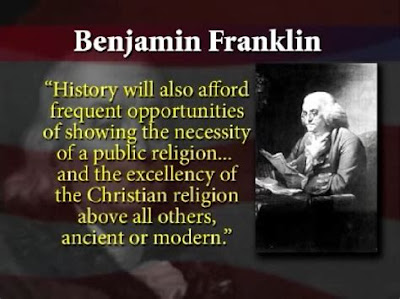
A Few Declarations of Founding Fathers and Early Statesmen on Jesus, Christianity, and the Bible
(This list is by no means exhaustive; many other Founders could be included,
and even with those who appear below, additional quotes could have been used.)John Adams
SIGNER OF THE DECLARATION OF INDEPENDENCE; JUDGE; DIPLOMAT; ONE OF TWO SIGNERS
OF THE BILL OF RIGHTS; SECOND PRESIDENT OF THE UNITED STATESThe general principles on which the fathers achieved independence were the general principles of Christianity. I will avow that I then believed, and now believe, that those general principles of Christianity are as eternal and immutable as the existence and attributes of God.1
Without religion, this world would be something not fit to be mentioned in polite company: I mean hell.2
The Christian religion is, above all the religions that ever prevailed or existed in ancient or modern times, the religion of wisdom, virtue, equity and humanity.3
Suppose a nation in some distant region should take the Bible for their only law book and every member should regulate his conduct by the precepts there exhibited. . . . What a Eutopia – what a Paradise would this region be!4
I have examined all religions, and the result is that the Bible is the best book in the world.5

John Quincy Adams
SIXTH PRESIDENT OF THE UNITED STATES; DIPLOMAT; SECRETARY OF STATE; U. S. SENATOR;
U. S. REPRESENTATIVE; “OLD MAN ELOQUENT”; “HELL-HOUND OF ABOLITION”My hopes of a future life are all founded upon the Gospel of Christ and I cannot cavil or quibble away [evade or object to]. . . . the whole tenor of His conduct by which He sometimes positively asserted and at others countenances [permits] His disciples in asserting that He was God.6The hope of a Christian is inseparable from his faith. Whoever believes in the Divine inspiration of the Holy Scriptures must hope that the religion of Jesus shall prevail throughout the earth. Never since the foundation of the world have the prospects of mankind been more encouraging to that hope than they appear to be at the present time. And may the associated distribution of the Bible proceed and prosper till the Lord shall have made “bare His holy arm in the eyes of all the nations, and all the ends of the earth shall see the salvation of our God” [Isaiah 52:10].7
In the chain of human events, the birthday of the nation is indissolubly linked with the birthday of the Savior. The Declaration of Independence laid the cornerstone of human government upon the first precepts of Christianity.8
Samuel AdamsSIGNER OF THE DECLARATION OF INDEPENDENCE; “FATHER OF THE AMERICAN REVOLUTION”; RATIFIER OF THE U. S. CONSTITUTION; GOVERNOR OF MASSACHUSETTSI . . . [rely] upon the merits of Jesus Christ for a pardon of all my sins.9
The name of the Lord (says the Scripture) is a strong tower; thither the righteous flee and are safe [Proverbs 18:10]. Let us secure His favor and He will lead us through the journey of this life and at length receive us to a better.10
I conceive we cannot better express ourselves than by humbly supplicating the Supreme Ruler of the world . . . that the confusions that are and have been among the nations may be overruled by the promoting and speedily bringing in the holy and happy period when the kingdoms of our Lord and Savior Jesus Christ may be everywhere established, and the people willingly bow to the scepter of Him who is the Prince of Peace.11
He also called on the State of Massachusetts to pray that . . .
- the peaceful and glorious reign of our Divine Redeemer may be known and enjoyed throughout the whole family of mankind.12
- we may with one heart and voice humbly implore His gracious and free pardon through Jesus Christ, supplicating His Divine aid . . . [and] above all to cause the religion of Jesus Christ, in its true spirit, to spread far and wide till the whole earth shall be filled with His glory.13
- with true contrition of heart to confess their sins to God and implore forgiveness through the merits and mediation of Jesus Christ our Savior.14
Josiah Bartlett
MILITARY OFFICER; SIGNER OF THE DECLARATION OF INDEPENDENCE;
JUDGE; GOVERNOR OF NEW HAMPSHIRECalled on the people of New Hampshire . . .
to confess before God their aggravated transgressions and to implore His pardon and forgiveness through the merits and mediation of Jesus Christ . . . [t]hat the knowledge of the Gospel of Jesus Christ may be made known to all nations, pure and undefiled religion universally prevail, and the earth be fill with the glory of the Lord.15Gunning BedfordMILITARY OFFICER; MEMBER OF THE CONTINENTAL CONGRESS;
SIGNER OF THE CONSTITUTION; FEDERAL JUDGETo the triune God – the Father, the Son, and the Holy Ghost – be ascribed all honor and dominion, forevermore – Amen.16Elias BoudinotPRESIDENT OF CONGRESS; SIGNED THE PEACE TREATY TO END THE AMERICAN REVOLUTION; FIRST ATTORNEY ADMITTED TO THE U. S. SUPREME COURT BAR; FRAMER OF THE BILL OF RIGHTS; DIRECTOR OF THE U. S. MINTLet us enter on this important business under the idea that we are Christians on whom the eyes of the world are now turned… [L]et us earnestly call and beseech Him, for Christ’s sake, to preside in our councils. . . . We can only depend on the all powerful influence of the Spirit of God, Whose Divine aid and assistance it becomes us as a Christian people most devoutly to implore. Therefore I move that some minister of the Gospel be requested to attend this Congress every morning . . . in order to open the meeting with prayer.17A letter to his daughter:
You have been instructed from your childhood in the knowledge of your lost state by nature – the absolute necessity of a change of heart and an entire renovation of soul to the image of Jesus Christ – of salvation through His meritorious righteousness only – and the indispensable necessity of personal holiness without which no man shall see the Lord [Hebrews 12:14]. You are well acquainted that the most perfect and consummate doctrinal knowledge is of no avail without it operates on and sincerely affects the heart, changes the practice, and totally influences the will – and that without the almighty power of the Spirit of God enlightening your mind, subduing your will, and continually drawing you to Himself, you can do nothing. . . . And may the God of your parents (for many generations past) seal instruction to your soul and lead you to Himself through the blood of His too greatly despised Son, Who notwithstanding, is still reclaiming the world to God through that blood, not imputing to them their sins. To Him be glory forever!18
For nearly half a century have I anxiously and critically studied that invaluable treasure [the Bible]; and I still scarcely ever take it up that I do not find something new – that I do not receive some valuable addition to my stock of knowledge or perceive some instructive fact never observed before. In short, were you to ask me to recommend the most valuable book in the world, I should fix on the Bible as the most instructive both to the wise and ignorant. Were you to ask me for one affording the most rational and pleasing entertainment to the inquiring mind, I should repeat, it is the Bible; and should you renew the inquiry for the best philosophy or the most interesting history, I should still urge you to look into your Bible. I would make it, in short, the Alpha and Omega of knowledge.19

Jacob BroomLEGISLATOR; SIGNER OF THE CONSTITUTIONA letter to his son, James, attending Princeton University:
I flatter myself you will be what I wish, but don’t be so much flatterer as to relax of your application – don’t forget to be a Christian. I have said much to you on this head, and I hope an indelible impression is made.20
Charles CarrollSIGNER OF THE DECLARATION OF INDEPENDENCE; SELECTED AS DELEGATE TO THE CONSTITUTIONAL CONVENTION; FRAMER OF THE BILL OF RIGHTS; U. S. SENATOROn the mercy of my Redeemer I rely for salvation and on His merits, not on the works I have done in obedience to His precepts.21
Grateful to Almighty God for the blessings which, through Jesus Christ Our Lord, He had conferred on my beloved country in her emancipation and on myself in permitting me, under circumstances of mercy, to live to the age of 89 years, and to survive the fiftieth year of independence, adopted by Congress on the 4th of July 1776, which I originally subscribed on the 2d day of August of the same year and of which I am now the last surviving signer.22
I, Charles Carroll. . . . give and bequeath my soul to God who gave it, my body to the earth, hoping that through and by the merits, sufferings, and mediation of my only Savior and Jesus Christ, I may be admitted into the Kingdom prepared by God for those who love, fear and truly serve Him.23
Congress, 1854The great, vital, and conservative element in our system is the belief of our people in the pure doctrines and the divine truths of the Gospel of Jesus Christ.24Congress, U. S. House Judiciary Committee, 1854Had the people, during the Revolution, had a suspicion of any attempt to war against Christianity, that Revolution would have been strangled in its cradle… In this age, there can be no substitute for Christianity… That was the religion of the founders of the republic and they expected it to remain the religion of their descendants.25John DickinsonSIGNER OF THE CONSTITUTION; GOVERNOR OF PENNSYLVANIA; GOVERNOR OF DELAWARE; GENERAL IN THE AMERICAN REVOLUTIONRendering thanks to my Creator for my existence and station among His works, for my birth in a country enlightened by the Gospel and enjoying freedom, and for all His other kindnesses, to Him I resign myself, humbly confiding in His goodness and in His mercy through Jesus Christ for the events of eternity.26
[Governments] could not give the rights essential to happiness… We claim them from a higher source: from the King of kings, and Lord of all the earth.27
Gabriel DuvallSOLDIER; JUDGE; SELECTED AS DELEGATE TO THE CONSTITUTIONAL CONVENTION;
COMPTROLLER OF THE U. S. TREASURY; U. S. SUPREME COURT JUSTICEI resign my soul into the hands of the Almighty Who gave it, in humble hopes of His mercy through our Savior Jesus Christ.28Benjamin FranklinSIGNER OF THE DECLARATION; DIPLOMAT; PRINTER; SCIENTIST;
SIGNER OF THE CONSTITUTION; GOVERNOR OF PENNSYLVANIAAs to Jesus of Nazareth, my opinion of whom you particularly desire, I think the system of morals and His religion as He left them to us, the best the world ever saw or is likely to see.29The body of Benjamin Franklin, printer, like the cover of an old book, its contents torn out and stripped of its lettering and guilding, lies here, food for worms. Yet the work itself shall not be lost; for it will, as he believed, appear once more in a new and more beatiful edition, corrected and amended by the Author.30 (FRANKLIN’S EULOGY THAT HE WROTE FOR HIMSELF)
Elbridge GerrySIGNER OF THE DECLARATION OF INDEPENDENCE;
MEMBER OF THE CONSTITUTIONAL CONVENTION; FRAMER OF THE BILL OF RIGHTS,
GOVERNOR OF MASSACHUSETTS, VICE PRESIDENT OF THE UNITED STATESHe called on the State of Massachusetts to pray that . . .- with one heart and voice we may prostrate ourselves at the throne of heavenly grace and present to our Great Benefactor sincere and unfeigned thanks for His infinite goodness and mercy towards us from our birth to the present moment for having above all things illuminated us by the Gospel of Jesus Christ, presenting to our view the happy prospect of a blessed immortality.31
- And for our unparalleled ingratitude to that Adorable Being Who has seated us in a land irradiated by the cheering beams of the Gospel of Jesus Christ . . . let us fall prostrate before offended Deity, confess sincerely and penitently our manifold sins and our unworthiness of the least of His Divine favors, fervently implore His pardon through the merits of our mediator.32
- And deeply impressed with a scene of our unparalleled ingratitude, let us contemplate the blessings which have flowed from the unlimited grave and favor of offended Deity, that we are still permitted to enjoy the first of Heaven’s blessings: the Gospel of Jesus Christ. 33
Alexander HamiltonREVOLUTIONARY GENERAL; SIGNER OF THE CONSTITUTION;
AUTHOR OF THE FEDERALIST PAPERS; SECRETARY OF THE TREASURYFollowing his duel with Aaron Burr, in those final twenty four hours while life still remained in him, Hamilton called for two ministers, the Rev. J. M. Mason and the Rev. Benjamin Moore, to pray with him and administer Communion to him. Each of those two ministers reported what transpired. The Rev. Mason recounted:[General Hamilton said] “I went to the field determined not to take his life.” He repeated his disavowal of all intention to hurt Mr. Burr; the anguish of his mind in recollecting what had passed; and his humble hope of forgiveness from his God. I recurred to the topic of the Divine compassion; the freedom of pardon in the Redeemer Jesus to perishing sinners. “That grace, my dear General, which brings salvation, is rich, rich” – “Yes,” interrupted he, “it is rich grace.” “And on that grace,” continued I, “a sinner has the highest encouragement to repose his confidence, because it is tendered to him upon the surest foundation; the Scrip¬ture testifying that we have redemption through the blood of Jesus, the forgiveness of sins according to the richness of His grace.” Here the General, letting go my hand, which he had held from the moment I sat down at his bed side, clasped his hands together, and, looking up towards Heaven, said, with emphasis, “I have a tender reliance on the mercy of the Al¬mighty, through the merits of the Lord Jesus Christ.” 34
The Rev. Benjamin Moore reported:
[I]mmediately after he was brought from [the field] . . . a mes¬sage was sent informing me of the sad event, accompanied by a request from General Hamilton that I would come to him for the purpose of administering the Holy Communion. I went. . . . I proceeded to converse with him on the subject of his receiving the Communion; and told him that with respect to the qualifications of those who wished to become partakers of that holy ordinance, my inquires could not be made in lan¬guage more expressive than that which was used by our [own] Church. – [I asked], “Do you sincerely repent of your sins past? Have you a lively faith in God’s mercy through Christ, with a thankful remembrance of the death of Christ? And are you disposed to live in love and charity with all men?” He lifted up his hands and said, “With the utmost sincerity of heart I can answer those questions in the affirmative – I have no ill will against Col. Burr. I met him with a fixed resolution to do him no harm – I forgive all that happened.” . . . The Communion was then administered, which he received with great devotion, and his heart afterwards appeared to be perfectly at rest. I saw him again this morning, when, with his last faltering words, he expressed a strong confidence in the mercy of God through the intercession of the Redeemer. I remained with him until 2 o’clock this afternoon, when death closed the awful scene – he expired without a struggle, and almost without a groan. By reflecting on this melancholy event, let the humble believer be encouraged ever to hold fast that precious faith which is the only source of true consolation in the last extremity of nature. [And l]et the infidel be persuaded to abandon his opposition to that Gospel which the strong, inquisitive, and comprehensive mind of a Hamilton embraced.35
One other consequence of Hamilton’s untimely death was that it permanently halted the formation of a religious society Hamilton had proposed. Hamilton suggested that it be named the Christian Constitutional Society, and listed two goals for its formation: first, the support of the Christian religion; and second, the support of the Constitution of the United States. This or¬ganization was to have numerous clubs throughout each state which would meet regularly and work to elect to office those who reflected the goals of the Christian Constitutional Society. 36

John HancockSIGNER OF THE DECLARATION OF INDEPENDENCE; PRESIDENT OF CONGRESS;
REVOLUTIONARY GENERAL; GOVERNOR OF MASSACHUSETTSSensible of the importance of Christian piety and virtue to the order and happiness of a state, I cannot but earnestly commend to you every measure for their support and encouragement.37He called on the entire state to pray “that universal happiness may be established in the world [and] that all may bow to the scepter of our Lord Jesus Christ, and the whole earth be filled with His glory.”38
He also called on the State of Massachusetts to pray . . .
- that all nations may bow to the scepter of our Lord and Savior Jesus Christ and that the whole earth may be filled with his glory.39
- that the spiritual kingdom of our Lord and Savior Jesus Christ may be continually increasing until the whole earth shall be filled with His glory.40
- to confess their sins and to implore forgiveness of God through the merits of the Savior of the World.41
- to cause the benign religion of our Lord and Savior Jesus Christ to be known, understood, and practiced among all the inhabitants of the earth.42
- to confess their sins before God and implore His forgiveness through the merits and mediation of Jesus Christ, our Lord and Savior.43
- that He would finally overrule all events to the advancement of the Redeemer’s kingdom and the establishment of universal peace and good will among men.44
- that the kingdom of our Lord and Savior Jesus Christ may be established in peace and righteousness among all the nations of the earth.45
- that with true contrition of heart we may confess our sins, resolve to forsake them, and implore the Divine forgiveness, through the merits and mediation of Jesus Christ, our Savior. . . . And finally to overrule all the commotions in the world to the spreading the true religion of our Lord Jesus Christ in its purity and power among all the people of the earth.46
John HartJUDGE; LEGISLATOR; SIGNER OF THE DECLARATION[T]hanks be given unto Almighty God therefore, and knowing that it is appointed for all men once to die and after that the judgment [Hebrews 9:27] . . . principally, I give and recommend my soul into the hands of Almighty God who gave it and my body to the earth to be buried in a decent and Christian like manner . . . to receive the same again at the general resurrection by the mighty power of God.47Patrick HenryREVOLUTIONARY GENERAL; LEGISLATOR; “THE VOICE OF LIBERTY”;
RATIFIER OF THE U. S. CONSTITUTION; GOVERNOR OF VIRGINIABeing a Christian… is a character which I prize far above all this world has or can boast.48The Bible… is a book worth more than all the other books that were ever printed.49
Righteousness alone can exalt [America] as a nation…Whoever thou art, remember this; and in thy sphere practice virtue thyself, and encourage it in others.50
The great pillars of all government and of social life [are] virtue, morality, and religion. This is the armor, my friend, and this alone, that renders us invincible.51
This is all the inheritance I can give to my dear family. The religion of Christ can give them one which will make them rich indeed.52
Samuel HuntingtonSIGNER OF THE DECLARATION OF INDEPENDENCE; PRESIDENT OF CONGRESS;
JUDGE; GOVERNOR OF CONNECTICUTIt becomes a people publicly to acknowledge the over-ruling hand of Divine Providence and their dependence upon the Supreme Being as their Creator and Merciful Preserver . . . and with becoming humility and sincere repentance to supplicate the pardon that we may obtain forgiveness through the merits and mediation of our Lord and Savior Jesus Christ.53James IredellRATIFIER OF THE U. S. CONSTITUTION; ATTORNEY GENERAL OF NORTH CAROLINA;
U. S. SUPREME COURT JUSTICE APPOINTED BY PRESIDENT GEORGE WASHINGTONFor my part, I am free and ready enough to declare that I think the Christian religion is a Divine institution; and I pray to God that I may never forget the precepts of His religion or suffer the appearance of an inconsistency in my principles and practice.54John JayPRESIDENT OF CONGRESS; DIPLOMAT; AUTHOR OF THE FEDERALIST PAPERS;
ORIGINAL CHIEF JUSTICE OF THE U. S. SUPREME COURT; GOVERNOR OF NEW YORKCondescend, merciful Father! to grant as far as proper these imperfect petitions, to accept these inadequate thanksgivings, and to pardon whatever of sin hath mingled in them for the sake of Jesus Christ, our blessed Lord and Savior; unto Whom, with Thee, and the blessed Spirit, ever one God, be rendered all honor and glory, now and forever. 55Unto Him who is the author and giver of all good, I render sincere and humble thanks for His manifold and unmerited blessings, and especially for our redemption and salvation by His beloved Son. . . . Blessed be His holy name.56
Mercy and grace and favor did come by Jesus Christ, and also that truth which verified the promises and predictions concerning Him and which exposed and corrected the various errors which had been imbibed respecting the Supreme Being, His attributes, laws, and dispensations.57
By conveying the Bible to people . . . we certainly do them a most interesting act of kindness. We thereby enable them to learn that man was originally created and placed in a state of happiness, but, becoming disobedient, was subjected to the degradation and evils which he and his posterity have since experienced. The Bible will also inform them that our gracious Creator has provided for us a Redeemer in whom all the nations of the earth should be blessed – that this Redeemer has made atonement “for the sins of the whole world,” and thereby reconciling the Divine justice with the Divine mercy, has opened a way for our redemption and salvation; and that these inestimable benefits are of the free gift and grace of God, not of our deserving, nor in our power to deserve. The Bible will also [encourage] them with many explicit and consoling assurances of the Divine mercy to our fallen race, and with repeated invitations to accept the offers of pardon and reconciliation. . . . They, therefore, who enlist in His service, have the highest encouragement to fulfill the du¬ties assigned to their respective stations; for most certain it is, that those of His followers who [participate in] His conquests will also participate in the tran¬scendent glories and blessings of His Triumph.58
I recommend a general and public return of praise and thanksgiving to Him from whose goodness these blessings descend. The most effectual means of securing the continuance of our civil and religious liberties is always to remember with reverence and gratitude the source from which they flow.59
The Bible is the best of all books, for it is the word of God and teaches us the way to be happy in this world and in the next. Continue therefore to read it and to regulate your life by its precepts.60
[T]he evidence of the truth of Christianity requires only to be carefully examined to produce conviction in candid minds… they who undertake that task will derive advantages.61
Providence has given to our people the choice of their rulers, and it is the duty as well as the privilege and interest of our Christian nation, to select and prefer Christians for their rulers.62
Thomas JeffersonSIGNER OF THE DECLARATION OF INDEPENDENCE; DIPLOMAT; GOVERNOR OF VIRGINIA; SECRETARY OF STATE; THIRD PRESIDENT OF THE UNITED STATESThe doctrines of Jesus are simple, and tend all to the happiness of man.63
The practice of morality being necessary for the well being of society, He [God] has taken care to impress its precepts so indelibly on our hearts that they shall not be effaced by the subtleties of our brain. We all agree in the obligation of the moral principles of Jesus and nowhere will they be found delivered in greater purity than in His discourses.64
I am a Christian in the only sense in which He wished anyone to be: sincerely attached to His doctrines in preference to all others.65
I am a real Christian – that is to say, a disciple of the doctrines of Jesus Christ.66
William Samuel JohnsonJUDGE; MEMBER OF THE CONTINENTAL CONGRESS; SIGNER OF THE CONSTITUTION;
FRAMER OF THE BILL OF RIGHTS; PRESIDENT OF COLUMBIA COLLEGE; U. S. SENATOR[I] . . . am endeavoring . . . to attend to my own duty only as a Christian. . . . let us take care that our Christianity, though put to the test . . . be not shaken, and that our love for things really good wax not cold.67In an address to graduates:
You this day. . . . have, by the favor of Providence and the at¬tention of friends, received a public education, the purpose whereof hath been to qualify you the better to serve your Creator and your country. You have this day invited this au¬dience to witness the progress you have made. . . . Thus you assume the character of scholars, of men, and of citizens. . . . Go, then, . . . and exercise them with diligence, fidelity, and zeal. . . . Your first great duties, you are sensible, are those you owe to Heaven, to your Creator and Redeemer. Let these be ever present to your minds, and exemplified in your lives and conduct. Imprint deep upon your minds the principles of piety towards God, and a reverence and fear of His holy name. The fear of God is the beginning of wisdom and its [practice] is everlasting [happiness] . . . . Reflect deeply and often upon [your] relations [with God]. Remember that it is in God you live and move and have your being, – that, in the language of David, He is about your bed and about your path and spieth out all your ways – that there is not a thought in your hearts, nor a word upon your tongues, but lo! He knoweth them altogether, and that He will one day call you to a strict account for all your conduct in this mortal life. Remember, too, that you are the redeemed of the Lord, that you are bought with a price, even the inestimable price of the precious blood of the Son of God. Adore Jehovah, therefore, as your God and your Judge. Love, fear, and serve Him as your Creator, Redeemer, and Sanctifier. Acquaint yourselves with Him in His word and holy ordinances. . . . [G]o forth into the world firmly resolved neither to be allured by its vanities nor contaminated by its vices, but to run with patience and perseverance, with firmness and [cheerfulness], the glorious career of religion, honor, and virtue. . . . Finally, . . . in the elegant and expressive language are honest, whatsoever things are just, whatsoever things are pure, whatsoever things are lovely, whatsoever things are of good report, if there be any virtue, and if there be any praise, think on these things” – and do them, and the God of peace shall be with you, to whose most gracious protection I now commend you, humbly imploring Almighty Goodness that He will be your guardian and your guide, your protector and the rock of your defense, your Savior and your God.68
James KentJUDGE; LAW PROFESSOR; “FATHER OF AMERICAN JURISPRUDENCE”My children, I wish to talk to you. During my early and middle life I was, perhaps, rather skeptical with regard to some of the truths of Christianity. Not that I did not have the utmost respect for religion and always read my Bible, but the doctrine of the atonement was one I never could understand, and I felt inclined to consider as impossible to be received in the way Divines taught it. I believe I was rather inclined to Unitarianism; but of late years my views have altered. I believe in the doctrines of the prayer books as I understand them, and hope to be saved through the merits of Jesus Christ. . . . My object in telling you this is that if anything happens to me, you might know, and perhaps it would console you to remember, that on this point my mind is clear: I rest my hopes of salvation on the Lord Jesus Christ.69Francis Scott KeyU. S. ATTORNEY FOR THE DISTRICT OF COLUMBIA;
AUTHOR OF THE “STAR SPANGLED BANNER”[M]ay I always hear that you are following the guidance of that blessed Spirit that will lead you into all truth, leaning on that Almighty arm that has been extended to deliver you, trusting only in the only Savior, and going on in your way to Him rejoicing.70James Madison’SIGNER OF THE CONSTITUTION; AUTHOR OF THE FEDERALIST PAPERS; FRAMER OF THE
BILL OF RIGHTS; SECRETARY OF STATE; FOURTH PRESIDENT OF THE UNITED STATESA watchful eye must be kept on ourselves lest, while we are building ideal monuments of renown and bliss here, we neglect to have our names enrolled in the Annals of Heaven.71I have sometimes thought there could not be a stronger testimony in favor of religion or against temporal enjoyments, even the most rational and manly, than for men who occupy the most honorable and gainful departments and [who] are rising in reputation and wealth, publicly to declare their unsatisfactoriness by becoming fervent advocates in the cause of Christ; and I wish you may give in your evidence in this way.72
James ManningMEMBER OF THE CONTINENTAL CONGRESS; PRESIDENT OF BROWN UNIVERSITY
I rejoice that the religion of Jesus prevails in your parts; I can tell you the same agreeable news from this quarter. Yesterday I returned from Piscataway in East Jersey, where was held a Baptist annual meeting (I think the largest I ever saw) but much more remarkable still for the Divine influences which God was pleased to grant. Fifteen were baptized; a number during the three days professed to experience a change of heart. Christians were remarkably quickened; multitudes appeared.73
Henry MarchantMEMBER OF THE CONTINENTAL CONGRESS; ATTORNEY GENERAL OF RHODE ISLAND; RATIFIER OF THE U. S. CONSTITUTION; FEDERAL JUDGE APPOINTED BY PRESIDENT GEORGE WASHINGTON
And may God grant that His grace may really affect your heart with suitable impressions of His goodness. Remember that God made you, that God keeps you alive and preserves you from all harm, and gives you all the powers and the capacity whereby you are able to read of Him and of Jesus Christ, your Savior and Redeemer, and to do every other needful business of life. And while you look around you and see the great privileges and advantages you have above what other children have (of learning to read and write, of being taught the meaning of the great truths of the Bible), you must remember not to be proud on that account but to bless God and be thankful and endeavor in your turn to assist others with the knowledge you may gain.74(to his daughter)
George MasonDELEGATE AT THE CONSTITUTIONAL CONVENTION; “FATHER OF THE BILL OF RIGHTS”I give and bequeath my soul to Almighty God that gave it me, hoping that through the meritorious death and passion of our Savior and Redeemer Jesus Christ to receive absolution and remission for all my sins.75
My soul I resign into the hands of my Almighty Creator, Whose tender mercies are all over His works. . humbly hoping from His unbounded mercy and benevolence, through the merits of my blessed Savior, a remission of my sins.76
James McHenryREVOLUTIONARY OFFICER; SIGNER OF THE CONSTITUTION; RATIFIER OF THE U. S. CONSTITUTION;
SECRETARY OF WAR UNDER PRESIDENTS GEORGE WASHINGTON AND JOHN ADAMS[P]ublic utility pleads most forcibly for the general distribution of the Holy Scriptures. Without the Bible, in vain do we increase penal laws and draw entrenchments around our institutions.77Bibles are strong protections. Where they abound, men cannot pursue wicked courses and at the same time enjoy quiet conscience.78
Thomas McKeanSIGNER OF THE DECLARATION OF INDEPENDENCE; PRESIDENT OF CONGRESS;
RATIFIER OF THE U. S. CONSTITUTION; CHIEF JUSTICE OF THE SUPREME COURT OF PENNSYLVANIA;
GOVERNOR OF PENNSYLVANIA; GOVERNOR OF DELAWAREIn the case Respublica v. John Roberts,79 John Roberts was sentenced to death after a jury found him guilty of treason. Chief Justice McKean then told him:You will probably have but a short time to live. Before you launch into eternity, it be¬hooves you to improve the time that may be allowed you in this world: it behooves you most seriously to reflect upon your past conduct; to repent of your evil deeds; to be incessant in prayers to the great and merciful God to forgive your manifold transgressions and sins; to teach you to rely upon the merit and passion of a dear Redeemer, and thereby to avoid those regions of sorrow – those doleful shades where peace and rest can never dwell, where even hope cannot enter. It behooves you to seek the [fellowship], advice, and prayers of pious and good men; to be [persistent] at the Throne of Grace, and to learn the way that leadeth to happiness. May you, reflecting upon these things, and pursuing the will of the great Father of light and life, be received into [the] company and society of angels and archangels and the spirits of just men made perfect; and may you be qualified to enter into the joys of Heaven – joys unspeakable and full of glory!80
Gouverneur MorrisREVOLUTIONARY OFFICER; MEMBER OF THE CONTINENTAL CONGRESS;
SIGNER OF THE CONSTITUTION; “PENMAN OF THE CONSTITUTION”; DIPLOMAT; U. S. SENATORThere must be religion. When that ligament is torn, society is disjointed and its members perish… [T]he most important of all lessons is the denunciation of ruin to every state that rejects the precepts of religion.81Your good morals in the army give me sincere pleasure as it hath long been my fixed opinion that virtue and religion are the great sources of human happiness. More especially is it necessary in your profession firmly to rely upon the God of Battles for His guardianship and protection in the dreadful hour of trial. But of all these things you will and I hope in the merciful Lord.82
Jedidiah MorseHISTORIAN OF THE AMERICAN REVOLUTION; EDUCATOR; “FATHER OF AMERICAN GEOGRAPHY”;
APPOINTED BY SECRETARY OF STATE TO DOCUMENT CONDITION OF INDIAN AFFAIRSTo the kindly influence of Christianity we owe that degree of civil freedom and political and social happiness which mankind now enjoys. All efforts made to destroy the foundations of our Holy Religion ultimately tend to the subversion also of our political freedom and happiness. In proportion as the genuine effects of Christianity are diminished in any nation… in the same proportion will the people of that nation recede from the blessings of genuine freedom… Whenever the pillars of Christianity shall be overthrown, our present republican forms of government – and all the blessings which flow from them – must fall with them. 83John MortonLEGISLATOR; JUDGE; SIGNER OF THE DECLARATIONWith an awful reverence to the Great Almighty God, Creator of all mankind, being sick and weak in body but of sound mind and memory, thanks be given to Almighty God for the same.84James OtisLEADER OF THE SONS OF LIBERTY; ATTORNEY & JURIST;
MENTOR OF JOHN HANCOCK AND SAMUEL ADAMSHas [government] any solid foundation? Any chief cornerstone?… I think it has an everlasting foundation in the unchangeable will of God… The sum of my argument is that civil government is of God.85Robert Treat PaineMILITARY CHAPLAIN; SIGNER OF THE DECLARATION OF INDEPENDENCE;
ATTORNEY GENERAL OF MASSACHUSETTS; JUDGEI desire to bless and praise the name of God most high for appointing me my birth in a land of Gospel Light where the glorious tidings of a Savior and of pardon and salvation through Him have been continually sounding in mine ears.86I am constrained to express my adoration of the Supreme Being, the Author of my existence, in full belief of His Providential goodness and His forgiving mercy revealed to the world through Jesus Christ, through whom I hope for never ending happiness in a future state.87
I believe the Bible to be the written word of God and to contain in it the whole rule of faith and manners.88
William PatersonATTORNEY GENERAL OF NEW JERSEY; SIGNER OF THE CONSTITUTION; U. S. SENATOR;
GOVERNOR OF NEW JERSEY; U. S. SUPREME COURT JUSTICEWhen the righteous rule, the people rejoice; when the wicked rule, the people groan. [invoking Proverbs 29:2 to instruct a grand jury].89Timothy PickeringREVOLUTIONARY GENERAL; JUDGE; RATIFIER OF THE U. S. CONSTITUTION;
POSTMASTER GENERAL UNDER PRESIDENT GEORGE WASHINGTON;
SECRETARY OF WAR UNDER PRESIDENTS GEORGE WASHINGTON AND JOHN ADAMS;
SECRETARY OF STATE UNDER PRESIDENT JOHN ADAMSPardon, we beseech Thee, all our offences of omission and commission; and grant that in all our thoughts, words, and actions, we may conform to Thy known will manifested in our consciences and in the revelations of Jesus Christ, our Savior.90[W]e do not grieve as those who have no… resurrection to a life immortal. Here the believers in Christianity manifest their superior advantages, for life and immortality were brought to light by the gospel of Jesus Christ [II Timothy 1:10]. Prior to that revelation even the wisest and best of mankind were involved in doubt and they hoped, rather than believed, that the soul was immortal.91
Charles Cotesworth PinckneyREVOLUTIONARY GENERAL; LEGISLATOR; SIGNER OF THE CONSTITUTION; DIPLOMATTo the eternal and only true God be all honor and glory, now and forever. Amen!92John Randolph of RoanokeCONGRESSMAN UNDER PRESIDENTS JOHN ADAMS, THOMAS JEFFERSON, JAMES MADISON,
JAMES MONROE, JOHN QUINCY ADAMS, ANDREW JACKSON; U. S. SENATOR; DIPLOMATI have thrown myself, reeking with sin, on the mercy of God, through Jesus Christ His blessed Son and our (yes, my friend, our) precious Redeemer; and I have assurances as strong as that I now owe nothing to your rank that the debt is paid and now I love God – and with reason. I once hated him – and with reason, too, for I knew not Christ. The only cause why I should love God is His goodness and mercy to me through Christ.93I am at last reconciled to my God and have assurance of His pardon through faith in Christ, against which the very gates of hell cannot prevail. Fear hath been driven out by perfect love.94
[I] have looked to the Lord Jesus Christ, and hope I have obtained pardon.95[I] still cling to the cross of my Redeemer, and with God’s aid firmly resolve to lead a life less unworthy of one who calls himself the humble follower of Jesus Christ.96
Benjamin RushSIGNER OF THE DECLARATION OF INDEPENDENCE; SURGEON GENERAL OF THE CONTINENTAL ARMY; RATIFIER OF THE U. S. CONSTITUTION; “FATHER OF AMERICAN MEDICINE”;
TREASURER OF THE U. S. MINT; “FATHER OF PUBLIC SCHOOLS UNDER THE CONSTITUTION”The Gospel of Jesus Christ prescribes the wisest rules for just conduct in every situation of life. Happy they who are enabled to obey them in all situations! . . . My only hope of salvation is in the infinite tran¬scendent love of God manifested to the world by the death of His Son upon the Cross. Noth¬ing but His blood will wash away my sins [Acts 22:16]. I rely exclusively upon it. Come, Lord Jesus! Come quickly! [Revelation 22:20]97I do not believe that the Constitution was the offspring of inspiration, but I am as satisfied that it is as much the work of a Divine Providence as any of the miracles recorded in the Old and New Testament.98
By renouncing the Bible, philosophers swing from their moorings upon all moral subjects… It is the only correct map of the human heart that ever has been published.99
[T]he greatest discoveries in science have been made by Christian philosophers and . . . there is the most knowledge in those countries where there is the most Christianity.100[T]he only means of establishing and perpetuating our republican forms of government is the universal education of our youth in the principles of Christianity by means of the Bible.101
The great enemy of the salvation of man, in my opinion, never invented a more effective means of limiting Christianity from the world than by persuading mankind that it was improper to read the Bible at schools.102
[C]hristianity is the only true and perfect religion; and… in proportion as mankind adopt its principles and obey its precepts, they will be wise and happy.103
The Bible contains more knowledge necessary to man in his present state than any other book in the world.104
The Bible, when not read in schools, is seldom read in any subsequent period of life… [T]he Bible… should be read in our schools in preference to all other books because it contains the greatest portion of that kind of knowledge which is calculated to produce private and public happiness.105
Roger ShermanSIGNER OF THE DECLARATION; SIGNER OF THE CONSTITUTION; “MASTER BUILDER OF THE CONSTITUTION”; JUDGE; FRAMER OF THE BILL OF RIGHTS; U. S. SENATORI believe that there is one only liv¬ing and true God, existing in three persons, the Father, the Son, and the Holy Ghost, the same in substance, equal in power and glory. That the Scriptures of the Old and New Testaments are a revelation from God, and a complete rule to direct us how we may glorify and enjoy Him. . . . That He made man at first perfectly holy; that the first man sinned, and as he was the public head of his posterity, they all became sinners in consequence of his first transgression, are wholly indisposed to that which is good and inclined to evil, and on account of sin are liable to all the miseries of this life, to death, and to the pains of hell forever. I believe that God . . . did send His own Son to become man, die in the room and stead of sinners, and thus to lay a foundation for the offer of pardon and salvation to all mankind, so as all may be saved who are willing to accept the Gospel offer. . . . I believe a visible church to be a congregation of those who make a credible profession of their faith in Christ, and obedience to Him, joined by the bond of the covenant. . . . I believe that the sacraments of the New Testament are baptism and the Lord’s Supper. . . . I believe that the souls of believers are at their death made perfectly holy, and immediately taken to glory: that at the end of this world there will be a resurrection of the dead, and a final judgment of all mankind, when the righteous shall be publicly acquitted by Christ the Judge and admitted to everlasting life and glory, and the wicked be sentenced to everlasting punishment.106
God commands all men everywhere to repent. He also commands them to believe on the Lord Jesus Christ, and has assured us that all who do repent and believe shall be saved… [G]od… has absolutely promised to bestow them on all these who are willing to accept them on the terms of the Gospel – that is, in a way of free grace through the atonement. “Ask and ye shall receive [John 16:24]. Whosoever will, let him come and take of the waters of life freely [Revelation 22:17]. Him that cometh unto me I will in no wise cast out” [John 6:37].107
[I]t is the duty of all to acknowledge that the Divine Law which requires us to love God with all our heart and our neighbor as ourselves, on pain of eternal damnation, is Holy, just, and good. . . . The revealed law of God is the rule of our duty.108
True Christians are assured that no temptation (or trial) shall happen to them but what they shall be enabled to bear; and that the grace of Christ shall be sufficient for them.109
“The volume which he consulted more than any other was the Bible. It was his custom, at the commencement of every session of Congress, to purchase a copy of the Scriptures, to peruse it daily, and to present it to one of his children on his return.”110
Richard StocktonJUDGE; SIGNER OF THE DECLARATION OF INDEPENDENCE[A]s my children will have frequent occasion of perusing this instrument, and may probably be particularly impressed with the last words of their father, I think it proper here not only to subscribe to the entire belief of the great and leading doctrines of the Christian religion, such as the being of God; the universal defection and depravity of human nature; the Divinity of the person and the completeness of the redemption purchased by the blessed Savior; the necessity of the operations of the Divine Spirit; of Divine faith accompanied with an habitual virtuous life; and the universality of the Divine Providence: but also, in the bowels of a father’s affection, to exhort and charge [my children] that the fear of God is the beginning of wisdom, that the way of life held up in the Christian system is calculated for the most complete happiness that can be enjoyed in this mortal state, [and] that all occasions of vice and immorality is injurious either immediately or consequentially – even in this life.111Thomas StoneSIGNER OF THE DECLARATION OF INDEPENDENCE;
SELECTED AS A DELEGATE TO THE CONSTITUTIONAL CONVENTIONShun all giddy, loose, and wicked company; they will corrupt and lead you into vice and bring you to ruin. Seek the company of sober, virtuous and good people… which will lead [you] to solid happiness.112Joseph StoryU. S. CONGRESSMAN; “FATHER OF AMERICAN JURISPRUDENCE”;
U. S. SUPREME COURT JUSTICE APPOINTED BY PRESIDENT JAMES MADISONOne of the beautiful boasts of our municipal jurisprudence is that Christianity is a part of the Common Law. There never has been a period in which the Common Law did not recognize Christianity as lying at its foundations.113I verily believe that Christianity is necessary to support a civil society and shall ever attend to its institutions and acknowledge its precepts as the pure and natural sources of private and social happiness.114
Caleb StrongDELEGATE AT THE CONSTITUTIONAL CONVENTION TO FRAME THE U. S. CONSTITUTION;
RATIFIER OF THE CONSTITUTION; U. S. SENATOR; GOVERNOR OF MASSACHUSETTSHe called on the State of Massachusetts to pray that . . .
all nations may know and be obedient to that grace and truth which came by Jesus Christ.115Zephaniah SwiftU. S. CONGRESSMAN; DIPLOMAT; JUDGE; AUTHOR OF AMERICA’S FIRST LEGAL TEXT (1795)Jesus Christ has in the clearest manner inculcated those duties which are productive of the highest moral felicity and consistent with all the innocent enjoyments, to which we are impelled by the dictates of nature. Religion, when fairly considered in its genuine simplicity and uncorrupted state, is the source of endless rapture and delight.116Charles ThomsonSECRETARY OF THE CONTINENTAL CONGRESS;
DESIGNER OF THE GREAT SEAL OF THE UNITED STATES; ALONG WITH JOHN HANCOCK,
THOMSON WAS ONE OF ONLY TWO FOUNDERS TO SIGN THE INITIAL DRAFT OF
THE DECLARATION OF INDEPENDENCE APPROVED BY CONGRESSI am a Christian. I believe only in the Scriptures, and in Jesus Christ my Savior.117Jonathan TrumbullJUDGE; LEGISLATOR; GOVERNOR OF CONNECTICUT;
CONFIDANT OF GEORGE WASHINGTON AND CALLED “BROTHER JONATHAN” BY HIMThe examples of holy men teach us that we should seek Him with fasting and prayer, with penitent confession of our sins, and hope in His mercy through Jesus Christ the Great Redeemer.118Principally and first of all, I bequeath my soul to God the Creator and giver thereof, and my body to the earth to be buried in a decent Christian burial, in firm belief that I shall receive the same again at the general resurrection through the power of Almighty God, and hope of eternal life and happiness through the merits of my dear Redeemer Jesus Christ.119
He called on the State of Connecticut to pray that . . .
God would graciously pour out His Spirit upon us and make the blessed Gospel in His hand effectual to a thorough reformation and general revival of the holy and peaceful religion of Jesus Christ.120
George WashingtonJUDGE; MEMBER OF THE CONTINENTAL CONGRESS;
COMMANDER-IN-CHIEF OF THE CONTINENTAL ARMY;
PRESIDENT OF THE CONSTITUTIONAL CONVENTION;
FIRST PRESIDENT OF THE UNITED STATES; “FATHER OF HIS COUNTRY”You do well to wish to learn our arts and ways of life, and above all, the religion of Jesus Christ. These will make you a greater and happier people than you are.121While we are zealously performing the duties of good citizens and soldiers, we certainly ought not to be inattentive to the higher duties of religion. To the distinguished character of Patriot, it should be our highest glory to add the more distinguished character of Christian.122
The blessing and protection of Heaven are at all times necessary but especially so in times of public distress and danger. The General hopes and trusts that every officer and man will endeavor to live and act as becomes a Christian soldier, defending the dearest rights and liberties of his country.123
I now make it my earnest prayer that God would… most graciously be pleased to dispose us all to do justice, to love mercy, and to demean ourselves with that charity, humility, and pacific temper of the mind which were the characteristics of the Divine Author of our blessed religion.124
Daniel WebsterU. S. SENATOR; SECRETARY OF STATE; “DEFENDER OF THE CONSTITUTION”[T]he Christian religion – its general principles – must ever be regarded among us as the foundation of civil society.125
Whatever makes men good Christians, makes them good citizens.126
[T]o the free and universal reading of the Bible… men [are] much indebted for right views of civil liberty.127
The Bible is a book… which teaches man his own individual responsibility, his own dignity, and his equality with his fellow man.128
Noah WebsterREVOLUTIONARY SOLDIER; JUDGE; LEGISLATOR; EDUCATOR; “SCHOOLMASTER TO AMERICA”[T]he religion which has introduced civil liberty is the religion of Christ and His apostles… This is genuine Christianity and to this we owe our free constitutions of government.129
The moral principles and precepts found in the Scriptures ought to form the basis of all our civil constitutions and laws.130
All the… evils which men suffer from vice, crime, ambition, injustice, oppression, slavery and war, proceed from their despising or neglecting the precepts contained in the Bible.131
[O]ur citizens should early understand that the genuine source of correct republican principles is the Bible, particularly the New Testament, or the Christian religion.132[T]he Christian religion is the most important and one of the first things in which all children under a free government ought to be instructed. No truth is more evident than that the Christian religion must be the basis of any government intended to secure the rights and privileges of a free people.133
The Bible is the chief moral cause of all that is good and the best corrector of all that is evil in human society – the best book for regulating the temporal concerns of men.134
[T]he Christian religion… is the basis, or rather the source, of all genuine freedom in government… I am persuaded that no civil government of a republican form can exist and be durable in which the principles of Christianity have not a controlling influence.135
John WitherspoonSIGNER OF THE DECLARATION OF INDEPENDENCE; RATIFIER OF THE U. S. CONSTITUTION; PRESIDENT OF PRINCETON[C]hrist Jesus – the promise of old made unto the fathers, the hope of Israel [Acts 28:20], the light of the world [John 8:12], and the end of the law for righteousness to every one that believeth [Romans 10:4] – is the only Savior of sinners, in opposition to all false religions and every uninstituted rite; as He Himself says (John 14:6): “I am the way, and the truth, and the life: no man cometh unto the Father but by Me.”136[N]o man, whatever be his character or whatever be his hope, shall enter into rest unless he be reconciled to God though Jesus Christ.137[T]here is no salvation in any other than in Jesus Christ of Nazareth.138
I shall now conclude my discourse by preaching this Savior to all who hear me, and entreating you in the most earnest manner to believe in Jesus Christ; for “there is no salvation in any other” [Acts 4:12].139
It is very evident that both the prophets in the Old Testament and the apostles in the New are at great pains to give us a view of the glory and dignity of the person of Christ. With what magnificent titles is He adorned! What glorious attributes are ascribed to him!… All these conspire to teach us that He is truly and properly God – God over all, blessed forever!140
[I]f you are not rec¬onciled to God through Jesus Christ – if you are not clothed with the spotless robe of His righteousness – you must forever perish.141[H]e is the best friend to American liberty who is the most sincere and active in promoting true and undefiled religion, and who sets himself with the greatest firmness to bear down profanity and immorality of every kind. Whoever is an avowed enemy of God, I scruple not to call him an enemy to his country.142
Oliver WolcottSIGNER OF THE DECLARATION OF INDEPENDENCE; MILITARY GENERAL;
GOVERNOR OF CONNECTICUTThrough various scenes of life, God has sustained me. May He ever be my unfailing friend; may His love cherish my soul; may my heart with gratitude acknowledge His goodness; and may my desires be to Him and to the remembrance of His name….May we then turn our eyes to the bright objects above, and may God give us strength to travel the upward road. May the Divine Redeemer conduct us to that seat of bliss which He himself has prepared for His friends; at the approach of which every sorrow shall vanish from the human heart and endless scenes of glory open upon the enraptured eye. There our love to God and each other will grow stronger, and our pleasures never be dampened by the fear of future separation. How indifferent will it then be to us whether we obtained felicity by travailing the thorny or the agreeable paths of life – whether we arrived at our rest by passing through the envied and unfragrant road of greatness or sustained hardship and unmerited reproach in our journey. God’s Providence and support through the perilous perplexing labyrinths of human life will then forever excite our astonishment and love. May a happiness be granted to those I most tenderly love, which shall continue and increase through an endless existence. Your cares and burdens must be many and great, but put your trust in that God Who has hitherto supported you and me; He will not fail to take care of those who put their trust in Him….It is most evident that this land is under the protection of the Almighty, and that we shall be saved not by our wisdom nor by our might, but by the Lord of Host Who is wonderful in counsel and Almighty in all His operations.143
Endnotes
1.Thomas Jefferson, The Writings of Thomas Jefferson (Washington D. C.: The Thomas Jefferson Memorial Association, 1904), Vol. XIII, p. 292-294. In a letter from John Adams to Thomas Jefferson on June 28, 1813.
2. John Adams, The Works of John Adams, Second President of the United States, Charles Francis Adams, editor (Boston: Little, Brown and Company, 1856), Vol. X, p. 254, to Thomas Jefferson on April 19, 1817.
3. John Adams, Works, Vol. III, p. 421, diary entry for July 26, 1796.
4. John Adams, Works, Vol. II, pp. 6-7, diary entry for February 22, 1756.
5. John Adams, Works, Vol. X, p. 85, to Thomas Jefferson on December 25, 1813.
6. John Adams and John Quincy Adams, The Selected Writings of John and John Quincy Adams, Adrienne Koch and William Peden, editors (New York: Alfred A. Knopf, 1946), p. 292, John Quincy Adams to John Adams, January 3, 1817.
7. Life of John Quincy Adams, W. H. Seward, editor (Auburn, NY: Derby, Miller & Company, 1849), p. 248.
8. John Quincy Adams, An Oration Delivered Before the Inhabitants of the Town of Newburyport at Their Request on the Sixty-First Anniversary of the Declaration of Independence, July 4, 1837 (Newburyport: Charles Whipple, 1837), pp. 5-6.
9. From the Last Will & Testament of Samuel Adams, attested December 29, 1790; see also Samuel Adams, Life & Public Services of Samuel Adams, William V. Wells, editor (Boston: Little, Brown & Co, 1865), Vol. III, p. 379, Last Will and Testament of Samuel Adams.
10. Letters of Delegates to Congress: August 16, 1776-December 31, 1776, Paul H. Smith, editor (Washington DC: Library of Congress, 1979), Vol. 5, pp. 669-670, Samuel Adams to Elizabeth Adams on December 26, 1776.
11. From a Fast Day Proclamation issued by Governor Samuel Adams, Massachusetts, March 20, 1797, in our possession; see also Samuel Adams, The Writings of Samuel Adams, Harry Alonzo Cushing, editor (New York: G. P. Putnam’s Sons, 1908), Vol. IV, p. 407, from his proclamation of March 20, 1797.
12. Samuel Adams, A Proclamation For a Day of Public Fasting, Humiliation and Prayer, given as the Governor of the Commonwealth of Massachusetts, from an original broadside in our possession; see also, Samuel Adams, The Writings of Samuel Adams, Harry Alonzo Cushing, editor (New York: G. P. Putnam’s Sons, 1908), Vol. IV, p. 385, October 14, 1795.
13. Samuel Adams, Proclamation for a Day of Fasting and Prayer, March 10, 1793.
14. Samuel Adams, Proclamation for a Day of Fasting and Prayer, March 15, 1796.
15. Josiah Bartlett, Proclamation for a Day of Fasting and Prayer, March 17, 1792.
16. Gunning Bedford, Funeral Oration Upon the Death of General George Washington (Wilmington: James Wilson, 1800), p. 18, Evans #36922.
17. Elias Boudinot, The Life, Public Services, Addresses, and Letters of Elias Boudinot, J. J. Boudinot, editor (Boston: Houghton, Mifflin & Co., 1896), Vol. I, pp. 19, 21, speech in the First Provincial Congress of New Jersey.
18. Elias Boudinot, The Age of Revelation (Philadelphia: Asbury Dickins, 1801), pp. xii-xiv, from the prefatory remarks to his daughter, Susan, on October 30, 1782; see also Letters of the Delegates to Congress: 1774-1789, Paul H. Smith, editor (Washington, D. C.: Library of Congress, 1992), Vol. XIX, p. 325, from a letter of Elias Boudinot to his daughter, Susan Boudinot, on October 30, 1782; see also, Elias Boudinot, The Life Public Services, Addresses, and Letters of Elias Boudinot (Boston and New York: Houghton, Mifflin, and Company, 1896), Vol. I, p. 260-262.
19. Elias Boudinot, The Age of Revelation, or the Age of Reason Shewn to be An Age of Infidelity (Philadelphia: Asbury Dickins, 1801), p. xv, from his “Dedication: Letter to his daughter Susan Bradford.”
20. Jacob Broom to his son, James, on February 24, 1794, written from Wilmington, Delaware, from an original letter in our possession.
21. From an autograph letter in our possession written by Charles Carroll to Charles W. Wharton, Esq., September 27, 1825.
22. Lewis A. Leonard, Life of Charles Carroll of Carrollton (New York: Moffit, Yard & Co, 1918), pp. 256-257.
23. Kate Mason Rowland, Life of Charles Carroll of Carrollton (New York: G.P. Putnam’s Sons, 1890), Vol. II, pp. 373-374, will of Charles Carroll, Dec. 1, 1718 (later replaced by a subsequent will not containing this phrase, although he reexpressed this sentiment on several subsequent occasions, including repeatedly in the latter years of his life).
24. Journal of the House of the Representatives of the United States of America (Washington, DC: Cornelius Wendell, 1855), 34th Cong., 1st Sess., p. 354, January 23, 1856; see also: Lorenzo D. Johnson, Chaplains of the General Government With Objections to their Employment Considered (New York: Sheldon, Blakeman & Co., 1856), p. 35, quoting from the House Journal, Wednesday, January 23, 1856, and B. F. Morris, The Christian Life and Character of the Civil Institutions of the United States (Philadelphia: George W. Childs, 1864), p. 328.
25. Reports of Committees of the House of Representatives Made During the First Session of the Thirty-Third Congress (Washington: A. O. P. Nicholson, 1854), pp. 6-9.
26. From the Last Will & Testament of John Dickinson, attested March 25, 1808.
27. John Dickinson, The Political Writings of John Dickinson (Wilmington: Bonsal and Niles, 1801), Vol. I, pp. 111-112.
28. From his last will and testament, attested on September 21, 1840.
29. Benjamin Franklin, Works of Benjamin Franklin, John Bigelow, editor (New York: G.P. Putnam’s Sons, 1904), p. 185, to Ezra Stiles, March 9, 1790.
30. Benjamin Franklin, Works of the Late Doctor Benjamin Franklin (Dublin: P. Wogan, P. Byrne, J. More, and W. Janes, 1793), p. 149.
31. Elbridge Gerry, Proclamation for a Day of Thanksgiving and Praise, October 24, 1810, from a proclamation in our possession, EAI #20675.
32. Elbridge Gerry, Proclamation for a Day of Fasting and Prayer, March 13, 1811, from a proclamation in our possession, Shaw #23317.
33. Elbridge Gerry, Proclamation for a Day of Fasting and Prayer, March 6, 1812, from a proclamation in our possession, Shaw #26003.
34. John M. Mason, A Collection of the Facts and Documents Relative to the Death of Major General Alexander Hamilton (New York: Hopkins and Seymour, 1804), p. 53.
35. John M. Mason, A Collection of the Facts and Documents Relative to the Death of Major General Alexander Hamilton (New York: Hopkins and Seymour, 1804), pp. 48-50.
36. Alexander Hamilton, The Works of Alexander Hamilton, John C. Hamilton, editor (New York: John F. Trow, 1851), Vol. VI, p. 542, to James A. Bayard, April, 1802; see also, Alexander Hamilton, The Papers of Alexander Hamilton, Harold C. Syrett, editor (New York: Columbia University Press, 1977), Vol. XXV, p. 606, to James A. Bayard, April 16, 1802.
37. Independent Chronicle (Boston), November 2, 1780, last page; see also Abram English Brown, John Hancock, His Book (Boston: Lee and Shepard, 1898), p. 269.
38. John Hancock, A Proclamation For a Day of Public Thanksgiving 1791, given as Governor of the Commonwealth of Massachusetts, from an original broadside in our possession.
39. John Hancock, Proclamation for a Day of Public Thanksgiving, October 28, 1784, from a proclamation in our possession, Evans #18593.
40. John Hancock, Proclamation for a Day of Public Thanksgiving, October 29, 1788, from a proclamation in our possession, Evans #21237.
41. John Hancock, Proclamation For a Day of Fasting and Prayer, March 16, 1789, from a proclamation in our possession, Evans #21946.
42. John Hancock, Proclamation for a Day of Thanksgiving and Praise, September 16, 1790, from an original broadside in our possession.
43. John Hancock, Proclamation for a Day of Fasting and Prayer, February 11, 1791, from a proclamation in our possession, Evans #23549.
44. John Hancock, Proclamation for a Day of Fasting, Prayer and Humiliation, February 24, 1792, from a proclamation in our possession, Evans #24519.
45. John Hancock, Proclamation for a Day of Public Thanksgiving, October 25, 1792, from an original broadside in our possession.
46. John Hancock, Proclamation for Day of Public Fasting, Humiliation and Prayer, March 4, 1793, from a broadside in our possession.
47. From his last will and testament, attested April 16, 1779.
48. A. G. Arnold, The Life of Patrick Henry of Virginia (Auburn and Buffalo: Miller, Orton and Mulligan, 1854), p. 250.
49. William Wirt, Sketches of the Life and Character of Patrick Henry (Philadelphia: James Webster, 1818), p. 402; see also George Morgan, Patrick Henry (Philadelphia & London: J. B. Lippincott Company, 1929), p. 403.
50. Patrick Henry, Patrick Henry: Life, Correspondence and Speeches, William Wirt Henry, editor (New York: Charles Scribner’s Sons, 1891), Vol. II, p. 632, addendum to his resolutions against the Stamp Act, May 29, 1765.
51. Patrick Henry, Patrick Henry: Life, Correspondence and Speeches, William Wirt Henry, editor (New York: Charles Scribner’s Sons, 1891), Vol. II, p. 592, to Archibald Blair on January 8, 1799.
52. Will of Patrick Henry, attested November 20, 1798.
53. Samuel Huntington, A Proclamation for a Day of Fasting, Prayer and Humiliation, March 9, 1791, from a proclamation in our possession, Evans #23284.
54. James Iredell, The Papers of James Iredell, Don Higginbotham, editor (Raleigh: North Carolina Division of Archives and History, 1976), Vol. I, p. 11 from his 1768 essay on religion.
55. William Jay, The Life of John Jay (New York: J & J Harper, 1833), Vol. I p. 518, Appendix V, from a prayer found among Mr. Jay’s papers and in his handwriting.
56. William Jay, The Life of John Jay (New York: J. & J. Harper, 1833), Vol. I, pp. 519-520, from his Last Will & Testament.
57. William Jay, The Life of John Jay (New York: J & J Harper, 1833), Vol. II, p. 386, to John Murray, April 15, 1818.
58. John Jay, The Correspondence and Public Papers of John Jay, 1794-1826, Henry P. Johnston, editor (New York: Burt Franklin, 1890), Vol. IV, pp. 494, 498, from his “Address at the Annual Meeting of the American Bible Society,” May 13, 1824.
59. William Jay, The Life of John Jay (New York: J. & J. Harper, 1833), Vol. I, pp. 457-458, to the Committee of the Corporation of the City of New York on June 29, 1826.
60. John Jay, John Jay: The Winning of the Peace. Unpublished Papers 1780-1784, Richard B. Morris, editor (New York: Harper & Row Publishers, 1980), Vol. II, p. 709, to Peter Augustus Jay on April 8, 1784.
61. William Jay, The Life of John Jay (New York: J. & J. Harper, 1833), Vol. II, p. 266, to the Rev. Uzal Ogden on February 14, 1796.
62. William Jay, The Life of John Jay (New York: J. & J. Harper, 1833), Vol. II, p. 376, to John Murray Jr. on October 12, 1816.
63. Thomas Jefferson, The Writings of Thomas Jefferson, Albert Bergh, editor (Washington, D. C.: Thomas Jefferson Memorial Assoc., 1904), Vol. XV, p. 383, to Dr. Benjamin Waterhouse on June 26, 1822.
64. Thomas Jefferson, The Writings of Thomas Jefferson, Alberty Ellery Bergh, editor (Washington D.C.: The Thomas Jefferson Memorial Association, 1904), Vol. XII, p. 315, to James Fishback, September 27, 1809.
65. Thomas Jefferson, Memoir, Correspondence, and Miscellanies from the Papers of Thomas Jefferson, Thomas Jefferson Randolph, editor (Boston: Grey & Bowen, 1830), Vol. III, p. 506, to Benjamin Rush, April 21, 1803.
66. Thomas Jefferson, The Writings of Thomas Jefferson, Albert Ellery Bergh, editor (Washington, D.C.: The Thomas Jefferson Memorial Association, 1904), Vol. XIV, p. 385, to Charles Thomson on January 9, 1816.
67. Edwards Beardsley, Life and Times of William Samuel Johnson (Boston: Houghton, Mifflin and Company, 1886), p. 184.
68. E. Edwards Beardsley, Life and Times of William Samuel Johnson (Boston: Houghton, Mifflin and Company, 1886), pp. 141-145.
69. William Kent, Memoirs and Letters of James Kent, (Boston: Little, Brown, and Company, 1898), pp. 276-277.
70. Hugh A. Garland, The Life of John Randolph of Roanoke (New York: D. Appleton & Company, 1853), Vol. II, p. 104, from Francis Scott Key to John Randolph.
71. James Madison, Letters and Other Writings of James Madison (New York: R. Worthington, 1884), Vol. I, pp. 5-6, to William Bradford on November 9, 1772.
72. James Madison, The Papers of James Madison, William T. Hutchinson, editor (Illinois: University of Chicago Press, 1962), Vol. I, p. 96, to William Bradford on September 25, 1773.
73. Letters of Delegates to Congress: November 7, 1785-November 5, 1786, Paul H. Smith, editor (Washington DC: Library of Congress, 1995), Vol. 23, p. 337, James Manning to Robert Carter on June 7, 1786.
74. Letters of Delegates to Congress: May 1, 1777 – September 18, 1777, Paul H. Smith, editor (Washington DC: Library of Congress, 1981), Vol. 7, pp. 645-646, Henry Marchant to Sarah Marchant on September 9, 1777.
75. Kate Mason Rowland, Life of George Mason (New York: G. P. Putnam’s Sons, 1892), Vol. I, p. 373, Will of Colonel George Mason, June 29, 1715 (this will was later replaced by the will below.)
76. Will of George Mason, attested March 20, 1773.
77. Bernard C. Steiner, One Hundred and Ten Years of Bible Society Work in Maryland, 1810-1920 (Maryland Bible Society, 1921), p. 14.
78. Bernard C. Steiner, One Hundred and Ten Years of Bible Society Work in Maryland, 1810-1920 (Maryland Bible Society, 1921), p. 14.
79. A. J. Dallas, Reports of Cases Ruled and Adjudged in the Courts of Pennsylvania (Phila¬delphia: P. Byrne, 1806), p. 39, Respublica v. John Roberts, Pa. Sup. Ct. 1778.
80. William B. Reed, Life and Correspondence of Joseph Reed (Philadelphia: Lindsay and Blakiston, 1847), Vol. II, pp. 36-37.
81. Collections of the New York Historical Society for the Year 1821 (New York: E. Bliss and E. White, 1821), pp. 32, 34, from “An Inaugural Discourse Delivered Before the New York Historical Society by the Honorable Gouverneur Morris, (President,) 4th September, 1816.”
82. Letters of Delegates to Congress: February 1, 1778-May 31, 1778, Paul H. Smith, editor (Washington DC: Library of Congress, 1982), Vol. 9, pp. 729-730, Gouverneur Morris to General Anthony Wayne on May 21, 1778.
83. Jedidiah Morse, A Sermon, Exhibiting the Present Dangers and Consequent Duties of the Citizens of the United States of America, Delivered at Charlestown, April 25, 1799, The Day of the National Fast (MA: Printed by Samuel Etheridge, 1799), p. 9.
84. From his last will and testament, attested January 28, 1777.
85. James Otis, The Rights of the British Colonies Asserted and Proved (London: J. Williams and J. Almon, 1766), pp. 11, 98.
86. Robert Treat Paine, The Papers of Robert Treat Paine, Stephen T. Riley and Edward W. Hanson, editors (Boston: Massachusetts Historical Society, 1992), Vol. I, p. 48, Robert Treat Paine’s Confession of Faith, 1749.
87. From the Last Will & Testament of Robert Treat Paine, attested May 11, 1814.
88. Robert Treat Paine, The Papers of Robert Treat Paine, Stephen T. Riley and Edward W. Hanson, editors (Boston: Massachusetts Historical Society, 1992), Vol. I, p. 49, Robert Treat Paine’s Confession of Faith, 1749.
89. United States Oracle (Portsmouth, NH), May 24, 1800.
90. Charles W. Upham, The Life of Timothy Pickering (Boston: Little, Brown, and Company, 1873), Vol. IV, p. 390, from his prayer of November 30, 1828.
91. Mary Orne Pickering, Life of John Pickering (Boston: 1887), p. 79, letter from Thomas Pickering to his son John Pickering, May 12, 1796.
92. From his last will and testament, attested October 8, 1807.
93. Collected Letters of John Randolph of Roanoke to Dr. John Brockenbrough, Kenneth Shorey, editor (New Brunswick: Transaction Books, 1988), p. 17, to John Brockenbrough, August 25, 1818.
94. Hugh A. Garland, The Life of John Randolph of Roanoke (New York: D. Appleton & Company, 1853), Vol. II, p. 99, to Francis Scott Key on September 7, 1818.
95. Hugh A. Garland, The Life of John Randolph of Roanoke (New York: D. Appleton & Company, 1853), Vol. 1I, p. 374.
96. Hugh A. Garland, The Life of John Randolph of Roanoke (New York: D. Appleton & Company, 1853), Vol. II, p. 106, to Francis Scott Key, May 3, 1819.
97. Benjamin Rush, The Autobiography of Benjamin Rush, George W. Corner, editor (Princeton: Princeton University Press, 1948), pp. 165-166.
98. Benjamin Rush, Letters of Benjamin Rush, L. H. Butterfield, editor (Princeton, New Jersey: American Philosophical Society, 1951), Vol. I, p. 475, to Elias Boudinot on July 9, 1788.
99. Benjamin Rush, Letters of Benjamin Rush, L. H. Butterfield, editor (Princeton, NJ: Princeton University Press, 1951), Vol. II, p. 936, to John Adams, January 23, 1807.
100. Benjamin Rush, Essays, Literary, Moral and Philosophical (Philadelphia: Thomas and William Bradford, 1806), p. 84, Thoughts upon Female Education.”
101. Benjamin Rush, Essays, Literary, Moral & Philosophical (Philadelphia: Thomas & Samuel F. Bradford, 1798), p. 112, “A Defence of the Use of the Bible as a School Book.”
102. Benjamin Rush, Letters of Benjamin Rush, L. H. Butterfield, editor (Princeton, NJ: Princeton University Press, 1951), Vol. I, p. 521, to Jeremy Belknap on July 13, 1789.
103. Benjamin Rush, Essays, Literary, Moral & Philosophical (Philadelphia: Thomas & Samuel F. Bradford, 1798), p. 93, “A Defence of the Use of the Bible as a School Book.” See also Rush, Letters, Vol. I, p. 578, to Jeremy Belknap on March 2, 1791.
104. Benjamin Rush, Essays, Literary, Moral & Philosophical (Philadelphia: Thomas & Samuel F. Bradford, 1798), p. 93, “A Defence of the Use of the Bible as a School Book;” see also Rush, Letters, Vol. I, p. 578, to Jeremy Belknap on March 2, 1791.
105. Benjamin Rush, Essays, Literary, Moral & Philosophical (Philadelphia: Thomas & Samuel F. Bradford, 1798), pp. 94, 100, “A Defence of the Use of the Bible as a School Book.”
106. Lewis Henry Boutell, The Life of Roger Sherman (Chicago: A. C. McClurg and Company, 1896), pp. 271-273.
107. Correspondence Between Roger Sherman and Samuel Hopkins (Worcester, MA: Charles Hamilton, 1889), p. 9, from Roger Sherman to Samuel Hopkins, June 28, 1790.
108. Correspondence Between Roger Sherman and Samuel Hopkins (Worcester, MA: Charles Hamilton, 1889), p. 10, from Roger Sherman to Samuel Hopkins, June 28, 1790.
109. Correspondence Between Roger Sherman and Samuel Hopkins (Worcester, MA: Charles Hamilton, 1889), p. 26, from Roger Sherman to Samuel Hopkins, October, 1790.
110. The Globe (Washington DC newspaper), August 15, 1837, p. 1.
111. Will of Richard Stockton, dated May 20, 1780.
112. John Sanderson, Biography of the Signers to the Declaration of Independence (Philadelphia: R. W. Pomeroy, 1824), Vol. IX, p. 333, Thomas Stone to his son, October 1787.
113. Joseph Story, Life and Letters of Joseph Story, William W. Story, editor (Boston: Charles C. Little and James Brown, 1851), Vol. II, p. 8.
114. Joseph Story, Life and Letters of Joseph Story, William W. Story, editor (Boston: Charles C. Little and James Brown, 1851), Vol. I, p. 92, March 24, 1801.
115. Caleb Strong, Governor of Massachusetts, Proclamation for a Day of Fasting, Prayer and Humiliation, February 13, 1813, from a proclamation in our possession, Shaw #29090.
116. Zephaniah Swift, The Correspondent (Windham: John Byrne, 1793), p. 135.
117. The Autobiography of Benjamin Rush; His “Travels Through Life” together with his Commonplace Book for 1789-1813, George W. Carter, editor (New Jersey: Princeton University Press, 1948), p. 294, October 2, 1810.
118. Jonathan Trumbull, Proclamation for a Day of Fasting and Prayer, March 9, 1774, from a proclamation in our possession, Evans #13210.
119. Last will and testament of Jonathan Trumbull, Sr., attested on January 29, 1785.
120. Jonathan Trumbull, Governor of Connecticut, A Proclamation for a Day of Public Thanksgiving, October 12, 1770, from a proclamation in our possession.
121. George Washington, The Writings of Washington, John C. Fitzpatrick, editor (Washington: Government Printing Office, 1932), Vol. XV, p. 55, from his speech to the Delaware Indian Chiefs on May 12, 1779.
122. George Washington, The Writings of Washington, John C. Fitzpatrick, editor (Washington: Government Printing Office, 1932), Vol. XI, pp. 342-343, General Orders of May 2, 1778.
123. George Washington, The Writings of George Washington, John C. Fitzpatrick, editor (Washington: Government Printing Office, 1932), Vol. 5, p. 245, July 9, 1776 Order.
124. George Washington, The Last Official Address of His Excellency George Washington to the Legislature of the United States (Hartford: Hudson and Goodwin, 1783), p. 12; see also The New Annual Register or General Repository of History, Politics, and Literature, for the Year 1783 (London: G. Robinson, 1784), p. 150.
125. Daniel Webster, Mr. Webster’s Speech in Defence of the Christian Ministry and in Favor of the Religious Instruction of the Young. Delivered in the Supreme Court of the United States, February 10, 1844, in the Case of Stephen Girard’s Will (Washington: Printed by Gales and Seaton, 1844), p. 41.
126. Daniel Webster, The Works of Daniel Webster (Boston: Little, Brown and Company, 1853), Vol. I, p. 44, A Discourse Delivered at Plymouth, on December 22, 1820.
127. Daniel Webster, Address Delivered at Bunker Hill, June 17, 1843, on the Completion of the Monument (Boston: T. R. Marvin, 1843), p. 31; see also W. P. Strickland, History of the American Bible Society from its Organization to the Present Time (New York: Harper and Brothers, 1849), p.
128. Daniel Webster, Address Delivered at Bunker Hill, June 17, 1843, on the Completion of the Monument (Boston: T. R. Marvin, 1843), p. 31; see also W. P. Strickland, History of the American Bible Society from its Organization to the Present Time (New York: Harper and Brothers, 1849), p.
129. Noah Webster, History of the United States (New Haven: Durrie and Peck, 1832), p. 300, ¶ 578.
130. Noah Webster, History of the United States (New Haven: Durrie & Peck, 1832), p. 339, “Advice to the Young,” ¶ 53.
131. Noah Webster, History of the United States (New Haven: Durrie & Peck, 1832), p. 339, “Advice to the Young,” ¶ 53.
132. Noah Webster, History of the United States (New Haven: Durrie and Peck, 1832), p. 6.
133. Noah Webster, A Collection of Papers on Political, Literary, and Moral Subjects (New York: Webster and Clark, 1843), p. 291, from his “Reply to a Letter of David McClure on the Subject of the Proper Course of Study in the Girard College, Philadelphia. New Haven, October 25, 1836.”
134. Noah Webster, The Holy Bible . . . With Amendments of the Language (New Haven: Durrie & Peck, 1833), p. v.
135. K. Alan Snyder, Defining Noah Webster: Mind and Morals in the Early Republic (New York: University Press of America, 1990), p. 253, to James Madison on October 16, 1829.
136. John Witherspoon, The Works of John Witherspoon (Edinburgh: J. Ogle, 1815), Vol. V, p. 255, Sermon 15, “The Absolute Necessity of Salvation Through Christ,” January 2, 1758.
137. John Witherspoon, The Works of John Witherspoon (Edinburgh: J. Ogle, 1815), Vol. V, p. 245, Sermon 15, “The Absolute Necessity of Salvation Through Christ,” January 2, 1758.
138. John Witherspoon, The Works of John Witherspoon (Edinburgh: J. Ogle, 1815), Vol. V, p. 248, Sermon 15, “The Absolute Necessity of Salvation Through Christ,” January 2, 1758.
139. John Witherspoon, The Works of John Witherspoon (Edinburgh: J. Ogle, 1815), Vol. V, p. 276, Sermon 15, “The Absolute Necessity of Salvation Through Christ’ January 2, 1758.
140. John Witherspoon, The Works of John Witherspoon (Edinburgh: J. Ogle, 1815), Vol. V, p. 267, Sermon 15, “The Absolute Necessity of Salvation Through Christ,” January 2, 1758.
141. John Witherspoon, The Works of John Witherspoon (Edinburgh: J. Ogle, 1815), Vol. V, p. 278, Sermon 15, “The Absolute Necessity of Salvation Through Christ,” January 2, 1758.
142. John Witherspoon, The Works of the Reverend John Witherspoon (Philadelphia: William W. Woodward, 1802), Vol. III, p. 42.
143. Letters of Delegates to Congress: January 1, 1776-May 15, 1776, Paul H. Smith, editor (Washington DC: Library of Congress, 1978), Vol. 3, pp. 502-503, Oliver Wolcott to Laura Wolcott on April 10, 1776.






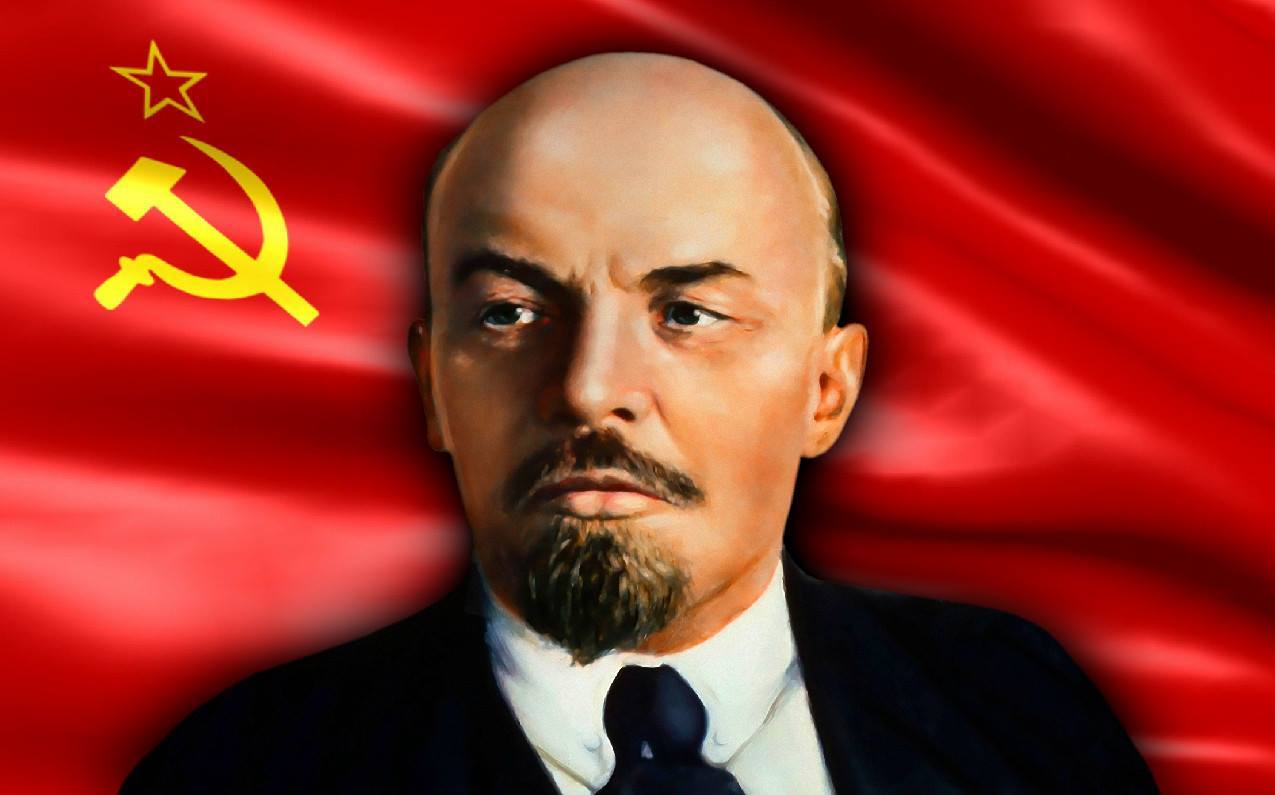
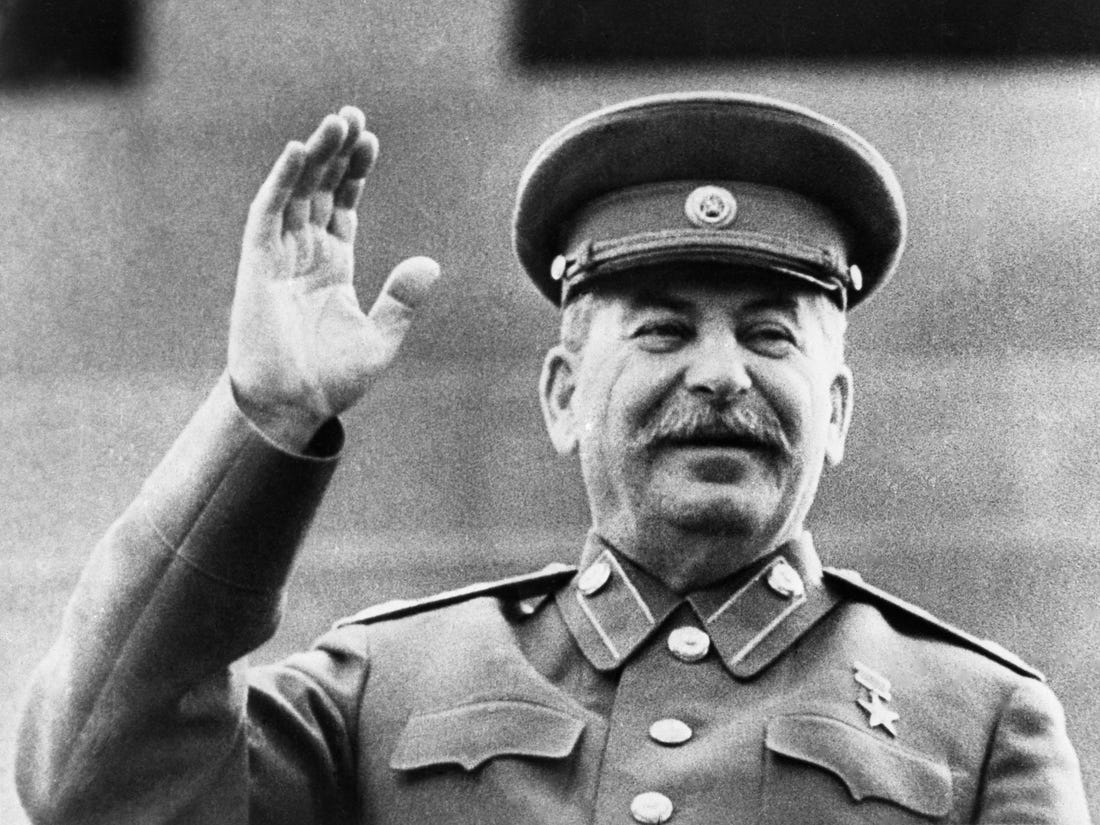







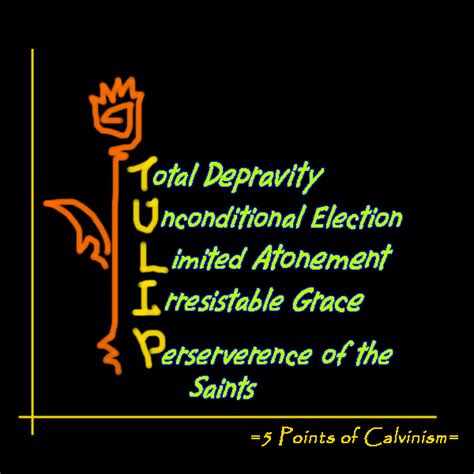
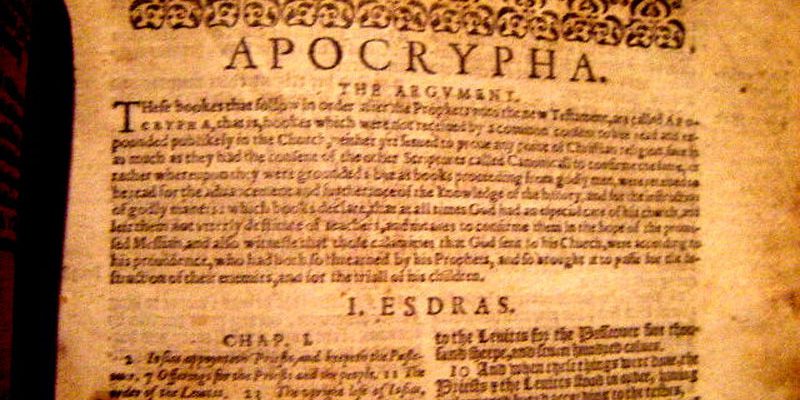
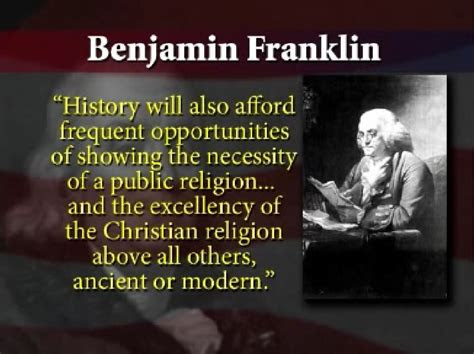
-
Subscribe
Subscribed
Already have a WordPress.com account? Log in now.
 Zach Uram's Blog