-
What is the Rock?

Here is a quick summary of the way that the Church Fathers interpreted that verse “Thou are Peter and upon this rock….” (Matthew 16:18)
Archbishop Kenrick, who was one of America’s extraordinary bishops, was opposed to the doctrine of papal infallibilty and at the First Vatican Council in 1869 he voted against it. He wanted to deliver a speech against the proposed doctrine at the Council but instead he ceased to attend the Council meetings. He published his speech in Naples the following year. It is important because he lists the five different patristic interpretations of Matthew 16:18.
Let’s look at how the Church Fathers line up over this verse:
- “That St. Peter is the Rock” is taught by seventeen (17) Fathers.
- That the whole Apostolic College is the Rock, represented by Peter as its chief, is taught by eight (8 ) Church Fathers.
- That St. Peter’s faith is the Rock, is taught by forty-four (44) Church Fathers.
- That Christ is the Rock, is taught by sixteen Fathers (16)
Archbishop Kenrick summarises:
“If we are bound to follow the greater number of Fathers in this matter, then we must hold for certain that the word “Petra” means not Peter professing the Faith, but the faith professed by Peter.”This is an important point by Archbishop Kenrick and it should be given its full weight. It is Roman Catholic doctrine that where there is something disputed the choice must be made for the consensus of the Fathers, the consensus patrum. You can look this up and check that I have it accurately in Friedrich, Docum ad illust. Conc. Vat. 1, pp. 185-246 As to who Archbishop Kenrick was. Please see the Catholic Encyclopedia here.
Peter’s confession as the rock was the majority view in the Early Church:
“In a remarkable pamphlete printed in fac-simile of manuscript and presented to the fathers almost two months ago, we find five different interpretations of the word “rock”, in the place cited; “the first of which declares (I transcribe the words) “that the church was built on Peter; and this interpretation is followed by seventeen fathers, among them, by Origen, Cyprian, Jerome, Hilary, Cyril of Alexandria, Leo the Great, Augustine.
“The second interpretation understands from these words ‘on this rock will I build my church’, that the church was built on all the apostles, whom Peter represented by virtue of the primacy. And this opinion is followed by eight fathers – among them, Origen, Cyprian, Jerome, Augustine, Theodoret.
“The third interpretation asserts that the words, ‘on this rock’, etc, are to be understood of the faith which Peter had professed – that this profession of faith, by which we believe Christ to be the Son of the Living God, is the everlasting and immovable foundation of the church. This interpretation is the weightiest of all, since it is followed by forty-four fathers and doctors; among them, from the East, are Gregory of Nyssa, Cyril of Alexandria, Chrysostom, Theophylact; from the West, Hilary, Ambrose, Leo the Great; from Africa, Augustine.
The fourth interpretation declare that the words ‘on this rock’, etc, are to be understood of the rock which Peter had confessed, that is, Christ – that the church was built upon Christ. This interpretation is followed by sixteen fathers and doctors.
The fifth interpretation of the fathers understands by the name of ‘the rock’, the faithful themselves, who, believing Christ to be the Son of God, are constituted living stones out of which the church is built.
From this it follows, either that no argument at all, or one of the slenderest probability, is to be derived from the words, ‘on this rock will I build my church’, in support of the primacy. Unless it is certain that by ‘the rock’ is to be understood the apostle Peter in his own person, and not in his capacity as the chief apostle speaking for them all, the word supplies no argument whatever, I do not say in proof of papal infallibility, but even in support of the primacy of the bishop of Rome. If we are bound to follow the majority of the fathers in this thing, then we are bound to hold for certain that by ‘the rock’ should be understood the faith professed by Peter, not Peter professing the faith.”
— Archbishop Kenrick in “An Inside View of the Vatican Council”Most Roman Catholics are surprised to find that the majority of the Early Church Fathers taught the other interpretations of Matthew 16:18. This information was compiled by Catholic scholars prior to Vatican I.
Thus we see that it is clear the majority view of the Early Church Fathers was that the Rock was Peter’s confession that Jesus is the Christ or that the Rock is Christ Himself. The view that the Rock represents Peter is a minority view. This just shows how selective Roman Catholics are with data which doesn’t fit their position.
-
Doctrines of Grace in the Early Church Fathers
Contrary to what Roman Catholics and Orthodox apologists assert, the doctrines of grace (the 5 points of Calvinism — TULIP) did not originate in the 16th century! They were believed by the Early Church. They may not have used the exact terminology which later writers would employ, but it’s clear from the quotes below that they absolutely believed in them.
The following quotes are taken from the Appendix of Michael Horton’s Book, “Putting Amazing Back into Grace.” They have no citations.
TOTAL DEPRAVITY
Barnabas (A.D. 70): “Learn: before we believed in God, the habitation of our heart was corrupt and weak.”
Ignatius (A.D. 110): “They that are carnal cannot do the things that are spiritual…Nor can the unbelievers do the things of belief.”
Justin Martyr (A.D. 150): “Mankind by Adam fell under death, and the deception of the serpent; we are born sinners…No good thing dwells in us…For neither by nature, nor by human understanding is it possible for me to acquire the knowledge of things so great and so divine, but by the energy of the Divine Spirit…Of ourselves it is impossible to enter the kingdom of God…He has convicted us of the impossibility of our nature to obtain life…Free will has destroyed us; we who were free are become slaves and for our sin are sold…Being pressed down by our sins, we cannot move upward toward God; we are like birds who have wings, but are unable to fly.”
Clement Of Alexandria (A.D. 190): “The soul cannot rise nor fly, nor be lifted up above the things that are on high, without special grace.”
Origen: “Our free will…or human nature is not sufficient to seek God in any manner.”
Eusebius (A.D. 330): “The liberty of our will in choosing things that are good is destroyed.”
Augustine (A.D. 370): “If, therefore, they are servants of sin (2 Cor. 3:17), why do they boast of free will?…O, man! Learn from the precept what you ought to do; learn from correction, that it is your own fault you have not the power…Let human effort, which perished by Adam, here be silent, and let the grace of God reign by Jesus Christ…What God promises, we ourselves do not through free will of human nature, but He Himself does by grace within us…Men labor to find in our own will something that is our own, and not God’s; how can they find it, I know not.”
UNCONDITIONAL ELECTION
Clement Of Rome (A.D. 69): “Let us therefore approach Him in holiness of soul, lifting up pure and undefiled hands unto Him, with love towards our gentle and compassionate Father because He made us an elect portion unto Himself…Seeing then that we are the special elect portion of a Holy God, let us do all things that pertain unto holiness…There was given a declaration of blessedness upon them that have been elected by God through Jesus Christ our Lord…Jesus Christ is the hope of the elect…”
Barnabas (A.D. 70): “We are elected to hope, committed by God unto faith, appointed to salvation.”
Ignatius: “To the predestined ones before all ages, that is, before the world began, united and elect in a true passion, by the eternal will of the Father…”
Justin Martyr: “In all these discourses I have brought all my proofs out of your own holy and prophetic writings, hoping that some of you may be found of the elect number which through the grace that comes from the Lord of Sabaoth, is left or reserved [set apart] for everlasting salvation.”
Irenaeus (A.D. 198): “God hath completed the number which He before determined with Himself, all those who are written, or ordained unto eternal life…Being predestined indeed according to the love of the Father that we would belong to Him forever.”
Clement Of Alexandria (A.D. 190): “Through faith the elect of God are saved. The generation of those who seek God is the elect nation, not [an earthly] place, but the congregation of the elect, which I call the Church…If every person had known the truth, they would all have leaped into the way, and there would have been no election…You are those who are chosen from among men and as those who are predestined from among men, and in His own time called, faithful, and elect, those who before the foundation of the world are known intimately by God unto faith; that is, are appointed by Him to faith, grow beyond babyhood.”
Cyprian (A.D. 250): “This is therefore the predestination which we faithfully and humbly preach.”
Ambrose Of Milan (A.D. 380): “In predestination the Church of God has always existed.”
Augustine (A.D. 380): “Here certainly, there is no place for the vain argument of those who defend the foreknowledge of God against the grace of God, and accordingly maintain that we were elected before the foundation of the world because God foreknew that we would be good, not that He Himself would make us good. This is not the language of Him who said, ‘You did not choose Me, but I chose you’ (John 15:16).”
LIMITED ATONEMENT
Barnabas (A.D. 70): “[Christ speaking] I see that I shall thus offer My flesh for the sins of the new people.”Justin Martyr (A.D. 150): “He endured the sufferings for those men whose souls are [actually] purified from all iniquity…As Jacob served Laban for the cattle that were spotted, and of carious forms, so Christ served even to the cross for men of every kind, of many and various shapes, procuring them by His blood and the mystery of the cross.”
Irenaeus (A.D. 180): “He came to save all, all, I say, who through Him are born again unto God, infants, and little ones, and children, and young men, and old men…Jesus is the Savior of them that believe; but the Lord of them that believe not. Wherefore, Christ is introduced in the gospel weary…promising to give His life a ransom, in the room of, many.”
Tertullian (A.D. 200): “Christ died for the salvation of His people…for the church.”
Cyprian (A.D. 250): “All the sheep which Christ hath sought up by His blood and sufferings are saved…Whosoever shall be found in the blood, and with the mark of Christ shall only escape…He redeemed the believers with the price of His own blood…Let him be afraid to die who is not reckoned to have any part in the cross and sufferings of Christ.”
Lactantius (A.D. 320): “He was to suffer and be slain for the salvation of many people…who having suffered death for us, hath made us heirs of the everlasting kingdom, having abdicated and disinherited the people of the Jews…He stretched out His hands in the passion and measured the world, that He might at the very time show that a large people, gathered out of all languages and tribes, should come under His wings, and receive the most great and sublime sign.”
Eusebius (A.D. 330): “To what ‘us’ does he refer, unless to them that beleive in Him? For to them that do not believe in Him, He is the author of their fire and burning. The cause of Christ’s coming is the redemption of those that were to be saved by Him.”
Julius (A.D. 350): “The Son of God, by the pouring out of His precious blood, redeemed His set apart ones; they are delivered by the blood of Christ.”
Hilarion (A.D. 363): “He shall remain in the sight of God forever, having already taken all whom He hath redeemed to be kings of heaven, and co-heirs of eternity, delivering them as the kingdom of God to the Father.”
Ambrose (A.D. 380): “Before the foundation of the world, it was God’s will that Christ should suffer for our salvation…Can He damn thee, whom He hath redeemed from death, for whom He offered Himself, whose life He knows is the reward of His own death?”
Pacian (A.D. 380): “Much more, He will not allow him that is redeemed to be destroyed, nor will He cast away those whom He has redeemed with a great price.”
Epiphanius (A.D. 390): “If you are redeemed…If therefore ye are bought with blood, thou are not the number of them who were bought with blood, O Manes, because thou deniest the blood…He gave His life for His own sheep.”
Jerome (A.D. 390): “Christ is sacrificed for the salvation of believers…Not all are redeemed, for not all shall be saved, but the remnant…All those who are redeemed and delivered by Thy blood return to Zion, which Thou hast prepared for Thyself by Thine own blood…Christ came to redeem Zion with His blood. But lest we should think that all are Zion or every one is Zion is truly redeemed of the Lord, who are redeemed by the blood of Christ form the Church…He did not give His life for every man, but for many, that is, for those who would believe.”
IRRESISTBLE GRACE
Barnabas (A.D. 70): “God gives repentance to us, introducing us into the incorruptible temple.”
Ignatius: “Pray for them, if so by they may repent, which is very difficult; but Jesus Christ, our true life, has the power of this.”
Justin Martyr (A.D. 150): “Having sometime before convinced us of the impossibility of our nature to obtain life, hath now shown us the Savior, who is able to save them which otherwise were impossible to be saved…Free will has destroyed us; we are sold into sin.”
Irenaeus (A.D. 180): “Not of ourselves, but of God, is the blessing of our salvation…Man, who was before led captive, is taken out of the power of the possessor, according to the mercy of God the Father, and restoring it, gives salvation to it by the Word; that is, by Christ; that many may experimentally learn that not of himself, but by the gift of God, he receives immortality.”
Tertullian (A.D. 200): “Do you think, O men, that we should ever have been able to have understood these things in the Scriptures unless by the will of Him that wills all things, we had received grace to understand them?…But by this it is plain, that [faith] is not given to thee by God, because thou dost not ascribe it to Him alone.”
Cyprian (A.D. 250): “Whatsoever is grateful is to be ascribed not to man’s power, but to God’s gift. It is God’s, I say, all is God’s that we can do. Yea, that in nothing must we glory, since nothing is ours.”
Arnobius (A.D. 303): “You place the salvation of your souls in yourselves, and trust that you may be made gods by your inward endeavor, yet it is not our own power to reach things above.”
Lactantius (A.D. 320): “The vistory lies in the will of God, not in thine own. To overcome is not in our power.”
Athanasius (A.D. 350): “To believe is not ours, or in our power, but the Spirit’s who is in us, and abides in us.”
Jerome (A.D. 390): “This is the chief righteousness of man, to reckon that whatsoever power he can have, is not his own, but the Lord’s who gives it…See how great is the help of God, and how frail the condition of man that we cannot by any means fulfill this, that we repent, unless the Lord first convert us…When [Jesus] says, ‘No man can come to Me,’ He breaks the proud liberty of free will; for man can desire nothing, and in vain he endeavors…Where is the proud boasting of free will?…We pray in vain if it is in our own will. Why should men pray for that from the Lord which they have in the power of their own free will?”
Augustine (A.D. 370): “Faith itself is to be attributed to God…Faith is made a gift. These men, however, attribute faith to free will, so grace is rendered to faith not as a gratuitous gift, but as a debt…They must cease from saying this.”
PERSEVERANCE OF THE SAINTS
Clement Of Rome (A.D. 69): “It is the will of God that all whom He loves should partake of repentance, and so not perish with the unbelieving and impenitent. He has established it by His almighty will. But if any of those whom God wills should partake of the grace of repentance, should afterwards perish, where is His almighty will? And how is this matter settled and established by such a will of His?”
Clement Of Alexandria (A.D. 190): “Such a soul [of a Christian] shall never at any time be separated from God…Faith, I say, is something divine, which cannot be pulled asunder by any other worldly friendship, nor be dissolved by present fear.”
Tertullian: “God forbid that we should believe that the soul of any saint should be drawn out by the devil…For what is of God is never extinguished.”
Augustine: “Of these believers no one perishes, because they were all elected. And they were elected because they were called according to the purpose–the purpose, however, not their own, but God’s…Obedience then is God’s gift…To this, indeed, we are not able to deny, that perseverance in good, progressing even to the end, is also a great gift of God.”
What we’ve seen is that the foundational doctrine of Reformed Protestants was believed by the Early Church Fathers. The Reformation was a recovery of the doctrine which had been lost over the centuries. It was truly a return to the undiluted Word of God!
-
One Nation Under God
A Few Declarations of Founding Fathers and Early Statesmen on Jesus, Christianity, and the Bible
(This list is by no means exhaustive; many other Founders could be included,
and even with those who appear below, additional quotes could have been used.)John Adams
SIGNER OF THE DECLARATION OF INDEPENDENCE; JUDGE; DIPLOMAT; ONE OF TWO SIGNERS
OF THE BILL OF RIGHTS; SECOND PRESIDENT OF THE UNITED STATESThe general principles on which the fathers achieved independence were the general principles of Christianity. I will avow that I then believed, and now believe, that those general principles of Christianity are as eternal and immutable as the existence and attributes of God.1
Without religion, this world would be something not fit to be mentioned in polite company: I mean hell.2
The Christian religion is, above all the religions that ever prevailed or existed in ancient or modern times, the religion of wisdom, virtue, equity and humanity.3
Suppose a nation in some distant region should take the Bible for their only law book and every member should regulate his conduct by the precepts there exhibited. . . . What a Eutopia – what a Paradise would this region be!4
I have examined all religions, and the result is that the Bible is the best book in the world.5

John Quincy Adams
SIXTH PRESIDENT OF THE UNITED STATES; DIPLOMAT; SECRETARY OF STATE; U. S. SENATOR;
U. S. REPRESENTATIVE; “OLD MAN ELOQUENT”; “HELL-HOUND OF ABOLITION”My hopes of a future life are all founded upon the Gospel of Christ and I cannot cavil or quibble away [evade or object to]. . . . the whole tenor of His conduct by which He sometimes positively asserted and at others countenances [permits] His disciples in asserting that He was God.6The hope of a Christian is inseparable from his faith. Whoever believes in the Divine inspiration of the Holy Scriptures must hope that the religion of Jesus shall prevail throughout the earth. Never since the foundation of the world have the prospects of mankind been more encouraging to that hope than they appear to be at the present time. And may the associated distribution of the Bible proceed and prosper till the Lord shall have made “bare His holy arm in the eyes of all the nations, and all the ends of the earth shall see the salvation of our God” [Isaiah 52:10].7
In the chain of human events, the birthday of the nation is indissolubly linked with the birthday of the Savior. The Declaration of Independence laid the cornerstone of human government upon the first precepts of Christianity.8
Samuel AdamsSIGNER OF THE DECLARATION OF INDEPENDENCE; “FATHER OF THE AMERICAN REVOLUTION”; RATIFIER OF THE U. S. CONSTITUTION; GOVERNOR OF MASSACHUSETTSI . . . [rely] upon the merits of Jesus Christ for a pardon of all my sins.9
The name of the Lord (says the Scripture) is a strong tower; thither the righteous flee and are safe [Proverbs 18:10]. Let us secure His favor and He will lead us through the journey of this life and at length receive us to a better.10
I conceive we cannot better express ourselves than by humbly supplicating the Supreme Ruler of the world . . . that the confusions that are and have been among the nations may be overruled by the promoting and speedily bringing in the holy and happy period when the kingdoms of our Lord and Savior Jesus Christ may be everywhere established, and the people willingly bow to the scepter of Him who is the Prince of Peace.11
He also called on the State of Massachusetts to pray that . . .
- the peaceful and glorious reign of our Divine Redeemer may be known and enjoyed throughout the whole family of mankind.12
- we may with one heart and voice humbly implore His gracious and free pardon through Jesus Christ, supplicating His Divine aid . . . [and] above all to cause the religion of Jesus Christ, in its true spirit, to spread far and wide till the whole earth shall be filled with His glory.13
- with true contrition of heart to confess their sins to God and implore forgiveness through the merits and mediation of Jesus Christ our Savior.14
Josiah Bartlett
MILITARY OFFICER; SIGNER OF THE DECLARATION OF INDEPENDENCE;
JUDGE; GOVERNOR OF NEW HAMPSHIRECalled on the people of New Hampshire . . .
to confess before God their aggravated transgressions and to implore His pardon and forgiveness through the merits and mediation of Jesus Christ . . . [t]hat the knowledge of the Gospel of Jesus Christ may be made known to all nations, pure and undefiled religion universally prevail, and the earth be fill with the glory of the Lord.15Gunning BedfordMILITARY OFFICER; MEMBER OF THE CONTINENTAL CONGRESS;
SIGNER OF THE CONSTITUTION; FEDERAL JUDGETo the triune God – the Father, the Son, and the Holy Ghost – be ascribed all honor and dominion, forevermore – Amen.16Elias BoudinotPRESIDENT OF CONGRESS; SIGNED THE PEACE TREATY TO END THE AMERICAN REVOLUTION; FIRST ATTORNEY ADMITTED TO THE U. S. SUPREME COURT BAR; FRAMER OF THE BILL OF RIGHTS; DIRECTOR OF THE U. S. MINTLet us enter on this important business under the idea that we are Christians on whom the eyes of the world are now turned… [L]et us earnestly call and beseech Him, for Christ’s sake, to preside in our councils. . . . We can only depend on the all powerful influence of the Spirit of God, Whose Divine aid and assistance it becomes us as a Christian people most devoutly to implore. Therefore I move that some minister of the Gospel be requested to attend this Congress every morning . . . in order to open the meeting with prayer.17A letter to his daughter:
You have been instructed from your childhood in the knowledge of your lost state by nature – the absolute necessity of a change of heart and an entire renovation of soul to the image of Jesus Christ – of salvation through His meritorious righteousness only – and the indispensable necessity of personal holiness without which no man shall see the Lord [Hebrews 12:14]. You are well acquainted that the most perfect and consummate doctrinal knowledge is of no avail without it operates on and sincerely affects the heart, changes the practice, and totally influences the will – and that without the almighty power of the Spirit of God enlightening your mind, subduing your will, and continually drawing you to Himself, you can do nothing. . . . And may the God of your parents (for many generations past) seal instruction to your soul and lead you to Himself through the blood of His too greatly despised Son, Who notwithstanding, is still reclaiming the world to God through that blood, not imputing to them their sins. To Him be glory forever!18
For nearly half a century have I anxiously and critically studied that invaluable treasure [the Bible]; and I still scarcely ever take it up that I do not find something new – that I do not receive some valuable addition to my stock of knowledge or perceive some instructive fact never observed before. In short, were you to ask me to recommend the most valuable book in the world, I should fix on the Bible as the most instructive both to the wise and ignorant. Were you to ask me for one affording the most rational and pleasing entertainment to the inquiring mind, I should repeat, it is the Bible; and should you renew the inquiry for the best philosophy or the most interesting history, I should still urge you to look into your Bible. I would make it, in short, the Alpha and Omega of knowledge.19

Jacob BroomLEGISLATOR; SIGNER OF THE CONSTITUTIONA letter to his son, James, attending Princeton University:
I flatter myself you will be what I wish, but don’t be so much flatterer as to relax of your application – don’t forget to be a Christian. I have said much to you on this head, and I hope an indelible impression is made.20
Charles CarrollSIGNER OF THE DECLARATION OF INDEPENDENCE; SELECTED AS DELEGATE TO THE CONSTITUTIONAL CONVENTION; FRAMER OF THE BILL OF RIGHTS; U. S. SENATOROn the mercy of my Redeemer I rely for salvation and on His merits, not on the works I have done in obedience to His precepts.21
Grateful to Almighty God for the blessings which, through Jesus Christ Our Lord, He had conferred on my beloved country in her emancipation and on myself in permitting me, under circumstances of mercy, to live to the age of 89 years, and to survive the fiftieth year of independence, adopted by Congress on the 4th of July 1776, which I originally subscribed on the 2d day of August of the same year and of which I am now the last surviving signer.22
I, Charles Carroll. . . . give and bequeath my soul to God who gave it, my body to the earth, hoping that through and by the merits, sufferings, and mediation of my only Savior and Jesus Christ, I may be admitted into the Kingdom prepared by God for those who love, fear and truly serve Him.23
Congress, 1854The great, vital, and conservative element in our system is the belief of our people in the pure doctrines and the divine truths of the Gospel of Jesus Christ.24Congress, U. S. House Judiciary Committee, 1854Had the people, during the Revolution, had a suspicion of any attempt to war against Christianity, that Revolution would have been strangled in its cradle… In this age, there can be no substitute for Christianity… That was the religion of the founders of the republic and they expected it to remain the religion of their descendants.25John DickinsonSIGNER OF THE CONSTITUTION; GOVERNOR OF PENNSYLVANIA; GOVERNOR OF DELAWARE; GENERAL IN THE AMERICAN REVOLUTIONRendering thanks to my Creator for my existence and station among His works, for my birth in a country enlightened by the Gospel and enjoying freedom, and for all His other kindnesses, to Him I resign myself, humbly confiding in His goodness and in His mercy through Jesus Christ for the events of eternity.26
[Governments] could not give the rights essential to happiness… We claim them from a higher source: from the King of kings, and Lord of all the earth.27
Gabriel DuvallSOLDIER; JUDGE; SELECTED AS DELEGATE TO THE CONSTITUTIONAL CONVENTION;
COMPTROLLER OF THE U. S. TREASURY; U. S. SUPREME COURT JUSTICEI resign my soul into the hands of the Almighty Who gave it, in humble hopes of His mercy through our Savior Jesus Christ.28Benjamin FranklinSIGNER OF THE DECLARATION; DIPLOMAT; PRINTER; SCIENTIST;
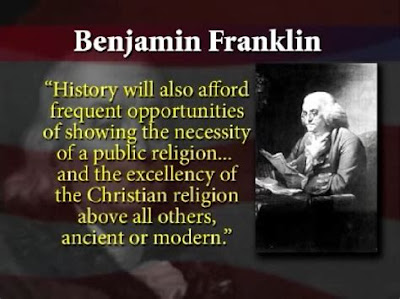
SIGNER OF THE CONSTITUTION; GOVERNOR OF PENNSYLVANIAAs to Jesus of Nazareth, my opinion of whom you particularly desire, I think the system of morals and His religion as He left them to us, the best the world ever saw or is likely to see.29The body of Benjamin Franklin, printer, like the cover of an old book, its contents torn out and stripped of its lettering and guilding, lies here, food for worms. Yet the work itself shall not be lost; for it will, as he believed, appear once more in a new and more beatiful edition, corrected and amended by the Author.30 (FRANKLIN’S EULOGY THAT HE WROTE FOR HIMSELF)
Elbridge GerrySIGNER OF THE DECLARATION OF INDEPENDENCE;
MEMBER OF THE CONSTITUTIONAL CONVENTION; FRAMER OF THE BILL OF RIGHTS,
GOVERNOR OF MASSACHUSETTS, VICE PRESIDENT OF THE UNITED STATESHe called on the State of Massachusetts to pray that . . .- with one heart and voice we may prostrate ourselves at the throne of heavenly grace and present to our Great Benefactor sincere and unfeigned thanks for His infinite goodness and mercy towards us from our birth to the present moment for having above all things illuminated us by the Gospel of Jesus Christ, presenting to our view the happy prospect of a blessed immortality.31
- And for our unparalleled ingratitude to that Adorable Being Who has seated us in a land irradiated by the cheering beams of the Gospel of Jesus Christ . . . let us fall prostrate before offended Deity, confess sincerely and penitently our manifold sins and our unworthiness of the least of His Divine favors, fervently implore His pardon through the merits of our mediator.32
- And deeply impressed with a scene of our unparalleled ingratitude, let us contemplate the blessings which have flowed from the unlimited grave and favor of offended Deity, that we are still permitted to enjoy the first of Heaven’s blessings: the Gospel of Jesus Christ. 33
Alexander HamiltonREVOLUTIONARY GENERAL; SIGNER OF THE CONSTITUTION;
AUTHOR OF THE FEDERALIST PAPERS; SECRETARY OF THE TREASURYFollowing his duel with Aaron Burr, in those final twenty four hours while life still remained in him, Hamilton called for two ministers, the Rev. J. M. Mason and the Rev. Benjamin Moore, to pray with him and administer Communion to him. Each of those two ministers reported what transpired. The Rev. Mason recounted:[General Hamilton said] “I went to the field determined not to take his life.” He repeated his disavowal of all intention to hurt Mr. Burr; the anguish of his mind in recollecting what had passed; and his humble hope of forgiveness from his God. I recurred to the topic of the Divine compassion; the freedom of pardon in the Redeemer Jesus to perishing sinners. “That grace, my dear General, which brings salvation, is rich, rich” – “Yes,” interrupted he, “it is rich grace.” “And on that grace,” continued I, “a sinner has the highest encouragement to repose his confidence, because it is tendered to him upon the surest foundation; the Scrip¬ture testifying that we have redemption through the blood of Jesus, the forgiveness of sins according to the richness of His grace.” Here the General, letting go my hand, which he had held from the moment I sat down at his bed side, clasped his hands together, and, looking up towards Heaven, said, with emphasis, “I have a tender reliance on the mercy of the Al¬mighty, through the merits of the Lord Jesus Christ.” 34
The Rev. Benjamin Moore reported:
[I]mmediately after he was brought from [the field] . . . a mes¬sage was sent informing me of the sad event, accompanied by a request from General Hamilton that I would come to him for the purpose of administering the Holy Communion. I went. . . . I proceeded to converse with him on the subject of his receiving the Communion; and told him that with respect to the qualifications of those who wished to become partakers of that holy ordinance, my inquires could not be made in lan¬guage more expressive than that which was used by our [own] Church. – [I asked], “Do you sincerely repent of your sins past? Have you a lively faith in God’s mercy through Christ, with a thankful remembrance of the death of Christ? And are you disposed to live in love and charity with all men?” He lifted up his hands and said, “With the utmost sincerity of heart I can answer those questions in the affirmative – I have no ill will against Col. Burr. I met him with a fixed resolution to do him no harm – I forgive all that happened.” . . . The Communion was then administered, which he received with great devotion, and his heart afterwards appeared to be perfectly at rest. I saw him again this morning, when, with his last faltering words, he expressed a strong confidence in the mercy of God through the intercession of the Redeemer. I remained with him until 2 o’clock this afternoon, when death closed the awful scene – he expired without a struggle, and almost without a groan. By reflecting on this melancholy event, let the humble believer be encouraged ever to hold fast that precious faith which is the only source of true consolation in the last extremity of nature. [And l]et the infidel be persuaded to abandon his opposition to that Gospel which the strong, inquisitive, and comprehensive mind of a Hamilton embraced.35
One other consequence of Hamilton’s untimely death was that it permanently halted the formation of a religious society Hamilton had proposed. Hamilton suggested that it be named the Christian Constitutional Society, and listed two goals for its formation: first, the support of the Christian religion; and second, the support of the Constitution of the United States. This or¬ganization was to have numerous clubs throughout each state which would meet regularly and work to elect to office those who reflected the goals of the Christian Constitutional Society. 36

John HancockSIGNER OF THE DECLARATION OF INDEPENDENCE; PRESIDENT OF CONGRESS;
REVOLUTIONARY GENERAL; GOVERNOR OF MASSACHUSETTSSensible of the importance of Christian piety and virtue to the order and happiness of a state, I cannot but earnestly commend to you every measure for their support and encouragement.37He called on the entire state to pray “that universal happiness may be established in the world [and] that all may bow to the scepter of our Lord Jesus Christ, and the whole earth be filled with His glory.”38
He also called on the State of Massachusetts to pray . . .
- that all nations may bow to the scepter of our Lord and Savior Jesus Christ and that the whole earth may be filled with his glory.39
- that the spiritual kingdom of our Lord and Savior Jesus Christ may be continually increasing until the whole earth shall be filled with His glory.40
- to confess their sins and to implore forgiveness of God through the merits of the Savior of the World.41
- to cause the benign religion of our Lord and Savior Jesus Christ to be known, understood, and practiced among all the inhabitants of the earth.42
- to confess their sins before God and implore His forgiveness through the merits and mediation of Jesus Christ, our Lord and Savior.43
- that He would finally overrule all events to the advancement of the Redeemer’s kingdom and the establishment of universal peace and good will among men.44
- that the kingdom of our Lord and Savior Jesus Christ may be established in peace and righteousness among all the nations of the earth.45
- that with true contrition of heart we may confess our sins, resolve to forsake them, and implore the Divine forgiveness, through the merits and mediation of Jesus Christ, our Savior. . . . And finally to overrule all the commotions in the world to the spreading the true religion of our Lord Jesus Christ in its purity and power among all the people of the earth.46
John HartJUDGE; LEGISLATOR; SIGNER OF THE DECLARATION[T]hanks be given unto Almighty God therefore, and knowing that it is appointed for all men once to die and after that the judgment [Hebrews 9:27] . . . principally, I give and recommend my soul into the hands of Almighty God who gave it and my body to the earth to be buried in a decent and Christian like manner . . . to receive the same again at the general resurrection by the mighty power of God.47Patrick HenryREVOLUTIONARY GENERAL; LEGISLATOR; “THE VOICE OF LIBERTY”;
RATIFIER OF THE U. S. CONSTITUTION; GOVERNOR OF VIRGINIABeing a Christian… is a character which I prize far above all this world has or can boast.48The Bible… is a book worth more than all the other books that were ever printed.49
Righteousness alone can exalt [America] as a nation…Whoever thou art, remember this; and in thy sphere practice virtue thyself, and encourage it in others.50
The great pillars of all government and of social life [are] virtue, morality, and religion. This is the armor, my friend, and this alone, that renders us invincible.51
This is all the inheritance I can give to my dear family. The religion of Christ can give them one which will make them rich indeed.52
Samuel HuntingtonSIGNER OF THE DECLARATION OF INDEPENDENCE; PRESIDENT OF CONGRESS;
JUDGE; GOVERNOR OF CONNECTICUTIt becomes a people publicly to acknowledge the over-ruling hand of Divine Providence and their dependence upon the Supreme Being as their Creator and Merciful Preserver . . . and with becoming humility and sincere repentance to supplicate the pardon that we may obtain forgiveness through the merits and mediation of our Lord and Savior Jesus Christ.53James IredellRATIFIER OF THE U. S. CONSTITUTION; ATTORNEY GENERAL OF NORTH CAROLINA;
U. S. SUPREME COURT JUSTICE APPOINTED BY PRESIDENT GEORGE WASHINGTONFor my part, I am free and ready enough to declare that I think the Christian religion is a Divine institution; and I pray to God that I may never forget the precepts of His religion or suffer the appearance of an inconsistency in my principles and practice.54John JayPRESIDENT OF CONGRESS; DIPLOMAT; AUTHOR OF THE FEDERALIST PAPERS;
ORIGINAL CHIEF JUSTICE OF THE U. S. SUPREME COURT; GOVERNOR OF NEW YORKCondescend, merciful Father! to grant as far as proper these imperfect petitions, to accept these inadequate thanksgivings, and to pardon whatever of sin hath mingled in them for the sake of Jesus Christ, our blessed Lord and Savior; unto Whom, with Thee, and the blessed Spirit, ever one God, be rendered all honor and glory, now and forever. 55Unto Him who is the author and giver of all good, I render sincere and humble thanks for His manifold and unmerited blessings, and especially for our redemption and salvation by His beloved Son. . . . Blessed be His holy name.56
Mercy and grace and favor did come by Jesus Christ, and also that truth which verified the promises and predictions concerning Him and which exposed and corrected the various errors which had been imbibed respecting the Supreme Being, His attributes, laws, and dispensations.57
By conveying the Bible to people . . . we certainly do them a most interesting act of kindness. We thereby enable them to learn that man was originally created and placed in a state of happiness, but, becoming disobedient, was subjected to the degradation and evils which he and his posterity have since experienced. The Bible will also inform them that our gracious Creator has provided for us a Redeemer in whom all the nations of the earth should be blessed – that this Redeemer has made atonement “for the sins of the whole world,” and thereby reconciling the Divine justice with the Divine mercy, has opened a way for our redemption and salvation; and that these inestimable benefits are of the free gift and grace of God, not of our deserving, nor in our power to deserve. The Bible will also [encourage] them with many explicit and consoling assurances of the Divine mercy to our fallen race, and with repeated invitations to accept the offers of pardon and reconciliation. . . . They, therefore, who enlist in His service, have the highest encouragement to fulfill the du¬ties assigned to their respective stations; for most certain it is, that those of His followers who [participate in] His conquests will also participate in the tran¬scendent glories and blessings of His Triumph.58
I recommend a general and public return of praise and thanksgiving to Him from whose goodness these blessings descend. The most effectual means of securing the continuance of our civil and religious liberties is always to remember with reverence and gratitude the source from which they flow.59
The Bible is the best of all books, for it is the word of God and teaches us the way to be happy in this world and in the next. Continue therefore to read it and to regulate your life by its precepts.60
[T]he evidence of the truth of Christianity requires only to be carefully examined to produce conviction in candid minds… they who undertake that task will derive advantages.61
Providence has given to our people the choice of their rulers, and it is the duty as well as the privilege and interest of our Christian nation, to select and prefer Christians for their rulers.62
Thomas JeffersonSIGNER OF THE DECLARATION OF INDEPENDENCE; DIPLOMAT; GOVERNOR OF VIRGINIA; SECRETARY OF STATE; THIRD PRESIDENT OF THE UNITED STATESThe doctrines of Jesus are simple, and tend all to the happiness of man.63
The practice of morality being necessary for the well being of society, He [God] has taken care to impress its precepts so indelibly on our hearts that they shall not be effaced by the subtleties of our brain. We all agree in the obligation of the moral principles of Jesus and nowhere will they be found delivered in greater purity than in His discourses.64
I am a Christian in the only sense in which He wished anyone to be: sincerely attached to His doctrines in preference to all others.65
I am a real Christian – that is to say, a disciple of the doctrines of Jesus Christ.66
William Samuel JohnsonJUDGE; MEMBER OF THE CONTINENTAL CONGRESS; SIGNER OF THE CONSTITUTION;
FRAMER OF THE BILL OF RIGHTS; PRESIDENT OF COLUMBIA COLLEGE; U. S. SENATOR[I] . . . am endeavoring . . . to attend to my own duty only as a Christian. . . . let us take care that our Christianity, though put to the test . . . be not shaken, and that our love for things really good wax not cold.67In an address to graduates:
You this day. . . . have, by the favor of Providence and the at¬tention of friends, received a public education, the purpose whereof hath been to qualify you the better to serve your Creator and your country. You have this day invited this au¬dience to witness the progress you have made. . . . Thus you assume the character of scholars, of men, and of citizens. . . . Go, then, . . . and exercise them with diligence, fidelity, and zeal. . . . Your first great duties, you are sensible, are those you owe to Heaven, to your Creator and Redeemer. Let these be ever present to your minds, and exemplified in your lives and conduct. Imprint deep upon your minds the principles of piety towards God, and a reverence and fear of His holy name. The fear of God is the beginning of wisdom and its [practice] is everlasting [happiness] . . . . Reflect deeply and often upon [your] relations [with God]. Remember that it is in God you live and move and have your being, – that, in the language of David, He is about your bed and about your path and spieth out all your ways – that there is not a thought in your hearts, nor a word upon your tongues, but lo! He knoweth them altogether, and that He will one day call you to a strict account for all your conduct in this mortal life. Remember, too, that you are the redeemed of the Lord, that you are bought with a price, even the inestimable price of the precious blood of the Son of God. Adore Jehovah, therefore, as your God and your Judge. Love, fear, and serve Him as your Creator, Redeemer, and Sanctifier. Acquaint yourselves with Him in His word and holy ordinances. . . . [G]o forth into the world firmly resolved neither to be allured by its vanities nor contaminated by its vices, but to run with patience and perseverance, with firmness and [cheerfulness], the glorious career of religion, honor, and virtue. . . . Finally, . . . in the elegant and expressive language are honest, whatsoever things are just, whatsoever things are pure, whatsoever things are lovely, whatsoever things are of good report, if there be any virtue, and if there be any praise, think on these things” – and do them, and the God of peace shall be with you, to whose most gracious protection I now commend you, humbly imploring Almighty Goodness that He will be your guardian and your guide, your protector and the rock of your defense, your Savior and your God.68
James KentJUDGE; LAW PROFESSOR; “FATHER OF AMERICAN JURISPRUDENCE”My children, I wish to talk to you. During my early and middle life I was, perhaps, rather skeptical with regard to some of the truths of Christianity. Not that I did not have the utmost respect for religion and always read my Bible, but the doctrine of the atonement was one I never could understand, and I felt inclined to consider as impossible to be received in the way Divines taught it. I believe I was rather inclined to Unitarianism; but of late years my views have altered. I believe in the doctrines of the prayer books as I understand them, and hope to be saved through the merits of Jesus Christ. . . . My object in telling you this is that if anything happens to me, you might know, and perhaps it would console you to remember, that on this point my mind is clear: I rest my hopes of salvation on the Lord Jesus Christ.69Francis Scott KeyU. S. ATTORNEY FOR THE DISTRICT OF COLUMBIA;
AUTHOR OF THE “STAR SPANGLED BANNER”[M]ay I always hear that you are following the guidance of that blessed Spirit that will lead you into all truth, leaning on that Almighty arm that has been extended to deliver you, trusting only in the only Savior, and going on in your way to Him rejoicing.70James Madison’SIGNER OF THE CONSTITUTION; AUTHOR OF THE FEDERALIST PAPERS; FRAMER OF THE
BILL OF RIGHTS; SECRETARY OF STATE; FOURTH PRESIDENT OF THE UNITED STATESA watchful eye must be kept on ourselves lest, while we are building ideal monuments of renown and bliss here, we neglect to have our names enrolled in the Annals of Heaven.71I have sometimes thought there could not be a stronger testimony in favor of religion or against temporal enjoyments, even the most rational and manly, than for men who occupy the most honorable and gainful departments and [who] are rising in reputation and wealth, publicly to declare their unsatisfactoriness by becoming fervent advocates in the cause of Christ; and I wish you may give in your evidence in this way.72
James ManningMEMBER OF THE CONTINENTAL CONGRESS; PRESIDENT OF BROWN UNIVERSITY
I rejoice that the religion of Jesus prevails in your parts; I can tell you the same agreeable news from this quarter. Yesterday I returned from Piscataway in East Jersey, where was held a Baptist annual meeting (I think the largest I ever saw) but much more remarkable still for the Divine influences which God was pleased to grant. Fifteen were baptized; a number during the three days professed to experience a change of heart. Christians were remarkably quickened; multitudes appeared.73
Henry MarchantMEMBER OF THE CONTINENTAL CONGRESS; ATTORNEY GENERAL OF RHODE ISLAND; RATIFIER OF THE U. S. CONSTITUTION; FEDERAL JUDGE APPOINTED BY PRESIDENT GEORGE WASHINGTON
And may God grant that His grace may really affect your heart with suitable impressions of His goodness. Remember that God made you, that God keeps you alive and preserves you from all harm, and gives you all the powers and the capacity whereby you are able to read of Him and of Jesus Christ, your Savior and Redeemer, and to do every other needful business of life. And while you look around you and see the great privileges and advantages you have above what other children have (of learning to read and write, of being taught the meaning of the great truths of the Bible), you must remember not to be proud on that account but to bless God and be thankful and endeavor in your turn to assist others with the knowledge you may gain.74(to his daughter)
George MasonDELEGATE AT THE CONSTITUTIONAL CONVENTION; “FATHER OF THE BILL OF RIGHTS”I give and bequeath my soul to Almighty God that gave it me, hoping that through the meritorious death and passion of our Savior and Redeemer Jesus Christ to receive absolution and remission for all my sins.75
My soul I resign into the hands of my Almighty Creator, Whose tender mercies are all over His works. . humbly hoping from His unbounded mercy and benevolence, through the merits of my blessed Savior, a remission of my sins.76
James McHenryREVOLUTIONARY OFFICER; SIGNER OF THE CONSTITUTION; RATIFIER OF THE U. S. CONSTITUTION;
SECRETARY OF WAR UNDER PRESIDENTS GEORGE WASHINGTON AND JOHN ADAMS[P]ublic utility pleads most forcibly for the general distribution of the Holy Scriptures. Without the Bible, in vain do we increase penal laws and draw entrenchments around our institutions.77Bibles are strong protections. Where they abound, men cannot pursue wicked courses and at the same time enjoy quiet conscience.78
Thomas McKeanSIGNER OF THE DECLARATION OF INDEPENDENCE; PRESIDENT OF CONGRESS;
RATIFIER OF THE U. S. CONSTITUTION; CHIEF JUSTICE OF THE SUPREME COURT OF PENNSYLVANIA;
GOVERNOR OF PENNSYLVANIA; GOVERNOR OF DELAWAREIn the case Respublica v. John Roberts,79 John Roberts was sentenced to death after a jury found him guilty of treason. Chief Justice McKean then told him:You will probably have but a short time to live. Before you launch into eternity, it be¬hooves you to improve the time that may be allowed you in this world: it behooves you most seriously to reflect upon your past conduct; to repent of your evil deeds; to be incessant in prayers to the great and merciful God to forgive your manifold transgressions and sins; to teach you to rely upon the merit and passion of a dear Redeemer, and thereby to avoid those regions of sorrow – those doleful shades where peace and rest can never dwell, where even hope cannot enter. It behooves you to seek the [fellowship], advice, and prayers of pious and good men; to be [persistent] at the Throne of Grace, and to learn the way that leadeth to happiness. May you, reflecting upon these things, and pursuing the will of the great Father of light and life, be received into [the] company and society of angels and archangels and the spirits of just men made perfect; and may you be qualified to enter into the joys of Heaven – joys unspeakable and full of glory!80
Gouverneur MorrisREVOLUTIONARY OFFICER; MEMBER OF THE CONTINENTAL CONGRESS;
SIGNER OF THE CONSTITUTION; “PENMAN OF THE CONSTITUTION”; DIPLOMAT; U. S. SENATORThere must be religion. When that ligament is torn, society is disjointed and its members perish… [T]he most important of all lessons is the denunciation of ruin to every state that rejects the precepts of religion.81Your good morals in the army give me sincere pleasure as it hath long been my fixed opinion that virtue and religion are the great sources of human happiness. More especially is it necessary in your profession firmly to rely upon the God of Battles for His guardianship and protection in the dreadful hour of trial. But of all these things you will and I hope in the merciful Lord.82
Jedidiah MorseHISTORIAN OF THE AMERICAN REVOLUTION; EDUCATOR; “FATHER OF AMERICAN GEOGRAPHY”;
APPOINTED BY SECRETARY OF STATE TO DOCUMENT CONDITION OF INDIAN AFFAIRSTo the kindly influence of Christianity we owe that degree of civil freedom and political and social happiness which mankind now enjoys. All efforts made to destroy the foundations of our Holy Religion ultimately tend to the subversion also of our political freedom and happiness. In proportion as the genuine effects of Christianity are diminished in any nation… in the same proportion will the people of that nation recede from the blessings of genuine freedom… Whenever the pillars of Christianity shall be overthrown, our present republican forms of government – and all the blessings which flow from them – must fall with them. 83John MortonLEGISLATOR; JUDGE; SIGNER OF THE DECLARATIONWith an awful reverence to the Great Almighty God, Creator of all mankind, being sick and weak in body but of sound mind and memory, thanks be given to Almighty God for the same.84James OtisLEADER OF THE SONS OF LIBERTY; ATTORNEY & JURIST;
MENTOR OF JOHN HANCOCK AND SAMUEL ADAMSHas [government] any solid foundation? Any chief cornerstone?… I think it has an everlasting foundation in the unchangeable will of God… The sum of my argument is that civil government is of God.85Robert Treat PaineMILITARY CHAPLAIN; SIGNER OF THE DECLARATION OF INDEPENDENCE;
ATTORNEY GENERAL OF MASSACHUSETTS; JUDGEI desire to bless and praise the name of God most high for appointing me my birth in a land of Gospel Light where the glorious tidings of a Savior and of pardon and salvation through Him have been continually sounding in mine ears.86I am constrained to express my adoration of the Supreme Being, the Author of my existence, in full belief of His Providential goodness and His forgiving mercy revealed to the world through Jesus Christ, through whom I hope for never ending happiness in a future state.87
I believe the Bible to be the written word of God and to contain in it the whole rule of faith and manners.88
William PatersonATTORNEY GENERAL OF NEW JERSEY; SIGNER OF THE CONSTITUTION; U. S. SENATOR;
GOVERNOR OF NEW JERSEY; U. S. SUPREME COURT JUSTICEWhen the righteous rule, the people rejoice; when the wicked rule, the people groan. [invoking Proverbs 29:2 to instruct a grand jury].89Timothy PickeringREVOLUTIONARY GENERAL; JUDGE; RATIFIER OF THE U. S. CONSTITUTION;
POSTMASTER GENERAL UNDER PRESIDENT GEORGE WASHINGTON;
SECRETARY OF WAR UNDER PRESIDENTS GEORGE WASHINGTON AND JOHN ADAMS;
SECRETARY OF STATE UNDER PRESIDENT JOHN ADAMSPardon, we beseech Thee, all our offences of omission and commission; and grant that in all our thoughts, words, and actions, we may conform to Thy known will manifested in our consciences and in the revelations of Jesus Christ, our Savior.90[W]e do not grieve as those who have no… resurrection to a life immortal. Here the believers in Christianity manifest their superior advantages, for life and immortality were brought to light by the gospel of Jesus Christ [II Timothy 1:10]. Prior to that revelation even the wisest and best of mankind were involved in doubt and they hoped, rather than believed, that the soul was immortal.91
Charles Cotesworth PinckneyREVOLUTIONARY GENERAL; LEGISLATOR; SIGNER OF THE CONSTITUTION; DIPLOMATTo the eternal and only true God be all honor and glory, now and forever. Amen!92John Randolph of RoanokeCONGRESSMAN UNDER PRESIDENTS JOHN ADAMS, THOMAS JEFFERSON, JAMES MADISON,
JAMES MONROE, JOHN QUINCY ADAMS, ANDREW JACKSON; U. S. SENATOR; DIPLOMATI have thrown myself, reeking with sin, on the mercy of God, through Jesus Christ His blessed Son and our (yes, my friend, our) precious Redeemer; and I have assurances as strong as that I now owe nothing to your rank that the debt is paid and now I love God – and with reason. I once hated him – and with reason, too, for I knew not Christ. The only cause why I should love God is His goodness and mercy to me through Christ.93I am at last reconciled to my God and have assurance of His pardon through faith in Christ, against which the very gates of hell cannot prevail. Fear hath been driven out by perfect love.94
[I] have looked to the Lord Jesus Christ, and hope I have obtained pardon.95[I] still cling to the cross of my Redeemer, and with God’s aid firmly resolve to lead a life less unworthy of one who calls himself the humble follower of Jesus Christ.96
Benjamin RushSIGNER OF THE DECLARATION OF INDEPENDENCE; SURGEON GENERAL OF THE CONTINENTAL ARMY; RATIFIER OF THE U. S. CONSTITUTION; “FATHER OF AMERICAN MEDICINE”;
TREASURER OF THE U. S. MINT; “FATHER OF PUBLIC SCHOOLS UNDER THE CONSTITUTION”The Gospel of Jesus Christ prescribes the wisest rules for just conduct in every situation of life. Happy they who are enabled to obey them in all situations! . . . My only hope of salvation is in the infinite tran¬scendent love of God manifested to the world by the death of His Son upon the Cross. Noth¬ing but His blood will wash away my sins [Acts 22:16]. I rely exclusively upon it. Come, Lord Jesus! Come quickly! [Revelation 22:20]97I do not believe that the Constitution was the offspring of inspiration, but I am as satisfied that it is as much the work of a Divine Providence as any of the miracles recorded in the Old and New Testament.98
By renouncing the Bible, philosophers swing from their moorings upon all moral subjects… It is the only correct map of the human heart that ever has been published.99
[T]he greatest discoveries in science have been made by Christian philosophers and . . . there is the most knowledge in those countries where there is the most Christianity.100[T]he only means of establishing and perpetuating our republican forms of government is the universal education of our youth in the principles of Christianity by means of the Bible.101
The great enemy of the salvation of man, in my opinion, never invented a more effective means of limiting Christianity from the world than by persuading mankind that it was improper to read the Bible at schools.102
[C]hristianity is the only true and perfect religion; and… in proportion as mankind adopt its principles and obey its precepts, they will be wise and happy.103
The Bible contains more knowledge necessary to man in his present state than any other book in the world.104
The Bible, when not read in schools, is seldom read in any subsequent period of life… [T]he Bible… should be read in our schools in preference to all other books because it contains the greatest portion of that kind of knowledge which is calculated to produce private and public happiness.105
Roger ShermanSIGNER OF THE DECLARATION; SIGNER OF THE CONSTITUTION; “MASTER BUILDER OF THE CONSTITUTION”; JUDGE; FRAMER OF THE BILL OF RIGHTS; U. S. SENATORI believe that there is one only liv¬ing and true God, existing in three persons, the Father, the Son, and the Holy Ghost, the same in substance, equal in power and glory. That the Scriptures of the Old and New Testaments are a revelation from God, and a complete rule to direct us how we may glorify and enjoy Him. . . . That He made man at first perfectly holy; that the first man sinned, and as he was the public head of his posterity, they all became sinners in consequence of his first transgression, are wholly indisposed to that which is good and inclined to evil, and on account of sin are liable to all the miseries of this life, to death, and to the pains of hell forever. I believe that God . . . did send His own Son to become man, die in the room and stead of sinners, and thus to lay a foundation for the offer of pardon and salvation to all mankind, so as all may be saved who are willing to accept the Gospel offer. . . . I believe a visible church to be a congregation of those who make a credible profession of their faith in Christ, and obedience to Him, joined by the bond of the covenant. . . . I believe that the sacraments of the New Testament are baptism and the Lord’s Supper. . . . I believe that the souls of believers are at their death made perfectly holy, and immediately taken to glory: that at the end of this world there will be a resurrection of the dead, and a final judgment of all mankind, when the righteous shall be publicly acquitted by Christ the Judge and admitted to everlasting life and glory, and the wicked be sentenced to everlasting punishment.106
God commands all men everywhere to repent. He also commands them to believe on the Lord Jesus Christ, and has assured us that all who do repent and believe shall be saved… [G]od… has absolutely promised to bestow them on all these who are willing to accept them on the terms of the Gospel – that is, in a way of free grace through the atonement. “Ask and ye shall receive [John 16:24]. Whosoever will, let him come and take of the waters of life freely [Revelation 22:17]. Him that cometh unto me I will in no wise cast out” [John 6:37].107
[I]t is the duty of all to acknowledge that the Divine Law which requires us to love God with all our heart and our neighbor as ourselves, on pain of eternal damnation, is Holy, just, and good. . . . The revealed law of God is the rule of our duty.108
True Christians are assured that no temptation (or trial) shall happen to them but what they shall be enabled to bear; and that the grace of Christ shall be sufficient for them.109
“The volume which he consulted more than any other was the Bible. It was his custom, at the commencement of every session of Congress, to purchase a copy of the Scriptures, to peruse it daily, and to present it to one of his children on his return.”110
Richard StocktonJUDGE; SIGNER OF THE DECLARATION OF INDEPENDENCE[A]s my children will have frequent occasion of perusing this instrument, and may probably be particularly impressed with the last words of their father, I think it proper here not only to subscribe to the entire belief of the great and leading doctrines of the Christian religion, such as the being of God; the universal defection and depravity of human nature; the Divinity of the person and the completeness of the redemption purchased by the blessed Savior; the necessity of the operations of the Divine Spirit; of Divine faith accompanied with an habitual virtuous life; and the universality of the Divine Providence: but also, in the bowels of a father’s affection, to exhort and charge [my children] that the fear of God is the beginning of wisdom, that the way of life held up in the Christian system is calculated for the most complete happiness that can be enjoyed in this mortal state, [and] that all occasions of vice and immorality is injurious either immediately or consequentially – even in this life.111Thomas StoneSIGNER OF THE DECLARATION OF INDEPENDENCE;
SELECTED AS A DELEGATE TO THE CONSTITUTIONAL CONVENTIONShun all giddy, loose, and wicked company; they will corrupt and lead you into vice and bring you to ruin. Seek the company of sober, virtuous and good people… which will lead [you] to solid happiness.112Joseph StoryU. S. CONGRESSMAN; “FATHER OF AMERICAN JURISPRUDENCE”;
U. S. SUPREME COURT JUSTICE APPOINTED BY PRESIDENT JAMES MADISONOne of the beautiful boasts of our municipal jurisprudence is that Christianity is a part of the Common Law. There never has been a period in which the Common Law did not recognize Christianity as lying at its foundations.113I verily believe that Christianity is necessary to support a civil society and shall ever attend to its institutions and acknowledge its precepts as the pure and natural sources of private and social happiness.114
Caleb StrongDELEGATE AT THE CONSTITUTIONAL CONVENTION TO FRAME THE U. S. CONSTITUTION;
RATIFIER OF THE CONSTITUTION; U. S. SENATOR; GOVERNOR OF MASSACHUSETTSHe called on the State of Massachusetts to pray that . . .
all nations may know and be obedient to that grace and truth which came by Jesus Christ.115Zephaniah SwiftU. S. CONGRESSMAN; DIPLOMAT; JUDGE; AUTHOR OF AMERICA’S FIRST LEGAL TEXT (1795)Jesus Christ has in the clearest manner inculcated those duties which are productive of the highest moral felicity and consistent with all the innocent enjoyments, to which we are impelled by the dictates of nature. Religion, when fairly considered in its genuine simplicity and uncorrupted state, is the source of endless rapture and delight.116Charles ThomsonSECRETARY OF THE CONTINENTAL CONGRESS;
DESIGNER OF THE GREAT SEAL OF THE UNITED STATES; ALONG WITH JOHN HANCOCK,
THOMSON WAS ONE OF ONLY TWO FOUNDERS TO SIGN THE INITIAL DRAFT OF
THE DECLARATION OF INDEPENDENCE APPROVED BY CONGRESSI am a Christian. I believe only in the Scriptures, and in Jesus Christ my Savior.117Jonathan TrumbullJUDGE; LEGISLATOR; GOVERNOR OF CONNECTICUT;
CONFIDANT OF GEORGE WASHINGTON AND CALLED “BROTHER JONATHAN” BY HIMThe examples of holy men teach us that we should seek Him with fasting and prayer, with penitent confession of our sins, and hope in His mercy through Jesus Christ the Great Redeemer.118Principally and first of all, I bequeath my soul to God the Creator and giver thereof, and my body to the earth to be buried in a decent Christian burial, in firm belief that I shall receive the same again at the general resurrection through the power of Almighty God, and hope of eternal life and happiness through the merits of my dear Redeemer Jesus Christ.119
He called on the State of Connecticut to pray that . . .
God would graciously pour out His Spirit upon us and make the blessed Gospel in His hand effectual to a thorough reformation and general revival of the holy and peaceful religion of Jesus Christ.120
George WashingtonJUDGE; MEMBER OF THE CONTINENTAL CONGRESS;
COMMANDER-IN-CHIEF OF THE CONTINENTAL ARMY;
PRESIDENT OF THE CONSTITUTIONAL CONVENTION;
FIRST PRESIDENT OF THE UNITED STATES; “FATHER OF HIS COUNTRY”You do well to wish to learn our arts and ways of life, and above all, the religion of Jesus Christ. These will make you a greater and happier people than you are.121While we are zealously performing the duties of good citizens and soldiers, we certainly ought not to be inattentive to the higher duties of religion. To the distinguished character of Patriot, it should be our highest glory to add the more distinguished character of Christian.122
The blessing and protection of Heaven are at all times necessary but especially so in times of public distress and danger. The General hopes and trusts that every officer and man will endeavor to live and act as becomes a Christian soldier, defending the dearest rights and liberties of his country.123
I now make it my earnest prayer that God would… most graciously be pleased to dispose us all to do justice, to love mercy, and to demean ourselves with that charity, humility, and pacific temper of the mind which were the characteristics of the Divine Author of our blessed religion.124
Daniel WebsterU. S. SENATOR; SECRETARY OF STATE; “DEFENDER OF THE CONSTITUTION”[T]he Christian religion – its general principles – must ever be regarded among us as the foundation of civil society.125
Whatever makes men good Christians, makes them good citizens.126
[T]o the free and universal reading of the Bible… men [are] much indebted for right views of civil liberty.127
The Bible is a book… which teaches man his own individual responsibility, his own dignity, and his equality with his fellow man.128
Noah WebsterREVOLUTIONARY SOLDIER; JUDGE; LEGISLATOR; EDUCATOR; “SCHOOLMASTER TO AMERICA”[T]he religion which has introduced civil liberty is the religion of Christ and His apostles… This is genuine Christianity and to this we owe our free constitutions of government.129
The moral principles and precepts found in the Scriptures ought to form the basis of all our civil constitutions and laws.130
All the… evils which men suffer from vice, crime, ambition, injustice, oppression, slavery and war, proceed from their despising or neglecting the precepts contained in the Bible.131
[O]ur citizens should early understand that the genuine source of correct republican principles is the Bible, particularly the New Testament, or the Christian religion.132[T]he Christian religion is the most important and one of the first things in which all children under a free government ought to be instructed. No truth is more evident than that the Christian religion must be the basis of any government intended to secure the rights and privileges of a free people.133
The Bible is the chief moral cause of all that is good and the best corrector of all that is evil in human society – the best book for regulating the temporal concerns of men.134
[T]he Christian religion… is the basis, or rather the source, of all genuine freedom in government… I am persuaded that no civil government of a republican form can exist and be durable in which the principles of Christianity have not a controlling influence.135
John WitherspoonSIGNER OF THE DECLARATION OF INDEPENDENCE; RATIFIER OF THE U. S. CONSTITUTION; PRESIDENT OF PRINCETON[C]hrist Jesus – the promise of old made unto the fathers, the hope of Israel [Acts 28:20], the light of the world [John 8:12], and the end of the law for righteousness to every one that believeth [Romans 10:4] – is the only Savior of sinners, in opposition to all false religions and every uninstituted rite; as He Himself says (John 14:6): “I am the way, and the truth, and the life: no man cometh unto the Father but by Me.”136[N]o man, whatever be his character or whatever be his hope, shall enter into rest unless he be reconciled to God though Jesus Christ.137[T]here is no salvation in any other than in Jesus Christ of Nazareth.138
I shall now conclude my discourse by preaching this Savior to all who hear me, and entreating you in the most earnest manner to believe in Jesus Christ; for “there is no salvation in any other” [Acts 4:12].139
It is very evident that both the prophets in the Old Testament and the apostles in the New are at great pains to give us a view of the glory and dignity of the person of Christ. With what magnificent titles is He adorned! What glorious attributes are ascribed to him!… All these conspire to teach us that He is truly and properly God – God over all, blessed forever!140
[I]f you are not rec¬onciled to God through Jesus Christ – if you are not clothed with the spotless robe of His righteousness – you must forever perish.141[H]e is the best friend to American liberty who is the most sincere and active in promoting true and undefiled religion, and who sets himself with the greatest firmness to bear down profanity and immorality of every kind. Whoever is an avowed enemy of God, I scruple not to call him an enemy to his country.142
Oliver WolcottSIGNER OF THE DECLARATION OF INDEPENDENCE; MILITARY GENERAL;
GOVERNOR OF CONNECTICUTThrough various scenes of life, God has sustained me. May He ever be my unfailing friend; may His love cherish my soul; may my heart with gratitude acknowledge His goodness; and may my desires be to Him and to the remembrance of His name….May we then turn our eyes to the bright objects above, and may God give us strength to travel the upward road. May the Divine Redeemer conduct us to that seat of bliss which He himself has prepared for His friends; at the approach of which every sorrow shall vanish from the human heart and endless scenes of glory open upon the enraptured eye. There our love to God and each other will grow stronger, and our pleasures never be dampened by the fear of future separation. How indifferent will it then be to us whether we obtained felicity by travailing the thorny or the agreeable paths of life – whether we arrived at our rest by passing through the envied and unfragrant road of greatness or sustained hardship and unmerited reproach in our journey. God’s Providence and support through the perilous perplexing labyrinths of human life will then forever excite our astonishment and love. May a happiness be granted to those I most tenderly love, which shall continue and increase through an endless existence. Your cares and burdens must be many and great, but put your trust in that God Who has hitherto supported you and me; He will not fail to take care of those who put their trust in Him….It is most evident that this land is under the protection of the Almighty, and that we shall be saved not by our wisdom nor by our might, but by the Lord of Host Who is wonderful in counsel and Almighty in all His operations.143
Endnotes
1.Thomas Jefferson, The Writings of Thomas Jefferson (Washington D. C.: The Thomas Jefferson Memorial Association, 1904), Vol. XIII, p. 292-294. In a letter from John Adams to Thomas Jefferson on June 28, 1813.
2. John Adams, The Works of John Adams, Second President of the United States, Charles Francis Adams, editor (Boston: Little, Brown and Company, 1856), Vol. X, p. 254, to Thomas Jefferson on April 19, 1817.
3. John Adams, Works, Vol. III, p. 421, diary entry for July 26, 1796.
4. John Adams, Works, Vol. II, pp. 6-7, diary entry for February 22, 1756.
5. John Adams, Works, Vol. X, p. 85, to Thomas Jefferson on December 25, 1813.
6. John Adams and John Quincy Adams, The Selected Writings of John and John Quincy Adams, Adrienne Koch and William Peden, editors (New York: Alfred A. Knopf, 1946), p. 292, John Quincy Adams to John Adams, January 3, 1817.
7. Life of John Quincy Adams, W. H. Seward, editor (Auburn, NY: Derby, Miller & Company, 1849), p. 248.
8. John Quincy Adams, An Oration Delivered Before the Inhabitants of the Town of Newburyport at Their Request on the Sixty-First Anniversary of the Declaration of Independence, July 4, 1837 (Newburyport: Charles Whipple, 1837), pp. 5-6.
9. From the Last Will & Testament of Samuel Adams, attested December 29, 1790; see also Samuel Adams, Life & Public Services of Samuel Adams, William V. Wells, editor (Boston: Little, Brown & Co, 1865), Vol. III, p. 379, Last Will and Testament of Samuel Adams.
10. Letters of Delegates to Congress: August 16, 1776-December 31, 1776, Paul H. Smith, editor (Washington DC: Library of Congress, 1979), Vol. 5, pp. 669-670, Samuel Adams to Elizabeth Adams on December 26, 1776.
11. From a Fast Day Proclamation issued by Governor Samuel Adams, Massachusetts, March 20, 1797, in our possession; see also Samuel Adams, The Writings of Samuel Adams, Harry Alonzo Cushing, editor (New York: G. P. Putnam’s Sons, 1908), Vol. IV, p. 407, from his proclamation of March 20, 1797.
12. Samuel Adams, A Proclamation For a Day of Public Fasting, Humiliation and Prayer, given as the Governor of the Commonwealth of Massachusetts, from an original broadside in our possession; see also, Samuel Adams, The Writings of Samuel Adams, Harry Alonzo Cushing, editor (New York: G. P. Putnam’s Sons, 1908), Vol. IV, p. 385, October 14, 1795.
13. Samuel Adams, Proclamation for a Day of Fasting and Prayer, March 10, 1793.
14. Samuel Adams, Proclamation for a Day of Fasting and Prayer, March 15, 1796.
15. Josiah Bartlett, Proclamation for a Day of Fasting and Prayer, March 17, 1792.
16. Gunning Bedford, Funeral Oration Upon the Death of General George Washington (Wilmington: James Wilson, 1800), p. 18, Evans #36922.
17. Elias Boudinot, The Life, Public Services, Addresses, and Letters of Elias Boudinot, J. J. Boudinot, editor (Boston: Houghton, Mifflin & Co., 1896), Vol. I, pp. 19, 21, speech in the First Provincial Congress of New Jersey.
18. Elias Boudinot, The Age of Revelation (Philadelphia: Asbury Dickins, 1801), pp. xii-xiv, from the prefatory remarks to his daughter, Susan, on October 30, 1782; see also Letters of the Delegates to Congress: 1774-1789, Paul H. Smith, editor (Washington, D. C.: Library of Congress, 1992), Vol. XIX, p. 325, from a letter of Elias Boudinot to his daughter, Susan Boudinot, on October 30, 1782; see also, Elias Boudinot, The Life Public Services, Addresses, and Letters of Elias Boudinot (Boston and New York: Houghton, Mifflin, and Company, 1896), Vol. I, p. 260-262.
19. Elias Boudinot, The Age of Revelation, or the Age of Reason Shewn to be An Age of Infidelity (Philadelphia: Asbury Dickins, 1801), p. xv, from his “Dedication: Letter to his daughter Susan Bradford.”
20. Jacob Broom to his son, James, on February 24, 1794, written from Wilmington, Delaware, from an original letter in our possession.
21. From an autograph letter in our possession written by Charles Carroll to Charles W. Wharton, Esq., September 27, 1825.
22. Lewis A. Leonard, Life of Charles Carroll of Carrollton (New York: Moffit, Yard & Co, 1918), pp. 256-257.
23. Kate Mason Rowland, Life of Charles Carroll of Carrollton (New York: G.P. Putnam’s Sons, 1890), Vol. II, pp. 373-374, will of Charles Carroll, Dec. 1, 1718 (later replaced by a subsequent will not containing this phrase, although he reexpressed this sentiment on several subsequent occasions, including repeatedly in the latter years of his life).
24. Journal of the House of the Representatives of the United States of America (Washington, DC: Cornelius Wendell, 1855), 34th Cong., 1st Sess., p. 354, January 23, 1856; see also: Lorenzo D. Johnson, Chaplains of the General Government With Objections to their Employment Considered (New York: Sheldon, Blakeman & Co., 1856), p. 35, quoting from the House Journal, Wednesday, January 23, 1856, and B. F. Morris, The Christian Life and Character of the Civil Institutions of the United States (Philadelphia: George W. Childs, 1864), p. 328.
25. Reports of Committees of the House of Representatives Made During the First Session of the Thirty-Third Congress (Washington: A. O. P. Nicholson, 1854), pp. 6-9.
26. From the Last Will & Testament of John Dickinson, attested March 25, 1808.
27. John Dickinson, The Political Writings of John Dickinson (Wilmington: Bonsal and Niles, 1801), Vol. I, pp. 111-112.
28. From his last will and testament, attested on September 21, 1840.
29. Benjamin Franklin, Works of Benjamin Franklin, John Bigelow, editor (New York: G.P. Putnam’s Sons, 1904), p. 185, to Ezra Stiles, March 9, 1790.
30. Benjamin Franklin, Works of the Late Doctor Benjamin Franklin (Dublin: P. Wogan, P. Byrne, J. More, and W. Janes, 1793), p. 149.
31. Elbridge Gerry, Proclamation for a Day of Thanksgiving and Praise, October 24, 1810, from a proclamation in our possession, EAI #20675.
32. Elbridge Gerry, Proclamation for a Day of Fasting and Prayer, March 13, 1811, from a proclamation in our possession, Shaw #23317.
33. Elbridge Gerry, Proclamation for a Day of Fasting and Prayer, March 6, 1812, from a proclamation in our possession, Shaw #26003.
34. John M. Mason, A Collection of the Facts and Documents Relative to the Death of Major General Alexander Hamilton (New York: Hopkins and Seymour, 1804), p. 53.
35. John M. Mason, A Collection of the Facts and Documents Relative to the Death of Major General Alexander Hamilton (New York: Hopkins and Seymour, 1804), pp. 48-50.
36. Alexander Hamilton, The Works of Alexander Hamilton, John C. Hamilton, editor (New York: John F. Trow, 1851), Vol. VI, p. 542, to James A. Bayard, April, 1802; see also, Alexander Hamilton, The Papers of Alexander Hamilton, Harold C. Syrett, editor (New York: Columbia University Press, 1977), Vol. XXV, p. 606, to James A. Bayard, April 16, 1802.
37. Independent Chronicle (Boston), November 2, 1780, last page; see also Abram English Brown, John Hancock, His Book (Boston: Lee and Shepard, 1898), p. 269.
38. John Hancock, A Proclamation For a Day of Public Thanksgiving 1791, given as Governor of the Commonwealth of Massachusetts, from an original broadside in our possession.
39. John Hancock, Proclamation for a Day of Public Thanksgiving, October 28, 1784, from a proclamation in our possession, Evans #18593.
40. John Hancock, Proclamation for a Day of Public Thanksgiving, October 29, 1788, from a proclamation in our possession, Evans #21237.
41. John Hancock, Proclamation For a Day of Fasting and Prayer, March 16, 1789, from a proclamation in our possession, Evans #21946.
42. John Hancock, Proclamation for a Day of Thanksgiving and Praise, September 16, 1790, from an original broadside in our possession.
43. John Hancock, Proclamation for a Day of Fasting and Prayer, February 11, 1791, from a proclamation in our possession, Evans #23549.
44. John Hancock, Proclamation for a Day of Fasting, Prayer and Humiliation, February 24, 1792, from a proclamation in our possession, Evans #24519.
45. John Hancock, Proclamation for a Day of Public Thanksgiving, October 25, 1792, from an original broadside in our possession.
46. John Hancock, Proclamation for Day of Public Fasting, Humiliation and Prayer, March 4, 1793, from a broadside in our possession.
47. From his last will and testament, attested April 16, 1779.
48. A. G. Arnold, The Life of Patrick Henry of Virginia (Auburn and Buffalo: Miller, Orton and Mulligan, 1854), p. 250.
49. William Wirt, Sketches of the Life and Character of Patrick Henry (Philadelphia: James Webster, 1818), p. 402; see also George Morgan, Patrick Henry (Philadelphia & London: J. B. Lippincott Company, 1929), p. 403.
50. Patrick Henry, Patrick Henry: Life, Correspondence and Speeches, William Wirt Henry, editor (New York: Charles Scribner’s Sons, 1891), Vol. II, p. 632, addendum to his resolutions against the Stamp Act, May 29, 1765.
51. Patrick Henry, Patrick Henry: Life, Correspondence and Speeches, William Wirt Henry, editor (New York: Charles Scribner’s Sons, 1891), Vol. II, p. 592, to Archibald Blair on January 8, 1799.
52. Will of Patrick Henry, attested November 20, 1798.
53. Samuel Huntington, A Proclamation for a Day of Fasting, Prayer and Humiliation, March 9, 1791, from a proclamation in our possession, Evans #23284.
54. James Iredell, The Papers of James Iredell, Don Higginbotham, editor (Raleigh: North Carolina Division of Archives and History, 1976), Vol. I, p. 11 from his 1768 essay on religion.
55. William Jay, The Life of John Jay (New York: J & J Harper, 1833), Vol. I p. 518, Appendix V, from a prayer found among Mr. Jay’s papers and in his handwriting.
56. William Jay, The Life of John Jay (New York: J. & J. Harper, 1833), Vol. I, pp. 519-520, from his Last Will & Testament.
57. William Jay, The Life of John Jay (New York: J & J Harper, 1833), Vol. II, p. 386, to John Murray, April 15, 1818.
58. John Jay, The Correspondence and Public Papers of John Jay, 1794-1826, Henry P. Johnston, editor (New York: Burt Franklin, 1890), Vol. IV, pp. 494, 498, from his “Address at the Annual Meeting of the American Bible Society,” May 13, 1824.
59. William Jay, The Life of John Jay (New York: J. & J. Harper, 1833), Vol. I, pp. 457-458, to the Committee of the Corporation of the City of New York on June 29, 1826.
60. John Jay, John Jay: The Winning of the Peace. Unpublished Papers 1780-1784, Richard B. Morris, editor (New York: Harper & Row Publishers, 1980), Vol. II, p. 709, to Peter Augustus Jay on April 8, 1784.
61. William Jay, The Life of John Jay (New York: J. & J. Harper, 1833), Vol. II, p. 266, to the Rev. Uzal Ogden on February 14, 1796.
62. William Jay, The Life of John Jay (New York: J. & J. Harper, 1833), Vol. II, p. 376, to John Murray Jr. on October 12, 1816.
63. Thomas Jefferson, The Writings of Thomas Jefferson, Albert Bergh, editor (Washington, D. C.: Thomas Jefferson Memorial Assoc., 1904), Vol. XV, p. 383, to Dr. Benjamin Waterhouse on June 26, 1822.
64. Thomas Jefferson, The Writings of Thomas Jefferson, Alberty Ellery Bergh, editor (Washington D.C.: The Thomas Jefferson Memorial Association, 1904), Vol. XII, p. 315, to James Fishback, September 27, 1809.
65. Thomas Jefferson, Memoir, Correspondence, and Miscellanies from the Papers of Thomas Jefferson, Thomas Jefferson Randolph, editor (Boston: Grey & Bowen, 1830), Vol. III, p. 506, to Benjamin Rush, April 21, 1803.
66. Thomas Jefferson, The Writings of Thomas Jefferson, Albert Ellery Bergh, editor (Washington, D.C.: The Thomas Jefferson Memorial Association, 1904), Vol. XIV, p. 385, to Charles Thomson on January 9, 1816.
67. Edwards Beardsley, Life and Times of William Samuel Johnson (Boston: Houghton, Mifflin and Company, 1886), p. 184.
68. E. Edwards Beardsley, Life and Times of William Samuel Johnson (Boston: Houghton, Mifflin and Company, 1886), pp. 141-145.
69. William Kent, Memoirs and Letters of James Kent, (Boston: Little, Brown, and Company, 1898), pp. 276-277.
70. Hugh A. Garland, The Life of John Randolph of Roanoke (New York: D. Appleton & Company, 1853), Vol. II, p. 104, from Francis Scott Key to John Randolph.
71. James Madison, Letters and Other Writings of James Madison (New York: R. Worthington, 1884), Vol. I, pp. 5-6, to William Bradford on November 9, 1772.
72. James Madison, The Papers of James Madison, William T. Hutchinson, editor (Illinois: University of Chicago Press, 1962), Vol. I, p. 96, to William Bradford on September 25, 1773.
73. Letters of Delegates to Congress: November 7, 1785-November 5, 1786, Paul H. Smith, editor (Washington DC: Library of Congress, 1995), Vol. 23, p. 337, James Manning to Robert Carter on June 7, 1786.
74. Letters of Delegates to Congress: May 1, 1777 – September 18, 1777, Paul H. Smith, editor (Washington DC: Library of Congress, 1981), Vol. 7, pp. 645-646, Henry Marchant to Sarah Marchant on September 9, 1777.
75. Kate Mason Rowland, Life of George Mason (New York: G. P. Putnam’s Sons, 1892), Vol. I, p. 373, Will of Colonel George Mason, June 29, 1715 (this will was later replaced by the will below.)
76. Will of George Mason, attested March 20, 1773.
77. Bernard C. Steiner, One Hundred and Ten Years of Bible Society Work in Maryland, 1810-1920 (Maryland Bible Society, 1921), p. 14.
78. Bernard C. Steiner, One Hundred and Ten Years of Bible Society Work in Maryland, 1810-1920 (Maryland Bible Society, 1921), p. 14.
79. A. J. Dallas, Reports of Cases Ruled and Adjudged in the Courts of Pennsylvania (Phila¬delphia: P. Byrne, 1806), p. 39, Respublica v. John Roberts, Pa. Sup. Ct. 1778.
80. William B. Reed, Life and Correspondence of Joseph Reed (Philadelphia: Lindsay and Blakiston, 1847), Vol. II, pp. 36-37.
81. Collections of the New York Historical Society for the Year 1821 (New York: E. Bliss and E. White, 1821), pp. 32, 34, from “An Inaugural Discourse Delivered Before the New York Historical Society by the Honorable Gouverneur Morris, (President,) 4th September, 1816.”
82. Letters of Delegates to Congress: February 1, 1778-May 31, 1778, Paul H. Smith, editor (Washington DC: Library of Congress, 1982), Vol. 9, pp. 729-730, Gouverneur Morris to General Anthony Wayne on May 21, 1778.
83. Jedidiah Morse, A Sermon, Exhibiting the Present Dangers and Consequent Duties of the Citizens of the United States of America, Delivered at Charlestown, April 25, 1799, The Day of the National Fast (MA: Printed by Samuel Etheridge, 1799), p. 9.
84. From his last will and testament, attested January 28, 1777.
85. James Otis, The Rights of the British Colonies Asserted and Proved (London: J. Williams and J. Almon, 1766), pp. 11, 98.
86. Robert Treat Paine, The Papers of Robert Treat Paine, Stephen T. Riley and Edward W. Hanson, editors (Boston: Massachusetts Historical Society, 1992), Vol. I, p. 48, Robert Treat Paine’s Confession of Faith, 1749.
87. From the Last Will & Testament of Robert Treat Paine, attested May 11, 1814.
88. Robert Treat Paine, The Papers of Robert Treat Paine, Stephen T. Riley and Edward W. Hanson, editors (Boston: Massachusetts Historical Society, 1992), Vol. I, p. 49, Robert Treat Paine’s Confession of Faith, 1749.
89. United States Oracle (Portsmouth, NH), May 24, 1800.
90. Charles W. Upham, The Life of Timothy Pickering (Boston: Little, Brown, and Company, 1873), Vol. IV, p. 390, from his prayer of November 30, 1828.
91. Mary Orne Pickering, Life of John Pickering (Boston: 1887), p. 79, letter from Thomas Pickering to his son John Pickering, May 12, 1796.
92. From his last will and testament, attested October 8, 1807.
93. Collected Letters of John Randolph of Roanoke to Dr. John Brockenbrough, Kenneth Shorey, editor (New Brunswick: Transaction Books, 1988), p. 17, to John Brockenbrough, August 25, 1818.
94. Hugh A. Garland, The Life of John Randolph of Roanoke (New York: D. Appleton & Company, 1853), Vol. II, p. 99, to Francis Scott Key on September 7, 1818.
95. Hugh A. Garland, The Life of John Randolph of Roanoke (New York: D. Appleton & Company, 1853), Vol. 1I, p. 374.
96. Hugh A. Garland, The Life of John Randolph of Roanoke (New York: D. Appleton & Company, 1853), Vol. II, p. 106, to Francis Scott Key, May 3, 1819.
97. Benjamin Rush, The Autobiography of Benjamin Rush, George W. Corner, editor (Princeton: Princeton University Press, 1948), pp. 165-166.
98. Benjamin Rush, Letters of Benjamin Rush, L. H. Butterfield, editor (Princeton, New Jersey: American Philosophical Society, 1951), Vol. I, p. 475, to Elias Boudinot on July 9, 1788.
99. Benjamin Rush, Letters of Benjamin Rush, L. H. Butterfield, editor (Princeton, NJ: Princeton University Press, 1951), Vol. II, p. 936, to John Adams, January 23, 1807.
100. Benjamin Rush, Essays, Literary, Moral and Philosophical (Philadelphia: Thomas and William Bradford, 1806), p. 84, Thoughts upon Female Education.”
101. Benjamin Rush, Essays, Literary, Moral & Philosophical (Philadelphia: Thomas & Samuel F. Bradford, 1798), p. 112, “A Defence of the Use of the Bible as a School Book.”
102. Benjamin Rush, Letters of Benjamin Rush, L. H. Butterfield, editor (Princeton, NJ: Princeton University Press, 1951), Vol. I, p. 521, to Jeremy Belknap on July 13, 1789.
103. Benjamin Rush, Essays, Literary, Moral & Philosophical (Philadelphia: Thomas & Samuel F. Bradford, 1798), p. 93, “A Defence of the Use of the Bible as a School Book.” See also Rush, Letters, Vol. I, p. 578, to Jeremy Belknap on March 2, 1791.
104. Benjamin Rush, Essays, Literary, Moral & Philosophical (Philadelphia: Thomas & Samuel F. Bradford, 1798), p. 93, “A Defence of the Use of the Bible as a School Book;” see also Rush, Letters, Vol. I, p. 578, to Jeremy Belknap on March 2, 1791.
105. Benjamin Rush, Essays, Literary, Moral & Philosophical (Philadelphia: Thomas & Samuel F. Bradford, 1798), pp. 94, 100, “A Defence of the Use of the Bible as a School Book.”
106. Lewis Henry Boutell, The Life of Roger Sherman (Chicago: A. C. McClurg and Company, 1896), pp. 271-273.
107. Correspondence Between Roger Sherman and Samuel Hopkins (Worcester, MA: Charles Hamilton, 1889), p. 9, from Roger Sherman to Samuel Hopkins, June 28, 1790.
108. Correspondence Between Roger Sherman and Samuel Hopkins (Worcester, MA: Charles Hamilton, 1889), p. 10, from Roger Sherman to Samuel Hopkins, June 28, 1790.
109. Correspondence Between Roger Sherman and Samuel Hopkins (Worcester, MA: Charles Hamilton, 1889), p. 26, from Roger Sherman to Samuel Hopkins, October, 1790.
110. The Globe (Washington DC newspaper), August 15, 1837, p. 1.
111. Will of Richard Stockton, dated May 20, 1780.
112. John Sanderson, Biography of the Signers to the Declaration of Independence (Philadelphia: R. W. Pomeroy, 1824), Vol. IX, p. 333, Thomas Stone to his son, October 1787.
113. Joseph Story, Life and Letters of Joseph Story, William W. Story, editor (Boston: Charles C. Little and James Brown, 1851), Vol. II, p. 8.
114. Joseph Story, Life and Letters of Joseph Story, William W. Story, editor (Boston: Charles C. Little and James Brown, 1851), Vol. I, p. 92, March 24, 1801.
115. Caleb Strong, Governor of Massachusetts, Proclamation for a Day of Fasting, Prayer and Humiliation, February 13, 1813, from a proclamation in our possession, Shaw #29090.
116. Zephaniah Swift, The Correspondent (Windham: John Byrne, 1793), p. 135.
117. The Autobiography of Benjamin Rush; His “Travels Through Life” together with his Commonplace Book for 1789-1813, George W. Carter, editor (New Jersey: Princeton University Press, 1948), p. 294, October 2, 1810.
118. Jonathan Trumbull, Proclamation for a Day of Fasting and Prayer, March 9, 1774, from a proclamation in our possession, Evans #13210.
119. Last will and testament of Jonathan Trumbull, Sr., attested on January 29, 1785.
120. Jonathan Trumbull, Governor of Connecticut, A Proclamation for a Day of Public Thanksgiving, October 12, 1770, from a proclamation in our possession.
121. George Washington, The Writings of Washington, John C. Fitzpatrick, editor (Washington: Government Printing Office, 1932), Vol. XV, p. 55, from his speech to the Delaware Indian Chiefs on May 12, 1779.
122. George Washington, The Writings of Washington, John C. Fitzpatrick, editor (Washington: Government Printing Office, 1932), Vol. XI, pp. 342-343, General Orders of May 2, 1778.
123. George Washington, The Writings of George Washington, John C. Fitzpatrick, editor (Washington: Government Printing Office, 1932), Vol. 5, p. 245, July 9, 1776 Order.
124. George Washington, The Last Official Address of His Excellency George Washington to the Legislature of the United States (Hartford: Hudson and Goodwin, 1783), p. 12; see also The New Annual Register or General Repository of History, Politics, and Literature, for the Year 1783 (London: G. Robinson, 1784), p. 150.
125. Daniel Webster, Mr. Webster’s Speech in Defence of the Christian Ministry and in Favor of the Religious Instruction of the Young. Delivered in the Supreme Court of the United States, February 10, 1844, in the Case of Stephen Girard’s Will (Washington: Printed by Gales and Seaton, 1844), p. 41.
126. Daniel Webster, The Works of Daniel Webster (Boston: Little, Brown and Company, 1853), Vol. I, p. 44, A Discourse Delivered at Plymouth, on December 22, 1820.
127. Daniel Webster, Address Delivered at Bunker Hill, June 17, 1843, on the Completion of the Monument (Boston: T. R. Marvin, 1843), p. 31; see also W. P. Strickland, History of the American Bible Society from its Organization to the Present Time (New York: Harper and Brothers, 1849), p.
128. Daniel Webster, Address Delivered at Bunker Hill, June 17, 1843, on the Completion of the Monument (Boston: T. R. Marvin, 1843), p. 31; see also W. P. Strickland, History of the American Bible Society from its Organization to the Present Time (New York: Harper and Brothers, 1849), p.
129. Noah Webster, History of the United States (New Haven: Durrie and Peck, 1832), p. 300, ¶ 578.
130. Noah Webster, History of the United States (New Haven: Durrie & Peck, 1832), p. 339, “Advice to the Young,” ¶ 53.
131. Noah Webster, History of the United States (New Haven: Durrie & Peck, 1832), p. 339, “Advice to the Young,” ¶ 53.
132. Noah Webster, History of the United States (New Haven: Durrie and Peck, 1832), p. 6.
133. Noah Webster, A Collection of Papers on Political, Literary, and Moral Subjects (New York: Webster and Clark, 1843), p. 291, from his “Reply to a Letter of David McClure on the Subject of the Proper Course of Study in the Girard College, Philadelphia. New Haven, October 25, 1836.”
134. Noah Webster, The Holy Bible . . . With Amendments of the Language (New Haven: Durrie & Peck, 1833), p. v.
135. K. Alan Snyder, Defining Noah Webster: Mind and Morals in the Early Republic (New York: University Press of America, 1990), p. 253, to James Madison on October 16, 1829.
136. John Witherspoon, The Works of John Witherspoon (Edinburgh: J. Ogle, 1815), Vol. V, p. 255, Sermon 15, “The Absolute Necessity of Salvation Through Christ,” January 2, 1758.
137. John Witherspoon, The Works of John Witherspoon (Edinburgh: J. Ogle, 1815), Vol. V, p. 245, Sermon 15, “The Absolute Necessity of Salvation Through Christ,” January 2, 1758.
138. John Witherspoon, The Works of John Witherspoon (Edinburgh: J. Ogle, 1815), Vol. V, p. 248, Sermon 15, “The Absolute Necessity of Salvation Through Christ,” January 2, 1758.
139. John Witherspoon, The Works of John Witherspoon (Edinburgh: J. Ogle, 1815), Vol. V, p. 276, Sermon 15, “The Absolute Necessity of Salvation Through Christ’ January 2, 1758.
140. John Witherspoon, The Works of John Witherspoon (Edinburgh: J. Ogle, 1815), Vol. V, p. 267, Sermon 15, “The Absolute Necessity of Salvation Through Christ,” January 2, 1758.
141. John Witherspoon, The Works of John Witherspoon (Edinburgh: J. Ogle, 1815), Vol. V, p. 278, Sermon 15, “The Absolute Necessity of Salvation Through Christ,” January 2, 1758.
142. John Witherspoon, The Works of the Reverend John Witherspoon (Philadelphia: William W. Woodward, 1802), Vol. III, p. 42.
143. Letters of Delegates to Congress: January 1, 1776-May 15, 1776, Paul H. Smith, editor (Washington DC: Library of Congress, 1978), Vol. 3, pp. 502-503, Oliver Wolcott to Laura Wolcott on April 10, 1776.
-
Christianity in America before Columbus

Christianity in the United States predates the arrival of Christopher Columbus!
Archaeological research shows that Ogam was widely used in many parts of the ancient world. It also occurs on Celtic coins issued in Gaul in the second century before Christ, some hundreds of years before the earliest known Irish Ogam inscriptions. The Irish Ogam has symbol called by scholars “The Incarnation Initial,” Irish monastic records state that during the reign of Pope Pelagius (555—561), an Irish ecclesiastic named St. Brendan (Brennain) made two voyages across the Atlantic Ocean, discovering a land far to the west, identified by some historians as North America. Apparently in pursuit of converts.
In Monroe County in West Virginia we find Ogam texts from the 500’s that to this day are the longest Ogam inscriptions recorded from anywhere in the world. They exhibit the grammar and vocabulary of Old Irish in a manner previously unknown in such early rock-cut inscriptions in any Celtic language.
These texts include:
“At the time of sunrise, a ray grazes the notch on the left side on Christmas Day, a Feast day of the church the first season of the year, the season of the blessed advent of the savior Lord Christ. Behold he is born of Mary, a woman.”
Also we find:
“A happy season is Christmas a time of joy and goodwill to all people. Behold the Virgin is with child, God ordained her to conceive and be fruitful. Ah behold a miracle. She gave birth in a cave, the name of the cave was the Cave of Bethlehem, His foster father gave Him the name Jesus the Christ, Alpha and Omega, The Festive season of prayer.”
Other Ogam inscriptions have been found in Mingo County, West Virginia which date back to the eighth to twelfth centuries.
-
Calvinism and Missions

Does Calvinism kill missions?
It is often asserted that Calvinism creates a barrier to evangelism and missions. The accusation usually comes in the form of questions. How could those who believe the Scriptures teach predestination and election truly have a heart for missions? If God has determined who shall be saved, why would there be any need to engage in evangelism or missions? And yet, we can safely say that this is an argument lacking historical proof (and theological basis).
It must be acknowledged that Calvinists have not only robustly encouraged, engaged, and propagated missions, but have led some of the great mission’s and evangelistic movements in the history of the church. Even a cursory glance at the history of missions and missionaries produces a hall of fame filled with Calvinists. It could rightly be argued that Calvinism is not only not a barrier to missions and evangelism, but has actually proven to be a spur to missions and evangelism. In fact, it has often been the driving force in missions. This is just a sampling of the history of missions and some notable Calvinists, who have led the way into foreign fields. One doesn’t have to be a thorough going Calvinist to be struck by the impact of Calvinism upon missions.
* John Calvin: Calvin sent missionaries from Geneva into France and as far away as Brazil. Most of these young men sent to France died a martyr’s death, but the church of Geneva continued to send them.
* John Eliot: A missionary sent to the American Indians in the 1600’s. He is believed to be the first missionary among this people group. As many have said, if William Carey is the father of the modern mission’s movement, then John Eliot is its grandfather.
* David Brainerd: A missionary to the American Indians in the 1700’s. Many historians believe that he has sent more individuals into the mission field than any other person in the history of the church via his diary, An Account of the Life of the Late Reverend David Brainerd.
* Theodorus Frelinghuysen: The great evangelist and preacher, who set the stage for the First Great Awakening in the middle colonies.
* Jonathan Edwards: The great theologian, writer, and preacher of the First Great Awakening. He was also a missionary to the Indians.
* George Whitfield: The great voice and preacher of the First Great Awakening. He journeyed across the Atlantic Ocean thirteen times and scholars believe he preached over 18,000 sermons.
* William Tennent: He founded the Log College, which later became Princeton University. This college trained pastors and provided many of the revivalist preachers of the First Great Awakening.
* Samuel Davies: The famous President of the College of New Jersey (Princeton University), preacher of the First Great Awakening, and evangelist to the slaves of Virginia. It is believed that hundreds of slaves came to saving faith through his evangelism efforts.
* William Carey: He is the famous missionary to India and is considered the father of the modern mission’s movement.
* Robert Moffat: The first missionary to reach the interior of Africa with the Gospel. He translated the entire Bible and Pilgrim’s Progess into Setswana.
* David Livingstone: Arguably, the most famous missionary to the continent of Africa.
* Robert Morrison: The first Protestant missionary to China and the first to translate the Bible into Chinese.
* Peter Parker: An American physician and missionary to China who first introduced Western medical techniques to the Chinese. He also served as the president of the Medical Missionary Society of China.
* Adoniram Judson: The famous missionary to Burma, translated the Bible into Burmese, and established multiple Baptist Churches in Burma. His mission work led many to enter the mission field and was foundational for forming the first Baptist association in America.
* Charles Simeon: The vicar of Holy Trinity Church and the founding figure of the Church Missionary Society. This organization was instrumental in leading many students to the mission field. The Society itself has sent more than 9,000 missionaries into the world.
* Henry Martyn: The renowned missionary to India and Persia. He preached in the face of opposition and translated the New Testament into a number of languages.
* Samuel Zwemer: He is affectionately known as “The Apostle to Islam.” His legacy includes efforts in Bahrain, Arabia, Egypt, and Asia Minor. His writing was used by the Lord to encourage and mobilize an entire generation of missionaries to labor in Islamic countries.
* John Stott: Scholar, preacher, pastor, and evangelist of the twentieth century. He was one of the principle authors and the influential leader in establishing the Lausanne Covenant, which promoted world-wide evangelism.
* Francis Schaeffer: Pastor and found of L’Abri, which has been used by the Lord to draw many to saving faith as they intellectually wrestled with the tenants of Christianity.
* D. James Kennedy: The founder of Evangelism Explosion, which many believe is the most widely used evangelistic training curriculum in church history.
* John Piper: Pastor, writer, and theologian, who has been used by the Lord to define missions and send many young people into the mission field.
Does Calvinism kill missions? The evidence suggests something wholly other. This is just a small sampling of some of the influential Calvinist missionaries and mission’s leaders in the history of the church. Biblical Calvinists understand that God uses means to call His elect to salvation. Therefore, we don’t shy away from missions or evangelism. As history shows, Calvinism actually encourages missions and evangelism. In fact, many of the greatest missionaries and leaders in missions throughout the history of the church have been Calvinists!
-
CRT Exposed

Critical Race Theory (CRT) originated in academia in the 1990s, yet it’s now embraced by the business world, by politicians, and it is even being taught in public schools and universities here in America.
CRT is an explicitly racist ideology. It teaches many untruths. Such as:
- All white people are racist. It doesn’t matter what they do or say, they are forever a racist.
- That systemic racism exists in America. That is racism codified in our laws. This is simply false. Slavery ended over 155 years ago! We’ve made enormous progress in race relations. Yet to hear the way CRT proponents talk you’d think it was 1821 not 2021!
- CRT teaches Marxism. This is vehemently denied by CRT supporters, yet if you read books written by CR proponents it is clearly Marxist talking points.
Can you name any public school that isn’t teaching CRT, intersectionality, that systemic racism is still endemic in the US, that police brutality against minorities is chronic and widespread, that white supremacy is the bedrock of the US constitution, history, and current status, and that there needs to be widespread reform to balance the scales? Move into higher education and the rhetoric becomes much more militant. Teachers were at the forefront of many BLM protests last year. Teachers are overwhelmingly left-wing from top to bottom in academia. This isn’t a new development.
Robin DiAngelo’s White Fragility is one long kafkatrap (def: A sophistical rhetorical device in which any denial by an accused person serves as evidence of guilt). Take a look at these resources about DiAngelo, white fragility, critical race theory, and Marxism (which is designed to lead to communism every single time). Here is an excellent article on the background of White Fragility as expressed by DiAngelo in her book.
Below is a list of 10 resources which thoroughly critique DiAngelo’s theories and the concepts that underpin them.
1. Exploring White Fragility: Debating the Effects of Whiteness Studies on America’s Schools, Rowman & Littlefield Publications, by Christopher Paslay. This book, which came out in April of 2021, uses both existing research and anecdotal classroom observations to examine the effects whiteness studies is having on America’s schools. (Click here to pre-order.)
2. The Flaws in White Fragility Theory: A Primer, New Discourses, by Helen Pluckrose and Jonathan Church. The title is self-explanatory: it’s a primer for understanding the major flaws in white fragility theory. Specifically, it analyses DiAngelo’s concept of “whiteness,” “white fragility,” and the shaky underlying concept of “implicit bias.” The article closes by illustrating how DiAngelo has constructed a house of cards full of logical fallacies.
3. White Fragility Theory Is a Bullying Rhetorical Tactic, The Agonist, by Jonathan Church. Robin DiAngelo believes that whites must shut up and listen. This article highlights how she uses white fragility theory to shut down whites — and any and all conversation — when they try to question or offer alternative viewpoints.
4. How ‘White Fragility’ Theory Turns Classrooms Into Race-Charged Power Struggles, The Federalist, by Jonathan Church and Christopher Paslay, (discussed further on the Dan Proft radio show). This article, co-authored by Jonathan Church and myself, highlights the flaws in methodology in white fragility, as well as how the approach can provoke resentment among classroom teachers.
5. Psychology’s Favorite Tool for Measuring Racism Isn’t Up to the Job, The Cut, by Jesse Singal. This article exposes the fundamental flaws of the Implicit Association Test (IAT), and Harvard’s Project Implicit website, and how the IAT has both validity and reliability issues. Implicit bias, of course, is a concept that heavily underpins DiAngelo’s white fragility theory, as well as most approaches in the schools of whiteness studies and anti-racism.
6. Diversity Training Shouldn’t Be Based On Flawed Implicit Bias Research, Philadelphia Inquirer, by Christopher Paslay. This article highlights the problems with implicit bias research, and how mandatory implicit bias trainings can have unintended negative consequences on education and business, such as hurting teacher/manager morale and provoking resentment among faculty/colleagues.
7. The Theory of White Fragility: Scholarship or Proselytization? , Areo Magazine, by Jonathan Church. This article exposes the cult-like atmosphere surrounding DiAngelo and white fragility trainings, and how the workshops are based more in religious indoctrination than in education and rational inquiry.
8. The Intellectual Fraud of Robin DiAngelo’s ‘White Fragility,’ The Logical Liberal, by David Edward Burke. Liberal activist and attorney David Edward Burke’s criticism of DiAngelo’s white fragility proves her questionable use of research and science is not simply a partisan issue. His article exposes how “Robin DiAngelo’s white fragility is snake oil masquerading as insight.”
9. Are Micro-Aggressions Really A Thing ?, The Good Men Project, by Jonathan Church. This article analyzes the scientific legitimacy of “microaggressions,” which like implicit bias, underpins much of whiteness studies, anti-racism, and white fragility theory.
10. Whiteness Studies and the Theory of White Fragility Are Based on a Logical Fallacy, Areo Magazine, (discussed further in an interview and podcast with Benjamin Boyce), by Jonathan Church. This articles exposes DiAngelo’s flawed reasoning and the logical fallacies at the heart of white fragility theory and whiteness studies in general.
Marxist scholars in the West simply adapted their revolutionary theory to the social and racial unrest of the 1960s. Abandoning Marx’s economic dialectic of capitalists and workers, they substituted race for class and sought to create a revolutionary coalition of the dispossessed based on racial and ethnic categories.
In contrast to equality, equity as defined and promoted by critical race theorists is little more than reformulated Marxism. In the name of equity, UCLA Law Professor and critical race theorist Cheryl Harris has proposed suspending private property rights, seizing land and wealth and redistributing them along racial lines. Critical race guru Ibram X. Kendi, who directs the Center for Antiracist Research at Boston University, has proposed the creation of a federal Department of Antiracism. This department would be independent of (i.e., unaccountable to) the elected branches of government, and would have the power to nullify, veto, or abolish any law at any level of government and curtail the speech of political leaders and others who are deemed insufficiently “antiracist.”
One practical result of the creation of such a department would be the overthrow of capitalism, since according to Kendi, “In order to truly be antiracist, you also have to truly be anti-capitalist.” In other words, identity is the means and Marxism is the end.
An equity-based form of government would mean the end not only of private property, but also of individual rights, equality under the law, federalism, and freedom of speech. These would be replaced by race-based redistribution of wealth, group-based rights, active discrimination, and omnipotent bureaucratic authority. Historically, the accusation of “anti-Americanism” has been overused. But in this case, it’s not a matter of interpretation—critical race theory prescribes a revolutionary program that would overturn the principles of the Declaration and destroy the remaining structure of the Constitution.
Although promoted as “anti-racist” civil rights education, CRT actively encourages discrimination. At its core, CRT segregates people into two main categories: oppressors or victims. The calculation is based solely on skin color. The tenets of CRT stretch far beyond the humanities. In some classrooms in Oregon and California, students operate under the understanding that “finding the right answer” in mathematics is racist. “Right” and “wrong” answers are deemed a product of white supremacy. The woke gymnastics required to reach such a conclusion would be amusing if this destructive ideology didn’t pose such a danger to education in America.
We must unite and fight against CRT! We must vote out politicians and judges who are pro-CRT. We must make sure we pass laws at the state level forbidding CRT in our K-12 classrooms. We must police university professors and what exactly they’re teaching related to CRT. We must boycott businesses which fund CRT and organizations which push CRT such as BLM (Black Lives Matter). We must have anti-CRT teachers and administrators in our schools and school boards. The time to fight back is now, before it’s too late for our children and grandchildren!
-
Atheism Debunked

The fool says in his heart, there is no God! This is what Scripture says about atheists. They trust in their own deficient reason and convince themselves that God doesn’t exist. Yet as Scripture says, we know that deep down they know that God exists!
The arguments atheists use to deny God’s existence are usually really immature and not very well developed.
Here are some famous atheists last words before they died. You will see that apart from faith in Christ they are utterly lost and hopeless and enter death full of fear and dread!
1. CAESAR BORGIA—Italian nobleman, politician, and cardinal: “While I lived, I provided for everything but death; now I must die, and am unprepared to die.”
2. THOMAS HOBBS—Political philosopher: “I say again, if I had the whole world at my disposal, I would give it to live one day. I am about to take a leap into the dark.”
3. THOMAS PAYNE—The leading atheistic writer in American colonies: “Stay with me, for God’s sake; I cannot bear to be left alone , O Lord, help me! O God, what have I done to suffer so much? What will become of me hereafter? I would give worlds if I had them, that The Age of Reason had never been published. 0 Lord, help me! Christ, help me! No, don’t leave; stay with me! Send even a child to stay with me; for I am on the edge of hell here alone. If ever the Devil had an agent, I have been that one.”
4. SIR THOMAS SCOTT—Chancellor of England: “Until this moment I thought there was neither a God nor a hell. Now I know and feel that there are both, and I am doomed to perdition by the just judgment of the Almighty.”
5. VOLTAIRE—famous anti-christian atheist: “I have swallowed nothing but smoke. I have intoxicated myself with the incense that turned my head. I am abandoned by God and man.” He said to his physician, Dr. Fochin: “I will give you half of what I am worth if you will give me six months of life.” When he was told this was not possible, he said “Then I shall die and go to hell!” His nurse said: “For all the money in Europe I wouldn’t want to see another unbeliever die! All night long he cried for forgiveness.”
6. ROBERT INGERSOLL—American writer and orator during the Golden Age of Free Thought: “O God, if there be a God, save my soul, if I have a soul!” Some say it was said this way: “Oh God, if there be a God, save my soul, if I have a soul, from hell, if there be a hell!
7. DAVID HUME—Atheist philosopher famous for his philosophy of empiricism and skepticism of religion: He cried loud on his death bed “I am in flames!” It is said his desperation was a horrible scene.
8. NAPOLEON BONAPARTE—French emperor who, like Adolf Hitler, brought death to millions to satisfy his greedy, power-mad, selfish ambitions for world conquest: “I die before my time, and my body will be given back to the earth. Such is the fate of him who has been called the great Napoleon. What an abyss between my deep misery and the eternal kingdom of Christ!”
9. SIR FRANCIS NEWPORT—Head of an English Atheist club, to those gathered around his deathbed: “You need not tell me there is no God, for I know there is one, and that I am in his presence! You need not tell me there is no hell. I feel myself already slipping. Wretches, cease your idle talk about there being hope for me! I know I am lost forever! Oh, that fire! Oh, the insufferable pangs of hell! Oh, that I could lie for a thousand years upon the fire that is never quenched, to purchase the favor of God and be united to Him again. But it is a fruitless wish. Millions and millions of years will bring me no nearer the end of my torments than one poor hour. Oh, eternity, eternity forever and forever! Oh, the insufferable pangs of Hell!”
10. CHARLES IX—The French king. Urged on by his mother, he gave the order for the massacre of the French Huguenots, in which 15,000 souls were slaughtered in Paris alone and 100,000 in other sections of France, for no other reason than that they loved Christ. The guilty king suffered miserably for years after that event. He finally died, bathed in blood bursting from his veins. To his physicians, he said in his last hours: “Asleep or awake, I see the mangled forms of the Huguenots passing before me. They drop with blood. They point at their open wounds. Oh! That I had spared at least the little infants at the bosom! What blood! I know not where I am. How will all this end? What shall I do? I am lost forever! I know it. Oh, I have done wrong.”
11. DAVID STRAUSS—Leading representative of German rationalism, after spending a lifetime erasing belief in God from the minds of others: “My philosophy leaves me utterly forlorn! I feel like one caught in the merciless jaws of an automatic machine, not knowing at what time one of its great hammers may crush me!”
12. JOSEF STALIN—Soviet Georgian revolutionary and politician. In a Newsweek interview with Svetlana Stalin, the daughter of Josef Stalin, she told of her father’s death: “My father died a difficult and terrible death. . .God grants an easy death only to the just. At what seemed the very last moment, he suddenly opened his eyes and cast a glance over everyone in the room. It was a terrible glance, insane or perhaps angry. His left hand was raised, as though he were pointing to something above and bringing down a curse on us all. The gesture was full of menace. . .the next moment he was dead.”
13. ANTON LEVEY—Author of the Satanic Bible and high priest of the religion dedicated to the worship of Satan. One of his famous quotes was: “There is a beast in man that needs to be exercised, not exorcised”. His dying words were: “Oh my, oh my, what have I done, there is something very wrong. . . there is something very wrong.”
14. GANDHI—At his death, he said, “For the first time in 50 years, I find myself in the slough of despond. All about me is darkness. . .I am praying for light.”
AUGUSTUS MONTAGUE TOPLADY (1710-1778)
He will ever be famous as the author of one of the most evangelical hymns of the eighteenth century, “Rock of Ages,” which was first published in 1776. During the final illness, Toplady was greatly supported by the consolations of the gospel: “The consolations of God, to so unworthy a wretch, are so abundant that he leaves me nothing to pray for but their continuance.” Near his last, awaking from a sleep, he said: “Oh, what delights! Who can fathom the joy of the third heaven? The sky is clear, there is no cloud; come Lord Jesus, come quickly!” He died saying:”No mortal man can live after the glories which God has manifested to my soul.”Only fools never learn from history, and it’s amazing that even in our days, with all these facts on our fingertips, someone with a mind can devote his entire life to a delusion, and want everyone to know that there is no God. No wonder the bible says, “Only fools say in their hearts, there is no God.” (Psalm 14:1)
MARTIN LUTHER (1483-1546)
Knowing the end was near, he wrote his last will and testament. It began with the words, “I am well known in heaven, on earth, and in hell,” a true statement of the result of his bold stance throughout his life. In his last moments, Luther was asked by his friend Justus Jonas, “Do you want to die standing firm on Christ and the doctrine you have taught?” He answered emphatically, “Yes!” Luther’s last words were: “We are beggars. This is true.”
He died in Eisleben on February 18, 1546, within sight of the font where he was baptized as an infant. Luther’s body was carried to Wittenberg as thousands of mourners lined the route. Church bells tolled for their fallen leader.
Luther was buried, appropriately, in the Castle Church of Wittenberg. This was the very church where, twenty-nine years earlier, he had nailed his Ninety-five Theses. His final resting place was immediately below the pulpit, where he had so often stood to preach the Word
JOHN CALVIN (1509-1564)
During the last few months of his life, he slowed down but refused to give up. He was carried to the church to preach his last sermon on February 6, 1564. Two months later, on April 25, 1564, feeling it was time to make his will, he called Peter Chenalat, notary of Geneva, to his home and dictated to him:In the name of the Lord, Amen. I, John Calvin, minister of the Word of God in this Church of Geneva, being afflicted and oppressed with various diseases…give thanks to God, that taking mercy on me, whom He had created and placed in this world…And I testify and declare, that it is my intention to spend what yet remains of my life in the same faith and religion which He has delivered to me by His gospel…With my whole soul I embrace the mercy which He has exercised towards me through Jesus Christ, atoning for my sins…that under His shadow I may be able to stand at the judgment seat. I likewise declare, that…I have endeavored, both in my sermons and also in my writings and commentaries, to preach His Word purely and chastely, and faithfully to interpret His sacred Scriptures…I also testify and declare, that…with the enemies of the gospel, I have acted candidly and sincerely in defending the truth. But woe is me!…I confess I have failed innumerable times to execute my office properly, and had not He, of His boundless goodness, assisted me, all that zeal had been fleeting and vain…As God is the Father of mercy, He will show Himself such a Father to me, who acknowledge myself to be a miserable sinner.
The second half of the will is devoted to distribution of the “slender patrimony which God has bestowed upon me” to various family members and friends. In the next month he quickly declined and died on May 27, 1564, shortly before his fifty-fifth birthday.
John Calvin worked tirelessly, almost up to his death, literally using up his life in the service of his Savior. May we all do so to His glory!
-
Evolution Exposed

Macro evolution from one species into another has never been observed in the fossil record. There is absolutely zero empirical evidence for evolution. Further it is impossible for to make organic life from inorganice life. Eolutionists don’t want to acknowledge the authority of God so they invent a fantasy universe where everything pops into existence from a quantum vacuum into a Big Bang and that after billions of years the earth forms and single celled organisms develop in the oceans and eventually make up a goo which evolves into animals, eventually into apes who we share a common ancestor with according to evolutionists! It’s all such an absurd farce.

Evolution is the favored tool of scientism. The belief that science can explain everything in the universe.
The process of general evolution could theoretically be reproduced through experimentation, but it never has been. Though speciation has been demonstrated in laboratories, no event beyond speciation has ever been demonstrated. Charles Darwin clearly delineated the differences between speciation and general evolution, and noted that the support for general evolution would have to come from the fossil record.
In ”The Origin of Species,” Darwin noted that without the appropriate fossil evidence (which did not exist in his day) his general theory would hold no weight. He and others tenaciously clung to the hope that the unfolding of the fossil record would show all of the intermediate forms necessary to support his claims. Today, however, with more than 100,000 species represented in fossils, the lack of intermediate forms is even greater than it was in Darwin’s day.
Not only has the fossil record failed, but findings of modern scientists have made general evolutionary theory even less tenable. In ”Evolution: A Theory in Crisis,” for example, Michael Denton methodically analyzes a wealth of evidence that challenges this theory. His subjects include the failure of homology (homologous structures not being represented by homologous genes nor embryonic development); the typological nature of microbiology, and problems associated with chance as a directive force, in addition to the lack of a supportive fossil record.
Contrary to popular belief, many people disagree with the theory of general evolution, and the idea that all opponents base their views on religious belief is groundless. Michael Denton is neither a creationist nor an evangelical Christian, and his book is one of several to challenge evolution on scientific terms. Moreover, having religious beliefs does not preclude the ability to reason scientifically. Many great scientists – Isaac Newton, Carolus Linnaeus, Georges Cuvier and Louis Pasteur, to name a few -were devoutly religious.
Even in Darwin’s day, scientists who opposed evolution were charged with irrationality and religiosity. But they did not attack evolution on religious grounds; rather, they protested its lack of scientific proof and pointed to the evidence that supported a typological nature. The creationists were attacked as scientific heretics, while supporters of evolution – refusing to admit the lack of evidence – became the true heretics, replacing scientific foundations with metaphysics.
Science is supposed to be an unbiased quest to understand the world by searching for truth through inquiry and experimentation. Evolutionists, however, have yet to provide solid evidence, while they ignore all the evidence against them (demonstrating the real issue, I think: the exclusion of God from an active role in nature). All the while, they preach their gospel as fact and force-feed it to America’s students, who swallow it in ignorance. That they have such a strong grip on the educational system is distressing.
Adolf Hitler, the mastermind of Nazi Germany believed in evolution and used it for his own grotesque justifications for eliminating the undesirables such as Jews. Hitler believed in evolution and not in creationism. He stated this not only in Mein Kampf but also in his second book, Zweites Buch. Here are quotes from him:
“In the times before man, world history was primarily a presentation of geological events: the struggle of natural forces with one another, the creation of an inhabitable surface on this planet, the separation of water from land, the formation of mountains, of plains, and of the seas.
Later, with the emergence of organic life, man’s interest concentrated on the process of becoming and the passing away of its thousandfold forms.
And only very late did man finally become visible to himself, and thus by the concept of world history he began to understand first and foremost only the history of his own becoming, that is, the presentation of his own evolution. This evolution is characterised by an eternal struggle of men against beasts and against men themselves. From the invisible confusion of the organisms there finally emerged formations: Clans, Tribes, Folks, States. The description of their origins and their passing away is but the representation of an eternal struggle for existence.”
“The doctrine of Marxism rejects the aristocratic principle of Nature and replaces the eternal privilege of power and strength by the mass of numbers and their dead weight. Thus it denies the value of personality in man, contests the significance of nationality and race, and thereby withdraws from humanity the premise of its existence and its culture. As a foundation of the universe, this doctrine would bring about the end of any order intellectually conceivable to man. And as, in this greatest of all recognizable organisms, the result of an application of such a law could only be chaos, on earth it could only be destruction for the inhabitants of this planet.
If, with the help of his Marxist creed, the *** is victorious over the other peoples of the world, his crown will be the funeral wreath of humanity and this planet will, as it did thousands of years ago, move through the ether devoid of men.”
-Mein Kampf
“Always struggle is a means to improve the health and stamina of the species, and thus a cause of its evolution. By any other process all development and evolution would cease, and the very reverse would take place.”
–Mein Kampf p. 278
“Because everyone who believes in the higher evolution of living organisms must admit that every manifestation of the vital urge and struggle to live must have had a definite beginning in time and that one subject alone must have manifested it for the first time.”
-Mein Kampf p. 249
Sir Arthur Keith was a British anthropologist, an atheistic evolutionist and an anti-Nazi, but he drew this chilling conclusion:
The German Führer, as I have consistently maintained, is an evolutionist; he has consciously sought to make the practice of Germany conform to the theory of evolution.
Keith, Sir Arthur, Evolution and Ethics (New York, NY: G. P. Putnam’s Sons, 1947), 230.Don’t believe the highly biased Wikipedia article on Hitler and evolution. It is sophomoric and not scholarly at all. It attempts to explain away all the evidence that Hitler believed in evolution. Instead I recommend you read this book: From Darwin to Hitler: Evolutionary Ethics, Eugenics, and Racism in Germany by Richard Weikart.
Here are some quotes by scientists which debunk evolution:
“There are only two possibilities as to how life arose; one is spontaneous generation arising to evolution, the other is a supernatural creative act of God, there is no third possibility. Spontaneous generation that life arose from non-living matter was scientifically disproved 120 years ago by Louis Pasteur and others. That leaves us with only one possible conclusion, that life arose as a creative act of God. I will not accept that philosophically because I do not want to believe in God, therefore I choose to believe in that which I know is scientifically impossible, spontaneous generation arising to evolution.” — Dr. George Wald, evolutionist, Professor Emeritus of Biology at the University at Harvard, Nobel Prize winner in Biology.
“Most modern biologists, having reviewed with satisfaction the downfall of the spontaneous generation hypothesis, yet unwilling to accept the alternative belief in special creation, are left with nothing.”
Dr. George Wald, evolutionist, Professor Emeritus of Biology at the University at Harvard, Nobel Prize winner in Biology.“Evolution [is] a theory universally accepted not because it can be proven by logically coherent evidence to be true, but because the only alternative, special creation, is clearly incredible.”
Professor D.M.S. Watson, leading biologist and science writer of his day.
“My attempts to demonstrate evolution by an experiment carried on for more than 40 years have completely failed…..It is not even possible to make a caricature of an evolution out of paleobiological facts…The idea of an evolution rests on pure belief.”
Dr. Nils Heribert-Nilsson, noted Swedish botanist and geneticist, of Lund University.“Scientists who go about teaching that evolution is a fact of life are great con-men, and the story they are telling may be the greatest hoax ever! In explaining evolution we do not have one iota of fact.”
Dr. Newton Tahmisian, Atomic Energy Commission.“When you realize that the laws of nature must be incredibly finely tuned to produce the universe we see, that conspires to plant the idea that the universe did not just happen, but that there must be a purpose behind it.”
John Polkinghorne, Cambridge University physicist, “Science Finds God,” Newsweek, 20 July, 1998
“Many have a feeling that somehow intelligence must have been involved in the laws of the universe.”
Charles Townes, 1964 Nobel Prize winner in physics, “Science Finds God,” Newsweek, 20 July, 1998“250,000 species of plants and animals recorded and deposited in museums throughout the world did not support the gradual unfolding hoped for by Darwin.”
Dr. David Raup, curator of geology at the Field Museum of Natural History in Chicago, “Conflicts Between Darwinism and Paleontology”“The pathetic thing about it is that many scientists are trying to prove the doctrine of evolution, which no science can do.”
Dr. Robert A. Milikan, physicist and Nobel Prize winner, speech before the American Chemical Society.
“The miracles required to make evolution feasible are far greater in number and far harder to believe than the miracle of creation.”
Dr. Richard Bliss, former professor of biology and science education as Christian Heritage College, “It Takes A Miracle For Evolution.”
“Scientists at the forefront of inquiry have put the knife to classical Darwinism. They have not gone public with this news, but have kept it in their technical papers and inner counsels.”
Dr. William Fix, in his book, “The Bone Peddlers.”“In the meantime, the educated public continues to believe that Darwin has provided all the relevant answers by the magic formula of random mutations plus natural selection—quite unaware of the fact that random mutations turned out to be irrelevant and natural selection tautology.”
Dr. Arthur Koestler
“The only competing explanation for the order we all see in the biological world is the notion of special creation.”
Dr. Colin Patterson, evolutionist and senior Paleontologist at the British Museum of Natural History, which houses 60 million fossils
“A growing number of respectable scientists are defecting from the evolutionist camp…..moreover, for the most part these “experts” have abandoned Darwinism, not on the basis of religious faith or biblical persuasions, but on strictly scientific grounds, and in some instances, regretfully.”
Dr. Wolfgang Smith, physicist and mathematician“It must be significant that nearly all the evolutionary stories I learned as a student….have now been debunked.”
Dr. Derek V. Ager, Department of Geology, Imperial College, London
“One must conclude that, contrary to the established and current wisdom, a scenario describing the genesis of life on earth by chance and natural causes which can be accepted on the basis of fact and not faith has not been written.”
Dr. Hubert P. Yockey
“Darwin’s evolutionary explanation of the origins of man has been transformed into a modern myth, to the detriment of scientific and social progress…..The secular myths of evolution have had a damaging effect on scientific research, leading to distortion, to needless controversy, and to gross misuse of science….I mean the stories, the narratives about change over time. How the dinosaurs became extinct, how the mammals evolved, where man came from. These seem to me to be little more than story-telling.”
Dr. Colin Patterson, evolutionist and senior Paleontologist at the British Museum of Natural History, which houses 60 million fossils
“The probability of life originating from accident is comparable to the probability of the unabridged dictionary resulting from an explosion in a printing shop.”
Dr. Edwin Conklin, evolutionist and professor of biology at Princeton University.)
“One has only to contemplate the magnitude of this task to concede that the spontaneous generation of a living organism is impossible. Yet here we are-as a result, I believe, of spontaneous generation.”
Dr. George Wald Evolutionist, Professor Emeritus of Biology at the University at Harvard, Nobel Prize winner in Biology.
“The explanation value of the evolutionary hypothesis of common origin is nil! Evolution not only conveys no knowledge, it seems to convey anti-knowledge. How could I work on evolution ten years and learn nothing from it? Most of you in this room will have to admit that in the last ten years we have seen the basis of evolution go from fact to faith! It does seem that the level of knowledge about evolution is remarkably shallow. We know it ought not be taught in high school, and that’s all we know about it.”
Dr. Colin Patterson, evolutionist and senior Paleontologist at the British Museum of Natural History, which houses 60 million fossils
“Hypothesis [evolution] based on no evidence and irreconcilable with the facts….These classical evolutionary theories are a gross over-simplification of an immensely complex and intricate mass of facts, and it amazes me that they are swallowed so uncritically and readily, and for such a long time, by so many scientists without a murmur of protest.”
Sir Ernst Chan, Nobel Prize winner for developing penicillin
“There is the theory that all the living forms in the world have arisen from a single source which itself came from an inorganic form. This theory can be called the “general theory of evolution,” and the evidence which supports this is not sufficiently strong to allow us to consider it as anything more than a working hypothesis.”
Dr. G. A. Kerkut evolutionist
“All of us who study the origin of life find that the more we look into it, the more we feel it is too complex to have evolved anywhere. We all believe as an article of faith that life evolved from dead matter on this planet. It is just that life’s complexity is so great, it is hard for us to imagine that it did.”
Dr. Harold Urey, Nobel Prize winner
“The deceit is sometimes unconscious, but not always, since some people, owing to their sectarianism, purposely overlook reality and refuse to acknowledge the inadequacies and the falsity of their beliefs.”
Dr. Pierre-Paul Grasse of the University of Paris and past-president of the French Academy of Science
“Meanwhile, their [evolutionists] unproven theories will continue to be accepted by the learned and the illiterate alike as absolute truth, and will be defended with a frantic intolerance that has a parallel only in the bigotry of the darkest Middle Ages. If one does not accept evolution as an infallible dogma, implicitly and without question, one is regarded as an unenlightened ignoramus or is merely ignored as an obscurantist or a naive, uncritical fundamentalist.”
Dr. Alfred Rehwinkel
“It is my conviction that if any professional biologist will take adequate time to examine carefully the assumptions upon which the macro-evolution doctrine rests, and the observational and laboratory evidence that bears on the problem of origins, he/she will conclude that there are substantial reasons for doubting the truth of this doctrine. Moreover, I believe that a scientifically sound creationist view of origins is not only possible, but it is to be preferred over the evolutionary one.”
Dean H. Kenyon, professor of biology at San Francisco State University
“If I knew of any Evolutionary transitional’s, fossil or living, I would certainly have included them in my book, ‘Evolution’ “
Dr. Colin Patterson, evolutionist and senior Paleontologist at the British Museum of Natural History, which houses 60 million fossils
“The absence of fossil evidence for intermediary stages between major transitions in organic design, indeed our inability, even in our imagination, to construct functional intermediates in many cases, has been a persistent and nagging problem for gradualist accounts of evolution.”
Stephen Jay Gould, Professor of Geology and Paleontology, Harvard University.
“I shall discuss the broad patterns of hominoid evolution, an exercise made enjoyable by the need to integrate diverse kinds of information, and use that as a vehicle to speculate about hominoid origins, an event for which there is no recognized fossil record. Hence, an opportunity to exercise some imagination.”
Dr. David Pilbeam
“To suppose that the eye, with all its inimitable contrivances for adjusting the focus to different distances, for admitting different amounts of light, and for the correction of spherical and chromatic aberration, could have formed by natural selection, seems, I freely confess, absurd in the highest degree possible.”
Charles Darwin, “The origin of species by means of natural selection”
“The extreme rarity of transitional forms in the fossil record persists as a trade secret of Paleontology. Evolutionary trees that adorn our textbooks have data only at the tips and nodes of their branches; the rest is inference, however reasonable, not the evidence of fossils.” Dr. Stephan J Gould, Harvard Paleontologist, “Evolution, Erratic Pace”
“Within the period of human history we do not know of a single instance of the transformation of one species into another one. It may be claimed that the theory of descent is lacking, therefore, in the most essential feature that it needs to place the theory on a scientific basis, this must be admitted.”
Dr. T.H Morgan
“The facts of paleontology seem to support creation and the flood rather than evolution. For instance, all the major groups of invertebrates appear “suddenly” in the first fossil ferrous strata (Cambrian) of the earth with their distinct specializations indicating that they were all created almost at the same time.”
Professor Enoch, University of Madras
“It remains true, as every paleontologist knows, that most new species, genera, and families, and that nearly all categories above the level of families, appear in the record suddenly and are not led up to by known, gradual completely continuous transitional sequences.”
Dr. George Gaylord Simpson of Harvard
“If it could be demonstrated that any complex organ existed which could not possibly have been formed by numerous, successive, slight modifications, my theory would absolutely break down.”
Charles Darwin, “The Origin of Species”“I can envision observations and experiments that would disprove any evolutionary theory I know.”
Dr. Stephen Jay Gould, “Evolution as Fact and Theory,” Discover 2(5):34-37 (1981)“Darwinism is a creed not only with scientists committed to document the all-purpose role of natural selection. It is a creed with masses of people who have at best a vague notion of the mechanism of evolution as proposed by Darwin, let alone as further complicated by his successors. Clearly, the appeal cannot be that of a scientific truth but of a philosophical belief which is not difficult to identify. Darwinism is a belief in the meaninglessness of existence.”
Dr. R. Kirk, “The Rediscovery of Creation,” in National Review, (May 27, 1983), p. 641.“It is not the duty of science to defend the theory of evolution, and stick by it to the bitter end no matter which illogical and unsupported conclusions it offers. On the contrary, it is expected that scientists recognize the patently obvious impossibility of Darwin’s pronouncements and predictions . . Let’s cut the umbilical cord that tied us down to Darwin for such a long time. It is choking us and holding us back.”
Dr. I.L. Cohen, “Darwin Was Wrong:” A Study in Probabilities (1985)
“The theories of evolution, with which our studious youth have been deceived, constitute actually a dogma that all the world continues to teach; but each, in his specialty, the zoologist or the botanist, ascertains that none of the explanations furnished is adequate . . It results from this summary, that the theory of evolution is impossible.”
Dr. P. Lemoine, “Introduction: De L’ Evolution?” Encyclopedie Francaise, Vol. 5 (1937)
“Paleontologists [fossil experts] have paid an exorbitant price for Darwin’s argument. We fancy ourselves as the only true students of life’s history, yet to preserve our favored account of evolution by natural selection we view our data as so bad that we almost never see the very process we profess to study.”
Dr. Steven Jay Gould, The Panda’s Thumb (1982), pp. 181-182 [Harvard professor and the leading evolutionary spokesman of the latter half of the twentieth century].
“Often a cold shudder has run through me, and I have asked myself whether I may have not devoted myself to a fantasy.”
Charles Darwin, Life and Letters, 1887, Vol. 2, p. 229)
“I have often thought how little I should like to have to prove organic evolution in a court of law.”
Dr. Errol White, Proceedings of the Linnean Society, London (1966) [an ichthyologist (expert on fish) in a 1988 address before a meeting of the Linnean Society in London]
“The universe and the Laws of Physics seem to have been specifically designed for us. If any one of about 40 physical qualities had more than slightly different values, life as we know it could not exist: Either atoms would not be stable, or they wouldn’t combine into molecules, or the stars wouldn’t form heavier elements, or the universe would collapse before life could develop, and so on…”
Stephen Hawking, considered the best known scientist since Albert Einstein, Austin American-Statesmen, October 19, 1997
“Facts do not ‘speak for themselves’ they are read in light of theory.”
Evolutionist, Steven J Gould, Professor. Harvard University
“Why then is not every Geological formation and every stratum full of such intermediate links? Geology assuredly does not reveal any such finely graduated organic chain; and this, perhaps, is the most obvious and serious objection which can be urged against the theory. The explanation lies, as I believe, in the extreme imperfection of the geological record.”
Charles Darwin
“If nature does not wish that weaker individuals should mate with stronger, she wishes even less that a superior race should intermingle with an inferior one; because in such cases all her efforts, throughout hundreds of thousands of years, to establish an evolutionary higher stage of being, may thus be rendered futile”
Adolph Hitler, “Mein Kampf” 1924
“The German Fuhrer, as I have consistently maintained, is an evolutionist; he has consistently sought to make the practices of Germany conform to the theory of evolution.”
Sir Arthur Keith, a militant anti-Christian physical anthropologist
“The more civilized so-called Caucasian races have beaten the Turkish hollow in the struggle for existence. Looking to the world at no very distant date, what an endless number of lower races will have been eliminated by the higher civilized races throughout the world.”
Charles Darwin, 1881, 3 July, “Life and Letters of Darwin, vol. 1, 316”“At some future period, not very distant as measured by centuries, the civilized races of man will almost certainly exterminate, and replace, the savage races throughout the world.”
Charles Darwin, The descent of Man, Chap. vi
“The chief distinction in the intellectual powers of the two sexes is shown by mans attaining to a higher eminence, in whatever he takes up, than the woman. Whether deep thought, reason, or imagination or merely the use of the senses and hands…..We may also infer…..The average mental power in man must be above that of woman.”
Charles Darwin, “The descent of Man, pg. 566”
“No rational man, cognizant of the facts, believes that the average Negro is the equal, still less the superior, of the white man…..it is simply incredible to think that…..he will be able to compete successfully with his bigger-brained and smaller-jawed rival, in a contest which is to be carried on by thoughts and not by bites.”
Thomas Huxley, 1871, Lay Sermons, addresses and reviews
“The Negroid stock is even more ancient than the Caucasian and the Mongolian, as may be proved by an examination not only of the brain, of the hair, of the bodily characters, such as the teeth, the genitalia, the sense organs, but of the instincts, the intelligence. The standard intelligence of the average adult Negro is similar to that of the 11 year old youth of the species homo-sapiens.”
Dr. H.F. Osborn, Director of the Museum of National History
“Recapitulation provided a convenient focus for the persuasive racism of white scientists; they looked to the activities of their own children for comparison with normal adult behavior in lower races.”
Dr. Stephen J Gould, “Dr. Downs Syndrome” natural history, 1980
“Evolution can be thought of as sort of a magical religion. Magic is simply an effect without a cause, or at least a competent cause. ‘Chance,’ ‘time,’ and ‘nature,’ are the small gods enshrined at evolutionary temples. Yet these gods cannot explain the origin of life. These gods are impotent. Thus, evolution is left without competent cause and is, therefore, only a magical explanation for the existence of life…”
Dr. Randy L. Wysong, instructor of human anatomy and physiology, The Creation-Evolution Controversy, pg. 418.
“After chiding the theologian for his reliance on myth and miracle, science found itself in the unenviable position of having to create mythology of its own: namely, the assumption that what, after long effort, could not be proved to take place today had, in truth, taken place in the primeval past.”
Dr. Loren Eiseley, anthropologist, The Immense Journey, pg. 144.
“Evolution is a fairy tale for grown-ups.”
Dr. Duane Gish, Biochemist.
“Evolution is a fairy tale for adults.”
Dr. Paul LeMoine, one of the most prestigious scientists in the world
“Evolution is a fairy tale for grown-ups. This theory has helped nothing in the progress of science. It is useless.”
Prof. Louis Bounoure, Director of Research, National Center of Scientific Research.
“The evolution theory is purely the product of the imagination.”
Dr. Ambrose Flemming, Pres. Philosophical Society of Great Britain
“The Darwinian theory of descent has not a single fact to confirm it in the realm of nature. It is not the result of scientific research but purely the product of the imagination.”
Albert Fleishman, professor of zoology & comparative anatomy at Erlangen University
“We have had enough of the Darwinian fallacy. It is time we cry, “The emperor has no clothes.”
Dr. Hsu, geologist at the Geological Institute in Zurich.
“The great cosmologic myth of the twentieth century.”
Dr. Michael Denton, molecular biochemist, Evolution: A Theory in Crisis.
“9/10 of the talk of evolution is sheer nonsense not founded on observation and wholly unsupported by fact. This Museum is full of proof of the utter falsity of their view.”
Dr. Ethredge, British Museum of Science.
“We have now the remarkable spectacle that just when many scientific men are agreed that there is no part of the Darwinian system that is of any great influence, and that, as a whole, the theory is not only unproved, but impossible, the ignorant, half-educated masses have acquired the idea that it is to be accepted as a fundamental fact.”
Dr. Thomas Dwight, famed professor at Harvard University
“I believe that one day the Darwinian myth will be ranked the greatest deceit in the history of science. When this happens, many people will pose the question, “How did this ever happen?”
Dr. Sorren Luthrip, Swedish Embryologist
“The more one studies paleontology, the more certain one becomes that evolution is based upon faith alone; exactly the same sort of faith which is necessary to have when one encounters the great mysteries of religion….The only alternative is the doctrine of special creation, which may be true, but irrational.” Dr. Louis T. More, professor of paleontology at Princeton University
“Evolution is faith, a religion.”
Dr. Louist T. More, professor of paleontology at Princeton UniversityAtheists love evolution because it gives them justification in their puny minds for rejecting God!
-
Handel's Messiah
Handel – The Messiah (HWV 56, 1754 Foundling Hospital version)
Here is a filmed performance of Handel’s epic sacred vocal work “Messiah”. Recorded from a BBC broadcast in 1982.Handel’s Messiah is one of my most favorite sacred vocal works. Here is my favorite recording of it featuring my all time favorite soprano, the incomparable Emma Kirkby. Recorded with the Academy of Ancient Music – Christopher Hogwood conducting. This performance used historically informed performance practices. So the tempi are faster than in most performances of the modern era and authentic instruments are used, that sound as they would have in the 17th century.
This is authentic performance of Handel’s Messiah, recorded in 1982 in Westminster Abbey for television. The musical interpretation is extremely compelling, and the well-known soloists are superb, true to the style of the music (no excess vibrato here, by pumped up divas), and add their own sparkling embellishments.
Set against this, the video quality and camerawork is poor by modern TV standards, and it is hard not to be distracted and amused by some wonderfully 80s hairstyles (and David Thomas’ rather manic gurning!). Nevertheless, having the video element adds greatly to the music.
Handel is my second favorite Baroque composer, the first being majestic and divine J.S. Bach! Christoper Hogwood died over 7 years from a long unspecified illness. The world of music is much poorer in his absence.
Academy of Ancient Music conducted by Christopher Hogwood
Choir of Westminster Abbey- Emma Kirkby (soprano)
- Judith Nelson (soprano)
- Carolyn Watkinson (mezzo soprano)
- Paul Elliott (tenor)
- David Thomas (bass)
The original video was:
Audio: Dolby 2.0 (AC3) 448kbps
Video: Interlaced MPEG2, 720×480 (NTSC)Please enjoy this brilliant performance of this wonderful piece!
-
The Antichrist

Historically the Reformers of the great Protestant Reformation believed the office of the pope to be the Antichrist.The Bible doesn’t say anything exactly about where the Antichrist will come from. Many Bible scholars speculate that he will come from a confederacy of ten nations and/or a reborn Roman empire (Daniel 7:24-25; Revelation 17:7). Others see him as having to be a Jew in order to claim to be the Messiah. Some say he will be Muslim. It is all just speculation since the Bible does not specifically say where the Antichrist will come from or what ethnicity he will be. We can be sure that one day, the Antichrist will be revealed. Second Thessalonians 2:3-4 tells us how we will recognize the Antichrist: “don’t let anyone deceive you in any way, for that day will not come until the rebellion occurs and the man of lawlessness is revealed, the man doomed to destruction. He will oppose and will exalt himself over everything that is called God or is worshiped, so that he sets himself up in God’s temple, proclaiming himself to be God.”
Revelation 13:5-8 says, “The beast was given a mouth to utter proud words and blasphemies and to exercise his authority for forty-two months. He opened his mouth to blaspheme God, and to slander his name and his dwelling place and those who live in heaven. He was given power to make war against the saints and to conquer them. And he was given authority over every tribe, people, language and nation. All inhabitants of the earth will worship the beast—all whose names have not been written in the book of life belonging to the Lamb that was slain from the creation of the world.”
I believe the Antichrist won’t be revealed until after the Rapture of the Church. He will be a charismatic figure, he’ll do many amazing things and bring about apparent world peace. But it’s all a deception.
MARTIN LUTHER (1483-1546)
“We are convinced that the papacy is the seat of the true and real Antichrist.” Luther’s Werke, v. 2, p. 167
“We here are of the conviction that the papacy is the seat of the true and real Antichrist…personally I declare that I owe the Pope no other obedience than that to Antichrist.” L. Froom, Prophetic Faith of our Fathers Volume 2 (Washington D.C: Review and Herald, 1948): 121
“You should know that the pope is the real, true, final Antichrist, of whom the entire Scripture speaks, whom the Lord is beginning to consume with the spirit of His mouth and will very soon destroy and slay with the brightness of His coming.” Luther’s Werke, vol. 8, p. 554
“nothing else than the kingdom of Babylon and of very Antichrist…. For who is the man of sin and the son of perdition, but he who by his teaching and his ordinances increases the sin and perdition of souls in the church; while he yet sits in the church as if he were God? All these conditions have now for many ages been fulfilled by the papal tyranny.” Martin Luther, First Principles, pp. 196-197
“I am practically cornered, and can hardly doubt any more, that the Pope is really the Antichrist… because everything so exactly corresponds to the way of his life, actions, words and commandments.” Martin Luther, Schriften volume 21a, column 234, as translated in George Waddington, A History of the Reformation on the continent volume 1 (1841)
“Already I feel greater liberty in my heart; for at last I know that the pope is antichrist, and that his throne is that of Satan himself.” Martin Luther, as quoted in D’Aubigné, book 6 chapter 9
“We are not the first who interpret the Papacy as the kingdom of Antichrist…He (John Purvey in 1390 AD) rightly and truly pronounces the Pope “Antichrist” as he is…a witness indeed, foreordained by God to confirm our doctrine.” Martin Luther, Commentarius in Apocalypsin (reprint)JOHN CALVIN (1509-1564)
“Daniel and Paul had predicted that Anti-Christ would sit in the temple of God. The head of that cursed and abominable kingdom, in the Western church, we affirm to be the Pope.” Institutes of the Christian Religion, bk. 4, ch. 2, sec. 12
“Some persons think us too severe and censorious when we call the Roman pontiff Antichrist. But those who are of this opinion do not consider that they bring the same charge of presumption against Paul himself, after whom we speak and whose language we adopt…I shall briefly show that (Pauls words in 2 Thessalonians 2) are not capable of any other interpretation than that which applies them to the Papacy” John Calvin, Tracts, Vol. 1, pp. 219,220. John Calvin, Institutes
“I shall briefly show that (Paul’s words in II Thess. 2) are not capable of any other interpretation than that which applies them to the Papacy.” John Calvin, Institutes of the Christian Religion (1536)
JOHN WESLEY (1703-1791)
“He is in an emphatical sense, the Man of Sin, as he increases all manner of sin above measure. And he is, too, properly styled the Son of Perdition, as he has caused the death of numberless multitudes, both of his opposers and followers… He it is…that exalteth himself above all that is called God, or that is worshipped… claiming the highest power, and highest honor… claiming the prerogatives which belong to God alone.” Albert Close, Antichrist and His Ten Kingdoms, London: Thynne and Co., 1917, p. 110
KING JAMES (1566-1625) AUTHORIZED THE KING JAMES VERSION OF THE BIBLE
“The faithfull praiseth God for the Popes destruction, and their deliverance,” and for “the plagues which are to light on him and his followers.” “The Pope by his Pardons makes merchandise of the soules of men: Heaven and the Saints reioyce at his destruction, albiet the earth and the worldlings lament for the same” James I, Paraphrase, in Workes, pp. 47, 57
JOHN WYCLIF (1324-1384) COMPLETED THE 1ST ENGLISH TRANSLATION OF THE BIBLE
“Why is it necessary in unbelief to look for another Antichrist? Hence in the seventh chapter of Daniel Antichrist is forcefully described by a horn arising in the time of the 4th kingdom. For it grew from [among] our powerful ones, more horrible, more cruel, and more greedy, because by reckoning the pagans and our Christians by name, a lesser [greater?] struggle for the temporals is not recorded in any preceding time. Therefore the ten horns are the whole of our temporal rulers, and the horn has arisen from the ten horns, having eyes and a mouth speaking great things against the Lofty One, and wearing out the saints of the Most High, and thinking that he is able to change times and laws.” (Daniel 7:8, 25 quoted) …”For so our clergy foresee the lord pope, as it is said of the eighth blaspheming little head.” Translated from Wyclif’s, De Veritate Sacrae Scripturae, vol. 3 pp. 262, 263
WILLIAM TYNDALE (1484-1536) 1ST TRANSLATOR OF THE BIBLE FROM THE GREEK
“The pope’s forbidding matrimony, and to eat of meats created of God for man’s use, which is devilish doctrine by Paul’s prophecy,… are tokens good enough that he is the right antichrist, and his doctrine sprung of the devil.” 1 Timothy 4:1-3 Tyndale, An Answer to Sir Thomas More’s Dialogue, in Works, vol. 3, p. 171
JOHN KNOX (1505-1572)
“He preached that Romish traditions and ceremonies should be abolished along with “that tyranny which the Pope himself has for so many ages exercised over the church” and that he should be acknowledged as “the son of perdition, of whom Paul speaks.” In a public challenge he declared: “As for your Roman Church, as it is now corrupted… I no more doubt but that it is the synagogue of Satan, and the head therof, called the Pope, to be the man of sin of whom the apostle speaketh.”” Knox, The Zurich Letters, p.199
PHILIPP MELANCHTHON (1497-1560)
“Since it is certain that the pontiffs and the monks have forbidden marriage, it is most manifest, and true without any doubt, that the Roman Pontiff, with his whole order and kingdom, is very Antichrist. Likewise in 2 Thess. II, Paul clearly says that the man of sin will rule in the church exalting himself above the worship of God, etc.” Translated from Melanchthon, Disputationes, No. 56, “De Matrimonio”, in Opera ‘Corpus Reformatorum’, vol. 12 col. 535
THOMAS CRANMER (1489 – 1556)
“Whereof it followeth Rome to be the seat of Antichrist, and the pope to be very antichrist himself. I could prove the same by many other scriptures, old writers, and strong reasons.” Works by Cranmer, vol.1, pp.6-7
HULDREICH ZWINGLI (1484-1531)
“I know that in it works the might and power of the Devil, that is, of the Antichrist… the Papacy has to be abolished… But by no other means can it be more thoroughly routed than by the word of God (2 Thessalonians 2), because as soon as the world receives this in the right way, it will turn away from the Pope without compulsion.” Principle Works of Zwingli, Vol. 7, p. 135
THE WESTMINSTER CONFESSION OF FAITH (1646)
“There is no other head of the Church but the Lord Jesus Christ: nor can the Pope of Rome in any sense be head thereof; but is that Antichrist, that man of sin and son of perdition, that exalts himself in the Church against Christ, and all that is called God.” 1646 Westminster Confession of Faith
THE BAPTIST CONFESSION OF FAITH (1689)
“The Lord Jesus Christ is the Head of the church, in whom, by the appointment of the Father, all power for the calling, institution, order or government of the church, is invested in a supreme and sovereign manner; neither can the Pope of Rome in any sense be head thereof, but is that antichrist, that man of sin, and son of perdition, that exalteth himself in the church against Christ.” 1689 Baptist Confession of Faith
CHARLES SPURGEON (1834 – 1892)
“Popery is contrary to Christ’s Gospel, and is the Antichrist, and we ought to pray against it. It should be the daily prayer of every believer that Antichrist might be hurled like a millstone into the flood and for Christ, because it wounds Christ, because it robs Christ of His glory, because it puts sacramental efficacy in the place of His atonement, and lifts a piece of bread into the place of the Saviour, and a few drops of water into the place of the Holy Ghost, and puts a mere fallible man like ourselves up as the vicar of Christ on earth; if we pray against it, because it is against Him, we shall love the persons though we hate their errors: we shall love their souls though we loath and detest their dogmas, and so the breath of our prayers will be sweetened, because we turn our faces towards Christ when we pray.” Michael de Semlyen, All Roads Lead to Rome
NICOLAUS VON AMSDORF (1483 – 1565)
“He (the antichrist) will be revealed and come to naught before the last day, so that every man shall comprehend and recognize that the pope is the real, true antichrist and not the vicar of Christ … Therefore those who consider the pope and his bishops as Christian shepherds and bishops are deeply in error, but even more are those who believe the the Turk (ISLAM) is the antichrist. Because the Turk (ISLAM) rules outside of the church and does not sit in the holy place, nor does he seek to bear the name of Christ, but is an open antagonist of Christ and His church. This does not need to be revealed, but it is clear and evident because he persecutes Christians openly and not as the pope does, secretly under the form of Godliness.” Nicolaus Von Amsdorf, Furnemliche und gewisse Zeichen, sig.A2r.,v.
FLACIUS (1570)
“The sixth and last reason for our separation from the pope and his followers be this; By many writings of our church, by the Divinely inspired Word, by prophecies concerning the future and by the special characteristics of the Papacy, it has been profusely and thoroughly proved that the pope with his prelates and clergy is the real true great antichrist, that his kingdom is the real Babylon, a never ceasing fountain and a mother of all abominable idolatry.” Flacius, Etliche Hochwichtige Ursachen und Grunde, warum das siche alle Christen von dem Antichrist … absondern sollen
ROGER WILLIAMS (1603 – 1683)
“Pastor Williams spoke of the Pope as “the pretended Vicar of Christ on earth, who sits as God over the Temple of God, exalting himself not only above all that is called God, but over the souls and consciences of all his vassals, yea over the Spirit of Christ, over the Holy Spirit, yea, and God himself…speaking against the God of heaven, thinking to change times and laws; but he is the son of perdition.”” The Prophetic Faith of Our Fathers by Froom, Vol. 3, pg. 52

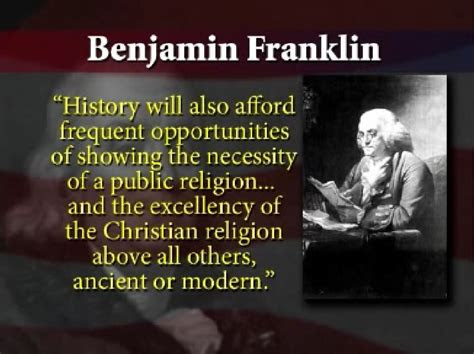
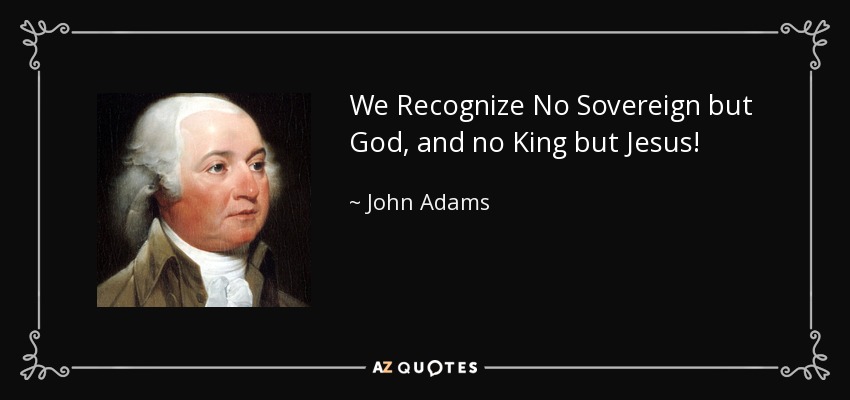




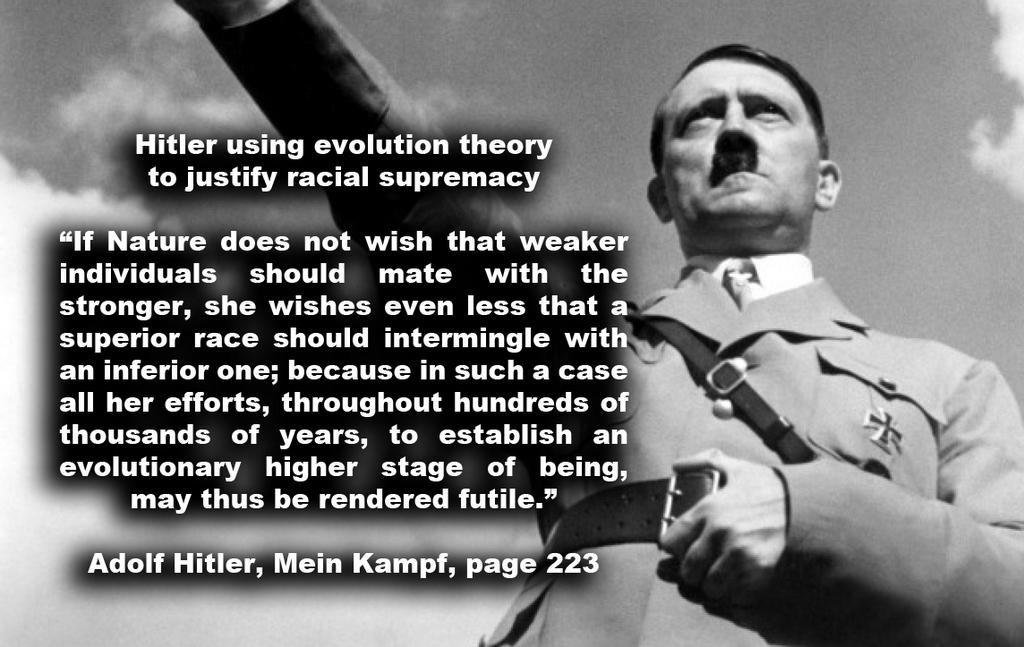

-
Subscribe
Subscribed
Already have a WordPress.com account? Log in now.
 Zach Uram's Blog