-
Warp Speed

Oh the joys of traveling
At a superluminal speed
In these gloomy days
It is precisely what I need
My thoughts travel
Faster than the light
God has given me this wondrous gift
At first, it gave me a fright
I traverse the universe to and fro
Past black holes, supernovas
And wherever else I go
Exploring from the comfort
Of my own place
Who needs a rocket
To explore outer space
So merrily along shall, I go
Never tired of my journeys
I can go fast or slowby Zachary Uram
(c) 2022 -
Dawn of the Nuclear Age

Was the use of atomic bombs (the first use of nuclear weapons in history) on the Japanese cities of Hiroshima and Nagasaki justified?
The Japanese were at that time fiercely devoted to Emperor Hirohito, who they regarded as divine. Fighting at Okinawa and elsewhere showed the Japanese forces were fanatical and would fight tenaciously to the death, and that they would choose death over dishonor. That means we can reasonably infer that the planned Allied invasion of Japan, codenamed Operation Downfall, would have resulted in horrific casualties on both Allied and Japanese sides.
Historian Victor Davis Hanson, writing in The Mercury News, argues that the attacks were strategically justified. Hanson estimated that, following the surrender of Germany, perhaps as many as 5,000 Allied bombers would have been ready to firebomb Japan, which would have been a prelude to Downfall. This operation was projected to cause a minimum of 1 million American casualties, and tens of millions of deaths and injuries among the Japanese defenders. Japanese troops had tenaciously defended the island of Okinawa with deadly ferocity, suggesting that combat on the mainland would cause a terrible waste of human life on both sides.
Other historians share Hanson’s perspective. “Truman had little choice,” wrote Antony Beevor in History Extra, “Japanese documents apparently indicate their army was prepared to accept up to 28 million civilian deaths.”
-
Ukraine and American Interventionism
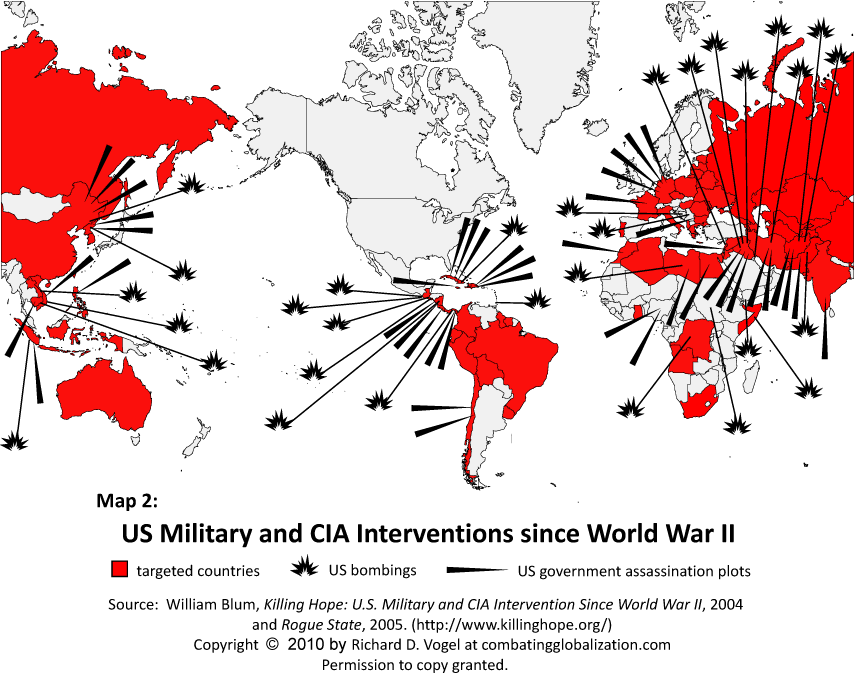
Once again we see neoconservatives and neoliberals pushing for an all-out war between Russia and America. This is sheer insanity and utter folly. America is not the world’s police. Have we learned nothing in the past 50 years? American interventionism has cost us trillions of dollars, and thousands of American lives, it’s generated lots of ill will and made enemies of countries who could have been allies. This is not just a Republican or Democrat problem. Both parties have engaged in reckless interventionism.
Do we really need hundreds of military bases around the world? There are roughly 750 US foreign military bases; they are spread across 80 nations. Our bloated nearly $1 trillion per year Dept. of Defense budget dwarfs the defense spending of every other country in the world by a lot! When is the last time America was invaded?! We should only support defensive wars and our defense budget should be a fraction of what it is.
Ukraine clearly provoked Russia into a wider conflict and forced Putin to take military action to defend the Russians in the Donbas. Since 2014 Ukraine killed thousands of Russians including not just separatist forces, but also civilians. It was a CIA backed coup that toppled the pro-Russia president of Ukraine which made this action in the Donbas possible.
Since January 24th of this year, the Biden administration has spent over $52 billion on Ukraine. Currently, Biden is requesting Congress that we spend an additional $37.7 billion on Ukraine. This is madness. We spend nearly $100 billion on a European conflict while the EU has only spent around $15 billion! This is not our problem. We have no business being involved in this conflict. The money we are pumping into the war is only prolonging the conflict and ensuring that more Ukrainians and Russians die.
Historically Ukraine has belonged to greater Russia. It was only in modern times that Lenin set the current borders of Ukraine.
It is foolish to antagonize Russia. The Biden administration could provoke World War 3 which would almost certainly involve the use of nuclear weapons. The cold war between the Soviet Union and America ended nearly 30 years ago with the break up of the Soviet Union. Russia is not our enemy! I see clearly how the Western media is being used to push anti-Russian propaganda. It is disgusting. Yet the majority of unthinking and uninformed Westerners are not even consciously aware of this bias and brainwashing they’ve been subjected to by the media.
Why are we spending nearly $1 trillion per year on defense when we have a huge problem of homelessness (including many veterans), millions of Americans are on food stamps and we know many children in America go to bed hungry. That money could be better allocated to help the poor in America and speaking personally the amount of money America spends per capita on the mentally ill is pitiful compared to Western European countries. My friend in Canada is on disability, like me, for mental illness and he gets over $2,000 per year more than me. You try living on $1,000 per month as your sole source of income and see how well you fare. As a conservative, it upsets me greatly that the majority of my fellow conservatives have little or no concern for poverty in America and especially those suffering from mental illness. Yet they hypocritically had no problem with trillions of dollars in tax cuts for the wealthy which the Trump administration pushed through.
Even though I don’t agree with President Trump on every policy issue I think he would manage our relationship with Russia far better than Biden and would end our involvement in Ukraine. I will support whoever the Republican party’s nominee is for president. I think either Trump or Florida governor DeSantis would fight for American interests.
Please urge your elected officials, whether they be local, state, or federal, to spend more money fighting poverty and to increase funding for critical social programs like SSI, SSDI, and food stamps.
America, Biden, budget, CIA, civilians, deaths, defense, defense spending, Dept. of Defense, DeSantis, Donbas, EU, food stamps, foreign military bases, funding, Intervention, Interventionism, mental illness, military, poverty, Putin, Russia, SSDI, SSI, Trump, Ukraine, United States, United States of America, US, USA -
1960s Folk Music Medley
The first song is Both Sides Now by Judy Collins.
Lyrics
Bows and flows of angel hair
And ice cream castles in the air
And feathered canyons everywhere
I’ve looked at clouds that way
But now they only block the sun
They rain and snow on everyone
So many things I would have done
But clouds got in my way
I’ve looked at clouds from both sides now
From up and down and still somehow
It’s cloud’s illusions I recall
I really don’t know clouds at all
Moons and Junes and Ferris wheels
The dizzy dancing way you feel
When every fairy tale comes real
I’ve looked at love that way
But now it’s just another show
You leave ’em laughing when you go
And if you care don’t let them know
Don’t give yourself away
I’ve looked at love from both sides now
From win and lose and still somehow
It’s love’s illusions I recall
I really don’t know love at all
Tears and fears and feeling proud
To say “I love you” right out loud
Dreams and schemes and circus crowds
I’ve looked at life that way
But now old friends are acting strange
They shake their heads, they say I’ve changed
Well something’s lost but something’s gained
In living every day
I’ve looked at life from both sides now
From win and lose and still somehow
It’s life’s illusions I recall
I really don’t know life at all
The second song is Try to Remember by The Brothers Four.
Lyrics
Try to remember the kind of September
When life was slow and oh, so mellow
Try to remember the kind of September
When grass was green and grain was yellowTry to remember the kind of September
When you were a tender and callow fellow
Try to remember and if you remember
Then follow, followTry to remember when life was so tender
That no one wept, except the willow
Try to remember the time of September
When love was an ember about to billow
Try to remember and if you remember
Then follow, followDeep in December, it’s nice to remember
Although you know the snow will follow
Deep in December, it’s nice to remember
The fire of September that made us mellow
Deep in December our hearts should remember
And follow, follow, follow
The third song is also by The Brothers Four titled Greenfields.
Lyrics
Once there were greenfields kissed by the sun
Once there were valleys where rivers used to run
Once there were blue skies with white clouds high above
Once they were part of an everlasting loveWe were the lovers
Who strolled through greenfieldsGreenfields are gone now, parched by the sun
Gone from the valleys where rivers used to run
Gone with the cold wind that swept into my heart
Gone with the lovers who let their dreams departWhere are the greenfields
That we used to roam?I’ll never know what made you run away
How can I keep searching when dark clouds hide the day
(Oh) I only know there’s nothing here for me
Nothing in this wide world left for me to seeBut I’ll keep on waiting till you return
I’ll keep on waiting until the day you learn
You can’t be happy while your heart’s on the roam
You can’t be happy until you bring it homeHome to the greenfields
And me once again
The fourth and final song in this medley is Michael, Row the Boat Ashore by The Highwaymen.
Lyrics
Michael rowed the boat ashore, halleluja
Michael rowed the boat ashore, hallelujaSister helped to trim the sails, halleluja
Sister helped to trim the sails, hallelujaMichael rowed the boat ashore, halleluja
Michael rowed the boat ashore, hallelujaThe river Jordan is chilly and cold, halleluja
Chills the body but not the soul, hallelujaMichael rowed the boat ashore, halleluja
Michael rowed the boat ashore, hallelujaThe river is deep and the river is wide, halleluja
Milk and honey on the other side, hallelujaMichael rowed the boat ashore, halleluja
Michael rowed the boat ashore, halleluja -
Autumn Haiku
“Morning Walk“
The leaves fall down slowly
Shades of orange, yellow, and red
Beautiful bright huesby Zachary Uram
(c) 2022“Rain“
Cold rain swiftly falls
I see my breath crystallize
The sun slowly setsby Zachary Uram
(c) 2022“Ravens“
Ravens crow loudly
I see them flying above me
Such majestic birdsby Zachary Uram
(c) 2022
-
The Geneva Bible: The Reformers’ Bible
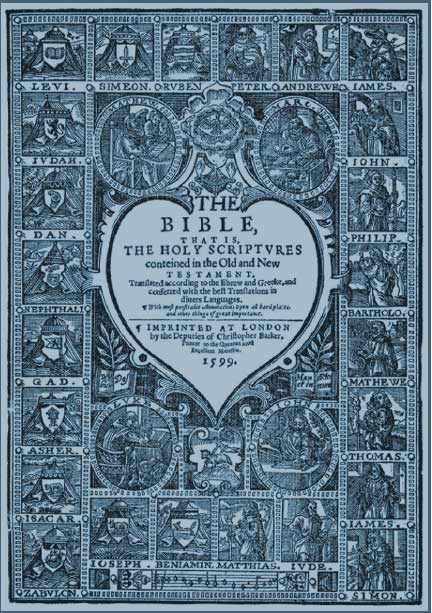
What exactly is the Geneva Bible and what is its significance?
The Geneva Bible was first published in 1560. It was the first translation to use chapter divisions and numbered verses and became the most popular version of its time because of the extensive marginal notes and annotations. Some of those notes were very controversial. They disturbed a powerful king and a dictatorial religion (Catholicism) that executed those who disagreed with Catholic theology.
The 1560 Geneva Bible was revolutionary. It was the most reader-friendly version of the Bible ever translated, with numerous innovations making it ideal for the common reader. The Geneva Bible was the first English Bible to use cross-references, and the first to have Bible chapters divided into numbered verses for easy reference and memorization. It was also the first English Bible to translate the Old Testament directly out of the Hebrew and the first to be printed in Roman (rather than Gothic) type for easy reading. It was the first English Bible published for the common man and the first “study Bible” with extensive notes by Reformers throughout to help explain and apply the text. It was also the Bible that the Pilgrims brought to America on the Mayflower.
The translation is the work of religious leaders exiled from England after the death of King Edward VI in 1553. Almost every chapter has marginal notes to create a greater understanding of scripture. The marginal notes often reflected Calvinistic and Protestant reformation influences, not yet accepted by the Church of England. King James I in the late 16th century pronounced the Geneva Bible marginal notes as being: “partial, untrue, seditious, and savoring of dangerous and traitorous conceits.” In every copy of each edition the word “breeches” rather than “aprons” was used in Genesis 3:7, which accounts for why the Geneva Bible is sometimes called the “Breeches” Bible. The Church of England never authorized or sanctioned the Geneva Bible. However, it was frequently used, without authority, both to read the scripture lessons, and to preach from. It was pre-eminent as a household Bible and continued so until the middle of the 17th century. The convenient size, cheap price, chapters divided into numbered verses, and extensive marginal notes were the cause of its popularity
As I said, the Geneva Bible angered a powerful king. It sailed with Christians across the Atlantic Ocean in 1607 to Jamestown, Virginia, and in 1620 with those aboard the Mayflower to Plymouth, Massachusetts. When the Pilgrims landed at Plymouth, Massachusetts in 1620, they brought along necessary supplies, a consuming passion for advancing the Kingdom of Christ, and their most precious cargo —William Bradford’s copy of the Geneva Bible.
First, a little history: Mary I was Queen of England and Ireland from 1553 until her death in 1558, and her executions of Protestants caused her opponents to give her the nickname “Bloody Mary.” She was determined to roll back the progress of the Reformation and reinstate Catholicism. Bloody Mary persecuted Christians who had embraced the Protestant Reformation, even putting some to death like Hugh Latimer, Nicholas Ridley, and Lady Jane Grey, an English noblewoman who was put to death at the age of just seventeen. It was her persecution that caused the Marian Exile which drove 800 English scholars to exile in the European continent, where a number of them gathered in Geneva, Switzerland. In Geneva, they found protection in the Genevan civil authorities. There, a team of scholars led by William Whittingham, and assisted by Miles Coverdale, Christopher Goodman, Anthony Gilby, John Knox, and Thomas Sampson, produced The Geneva Bible, based on Greek and Hebrew manuscripts and a revision of William Tyndale’s New Testament, which first appeared in 1526. The Geneva Bible New Testament was published in 1557, with the complete Bible appearing in 1560, and an updated and restored version appearing in 1599. It was the first English translation of the Bible without the stamp of approval of either English government officials or the Church of Rome. The Geneva Bible is a critical, yet almost completely forgotten part of the Protestant Reformation. It was a pure and accurate translation of the Holy Writ.
The creation of the Geneva Bible was a substantial undertaking. Its authors spent over two years, working diligently day and night by candlelight, to finish the translation and the commentaries. The entire project was funded by the exiled English congregation in Geneva, making the translation a work supported by the people and not by an authoritarian church or monarch.
While previous English translations failed to capture the hearts of the reading public, the Geneva Bible was instantly popular. Between 1560 and 1644 at least 144 editions appeared.
But the Geneva Bible was not popular with everyone. A note on Exodus 1:19 upset King James because it stated that the Hebrew midwives were right to disobey the Egyptian king’s orders.
In addition to being a threat to the nearly unlimited power and authority of the king of England, the Geneva Bible addressed the very powerful Catholic church in a note on Revelation 11:7.
Tyrants have always feared God’s Word, especially when it is translated so the average person can read, understand, and apply it to every area of life. What was true then is no less true today.
Since the sixteenth century, other Bible publishers have built on the wisdom of the Geneva Protestants. In fact, it is nearly impossible to find a version of the English Bible that does not include chapter and verse numbers, cross-references, Roman typography, and a translation from the original source languages in straightforward contemporary language – all of which were originally unique to the Geneva Bible.
At the time of the signing of the Constitution, the predominant language spoken in America was Scottish. When the Pilgrims came to what would become America, the only Bible used at that time was the Geneva Bible.
The greatest distinction of the Geneva Bible, however, is the extensive collection of marginal notes that it contains. Prominent Reformation leaders such as John Calvin, John Knox, Miles Coverdale, William Whittingham, Theodore Beza, and Anthony Gilby wrote the majority of these notes in order to explain and interpret the scriptures. The notes comprise nearly 300,000 words, or nearly one-third the length of the Bible itself, and they are justifiably considered the most complete source of Protestant religious thought available. The Geneva Bible was the predominant English translation during the period in which the English and Scottish Reformations gained great impetus. Iain Murray, in his classic work on revival and the interpretation of prophecy, The Puritan Hope, notes, “… the two groups in England and Scotland developed along parallel lines, like two streams originating at one fountain. The fountain was not so much Geneva, as the Bible which the exiles newly translated and issued with many marginal notes… it was read in every Presbyterian and Puritan home in both realms”
The Cambridge Geneva Bible of 1591 was the edition carried by the Pilgrims when they fled to America. As such, it directly provided much of the genius and inspiration which carried those courageous and faithful souls through their trials, and provided the spiritual, intellectual, and legal basis for the establishment and flourishing of the colonies. Thus, it became the foundation for the establishment of the American nation.All the marginal commentaries were finished by 1599, making the 1599 edition of the Geneva Bible the most complete study aid for Biblical scholars and students. This edition does not contain the Apocrypha. The Apocrypha’s notes are minimal or absent in other editions. Additional highlights of this edition include maps of the Exodus route and Joshua’s distribution of land, a name and subject index, and Psalms sung by the English congregation in Geneva.
Owing to the marginal notes and the superior quality of the translation, the Geneva Bible became the most widely read and influential English Bible of the 16th and 17th centuries. It was continually printed from 1560 to 1644 in over 200 different editions. It was the Bible of choice for many of the greatest writers, thinkers, and historical figures of the Reformation era. William Shakespeare’s plays and the writings of John Milton and John Bunyan were clearly influenced by the Geneva Bible. It was the primary Bible of 16th-century English Protestantism and was used by William Shakespeare, Oliver Cromwell, John Milton, John Knox, John Donne, and John Bunyan. Oliver Cromwell issued a pamphlet containing excerpts from the Geneva Bible to his troops during the English Civil War. When the Pilgrims set sail on the Mayflower they took with them exclusively the Geneva Bible. A superb translation, it was the product of the best Protestant scholars of the day and became the Bible of choice for many of the greatest writers and thinkers of that time.
The marginal notes of the Geneva Bible enraged the Catholic Church since the notes deemed the act of confession to men – the Catholic Bishops – as unjustified by Holy Script. Man should confess to God only; man’s private life was man’s private life. The notes also infuriated King James, since they allowed disobedience to tyrannical kings. King James went so far as to make ownership of the Geneva Bible a felony. He then proceeded to make his own version of the Bible, but without the marginal notes that had so disturbed him. Consequently, during King James’s reign, and into the reign of Charles I, the Geneva Bible was gradually replaced by the King James Bible.
All but forgotten today, the Geneva Bible was the most widely read and influential English Bible of the 16th and 17th centuries.
With its variety of scriptural study guides and aids—which included cross-reference verse citations, introductions to each book of the Bible, maps, tables, woodcut illustrations, indexes, and other features—the Geneva Bible is regarded as history’s first study Bible.
John Adams, the second president of the United States, wrote: “Let not Geneva be forgotten or despised. Religious liberty owes it most respect.” Between 1560 and 1599, The Geneva Bible was providentially unleashed upon a dark, discouraged, downtrodden English-speaking world. Just when it looked as if the Machiavellian, Divine Right kings, such as the Tudors of England, were about to drive Christendom back to the days of Caesar worship, a Bible appeared that set the stage for a Christian Reformation of life and culture the likes of which the world had never seen.
By the time of the defeat of the Spanish Armada in 1588, just 28 years after the first printing of the Geneva Bible, it was already being said of the English that they were becoming a people of the Book. The results of a people reading and obeying the Word of God were the explosion of faith, character, the first missionary movement in history, literature, economic blessing, and political and religious freedom.
The Geneva Bible is one of the most historically significant translations of the Bible into English, preceding the King James Version by 51 years. It was one of the Bibles taken to America on the Mayflower. The Geneva Bible was used by many English Dissenters, and it was still respected by Oliver Cromwell’s soldiers at the time of the English Civil War. This version of the Bible is significant because, for the first time, a mechanically printed, mass-produced Bible was made available directly to the general public.
The Geneva Bible is unique among all other Bibles. Translated by the best Protestant scholars of the day, it’s a version born directly out of the religious conflict of the Reformation. And, though sadly little-known today, The Geneva Bible became one of the most popular translations of its time.

The Geneva Bible—written with clear readability and comprehension in mind—was not only the first Bible to use chapters and numbered verses, but it was also filled with extensive marginal notes. These notes, written by Reformation leaders including John Calvin, were intended to help explain and interpret the Scriptures for the average reader.
The Geneva Bible’s extensive study notes were included to explain and interpret the scriptures for the common people, and were considered to be a threat to Big Government, which makes this version of the Bible more relevant than today than any other version! Why? King James frowned on what he considered to be seditious marginal notes on key political texts. A marginal note for Exodus 1:9 indicated that the Hebrew midwives were correct in disobeying the Egyptian king’s orders, and a note for 2 Chronicles 15:16 said that King Asa should have had his mother executed and not merely deposed for the crime of worshipping an idol. The King James Version of the Bible grew out of the king’s distaste for these brief but potent doctrinal commentaries. He considered the marginal notes to be a political threat to his kingdom.
In 2006, Tolle Lege Press released a version of the 1599 Geneva Bible with modern spellings and punctuation as part of its 1599 Geneva Bible restoration project. The original cross-references were retained as well as the study notes by the Protestant Reformation leaders. In addition, the Old English glossary was included in the updated version. Download in a variety of formats such as PDF, Mobi, and ePub here: 1599 Geneva Bible Patriot Edition With Notes. If you wish to have a printed edition you can order it here.
This edition of the 1599 Geneva Bible and Notes contains the original language (Old English) so there will be an archaic spelling of words and odd grammar.
America, Anglican church, apologetics, Bible, books, Britain, Catholic church, Catholicism, Christian theology, Christianity, france, government, history, law, Lutheran, men, poetry, popular culture, Protestant, Puritans, Reformed, Scotland, theology, Western Europe1560, 1599, 1599 Geneva Bible, 16th Century, 17th century, America, Anglican, Anthony Gilby, Apocrypha, Bible, Bible translation, Bloody Mary, Britain, Cambridge Geneva Bible, Catholic, Christopher Goodman, Church, Church of England, Constitution, England, English Bible, English Civil War, ePub, first, france, Geneva, Geneva Bible, Hebrew, Hugh Latimer, Jamestown, John Adams, John Bunyan, John Calvin, John Knox, John Milton, King Charles I, King James, King James Bible, King James Version, Lady Jane Grey, Latin, manuscripts, marginal notes, Martyrs, Mary I, Massachusetts, Miles Coverdale, Mobi, New Testament, Nicholas Ridley, notes, Old English, Old Testament, Papist, PDF, persecution, Pilgrims, Plymouth, President, Protestant, Protestant Reformation, Protestant scholars, Puritans, Queen of England, Roman Catholic, Romish, scholars, Scotland, Spanish Armada, students, Study Bible, Switzerland, Theodore Beza, Thomas Sampson, Tolle Lege Press, translation, United States, United States of America, US, USA, Virginia, William Bradford, William Shakespeare, William Tyndale, William Whittingham -
Some Thoughts on the Lord’s Day
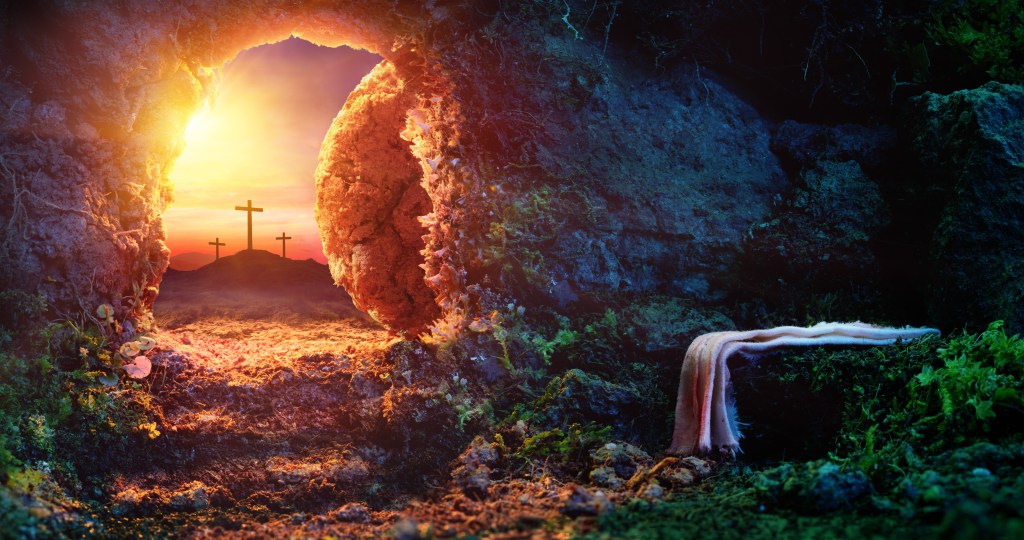
Empty tomb At Sunrise With Shroud Oh what a mystery
That the Creator of the universe
Should humble Himself
And incarnate as a manWho can fathom this
Miracle of miracles
The omnipotent and sovereign God
As a creatureWhat depths of love
Drove the God-Man to us
To redeem wretched mankind
Such love is eternalBorn to a virgin
Christ lived among us
He was sinless, perfect in every way
He experienced what we experienceChrist gathered 12 apostles
And began teaching and healing
People were astounded by His miracles
They authenticated Him as the MessiahBut not everyone was pleased with Jesus
The Jewish religious leaders conspired
Judas betrayed Christ
And so He was arrestedEven the Roman prefect Pilate
Could find no fault with Christ
Yet the Jewish crowd demanded His death
And so He was sentenced to deathHe was to be crucified
A criminal’s death
For the Lord of Lords
Yet Christ did not resistHe knew what must happen
To save us
Jesus would be a propitiation
For wicked mankindOn the rocky Golgotha outside Jerusalem
Here on Calvary hung the King of Kings
He bore our sins
And suffered beyond our imaginationJesus took on the full wrath of God
He sacrificed Himself willingly for us
At last, Christ cried out “It is finished!”
And gave up His spiritWas this the end?
Had evil triumphed?
Christ lay in the silent tomb
Our eternal destiny hung in the balanceOn the third day
There was a blinding flash of light
In the tomb
And Jesus rose up alive!The God-Man had resurrected
Hell could not contain Him
Death could not destroy Him
Our Redeemer liveth!Oh, happy day!
Oh, joy unending!
Christ ransomed us from Hell
The Elect would live eternally with JesusHow can we partake in this new life you ask?
First, you must sincerely repent of your sins
Next, you must trust in Christ alone
If you do this your salvation is securedNo power of Satan
No plot of mankind
Can ever rob you of your salvation
So persevere to the endWe are saved by unmerited grace
Through faith alone in Christ
We contribute nothing to our salvation
Except for our filthy sinsIf Christ is your Savior
He will also be your Lord
You will delight
In obeying His commandsSo spread the Gospel
Throughout the earth
We plant the seeds
And the Holy Spirit reaps the harvest -
Farewell Cruel World
Oh world of pain and strife
Jesus, take me Home from this tragic life
I long to be with the Lord
And free of this wicked world
No more suffering and misery
As Christians, this is our destiny
So I bid farewell to every family member and friend
I have reached the end
I’ll soon behold the Lamb of God
Bury me underneath the cold sod
No more mental illness and disease
Only Christ shall I please
by Zachary Uram
(c) 2022PS: I am not suicidal. I believe suicide is a sin. This poem is simply a reflection of my feelings.
-
The Glorious Protestant Reformation: Some Thoughts on Reformation Day
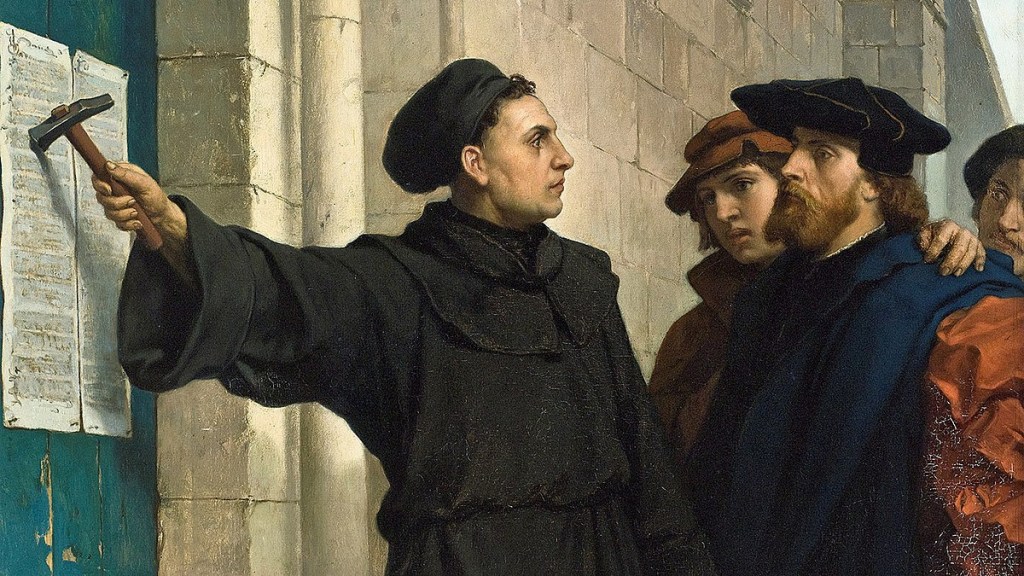
On this day, October 31st, in the year of our Lord, 1517, an Augustinian friar (monk) in the Roman Catholic church, Martin Luther (1483-1546), who was also a theologian, priest, and a professor at the University at Wittenberg, nailed his 95 theses, which were theological problems he saw with Catholic theology as well as practices which Luther wanted to debate, to the Castle doors in Wittenberg. Many of the ideas in the 95 Theses directly challenged and contradicted the teachings of the Catholic church. Thus igniting a catalyst that would propel Luther to worldwide renown, cause major reform in theology and cause a split with the institutional Catholic church. This movement of reform came to be known as the Protestant Reformation.
The Reformation Luther started had been a match lighting a single blade of grass, the fire quickly spread into a fierce and mighty conflagration. Other Reformers joined Luther: John Calvin in France, Huldrych Zwingli in Switzerland, and John Knox in Scotland among others.
I thank God for this Reformation! It has been a mighty force for good in the world. The Reformation challenged the Catholic church’s dominance in the West as the sole Christian church (the Eastern Orthodox had broken off in the East with the schism in 1054 AD). At that time there was no separation of church and state. If you disagree with the Catholic church you would be murdered unless you recanted. A vast multitude of people across the centuries were tortured and murdered by the Catholic church.
The Reformation grew from its humble beginnings to a mighty movement of God that spread through Western Europe. The Reformers had some theological disagreements, but they agreed on the fact that God was sovereign and that we are saved by grace alone, through faith alone, in Christ alone, according to Scripture alone, for the glory of God alone. Salvation through faith alone (Sola Fide) was the centerpiece, the sine qua non, of the Reformation. In fact, Martin Luther argued that justification by faith alone is the doctrine on which the church stands or falls.

The Catholic church teaches that we are saved by faith, in cooperation with our works. This is a synergistic process (God and man work together), whereas the Reformers argued that the salvation process is monergistic (God working alone). This is because in Reformed soteriology (how we are saved), man is born totally depraved (every aspect of his being is corrupted by sin) due to the Fall (when Adam disobeyed God and fell into sin). We are spiritually dead and God breathes spiritual life into us when the Holy Spirit regenerates us. Repentance precedes faith. Both repentance and faith are gifts that we receive by God’s unmerited grace alone.
In Reformed theology, our faith is predicated on the Word of God (Scripture). That is the standard. Scripture alone (Sola Scriptura) is our highest authority: not the Catholic pope, not the Catholic cardinals and bishops, not the so-called infallible Magisterium (teaching authority) of the Catholic church, which asserts itself to have the same level of authority as Scripture. It is axiomatic and self-evident that God’s Word should be the supreme rule of our lives. Scripture doesn’t need to explicitly declare itself to the highest authority. But in fact, Scripture does say that it equips us for every good work.
All Scripture is breathed out by God and profitable for teaching, for reproof, for correction, and for training in righteousness, that the man of God may be competent, equipped for every good work.
2 Timothy 3:16-17For the word of God is living and active, sharper than any two-edged sword, piercing to the division of soul and of spirit, of joints and of marrow, and discerning the thoughts and intentions of the heart.
Hebrews 4:12The Catholic church realized this new spiritual revolution posed a major threat to its power. They sent assassins to murder Luther, but God preserved his life. If one studies the Reformation carefully, the providential hand of God is readily apparent.
What the Reformation was truly about was God’s glory; a return to biblical faith which alone is saving faith. Over many centuries of man-made traditions, opinions by popes and councils, and so-called Early Church Fathers, all developing new doctrines which would have been utterly alien to the New Testament Church. It is the Reformers who called us back to the faith of the Apostles without additional doctrinal accretions. The Reformed Church gives God the highest degree of glory.
Here is an outstanding documentary, Luther: The Life and Legacy of the German Reformer, produced by Ligonier Ministries (founded by R. C. Sproul), which examines Luther’s life and his impact on the world, as well as his lasting legacy.
SEMPER REFORMANDA!!!
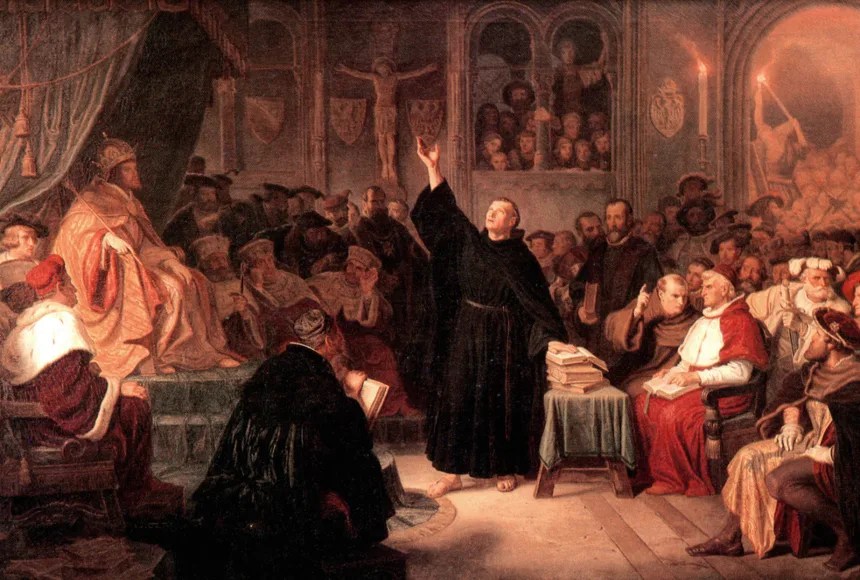
Martin Luther at the Diet of Worms, 1521 Luther had been called before the Emperor Charles V, as well as Roman Catholic theologians, at the Diet of Worms, to give recant his dangerous ideas. Luther refused to recant, and instead he gave a passionate and stirring speech (known as the Here I Stand speech) which said that he would stand on God’s Word.
Diet of Worms Speech
The following translation comes from The History of the Reformation in the Sixteenth Century by Jean-Henri Merle d’Aubigne (l. 1794-1872), translated by David Dundas Scott. Slight changes have been made in spelling and punctuation and passages clarified by Lyndal Roper’s Martin Luther: Renegade and Prophet and Roland H. Bainton’s Here I Stand: A Life of Martin Luther. Biblical citations are from the original text.
Most Serene Emperor, Illustrious Princes, Gracious Lords:
I this day appear before you in all humility, according to your command, and I implore your Majesty and your august highnesses, by the mercies of God, to listen with favor to the defense of a cause which I am well assured is just and right. I ask pardon, if by reason of my ignorance, I am wanting in the manners that befit a court; for I have not been brought up in king’s palaces, but in the seclusion of a cloister and I claim no other merit than that of having spoken and written with the simplicity of mind which regards nothing but the glory of God and the pure instruction of the people of Christ.
Two questions were yesterday put to me by his imperial majesty; the first, whether I was the author of the books whose titles were read; the second, whether I wished to revoke or defend the doctrine I have taught. I answered the first directly, and I adhere to that answer: that these books are mine and published by me, except so far as they may have been altered or interpolated by the craft or officiousness of opponents. As for the second question, I am now about to reply to it and I must first entreat your Majesty and your Highnesses to deign to consider that I have composed writings on very different subjects. In some, I have discussed faith and good works, in a spirit at once so pure, clear, and Christian, that even my adversaries themselves, far from finding anything to censure, confess that these writings are profitable, and deserve to be perused by devout persons. The pope’s bull, violent as it is, acknowledges this. What, then, should I be doing if I were now to retract these writings? Wretched man! I alone, of all men living, should be abandoning truths approved by the unanimous vote of friends and enemies, and should be opposing doctrines that the whole world glorifies in confessing!
I have composed, secondly, certain works against the papacy, wherein I have attacked such as by false doctrines, irregular lives, and scandalous examples, afflict the Christian world, and ruin the bodies and souls of men. And is not this confirmed by the grief of all who fear God? Is it not manifest that the laws and human doctrines of the popes entangle, vex, and distress the consciences of the faithful, while the crying and endless extortions of Rome engulf the property and wealth of Christendom, and more particularly of this illustrious nation? Yet it is a perpetual statute that the laws and doctrines of the pope be held erroneous and reprobate when they are contrary to the Gospel and the opinions of the Church fathers.
If I were to revoke what I have written on that subject, what should I do but strengthen this tyranny and open a wider door to so many and flagrant impieties? Bearing down all resistance with fresh fury, we should behold these proud men swell, foam, and rage more than ever! And not merely would the yoke which now weighs down Christians be made more grinding by my retraction, it would thereby become, so to speak, lawful, for, by my retraction, it would receive confirmation from your most serene majesty, and all the States of the Empire. Great God! I should thus be like to an infamous cloak, used to hide and cover over every kind of malice and tyranny.
In the third and last place, I have written some books against private individuals, who had undertaken to defend the tyranny of Rome by destroying the faith. I freely confess that I may have attacked such persons with more violence than was consistent with my profession as an ecclesiastic; I do not think of myself as a saint, but neither can I retract these books. Because I should, by so doing, sanction the impieties of my opponents, and they would thence take occasion to crush God’s people with still more cruelty.
Yet, as I am a mere man, and not God, I will defend myself after the example of Jesus Christ, who said: “If I have spoken evil, bear witness against me; but if well, why doest thou strike me?” (John 18:23). How much more should I, who am but dust and ashes, and so prone to error, desire that everyone should bring forward what he can against my doctrine. Therefore, most serene emperor, and you illustrious princes, and all, whether high or low, who hear me, I implore you by the mercies of God to prove to me by the writings of the prophets and apostles that I am in error. As soon as I shall be convinced, I will instantly retract all my errors, and will myself be the first to seize my writings and commit them to the flames.
What I have just said will, I think, clearly show that I have well considered and weighed, not only the dangers to which I am exposing myself, but also the parties and dissentions excited in the world by means of my doctrine, of which I was yesterday so gravely admonished. But far from being dismayed by them, I rejoice exceedingly to see the Gospel this day, as of old, a cause of disturbance and disagreement; for such is the character and destiny of God’s Word. “I came not to send peace unto the earth, but a sword,” said Jesus Christ. “For I am come to set a man at variance against his father and the daughter against her mother and the daughter-in-law against her mother-in-law and a man’s foes shall be those of his own household.” (Matthew 10:34-36)
God is wonderful and terrible in His counsels. Let us have a care, lest in our endeavors to arrest discords, we be bound to fight against the holy word of God and bring down upon our heads a frightful deluge of inextricable dangers, present disaster, and everlasting desolations. Let us have a care that the reign of the young and noble prince, the Emperor Charles, on whom, next to God, we build so many hopes, should not only commence, but continue and terminate its course, under the most favorable auspices.
I might cite examples drawn from the oracles of God. I might speak of Pharaohs, of kings in Babylon, or of Israel, who were never more contributing to their own ruin than when, by measures in appearances most prudent, they thought to establish their authority! God removeth the mountains and they know not (Job 9:5). In speaking thus, I do not suppose that such noble princes have need of my poor judgment; but I wish to acquit myself of a duty whose fulfillment my native Germany has a right to expect from her children. And so, commending myself to your august majesty, and your most serene highnesses, I beseech you in all humility, not to permit the hatred of my enemies to rain upon me an indignation I have not deserved. I have done.
Martin Luther, Diet of Worms, 1521At this point in the hearing, Luther was asked by Charles V to repeat what he had said in German in Latin. He was told to answer simply, and without the art of oratory, whether he would retract his statements or stand by them. He then concluded with the most famous passage of his speech.
Since your most serene majesty and your highnesses require of me a simple, clear, and direct answer, I will give one, and it is this: I cannot submit my faith either to the pope or to the council, because it is clear that they have fallen into error and even into inconsistency with themselves. If, then, I am not convinced by proof from Holy Scripture, or by cogent reasons, if I am not satisfied by the very text I have cited, and if my judgment is not in this way brought into subjection to God’s word, I neither can nor will retract anything; for it cannot be either safe or honest for a Christian to speak against his conscience. Here I stand. I cannot do otherwise. God help me. Amen.
Martin Luther, Diet of Worms, 1521“Here I Stand” Line
The now-famous concluding sentence – “Here I stand. I cannot do otherwise” – is thought by modern scholars to have been added later, but this claim continues to be debated. Scholar Lyndal Roper notes, “If he did not say these words, this was the phrase that soon became famous. It certainly encapsulated the spirit of his appearance”. Scholar Roland H. Bainton comments:
The earliest printed version [of the speech] added the words: “Here I stand. I cannot do otherwise.” The words, though not recorded on the spot, may nevertheless be genuine, because the listeners at the moment may have been too moved to write.
This speech is considered by many historians and speech writers to be one of the finest pieces of oratory in world history.
This monumental speech was the death knell for the Catholic church’s unchallenged rule over the laity. Its absolute and complete control over them, a control which operated on instilling fear through the threat of damnation, was finally broken once and for all. Even today in 2022, if you are a Catholic and disagree with a point of church dogma, such as the supposed Immaculate Conception of Jesus’ mother Mary, you will be declared anathema and excommunicated. The church requires full and total consent and affirmation of all of its doctrines, as well as any future doctrines which may develop! This was too much for C. S. Lewis (famed author and Christian apologist) to tolerate, so he thankfully never swam the Tiber River to Rome! The Catholic church is still a monarchical and rigid institution, but with the freedoms most people now enjoy, they can no longer terrorize Christians legally with the blessing of the state.
The Catholic church teaches a false gospel of works righteousness which is anithetical to the biblical gospel of unmerited grace and justification by faith alone. The church in Rome does teach some correct doctrine, but for every correct doctrine, you may find several that are incorrect. So remaining in the Catholic church presents a huge problem to one who has been truly regenerated.
This is not just an abstract issue for me. Both sides of my family have been Roman Catholics for at least 500 years. Today, my parents, my two sisters and myself are Protestant. But all of my aunts, uncles, and cousins are Roman Catholic. All my grandparents, who sadly passed away, were also staunch Roman Catholics. If you’d like to read my testimony of salvation you can read it here.
This article by Dr. John MacArthur, The Protestant Protest, on the importance of the Reformation and how precious and supremely important it was to recover the Gospel.
The Reformation was a mighty move of God to correct errors that had crept into the the Catholic church. It liberated man from the unholy tyrrany which the Catholic church had so often employed throughout the previous centuries. Even as early as the New Testament era. we saw errors in the Church, by false prophets and false teachers. The Apostle Paul strongly rebuked these people and urged Christians to follow God’s Word.
The Reformation was a Holy Spirit led movement. Thanks to God using the Reformers, and strengthening them for the tasks at hand, man was once again being led by the indwelt Holy Spirit and walking by faith, not by sight.
For over a millennium, the Catholic church kept the precious Word of God out of the hands of the laity. Jerome (Eusebius Hieronymus Sophronius) completed the translation of the Bible into Latin, which became known as the Vulgate Bible, from the Hebrew and Greek sources, in 405 AD. It would stand as the “common” Bible translation and lasted all the way until 1965 when the Second Vatican Council finally allowed Bible translations in the vernacular. If one wanted to read Scripture they had to be educated in Latin and very few laity could afford to educate their children to such a level. The Catholic church could have let the laity have access to the Bibles in their churches, but that didn’t happen. Even after the invention of the printing press, which revolutionized learning, the Catholic church still kept the language of the mass and the Bible in Latin for another 1,100 years!
Thank God we have broken free of the iron grip the Catholic church had on people for so long. It is indeed a blessing to be born in the present age.
I want to end this article by thanking the Lord for saving an absolutely wicked sinful wretch like me. I clearly see how God used humble men to accomplish His will. He molded them like clay, He breathed spiritual life into them, and they dedicated their lives to Christ as both Lord and Savior. Out of their obedience to God, which meant many hardships, even death, was birthed the Protestant Reformation which restored the Gospel to man and started a theological revolution which echoes all the way to our current age. May we be ever self-reforming in our lives as Christ progressively sanctifies us, may our churches be ever reforming and oppose heresy when it’s encountered, may wives and husbands be ever reforming in raising their children for the glory of God. The Reformation didn’t end. It is a continual renewing, a redisciplining, remolding doctrine to be in line with Scripture. It will last until the Second Coming of Christ. Maranatha!
Be happy in Him, O my heart, and in nothing but God.
The Valley Of Visionapologetics, Catholic church, Catholicism, Christian theology, Christianity, government, law, Protestant, Reformed, sanctification, theology, Western Europe1517, 1521, 1965, 405, 5 Solas, 95 Theses, anathema, apologetics, Augustinian, Bible translation, Biblical faith, C. S. Lewis, Catholic, Church, church and state, control, debate, Diet of Worms, documentary, Emperor Charles V, excommunication, faith alone, False gospel, france, friar, Germany, good works, Gospel, Here I stand, history, Jerome, John Calvin, John MacArthur, justification, laity, Ligonier Ministries, Luther, Luther: The Life and Legacy of the German Reformer, Martin Luther, monk, monopoly, power, professor, progressive sanctification, Protestant Reformation, Puritan, R. C. Sproul, reformation, Reformation Day, Reformers, revolutionary, Roman Catholic, Saving faith, Scripture Alone, Second Coming, Second Vatican Council, semper reformanda, Sola Fide, Sola Scriptura, soteriology, speech, Switzerland, teacher, Totally depraved, Ulrich Zwingli, Valley of Vision, Vulgate, Wittenberg, Wittenberg University, Word of God, works righteousness -
Fantastic MLJ sermon!

Here is a wonderful and edifying sermon by Dr. Martyn Lloyd-Jones!
The sermon is titled “Christ, who is God“.
A Sermon on Romans 9:4-5
They are Israelites, and to them belong the adoption, the glory, the covenants, the giving of the law, the worship, and the promises. To them belong the patriarchs, and from their race, according to the flesh, is the Christ, who is God over all, blessed forever. Amen.
Romans 9:4-5Have modern critical scholars undermined the teaching about Christ’s deity? On what basis is this passage a doxology to God the Father instead of an affirmation of deity of the Son? False religions and cults seek to mislead the people of God and Dr. Martyn Lloyd-Jones takes up the challenge of looking closely at the arguments for the departure of modern translations from the Authorized Version. In this sermon on Romans 9:4–5 titled “Christ … Who is … God,” his main contention is that the changes reflected in the modern translations is not the result of an honest reading of the grammar, nor are they based on studying the manuscript tradition (textual criticism). Instead, it rests entirely on a general argument about what Paul does not do in his letters. Dr. Lloyd-Jones finds this most troubling and leverages not only other modern scholars, but the history of interpretation, and most importantly, other Scriptural evidence in order to show that Jesus Christ is called “God” by the apostle Paul in this verse. Listen as Dr. Lloyd-Jones provides a fresh account of an old debate and defends Trinitarian orthodoxy in the face of modern critical scholarship.
Click the play button below to listen to this sermon.
To download this sermon (MP3 file), click here.
-
Subscribe
Subscribed
Already have a WordPress.com account? Log in now.
 Zach Uram's Blog