-
Sheer Folly: America’s Ukraine/Russia Policy

It’s madness and utter idiocy for America to goad and antagonize Russia thus provoking a potential nuclear war. The stakes are too high and the risks are not mitigated sufficiently to behave so brazen and foolish. Yet that is precisely the policy the Biden Administration and Congress (including many Republicans) are taking.
The $1.7 trillion omnibus spending package the House of Representatives passed this week, which Biden is likely to approve, will authorize $45 billion in additional spending on Ukraine. That will bring total U.S. funding on that effort to over $100 billion since the start of this year when the conflict started.
Even the way the American mainstream media and the Biden administration characterize the conflict is offensive to Russia and needlessly polarizing. They keep referring to Russia’s involvement as an invasion of Ukraine. Calling Putin Hitler and a fascist is so absurd.
The truth is that Ukraine had a pro-Russian president and majority government until 2014 when the US (led by CIA operatives and funding from people like George Soros) worked to destabilize the region and ousted the pro-Russia president and replaced him with an aggressively anti-Russian leader.
When the Soviet Union broke up in the early 1990s assurances were given to Russia by America and NATO that no former Soviet bloc countries would enter NATO. NATO and EU countries are pushing Russia to a breaking point.
Ethnic Russians in the Donbas region of Ukraine were being killed by the thousands by president Volodymyr Zelensky’s government. They provoked Russia to intervene. Russia is currently taking action to secure the Donbas region and remove the Ukrainian government’s ability to wage war.
Sadly the neocons (neoconservatives) and war hawks have learned nothing since the US debacles in Vietnam, Afghanistan, and Iraq! They are pushing for an all-out war with Russia. It’s a proxy war now, but it could easily widen into a broader and deadlier conflict – one involving nuclear weapons.
America, geopolitics, global, government, history, politics, Russia, Soviet Union, The West, Ukraine, war$100 billion, 1990s, absurd, Afghanistan, Biden, Biden administration, CIA, Congress, EU, foolish, George Soros, Hitler, idiocy, Iraq, madness, NATO, neocons, neoconservatives, nuclear, nuclear conflict, nuclear weapons, President Biden, President Zelensky, proxy war, Republicans, Russia, Soviet Union, Ukraine, Vietnam, Volodymyr Zelensky, war, war hawks, Zelensky -
The Christian fish symbol

The fish was used in the Early Church to identify oneself as a Christian. Until the late 4th century Christianity was illegal in the Roman Empire and punishable by death. So Christians had to be cautious and take protective measures to avoid detection by the authorities.
The acrostic ICHTHUS (ΙΧΘϒΣ) identifies Jesus Christ as God’s Son and as the Savior. Thus it is a Christological symbol. Ichthus is the Greek word for fish. Thus we see how it was used as a Christian symbol. Ichthus is the Greek word for fish.
- Ισούς (Iesous) = Jesus
- Χριστός (Christos) = Christ
- Θεού (Theou) = God’s
- ΥιόΣ (Huios) = Son
- Σωτήρ (Soter) = Savior
This fish symbol, also became a code of communication, especially for the first
Christians when persecuted during the Roman Empire. Although Common (Vulgar) Latin was the language, everyone, across the known Western world spoke (the English of the time). Many people, especially educated people, but also Middle Eastern people spoke and understood Greek (and that is why the sign above the Cross said “The King of the Jews” in Latin, Hebrew, and Greek).The fish symbol can also be signified thus:

-
January 6th, 2021: Insurrection or Idiocy?

On January 6th, 2021, as Congress was certifying Joe Biden as the newly elected President as a result of his winning the 2020 presidential election, a group of angry supporters of President Trump stormed the Capitol Building where the members of Congress were, including Vice President Mike Pence. They wanted to stop Congress from certifying the election in favor of Biden. Some of them had previously planned to target certain politicians for assassination including Speaker of the House Nancy Pelosi and also Vice President Pence because he refused Trump’s request to invalidate the election. For months since the election Trump had refused to concede, he claimed there was a vast conspiracy that stole the election from him, the rightful winner in his mind, and given it to Biden. On January 6th, mere hours before Trump supporters sprang into violent action Trump had cajoled and encouraged them to “fight” for him.
Here is a minute-by-minute timeline of the attack/riot.
The Justice Department results of the criminal investigation into the rioters as of December 30, 2021. Based on the public court documents, below is a snapshot of the investigation. Complete versions of most of the public court documents used to compile these statistics are available on the Capitol Breach Investigation Resource Page at https://www.justice.gov/usao-dc/capitol-breach-cases.
Arrests made: More than 725 defendants have been arrested in nearly all 50 states and the District of Columbia. (This includes those charged in both District and Superior Court).
Criminal charges:
- More than225 defendants have been charged with assaulting, resisting, or impeding officers or employees, including over 75 individualswho have been charged with using a deadly or dangerous weapon or causing serious bodily injury to an officer.
- Approximately 140 police officers were assaulted Jan. 6 at the Capitol including about 80 U.S. Capitol Police and about 60 from the Metropolitan Police Department.
- Approximately 10 individuals have been arrested on a series of charges that relate to assaulting a member of the media, or destroying their equipment, on Jan. 6.
- Approximately 640 defendants have been charged with entering or remaining in a restricted federal building or grounds.
- Over 75 defendants have been charged with entering a restricted area with a dangerous or deadly weapon.
- More than 45 defendants have been charged with destruction of government property, and over 30 defendants have been charged with theft of government property.
- At least 275 defendants have been charged with corruptly obstructing, influencing, or impeding an official proceeding, or attempting to do so.
- Approximately 40 defendants have been charged with conspiracy, either: (a) conspiracy to obstruct a congressional proceeding, (b) conspiracy to obstruct law enforcement during a civil disorder, (c) conspiracy to injure an officer, or (d) some combination of the three.
Pleas:
- Approximately 165 individuals have pleaded guilty to a variety of federal charges, from misdemeanors to felony obstruction, many of whom will face incarceration at sentencing.
- Approximately 145 have pleaded guilty to misdemeanors. Twenty have pleaded guilty to felonies.
- Six of those who have pleaded guilty to felonies have pleaded to charges related to assaults on law enforcement. Four face statutory maximums of 20 years or more in prison as well as potential financial penalties. Two face statutory maximums of eight years in prison as well as potential financial penalties.
Sentencings:
- Approximately 70 federal defendants have had their cases adjudicated and received sentences for their criminal activity on Jan. 6. Thirty-one have been sentenced to periods of incarceration. Eighteen have been sentenced to a period of home detention, and the other defendants have been sentenced to probation with no term of incarceration.
Public Assistance:
- Citizens from around the country have provided invaluable assistance in identifying individuals in connection with the Jan. 6 attack. The FBI continues to seek the public’s help in identifying more than 350 individuals believed to have committed violent acts on the Capitol grounds, including over 250 who assaulted police officers.
- Additionally, the FBI currently has 16 videos of suspects wanted for violent assaults on federal officers and one video of two suspects wanted for assaults on members of the media on January 6th and is seeking the public’s help to identify them. For images and video of the attackers, please visit https://www.fbi.gov/wanted/capitol-violence. Anyone with tips can call 1-800-CALL-FBI (800-225-5324) or visit tips.fbi.gov.
Recently, the Jan. 6 Congressional panel, the House select committee, investigating the Jan. 6 incident, unveiled its comprehensive 845-page final report on the insurrection. This bipartisan committee describes Trump as being deeply rooted in a ‘conspiracy’ to commit insurrection.
The House select committee investigating the January 6, 2021, insurrection recommends barring former President Donald Trump from holding office again.
The recommendation is among the conclusions of the panel’s final report, a comprehensive overview of the bipartisan panel’s findings on how Trump and his allies sought to overturn the 2020 presidential election, released late Thursday evening.
The 845-page report – based on 1,000-plus interviews, documents collected including emails, texts, phone records and a year and a half of investigation – includes allegations that Trump “oversaw” the legally dubious effort to put forward fake slates of electors in seven states he lost, arguing that the evidence shows he actively worked to “transmit false Electoral College ballots to Congress and the National Archives” despite concerns among his lawyers that doing so could be unlawful.

In a symbolic move Monday, the committee in its last public meeting referred Trump to the Justice Department on at least four criminal charges, while saying in its executive summary it had evidence of possible charges of conspiring to injure or impede an officer and seditious conspiracy.
“That evidence has led to an overriding and straight forward conclusion: the central cause of January 6th was one man, former President Donald Trump, whom many others followed. None of the events of January 6th would have happened without him,” the report states.
Committee Chairman Bennie Thompson, a Mississippi Democrat, said on Monday that he has “every confidence that the work of this committee will help provide a road map to justice, and that the agencies and institutions responsible for ensuring justice under the law will use the information we’ve provided to aid in their work.”
Special counsel Jack Smith is leading the Justice Department’s investigations related to Trump, including both his post-election actions and classified documents found at his Mar-a-Lago resort earlier this year.
Trump swiftly lashed out over the report on his Truth Social platform with false claims about the riot and the 2020 election. He did not address specific findings from what he called the “highly partisan” report but instead falsely blamed House Speaker Nancy Pelosi for the breakdown in security that day and resurfaced his unfounded claims of election fraud.
Here’s what’s in the report:
Trump and his inner circle engaged in ‘at least 200’ attempts to pressure state officials
In an effort to overturn election results in key states, Trump and his inner circle targeted election officials in “at least 200 apparent acts of public or private outreach, pressure, or condemnation,” between Election Day and the January 6 attack, according to the report.
There were 68 meetings, attempted or connected phone calls, or text messages, aimed at state or local officials, as well as 125 social media posts by Trump or senior aides targeting state officials.
Trump “spearheaded outreach aimed at numerous officials in States he lost but that had GOP-led legislatures, including in Michigan, Pennsylvania, Georgia, and Arizona,” the report says. (He lost all of those states.)

DC National Guard commander ‘strongly’ considered sending troops to Capitol without approval, Jan. 6 report says
For example, during a January 2, 2021, call between Trump and Georgia Secretary of State Brad Raffensperger, the then-president went through a “litany of false election-fraud claims” and then asked Raffensperger to deliver him a second term by “finding” just enough votes to ensure victory, according to the report.
Trump infamously said, “I just want to find 11,780 votes, which is one more than we have because we won the state.”
Committee identifies pro-Trump lawyer Kenneth Chesebro as architect of fake electors plot
The January 6 committee identifies a little known pro-Trump attorney as being the original architect of the legally dubious fake electors plan: Kenneth Chesebro.
Conservative attorney John Eastman authored a now-infamous memo detailing step-for-step how then-Vice President Mike Pence could theoretically overturn the 2020 election results. But the committee points to Chesebro, a known associate of Eastman, as being responsible for creating the fake electors plot.
“The fake elector plan emerged from a series of legal memoranda written by an outside legal advisor to the Trump Campaign: Kenneth Chesebro,” the report says.
It was previously known that Chesebro was involved in the fake electors scheme, but the committee’s conclusion about his leadership role is new.
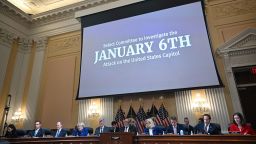
What’s in the House January 6 committee report summary
The effort to put forward fake slates of pro-Trump electors is under scrutiny by federal and state prosecutors investigating efforts by Trump and his allies to overturn Joe Biden’s election victory in 2020.
The committee wrote that Chesebro sent a memo to then-Trump lawyer Rudy Giuliani after a request from Trump campaign official Boris Epshteyn about a “‘President of the Senate’ strategy,” which wrongly asserted that the vice president could pick which presidential electors to count during the joint session of Congress on January 6.
“President Trump in the days immediately before January 6th, Chesebro – an attorney based in Boston and New York recruited to assist the Trump Campaign as a volunteer legal advisor – was central to the creation of the plan,” the report says. “Memos by Chesebro on November 18th, December 9th, and December 13th, as discussed below, laid the plan’s foundation.”
CNN has previously asked Chesebro to comment about these topics and he has not responded.
Trump WH called Eastman on the day he wrote his memo
Eastman reached out to speak to Trump on December 23, 2020, the same day that he drafted his initial memo on the Pence theory.
Eastman emailed Trump’s assistant, Molly Michael, at 1:32 p.m., according to the committee. “Is the President available for a very quick call today at some point? Just want to update him on our overall strategic thinking.”
The committee wrote that Eastman received a call from the White House switchboard, and the call lasted 23 minutes, according to Eastman’s phone records. Eastman’s two-page memo discussed various ways to ensure “President Trump is re-elected,” even though by then, he had been projected to lose the election, according to the committee.
These new details show how the committee used emails and phone records it obtained after it successfully fought in court to obtain the documents.
The committee obtained Eastman’s emails after a judge sided with the House in a lawsuit where the committee accused both Eastman and Trump of a criminal conspiracy to obstruct Congress and to defraud the government.
Trump latched onto Eastman’s theories that incorrectly claimed Pence could overturn the election, and launched a pressure campaign against Pence in the days leading up to January 6. Eastman was present at a January 4, 2021, meeting between Trump and Pence in the Oval Office where Trump tried to convince Pence he could intervene when Congress certified the Electoral College vote on January 6.
January 6 committee recommends barring Trump from holding office again
Barring Trump from further public office is one of 11 recommendations the committee is making as a result of its investigation.
The panel zeroes in on the section of the Constitution that states an individual who has taken an oath to support the US Constitution but has “engaged in an insurrection” or given “aid or comfort to the enemies of the Constitution” can be disqualified from office. The former president and others have been referred by the committee to the Department of Justice for assisting or aiding an insurrection.
It calls on congressional committees of jurisdiction to create a “formal mechanism” for evaluating whether those individuals violate that section of the 14th Amendment should be barred from future federal or state office.
Says lawyers should be held responsible
In addition to criminal referrals, the select committee is calling for lawyers involved in the efforts to overturn the election to be held accountable.
“Those courts and bar disciplinary bodies responsible for overseeing the legal profession in the states and the District of Columbia should continue to evaluate the conduct of attorneys described in this Report” the panel writes, adding that there are specific attorneys the report identifies as having “conflicts of interests” for the Department of Justice to evaluate.
The report even calls on Congress to amend statutes and consider the severity of penalties that deter individuals from efforts to obstruct, influence or impede the Joint Session of Congress that certifies election results. It calls for statutes of federal penalties for certain types of threats against election workers to be strengthened.
Although the panel was successful in getting more than 1,000 witnesses to testify as part of its investigation, it still had difficulty gaining cooperation from everyone it wanted to speak to. Its report recommends congressional committees of jurisdiction “develop legislation” to create “a cause of action” for the House to enforce its subpoenas in federal court.
Electoral Count Act reform
One recommendation may soon become reality.
The panel calls on Congress to pass an overhaul of the 1887 Electoral Count Act aimed at making it harder to overturn a certified presidential election – the first legislative response to the insurrection and Trump’s relentless pressure campaign to stay in power.
The House and Senate have each passed their own version of the legislation.
Committee refers Trump to Justice Department

A video of former President Donald Trump is shown on a screen on Capitol Hill on December 19, 2022. J. Scott Applewhite/AP
The House committee lays out a number of criminal statutes it believes were violated in the plots to stave off Trump’s defeat and says there’s evidence for criminal referrals to the Justice Department for Trump, Eastman and “others.”
The report summary first released Monday says there’s evidence to pursue Trump on multiple crimes, including obstruction of an official proceeding, conspiracy to defraud the United States, conspiracy to make false statements, assisting or aiding an insurrection, conspiring to injure or impede an officer and seditious conspiracy.
The panel says it also has the evidence to refer Eastman on the obstruction charge, and it names him as a co-conspirator in other alleged criminal activity lawmakers have gathered evidence on.
The committee alluded to evidence of criminal obstruction of the House investigation but the summary does not go into detail about that evidence.
Trump’s false victory declaration was ‘premeditated’
The committee outlines 17 findings from its investigation that underpin its reasoning for criminal referrals, including that Trump knew the fraud allegations he was pushing were false and continued to amplify them anyway.
“President Trump’s decision to declare victory falsely on election night and, unlawfully, to call for the vote counting to stop, was not a spontaneous decision. It was premeditated,” the report states.
The committee also revealed emails from Tom Fitton, president of the conservative group Judicial Watch, from before the 2020 presidential election that say Trump should declare victory regardless of the outcome.
It notes that Trump’s top allies, including those who testified before the committee, acknowledged they found no proof to back up the former president’s claims.
“Ultimately, even Rudolph Giuliani and his legal team acknowledged that they had no definitive evidence of election fraud sufficient to change the election outcome,” it adds, referring to Trump’s then-personal attorney.
“For example, although Giuliani repeatedly had claimed in public that Dominion voting machines stole the election, he admitted during his Select Committee deposition that ‘I do not think the machines stole the election,’” it states.
Millions of dollars were raised on false claims, but RNC showed caution to not go too far
The committee investigators describe how Trump campaign and Republican National Committee fundraising pitches containing false claims of a stolen election ultimately raised more than $250 million – but were met internally with some resistance.
Investigators describe three options that were considered for a post-election fundraising appeal by the campaign. One option, that the campaign opted against using because they knew it was false, said that Trump had won. A second unused option said the campaign was waiting on results. Ultimately, according to the committee, the Trump campaign approved a message that Democrats are going to “try to steal the election” that was written before election night.
The committee describes, based on interview with Trump campaign officials, that much of the material in the fundraising emails was based on messages said by Trump – but were not checked for accuracy before being used to ask for donations.
“President Trump’s claims were treated as true and blasted to millions of people with little to no scrutiny by those tasked with ensuring accuracy,” the committee wrote.
Trump campaign’s deputy director of communications and research Zach Parkinson told investigators that reviews for accuracy were limited to “questions concerning items such as time and location.”
The RNC did eventually tone down some messages, which the committee suggests shows “the RNC knew that President’s Trump’s claims about winning the election were baseless” and made “changes to fundraising copy that seemingly protected the RNC from legal exposure,” according to investigators.
House investigators said that RNC lawyers directed copywriters not to use the term “rigged,” according to interviews conducted by the committee. The panel obtained several examples of fundraising appeals that were toned down to be accurate and less inflammatory.
Trump privately called some of Sidney Powell’s election claims ‘crazy’
White House communications director Hope Hicks told the January 6 committee that Donald Trump had laughed at one of his election lawyer’s claims about foreign powers interfering in the election, calling them “crazy,” according to the committee’s final report.
“The day after the press conference, President Trump spoke by phone with Sidney Powell from the Oval Office. During the call, Powell repeated the same claims of foreign interference in the election she had made at the press conference,” the report said, referring to conspiratorial claims made by Powell, Trump’s onetime attorney, at an outlandish press conference after the 2020 election.
“While she was speaking, the President muted his speakerphone and laughed at Powell, telling the others in the room, ‘This does sound crazy, doesn’t it?’” the report says.
During the press conference, Powell falsely claimed, among other things, that widely used voting machines from the election technology company Dominion Voting Systems featured software created “at the direction” of deceased Venezuelan President Hugo Chavez to swing his own election results, and that the company has ties to the Clinton Foundation and George Soros.
“A few days later, the Trump campaign issued a statement claiming Powell was not part of the Trump campaign’s legal team. But Powell’s outlandish claims were no different from those President Trump was making himself,” the committee writes.
Trump refused to act as riot unfolded

Pro-Trump supporters storm the US Capitol following a rally with President Donald Trump on January 6, 2021 in Washington.Samuel Corum/Getty Images
The committee lays out Trump’s failure to act as the riot unfolded, noting that as he watched the riot on television, he made no calls for security assistance and resisted efforts from staffers asking him to call off his supporters.
“President Trump did not contact a single top national security official during the day. Not at the Pentagon, nor at the Department of Homeland Security, the Department of Justice, the F.B.I., the Capitol Police Department, or the D.C. Mayor’s office,” the committee writes. “As Vice President Pence has confirmed, President Trump didn’t even try to reach his own Vice President to make sure that Pence was safe.”
Milley, chairman of the Joint Chiefs of Staff, told the committee he had this reaction to Trump, “You know, you’re the Commander in Chief. You’ve got an assault going on on the Capitol of the United States of America. And there’s nothing? No call? Nothing? Zero?”
White House staffers, meantime, described being appalled that as the Capitol was under attack, Trump fired off a tweet criticizing Pence.

Republicans release their own US Capitol riot report focused on security failures
Hicks texted a colleague that night to say, “Attacking the VP? Wtf is wrong with him,” according to the committee’s summary report.
“No photographs exist of the President for the remainder of the afternoon until after 4 p.m. President Trump appears to have instructed that the White House photographer was not to take any photographs,” the committee writes, citing testimony from former White House photographer Shealah Craighead.
In the aftermath, on the evening of January 6, Trump’s former campaign manager Brad Parscale told Katrina Pierson, one of the rally organizers, that he felt guilty helping Trump win, the report states.
The events of the day, Parscale said, resulted from “a sitting president asking for civil war.”
Aide characterized Trump’s tone on January 6 as, ‘can you believe this sh*t?’
Trump’s tone during his last known phone call on January 6 was like, “wow, can you believe this sh*t?” according to the White House aide who spoke with him that night.
In newly revealed testimony included in the January 6 committee’s final report, the aide, John McEntee, said Trump told him “[t]his is a crazy day.” The report added, “McEntee said his tone was one of “like, wow, can you believe this sh*t?”
Trump did not express any sadness over the violence that had unfolded at the Capitol that day, McEntee told the panel.
“I think he was shocked by, you know, it getting a little out of control, but I don’t remember sadness, specifically” McEntee said.
He wasn’t the only person with that impression about Trump’s mood.
Ivanka Trump, a senior White House adviser at the time, told the select committee her father was “disappointed and surprised” by the attack on the Capitol.
But when pressed by committee investigators, she could not provide any instances of the president discussing whether or not he did the right thing on January 6 or speaking about those who were injured or died that day.
This story has been updated with additional details.
CNN’s Marshall Cohen, Dan Berman and Adam Levine contributed to this report.
https://edition.cnn.com/2022/12/22/politics/jan-6-committee-final-report/index.htmlTrump could be the first president in American history to go to prison after they left office. It is a shame this happened. I don’t know Trump’s level of culpability, but it seems clear that he made many mistakes. Was Trump the man behind a vast orchestrated conspiracy? Or were the people who rioted just idiots getting carried away?
2020 presidential election, 2021, abuse of power, America, arrests, bipartisan, committee, Congress, Congressional panel, conspiracy, controversy, criminal, criminal charges, defendants, Democrat, Donald Trump, evidence, Executive branch, final report, government, history, House, House select committee, illegal, insurrection, Jan. 6, January 6th, Joe Biden, mayhem, Mike Pence, Nancy Pelosi, panel, President Biden, President Trump, presidential election, prison, report, Republican, riot, Speaker of the House, supporters, timeline, Trump, United States, United States of America, US, USA, Vice President, video, violence - More than225 defendants have been charged with assaulting, resisting, or impeding officers or employees, including over 75 individualswho have been charged with using a deadly or dangerous weapon or causing serious bodily injury to an officer.
-
Christmas Under Attack!

Adoration of the Shepherds
Domenico Ghirlandaio
1485It’s Christmas Eve night, a holy night as we sit under eager expectation to celebrate our Lord and Savior Jesus Christ’s birth. You’d think this special time of the year is for joyous celebration and quality time spent with friends and family observing holiday traditions, going to church, eating a delicious fine meal, and exchanging gifts. Yet for most Reformed, Christmas, and Easter celebrations illicit feelings that are akin to a pre-conversion Scrooge from Charles Dicken’s wonderful book “A Christmas Story“. To them, these are just ordinary days on the calendar with no special significance whatsoever. I disagree strongly with this view. These people believe the only lawful and proper holiday for Christians to observe is the Christian Sabbath (Sunday). I have no problem with observing the Lord’s Day, but I don’t believe it is the only possible holiday we have the freedom to observe as believers.
It is utterly fallacious for opponents of Christians observing holidays, such as Christmas, to assert that these are not holy days since they are not explicitly defined as such in Scripture. That very narrow-minded definition is not biblical at all. What could be more holy than Jesus’ birth, death, and resurrection?! We know these are holy days and are fit for a celebration. It’s ridiculous to assert that Scripture must explicitly designate a certain day to be holy for it to be so.
Making an extra special celebration for Christ’s birth is VERY BIBLICAL and VERY NECESSARY in my view. It is an exaggerated and reactionary Reformed response to the Roman Catholic church calendar which is behind most Reformed not celebrating Christmas or Easter. I think it’s stupid! The Puritans went so far as to condemn those that celebrate Christmas and Easter as being guilty of sin. They often banned such holidays from being observed in their jurisdictions.
Christians from the time of the EARLY CHURCH to the present have been celebrating Christ’s birth, death, and resurrection continuously for nearly 2,000 years!! Yes, December 25th, and Easter, are very momentous, significant, and special days. I believe ALL CHRISTIANS should honor Christ on these days and celebrate!!
The other root cause of this problem, besides a reactionary response to all things Roman Catholic, is the regulative principle of worship (RPW). It dictates that we may only worship God in ways He has delineated in Scripture. I have several objections to this principle. First, observing holidays like Christmas does not fall under the rubric of worship so the RPW does not apply. Second, even if observing Christmas does fall under the category of worship there is nothing in Scripture that explicitly commands us to only worship God as defined in Scripture. I believe the normative principle of worship (NPW) is a far more biblical and balanced view. The NPW says that anything which is not sinful and is not explicitly condemned or forbidden in Scripture is permissible.
A problem here is believers not comprehending how better a covenant the New Covenant is, and the freedom to worship we have in Christ. So no I absolutely do not believe that a Christian who sets up a Christmas tree, watches a Christmas movie, sings carols, has a fine family meal, or any of the other traditions associated with Christmas makes us somehow guilty of offering Strange Fire unto the Lord.
There is, sadly, often a highly legalistic and self-righteous spirit behind these objections to Christmas and Easter. I actually feel sorry for such Christians, and I pray God would open their eyes someday. It would be one thing if they choose to not observe Christmas or Easter, but they aren’t content with that and frequently feel compelled to criticize, falsely judge, ridicule, mock, and lambast those of us who do observe such holidays. I’ve seen some very ugly behavior on Facebook in particular. This controversy does not honor Christ! I will step back and try to not let such people get me too upset and disturbed.
Catholic church, Catholicism, Christian theology, Christianity, Christmas, Easter, Evangelical, global, history, law, popular culture, Protestant, Puritans, Reformed, theology, worship1485, 2000 years, A Christmas Carol, Adoration of the Shepherds, Bah Humbug, Bible, Biblical, birth, birthday, carols, Charles Dickens, Christian Sabbath, Christmas, Christmas Eve, Christmas feast, Christmas tree, Church history, controversy, Day of the Lord, death, Domenico Ghirlandaio, Early Church, Easter, exchanging gifts, holidays, holy days, honor, legalism, legalistic, narrow-minded, Normative principle of worship, NPW, observe, Puritans, Reformed, Reformed theology, regulative principle of worship, resurrection, RPW, Sabbath, Scripture, Scrooge, self-righteous, sin, Strange Fire, Sunday, traditions, worship -
Transgender insanity

It is a simple biological fact that you cannot change your sex. Gender = biological sex. There are only 2 sexes, male and female, and thus only 2 genders. This has been the accepted wisdom until the past 20-25 years. Slowly, but surely, as the LGBT movement has grown and become powerful and widely accepted by the government, academia, big business, K-12 schools, and across the mainstream media and entertainment industry, there are more and more people identifying as transgender. A transgender is a person who believes they were born as the wrong sex. A man may feel like a woman and so on. However, your feelings don’t dictate or change your biology.
Transgenderism is the latest manifestation of the Emperor With No Clothes phenomenon. Every sane and rational person can see that a transgender man is just pretending he’s “really” or “truly” a woman! Within my parents’ lifetimes, transgenders were rightly recognized as suffering from severe mental illnesses such as body dysmorphic disorder (BDD) and gender dysphoria. Homosexuality also up until the mid-1970s was classified as a mental illness in the DSM book which is the standard source where mental illnesses are defined. These people are sick and need help. What they don’t need is for society to coddle them and entertain their perverse delusions. Yet, sadly, that is precisely what we’ve seen happen.
Your sex/gender is literally encoded in your chromosomes in every single cell in your body. So it’s impossible to change!!! This is a scientific fact.
Brainwashing and indoctrination into LGBT and gender insanity is happening right now in public schools. They start as early as possible such as in preschool or kindergarten. Girls are given male hormones (testosterone) so they develop facial and chest hair, boys are given hormone blocks and take female hormones (estrogen) so they develop breasts. Even horrific surgeries are performed that mutilate their bodies! This is sexual abuse and child abuse! It is absolutely wicked.
In less than 70 years (within my parents’ lifetimes), transgenderism and homosexuality went from being on the fringe of society, where it was universally reviled and shunned, to mainstream acceptance by all strata of society. LGBT as a set of beliefs has become so dominant that now, one can be fired from their workplace, expelled from their school, have their small business sued, lose tenure as a professor, be censored, or forced to resign their executive position all for merely not assenting to LGBT propaganda. Donald Trump even courted the LGBT vote and recently many Republicans in Congress sided with Democrats to pass the bill enshrining homosexual marriage into federal law. Absolutely disgusting!
When I was in kindergarten and grade school there was no story time with so-called Drag Queens (male transvestites who dress as women), and there were no books such as “My Two Mommies” about lesbian relationships. Looking back now, I can clearly see how God sheltered and protected my sisters and me from the LGBT insanity.
Today LGBT ideology is indoctrinating kids are early as preschool! If you attend public schools you’ll be brainwashed by LGBT ideology for 13 years. It’s even more blatant in colleges and universities. There, supported by most of the liberal professors and the administration, LGBT students and faculty are quite aggressive. They make all types of demands and take sanctions and target any students or faculty who challenge LGBT ideology.
Now we see transgenders in the Biden administration, in state and local government offices. We see transgender judges, professors, K-12 teachers, actors, singers, and in many other positions. They are given maximum exposure by the mainstream media, and they are championed by academia. The entertainment industry has LGBT content now in just about every TV show or movie, even ones made for kids such as Disney films. Popular music also pushes LGBT ideology. To put it bluntly, they are loud and in your face. Just as all LGBT are today in the West. This degeneracy and lack of belief in biblical values have truly engulfed the Western world. Only in the East and in Africa do we see much resistance and people fighting back against these Satanic ideologies.
Make no mistake about it, this is a spiritual battle. Satan’s goal is to undermine and destroy the traditional family with a heterosexual biological father, and a heterosexual biological mother.
God made two genders and only two genders. Gender is not ‘fluid,’ nor should we misidentify our gender
By Elizabeth Prata
In Genesis 1:26, God made man in His image. We don’t look like God nor do we possess His incommunicable attributes, but ‘in His image’ means as Phil Johnson preached:
“Humanity bears the stamp of God’s likeness. No other creature, not even the highest archangel, was made in God’s image. We can see the image of God imprinted on the human soul in humanity’s unique moral and spiritual attributes, those things that set us apart from the animals.”
“For example, the human intellect is uniquely capable of self-reflection. We’re creative. We are moved by beauty. We speak a variety of complex languages. Our moral instinct (that innate sense of right and wrong) is unparalleled in the animal kingdom. We have a conscience that declares our guilt when we do wrong. And no other creature manifests anything like the human craving for communion with God. Animals don’t practice religion of any kind.” end Phil Johnson excerpt from sermon “What Creation Reveals”
Then God made woman, Genesis 2:22. God made male and He made female. He made only two genders. He didn’t make another Adam and then change that Adam into Eve. He used one rib, and fashioned a woman, distinct from a man. He did this for a purpose. First, to be a helper suitable for man. Second, so that the two would come together and populate the earth.
In the New Testament, Jesus affirmed God’s design of the two genders in Matthew 19:4 and 5. Jesus replied to the Pharisees’ question about marriage this way, “And He answered and said, “Have you not read that He who created them from the beginning MADE THEM MALE AND FEMALE,” and said, ‘FOR THIS REASON A MAN SHALL LEAVE HIS FATHER AND HIS MOTHER AND BE JOINED TO HIS WIFE, AND THE TWO SHALL BECOME ONE FLESH’?” emphasis Bible’s.
Jesus’ reply in a few short words covers a lot. It affirms God’s design for human kind- two genders. It affirms that marriage is between one man and one woman. It affirms two genders again, noting that there is a father and a mother, from which a child issued. In other words it intends two specific genders that comprise family units. It affirms that in marriage, the two genders become one flesh. That last bit refers to the sexual act, but overall it also refers in general that the two genders become one unit. I.E. that marriage is permanent between two opposite-sex individuals.
Even where polygamy is recorded in the Bible, it’s a man married to multiple women. You note that even though polygamy is sinful, that when it is pictured in the Bible, it’s opposite genders married, not same genders married to multiples of the same gender. The creation mandate to multiply cannot happen between same genders.
But speaking of the one flesh as the marital physical act, there is no other configuration from which two people become one flesh.
The human reproductive system is designed by God. It’s designed to be incomplete without the other gender. Humans were given a mandate to go forth and multiply (Genesis 1:28). They were given that mandate again after the flood (Genesis 9:7). The human reproductive system was designed to produce a human, which cannot happen when the sexes are the same. Homosexuality is evidence that God has given them over to their unwholesome and depraved desires, (Romans 1:26-27), and it rejects the marriage mandate and the multiplication mandate. It is a total rejection of God’s created order.
Though in the Bible times they did not have the medical capability to change a person from one gender to another like we do now, God called the outward expression of a person presenting the inward desire to be another gender via cross-dressing, an abomination in Deuteronomy 22:5. Going the extra step nowadays using medical technology to actually change genders and not simply dress like the opposite gender, would also be an abomination. Even more so.
They are suppressing their own biology. All they need to do is examine their own body and understand they are a boy or a girl. A man or a woman. God does not make mistakes and He didn’t put the wrong ‘heart’ into the wrong body. There are two genders and they are as solid as cement, not fluid, not changeable, but one OR the other. What you are is what you are and what God intended them to be when He formed them in the womb.
If one rejects one’s own gender, it is an ultimate rejection of God, because He is creator not just of the world but of each person. It’s a supreme rejection of God because if I can change my own gender, adjust my own biology, I am my own god.
All creation groans under the curse set upon it by man’s first sin. (Romans 8:22). Yet all creation is doing what it’s supposed to, while suffering. Only man is the rebel. Humans who desire to switch from one gender to another are living with a deep inward delusion. They are living in the darkness, and we should have compassion on someone who is so burdened with perverted desires. We should pity the person who is under such judgment from God that He gave them over. We should be righteously angry with parents who act as in Romans 1:32, they heartily applaud such craven desires and allow their precious children to be pushed further into the evil dark.
For the person sadly seeking some sort of ‘liberation’ from being ‘trapped’ in the wrong body, there is liberation. It’s liberation from the power of sin, by repenting of our sin and appealing to Jesus Christ and His death on the cross and resurrection. He died for sinners, and has released those already who will repent of their sin and acknowledge Him. True liberation comes from Jesus, not a different gender. The pursuit of liberation, satisfaction, settled happiness, comes not under the surgeon’s knife but under the sharp sword of the Word of God. The word promises-
So then, brothers and sisters, we are under obligation, not to the flesh, to live according to the flesh— 13for if you are living in accord with the flesh, you are going to die; but if by the Spirit you are putting to death the deeds of the body, you will live. 14For all who are being led by the Spirit of God, these are sons and daughters of God. 15For you have not received a spirit of slavery leading to fear again, but you have received a spirit of adoption as sons and daughters by which we cry out, “Abba! Father!” 16The Spirit Himself testifies with our spirit that we are children of God, 17and if children, heirs also, heirs of God and fellow heirs with Christ, if indeed we suffer with Him so that we may also be glorified with Him. (Romans 8:12-17).
https://the-end-time.org/2021/07/21/god-made-two-genders-and-only-two-genders-gender-is-not-fluid-nor-should-we-misidentify-our-gender/There is also a profit motive driving the transgender insanity:
Data show that “socially transitioned” children are far more likely to go on to medical interventions. And perhaps this is the point: After all, transgender is big business. Gender-transition surgery can cost upward of $100,000. The US gender-surgery market was valued in 2021 at $1.9 billion, with predicted annual growth of more than 10%. And when hormone therapy costs $1,500 a year, for the rest of a patient’s life, no wonder entrepreneurial medics want kids on the treatment treadmill as young as possible. Clinics are popping up like mushrooms to take advantage of this new business opportunity: The first American pediatric gender clinic opened in 2007, and there are now more than 50 nationwide.
https://nypost.com/2022/08/24/boston-childrens-hospitals-transgender-insanity-elites-profit-from-kids/The parents of these so-called transgender kids are destroying their children’s lives! They will answer to God. All the educators, doctors, surgeons, nurses, psychiatrists, and others who are harming these children shall likewise be held to account!
America, apologetics, Bible, Christian theology, Christianity, degeneracy, economics, education, entertainment, global, government, marriage, medical, men, mental illness, mind, popular culture, psychiatric, sexual abuse, television, The West, theology, TV, Western Europe, women2 genders, 2 sexes, America, Bible, body dysmorphic disorder, Christ, Christianity, degeneracy, DSM, dysphoria, female, gender, God, hormone blockers, insanity, Jesus, kids, male, mental illness, NT, OT, parents, psychiatric, Scripture, sex, surgery, The West, transgender, United States, United States of America, US, USA -
Two Songs by Elvis about Love

Here are two songs performed by Elvis that describe diametrically opposed ways of experiencing love. One is about losing love, and the other is about falling in love.
What Now My Love
Elvis conveys deep anguish and heartache. The emotional turmoil is palpable. The man loses everything and he loses the will to live. When Elvis sings “no one would care, no one would cry, if I should live or die” seems oddly prophetic since less than 4 years later he’d be dead. This song was recorded live in Honolulu, Hawaii for the special concert “Aloha From Hawaii”, which was broadcast by satellite to homes all across the globe, to 1.3 billion people in 1973.
Lyrics
What now my love
Now that you left me
How can I live through another day
Watching my dreams turn into ashes
And all my hopes into bits of clay
Once I could see, once I could feel
Now I’m a numb
I’ve become unrealI walk the night, oh, without a goal
Stripped of my heart, my soul
What now my love
Now that it’s over
I feel the world closing in on me
Here comes the stars
Tumbling around me
And there’s the sky where the sea should beWhat now my love
Now that you’re gone
I’d be a fool to go on and on
No one would care, no one would cry
If I should live or dieWhat now my love
Now there is nothing
Only my last goodbye
Only my last goodbyeCan’t Help Falling In Love (Plaisir D’Amour)
This is a very touching song about falling in love. Elvis sings it perfectly!
Lyrics
Wise men say
Only fools rush in
But I can’t help falling in love with you
Shall I stay?
Would it be a sin
If I can’t help falling in love with you?Like a river flows
Surely to the sea
Darling, so it goes
Some things are meant to beTake my hand
Take my whole life, too
For I can’t help falling in love with youLike a river flows
Surely to the sea
Darling, so it goes
Some things are meant to beTake my hand
Take my whole life, too
For I can’t help falling in love with you
For I can’t help falling in love with you -
Some Reformed utter “Bah Humbug!” and seek to cancel Christmas!

Dear fellow Reformed:
Stop saying it’s a sin to celebrate Christmas, or that such a celebration is unbiblical.
You do things every single day not explicitly commanded in Scripture.
It is a gross misapplication of the regulative principle which itself is problematic. I favor the normative principle. Unless something is SINFUL OR EXPRESSLY FORBIDDEN by Scripture then doing so is not a sin.
You can’t get more biblical than celebrating the Lord’s incarnation!
Christmas has been celebrated continuously by the Church for the past 2,000 years. It is only in the 1500s (some 1,500 years later) that we see some Reformed saying we should cancel Christmas because it has too close an association with the Catholic church! By that reasoning, we Reformed might as well cancel baptism, communion, etc. How stupid! I love the Puritans and appreciate their insights, but their desire to cancel Christmas and other holidays such as Easter was dead wrong and unbiblical.
I will keep celebrating the Lord Jesus’ birth and I call upon those who wish to cancel Christmas to examine Scripture closely and realize that celebrating holidays such as Christmas and Easter is very proper and quite thoroughly biblical!
-
What Does It Mean to Be Reformed?

In my years of being involved in Christian discussion and debate online (nearly 30 years), I’ve noticed that many Reformed Presbyterians seem to look down on us Reformed Baptists (aka Particular Baptists) and say we aren’t “Really Reformed” or we’re not “Truly Reformed”.
I maintain that infant baptism is not the sine qua non of Reformed theology. One can disagree with infant baptism and still be Reformed.
What markers or distinctive make a Christian Reformed? I’d argue for the following:
Affirm the great “Sola’s” (Latin for “only”) of the Reformation.
- Sola Gratia…Grace Alone
- Sola Fide…Faith Alone
- Solus Christus…Christ Alone
- Sola Scriptura…Scripture Alone
- Soli Deo Gloria…To the Glory of God Alone
To summarize, salvation by Grace Alone, through Faith Alone, in Christ Alone, according to the Scriptures Alone, to the Glory of God Alone.
Affirm and promote a profoundly high view of the supremacy and sovereignty of God in all things and sees God as actively involved in His creation, governing and overseeing all the affairs of men. cf. Psalm 115:3; Job 34:14-15; 37:6-13; Daniel 4:35.
Affirm the utter dependence of sinful man, upon God, in all things, especially concerning salvation.
Affirm the Doctrines of Grace (commonly referred to as Calvinism), which display God as the author of salvation from beginning to end.
The acrostic TULIP (which is a summation of the Canons of Dort) is the most familiar way of delineating the doctrines of Grace. TULIP is made up of 5 points that define Calvinism, which are:
- T – Total Depravity
- U – Unconditional Election
- L – Limited Atonement
- I – Irresistible Grace
- P – Perseverance, and Preservation, of the Saints
Creedal – To affirm the great creeds of the historic, orthodox church.
- The Apostles’ Creed
- The Nicene Creed
- The Definition of Chalcedon
Confessional – To affirm one, or more, of the great confessions of the historic orthodox church.
The Westminster Standards:
- The Westminster Confession of Faith
- The Westminster Longer Catechism
- The Westminster Shorter Catechism
Reformed Baptist Standards:
- 1644 London Baptist Confession of Faith
- 1689 London Baptist Confession of Faith
- The Baptist Catechism
- Orthodox Catechism
The Three Forms of Unity:
- The Belgic Confession of Faith
- The Heidelberg Catechism
- The Canons of Dortrecht
A high view of Scripture, in its necessity, infallibility, sufficiency, and internal consistency, and our dependence upon it to learn what God has revealed about Himself, His commands, and His way of salvation.
A high view of the church, in preaching (the exposition and application of God’s Word), the ordinances, discipline, prayer, worship, fellowship, and evangelism, all encompassed in the keeping of the Christian Sabbath, commonly called the Lord’s Day (Sunday).
A distinctly Biblical, Christian worldview that permeates all of life, a life lived in the world, but at the same time, a life not oriented to the world and its standards, but oriented to God’s Word.
A clear understanding of the distinction between, and relationship of, Law and Gospel.
The Law has Three Uses:
- The civil use. The law serves the commonwealth or body politic as a force to restrain sin. The law restrains evil through punishment. Though the law cannot change the heart, it can inhibit sin by threats of judgment, especially when backed by a civil code that administers punishment for proven offenses.
- The pedagogical use. The law also shows people the perfect righteousness of God, and their sinfulness which deserves punishment, and points them to mercy and grace outside of themselves, found in the Gospel alone.
- The moral, normative, sanctifying use. The moral standards of the law provide guidance for believers as they seek to live in humble gratitude for the grace God has shown us. This use of the law is for those who trust in Christ and have been justified by grace alone, through faith alone, apart from works.
The 2nd use of the Law and its perfect requirement points us to the Gospel (good news) of the purchased redemption and free grace of the Son, for God’s people, and the Gospel, once applied by the Holy Spirit, then points us back to the third use of the Law in delight to obey its commands to the glory of God as a new creation in Christ Jesus.
If one affirms all this, they are truly Reformed, regardless of what some Reformed Presbyterians may assert. We must not tolerate unwarranted theological bigotry under the ruse of being “biblical”. It is a haughty and smug spirit that such Presbyterians have, one which makes them feel superior to Reformed Baptists. We must not be afraid to challenge and confront this bigotry when we encounter it. It has no place in the Body of Christ!
By the way, you may be interested in reading the other two blog posts I’ve written which are related to the idea of Reformed identity. They are linked below:
Many thanks to Joseph Trost Jr. for contributing content to this post.
5 Solas, Bible, bigotry, Calvinism, Canons of Dort, confessional, confessions, creedal, discrimination, distinctives, Doctrines of Grace, identity, inerrancy, Londont Baptist Confession of Faith, markers, Presbyterians, Protestant, reformation, Reformed, Reformed Baptists, Scripture, Solas, theological bigotry, theology, Truly Reformed, TULIP, Westminster Standards, worldview -
Charles Finney: Agent of Satan

Charles Finney popularized the altar call and decisional salvation (decision theology), which is making a decision for Christ by praying and asking Jesus into your heart. It’s synergistic Arminian soteriology. He also advocated for revivals. The true Gospel is one in which God regenerates a believer, through effectual calling, grants them repentance and faith in Christ alone.
It wasn’t long before his altar call experience became the norm in evangelical churches in America.
His theology had a poisonous and disastrous effect on society. It inoculated many people against the true Gospel, making millions of false converts who thought they were saved but never regenerated!
Salvation is strictly monergistic, not synergistic as Finney asserted.
Finney’s impact on the evangelical church was devastating. Even today we deal with its corrosive effects and rotten fruit.
The Disturbing Legacy of Charles Finney
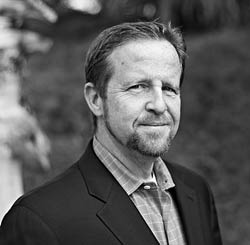 by Michael Horton
No single man is more responsible for the distortion of Christian truth in our age than Charles Grandison Finney. His “new measures” created a framework for modern decision theology and Evangelical Revivalism. In this excellent article, Dr. Mike Horton explains how Charles Finney distorted the important doctrine of salvation.
Jerry Falwell calls him “one of my heroes and a hero to many evangelicals, including Billy Graham.” I recall wandering through the Billy Graham Center some years ago, observing the place of honor given to Charles Finney in the evangelical tradition, reinforced by the first class in theology I had at a Christian college, where Finney’s work was required reading. The New York revivalist was the oft-quoted and celebrated champion of the Christian singer Keith Green and the Youth With A Mission organization. He is particularly esteemed among the leaders of the Christian Right and the Christian Left, by both Jerry Falwell and Jim Wallis (Sojourners’ magazine), and his imprint can be seen in movements that appear to be diverse, but in reality are merely heirs to Finney’s legacy. From the Vineyard movement and the Church Growth Movement to the political and social crusades, televangelism, and the Promise Keepers movement, as a former Wheaton College president rather glowingly cheered, “Finney, lives on!”
That is because Finney’s moralistic impulse envisioned a church that was in large measure an agency of personal and social reform rather than the institution in which the means of grace, Word and Sacrament, are made available to believers who then take the Gospel to the world. In the nineteenth century, the evangelical movement became increasingly identified with political causes-from abolition of slavery and child labor legislation to women’s rights and the prohibition of alcohol. In a desperate effort at regaining this institutional power and the glory of “Christian America” (a vision that is always powerful in the imagination, but, after the disintegration of Puritan New England, elusive), the turn-of-the century Protestant establishment launched moral campaigns to “Americanize” immigrants, enforce moral instruction and “character education.” Evangelists pitched their American gospel in terms of its practical usefulness to the individual and the nation.
That is why Finney is so popular. He is the tallest marker in the shift from Reformation orthodoxy, evident in the Great Awakening (under Edwards and Whitefield) to Arminian (indeed, even Pelagian) revivalism. evident from the Second Great Awakening to the present. To demonstrate the debt of modern evangelicalism to Finney, we must first notice his theological departures. From these departures, Finney became the father of the antecedents to some of today’s greatest challenges within evangelical churches, namely, the church growth movement, Pentecostalism and political revivalism.
Who is Finney?
Reacting against the pervasive Calvinism of the Great Awakening, the successors of that great movement of God’s Spirit turned from God to humans, from the preaching of objective content (namely, Christ and him crucified) to the emphasis on getting a person to “make a decision.”
Charles Finney (1792-1875) ministered in the wake of the “Second Awakening,” as it has been called. A Presbyterian layover, Finney one day experienced “a mighty baptism of the Holy Ghost” which “like a wave of electricity going through and through me … seemed to come in waves of liquid love.” The next morning, he informed his first client of the day, “I have a retainer from the Lord Jesus Christ to plead his cause and I cannot plead yours. “Refusing to attend Princeton Seminary (or any seminary, for that matter). Finney began conducting revivals in upstate New York. One of his most popular sermons was “Sinners Bound to Change Their Own Hearts.”
Finney’s one question for any given teaching was, “Is it fit to convert sinners with?” One result of Finney’s revivalism was the division of Presbyterians in Philadelphia and New York into Arminian and Calvinistic factions. His “New Measures” included the “anxious bench” (precursor to today’s altar call), emotional tactics that led to fainting and weeping, and other “excitements,” as Finney and his followers called them.
Finney’s Theology?
One need go no further than the table of contents of his Systematic Theology to learn that Finney’s entire theology revolved around human morality. Chapters one through five are on moral government, obligation, and the unity of moral action; chapters six and seven are “Obedience Entire,” as chapters eight through fourteen discuss attributes of love, selfishness, and virtues and vice in general. Not until the twenty-first chapter does one read anything that is especially Christian in its interest, on the atonement. This is followed by a discussion of regeneration, repentance, and faith. There is one chapter on justification followed by six on sanctification. In other words, Finney did not really write a Systematic Theology, but a collection of essays on ethics.
But that is not to say that Finney’s Systematic Theology does not contain some significant statements of theology.
First, in answer to the question, “Does a Christian cease to be a Christian, whenever he commits a sin?”, Finney answers:“Whenever he sins, he must, for the time being, cease to be holy. This is self-evident. Whenever he sins, he must be condemned; he must incur the penalty of the law of God … If it be said that the precept is still binding upon him, but that with respect to the Christian, the penalty is forever set aside, or abrogated, I reply, that to abrogate the penalty is to repeal the precept, for a precept without penalty is no law. It is only counsel or advice. The Christian, therefore, is justified no longer than he obeys, and must be condemned when he disobeys or Antinomianism is true … In these respects, then, the sinning Christian and the unconverted sinner are upon precisely the same ground (p. 46).”
Finney believed that God demanded absolute perfection, but instead of that leading him to seek his perfect righteousness in Christ, he concluded that “… full present obedience is a condition of justification. But again, to the question, can man be justified while sin remains in him? Surely he cannot, either upon legal or gospel principles, unless the law be repealed … But can he be pardoned and accepted, and justified, in the gospel sense, while sin, any degree of sin, remains in him? Certainly not” (p. 57).
Finney declares of the Reformation’s formula simul justus et peccator or “simultaneously justified and sinful,” “This error has slain more souls, I fear, than all the Universalism that ever cursed the world.” For, “Whenever a Christian sins he comes under condemnation, and must repent and do his first works, or be lost” (p.60).
Finney’s doctrine of justification rests upon a denial of the doctrine of original sin. Held by both Roman Catholics and Protestants, this biblical teaching insists that we are all born into this world inheriting Adam’s guilt and corruption. We are, therefore, in bondage to a sinful nature. As someone has said, “We sin because we’re sinners”: the condition of sin determines the acts of sin, rather than vice versa. But Finney followed Pelagius, the fifth-century heretic, who was condemned by more church councils than any other person in church history, in denying this doctrine.
Finney believed that human beings were capable of choosing whether they would be corrupt by nature or redeemed, referring to original sin as an “anti-scriptural and nonsensical dogma” (p.179). In clear terms, Finney denied the notion that human beings possess a sinful nature (ibid.). Therefore, if Adam leads us into sin, not by our inheriting his guilt and corruption, but by following his poor example, this leads logically to the view of Christ, the Second Adam, as saving by example. This is precisely where Finney takes it, in his explanation of the atonement.
The first thing we must note about the atonement, Finney says, is that Christ could not have died for anyone else’s sins than his own. His obedience to the law and his perfect righteousness were sufficient to save him, but could not legally be accepted on behalf of others. That Finney’s whole theology is driven by a passion for moral improvement is seen on this very point: “If he [Christ] had obeyed the Law as our substitute, then why should our own return to personal obedience be insisted upon as a sine qua non of our salvation” (p.206)? In other words, why would God insist that we save ourselves by our own obedience if Christ’s work was sufficient? The reader should recall the words of St. Paul in this regard, “I do not nullify the grace of God’, for if justification comes through the law, then Christ died for nothing.” It would seem that Finney’s reply is one of agreement. The difference is, he has no difficulty believing both of those premises.
That is not entirely fair, of course, because Finney did believe that Christ died for something—not for someone, but for something. In other words, he died for a purpose, but not for people. The purpose of that death was to reassert God’s moral government and to lead us to eternal life by example, as Adam’s example excited us to sin. Why did Christ die? God knew that “The atonement would present to creatures the highest possible motives to virtue. Example is the highest moral influence that can be exerted … If the benevolence manifested in the atonement does not subdue the selfishness of sinners, their case is hopeless” (p.209). Therefore, we are not helpless sinners who need to,’ be redeemed, but wayward sinners who need a demonstration of selflessness so moving that we will be excited to leave off selfishness. Not only did Finney believe that the “moral influence” theory of the atonement was the chief way of understanding the cross; he explicitly denied the substitutionary atonement, which“assumes that the atonement was a literal payment of a debt, which we have seen does not consist with the nature of the atonement … It is true, that the atonement, of itself, does not secure the salvation of any one” (p.217).
Then there is the matter of applying redemption. Throwing off Reformation orthodoxy, Finney argued strenuously against the belief that the new birth is a divine gift, insisting that “regeneration consists in the sinner changing his ultimate choice, intention, preference; or in changing from selfishness to love or benevolence,” as moved by the moral influence of Christ’s moving example (p.224). “Original sin, physical regeneration, and all their kindred and resulting dogmas, are alike subversive of the gospel, and repulsive to the human intelligence” (p.236).
Having nothing to do with original sin, a substitutionary atonement, and the supernatural character of the new birth, Finney proceeds to attack “the article by which the church stands or falls”— justification by grace alone through faith alone.
Distorting the Cardinal Doctrine of Justification
The Reformers insisted, on the basis of clear biblical texts, that justification (in the Greek, “to declare righteous,” rather than “to make righteous”) was a forensic (i.e., legal) verdict. In other words, whereas Rome maintained that justification was a process of making a bad person better, the Reformers argued that it was a declaration or pronouncement that had someone else’s righteousness (i.e., Christ’s) as its basis. Therefore, it was a perfect, once and-for-all verdict of right standing.
This declaration was to be pronounced at the beginning of the Christian life, not in the middle or at the end. The key words in the evangelical doctrine are “forensic” (legal) and “imputation” (crediting one’s account, as opposed to the idea of “infusion” of a righteousness within a person’s soul). Knowing all of this, Finney declares,“But for sinners to be forensically pronounced just, is impossible and absurd… As we shall see, there are many conditions, while there is but one ground, of the justification of sinners … As has already been said, there can be no justification in a legal or forensic sense, but upon the ground of universal, perfect, and uninterrupted obedience to law. This is of course denied by those who hold that gospel justification, or the justification of penitent sinners, is of the nature of a forensic or judicial justification. They hold to the legal maxim that what a man does by another he does by himself, and therefore the law regards Christ’s obedience as ours, on the ground that he obeyed for us.”
To this, Finney replies: “The doctrine of imputed righteousness, or that Christ’s obedience to the law was accounted as our obedience, is founded on a most false and nonsensical assumption.” After all, Christ’s righteousness “could do no more than justify himself. It can never be imputed to us … it was naturally impossible, then, for him to obey in our behalf ” This “representing of the atonement as the ground of the sinner’s justification has been a sad occasion of stumbling to many” (pp.320-2).
https://www.monergism.com/disturbing-legacy-charles-finney
The view that faith is the sole condition of justification is “the antinomian view,” Finney asserts. “We shall see that perseverance in obedience to the end of life is also a condition of justification. Some theologians have made justification a condition of sanctification, instead of making sanctification a condition of justification. But this we shall see is an erroneous view of the subject.” (pp.326-7).
Finney Today
As the noted Princeton theologian B. B. Warfield pointed out so eloquently, there are throughout history only two religions: heathenism, of which Pelagianism is a religious expression, and a supernatural redemption.
With Warfield and those who so seriously warned their brothers and sisters of these errors among Finney and his successors, we too must come to terms with the wildly heterodox strain in American Protestantism. With roots in Finney’s revivalism, perhaps evangelical and liberal Protestantism are not that far apart after all. His “New Measures,” like today’s Church Growth Movement, made human choices and emotions the center of the church’s ministry, ridiculed theology, and replaced the preaching of Christ with the preaching of conversion.
It is upon Finney’s naturalistic moralism that the Christian political and social crusades build their faith in humanity and its resources in self-salvation. Sounding not a little like a deist, Finney declared, “There is nothing in religion beyond the ordinary powers of nature. It consists entirely in the right exercise of the powers of nature. It is just that, and nothing else. When mankind becomes truly religious, they are not enabled to put forth exertions which they were unable before to put forth. They only exert powers which they had before, in a different way, and use them for the glory of God.” As the new birth is a natural phenomenon for Finney, so too a revival: “A revival is not a miracle, nor dependent on a miracle, in any sense. It is a purely philosophical result of the right use of the constituted means—as much so as any other effect produced by the application of means.”
The belief that the new birth and revival depend necessarily on divine activity is pernicious. “No doctrine,” he says, “is more dangerous than this to the prosperity of the Church, and nothing more absurd” (Revivals of Religion [Revell], pp.4-5).
When the leaders of the Church Growth Movement claim that theology gets in the way of growth and insist that it does not matter what a particular church believes: growth is a matter of following the proper principles, they are displaying their debt to Finney.
When leaders of the Vineyard movement praise this sub-Christian enterprise and the barking, roaring, screaming, laughing, and other strange phenomena on the basis that “it works” and one must judge its truth by its fruit, they are following Finney as well as the father of American pragmatism, William James, who declared that truth must be judged on the basis of “its cash-value in experiential terms.”
Thus, in Finney’s theology, God is not sovereign, man is not a sinner by nature, the atonement is not a true payment for sin, justification by imputation is insulting to reason and morality, the new birth is simply the effect of successful techniques, and revival is a natural result of clever campaigns. In his fresh introduction to the bicentennial edition of Finney’s Systematic Theology, Harry Conn commends Finney’s pragmatism: “Many servants of our Lord should be diligently searching for a gospel that ‘works’, and I am happy to state they can find it in this volume.”
As Whitney R. Cross has carefully documented, the stretch of territory in which Finney’s revivals were most frequent was also the cradle of the perfectionistic cults that plagued that century. A gospel that “works” for zealous perfectionists one moment merely creates tomorrow’s disillusioned and spent supersaints. Needless to say, Finney’s message is radically different from the evangelical faith, as is the basic orientation of the movements we see around us today that bear his imprint such as: revivalism (or its modern label. the Church Growth Movement), or Pentecostal perfectionism and emotionalism, or political triumphalism based on the ideal of “Christian America,” or the anti-intellectual, and antidoctrinal tendencies of many American evangelicals and fundamentalists.
Not only did the revivalist abandon the doctrine of justification, making him a renegade against evangelical Christianity; he repudiated doctrines, such as original sin and the substitutionary atonement, that have been embraced by Roman Catholics and Protestants alike. Therefore, Finney is not merely an Arminian’, but a Pelagian. He is not only an enemy of evangelical Protestantism, but of historic Christianity of the broadest sort.
Of one thing Finney was absolutely correct: The Gospel held by the Reformers whom he attacked directly, and indeed held by the whole company of evangelicals, is “another gospel” in distinction from the one proclaimed by Charles Finney. The question of our moment is, With which gospel will we side?
(Reprinted by permission from Modern Reformation.)
Unless otherwise specified, all quotes are from Charles G. Finney, Finney’s Systematic Theology (Bethany, 1976).
Dr. Michael S. Horton is Member of the Alliance of Confessing Evangelicals and cohost of the popular White Horse Inn radio program.Today, Finney’s dangerous theology has spread throughout the entire world. It holds preeminence if you look at the numbers. We as Reformed believers must fight against this destructive and damning theology.

Looking back, we can clearly see how Satan used Finney to pervert the true Gospel, to lead hundreds of millions of people into a false sense of security in terms of their salvation, it drew many away from sound biblical teaching.
America, apologetics, Catholic church, Catholicism, Christian theology, Christianity, Evangelical, justification, Protestant, Reformed, sanctification, theology1800s, 19th century, accepting Jesus into your heart, altar calls, America, Arminian, Charles Finney, Church, decision, decisional salvation, Evangelical, Evangelical church, Evangelicals, Finney, Michael Horton, revival, salvation, synergism, theology, United States, United States of America, US, USA, world -
Free Time
I’m glad I’m not busy. I was busy enough when I was younger. I’m enjoying my time of rest and relaxation that God has given me.
My favorite thing to do is to stay at home. I don’t like leaving home unless it’s an absolute necessity.
I see most men my age are so busy they don’t even have time to think. I have no deadlines or tasks I must complete. I am not beholden to a boss.
I believe time is the most precious commodity we have. By that reckoning, I’m a very rich man! Thank You, Jesus!
If I want to spend 8-10 hours reading or 6 hours watching movies I can do it. I don’t have to wake up early. I’m very content with my life and I thank God for it!!
I feel sorry for adults who have no time for leisure. Slavishly toiling away each day the best years of their life just to make someone else rich! NO THANK YOU!
-
Subscribe
Subscribed
Have a WordPress.com account? Log in now.

