-
Atomic Age

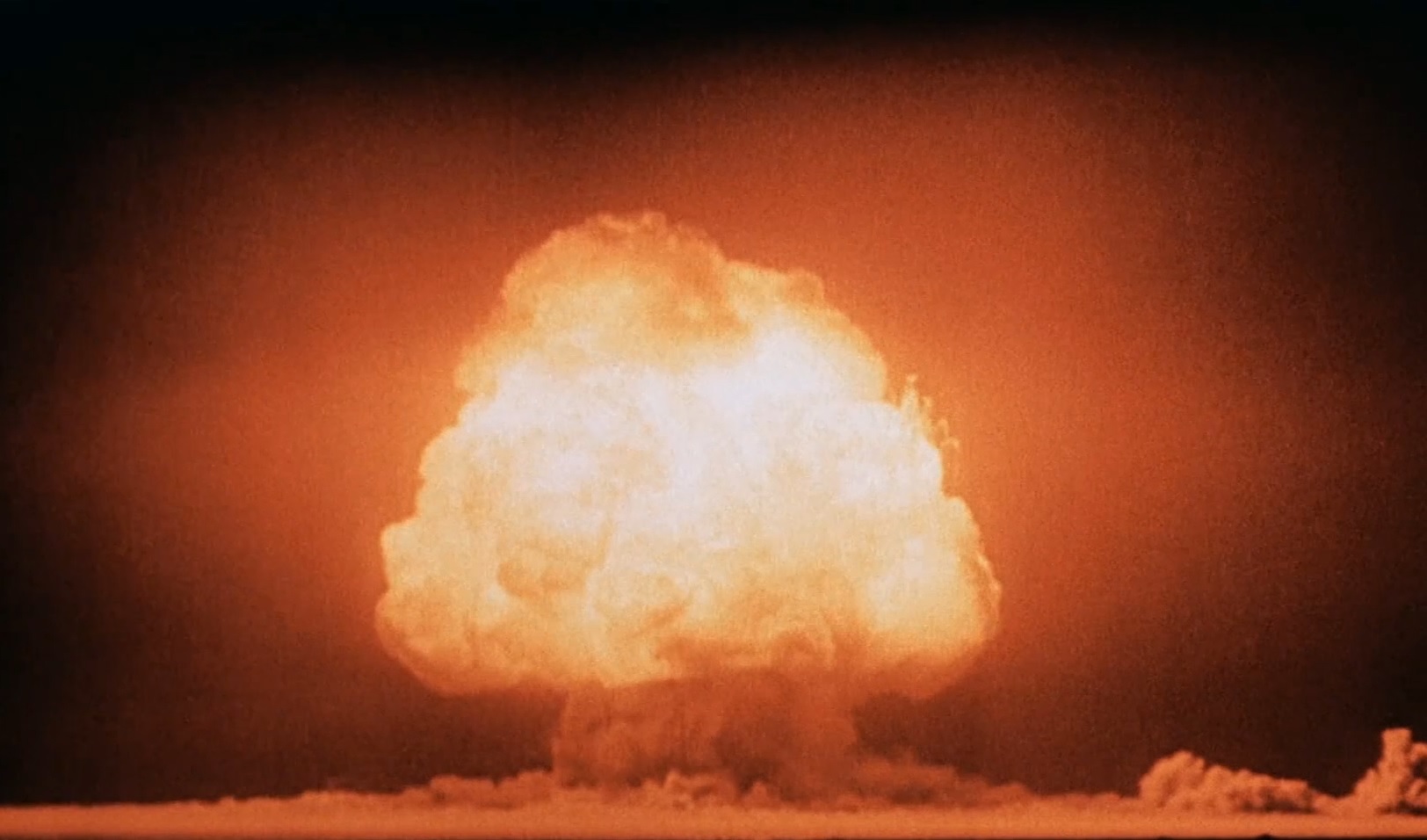
On July 16, 1945, at 5:29:45 AM (MST), the first atomic bomb ever detonated went off near Socorro, New Mexico at the test site known as Trinity. Hence the world was ushered into the Atomic Age. This place wasn’t far from Los Alamos, where the atomic bombs were under development in the top secret program known as the Manhattan Project. This eventually resulted in a Cold War arms race between the Soviet Union and the United States.
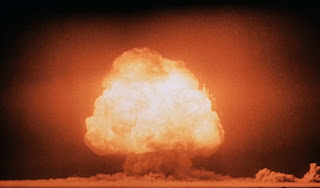 The Trinity test of the Manhattan Project was the first detonation of a nuclear weapon, which led J. Robert Oppenheimer to recall verses from the Hindu scripture Bhagavad Gita: “If the radiance of a thousand suns were to burst at once into the sky, that would be like the splendor of the mighty one “… “I am become Death, the destroyer of worlds”.Shortly before the first detonation of a nuclear device, the Trinity test, July 16, 1945, Enrico Fermi jokingly took bets on “whether the atmosphere will be set on fire,” according to physicist Hans Bethe. Fermi was mocking concerns raised by Edward Teller that the fission explosion might trigger runaway fusion! Scientists get so caught up in their projects’ success, they don’t often fully think about the long term ramifications.
Why was the atomic bomb developed? Was it necessary to end the 2nd World War?
My parents recall the silly Duck and Cover drills they had at school in the early 50s. My father knew in 4th grade that the drills were useless and would not protect them if they were close to ground zero of a nuclear strike. Here is the video that was shown at the time to instruct kids what to do.
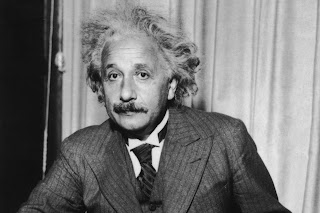
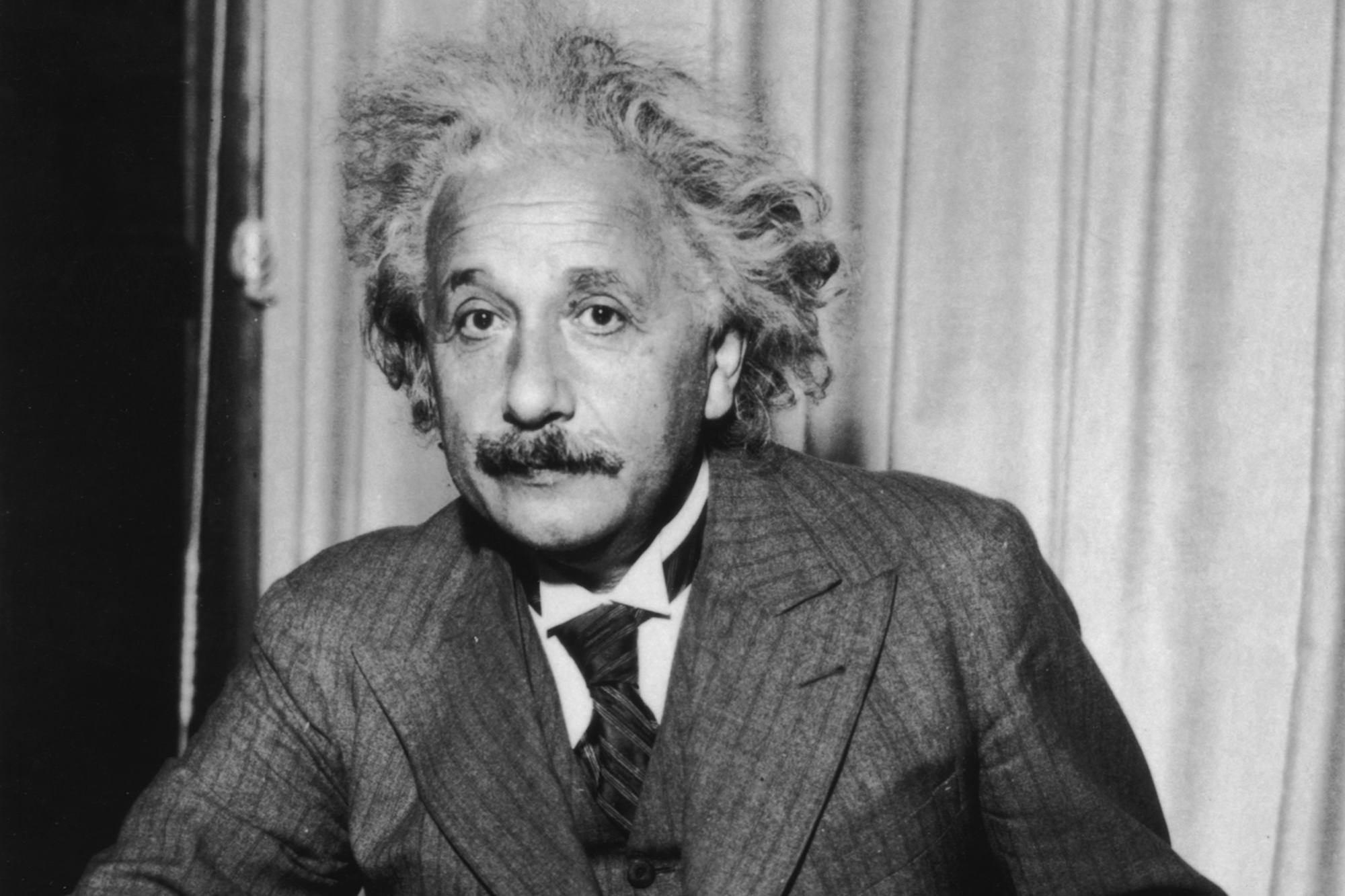
In the 1930s as the Nazi state rose, a large number of prominent physicists (some of Jewish ancestry), including Albert Einstein, left Germany and emigrated to the United States. Einstein’s breakthrough work on the relationship between matter and energy showed that a large amount of energy may be released from a relatively small amount of matter through the process of nuclear fission. Einstein himself went to far as to write to President Franklin D. Roosevelt and urge him to develop an atomic bomb before Germany did.
In the United States, in the summer of 1939, a small number of physicists, alarmed over the possibility of Germany successfully developing an atomic bomb, decided to warn President Roosevelt. A letter was written by Einstein and Szilard, and was delivered to the President’s aide, General Edwin Watson, by Alexander Sachs, an economist and writer who had a friendly relationship with Roosevelt. Sachs was given an appointment with the President to whom he read Einstein’s letter. The letter described the new powerful bombs that could be produced and recommended that the U.S. Government speed up experimental work currently taking place. Einstein closed his letter by stating his understanding that Germany had stopped the sale of uranium from Czechoslovakian mines and that Carl von Weizacker, a highly respected German scientist, was attached to the Kaiser Wilhelm Institute in Berlin where American work on uranium was being repeated. These last remarks reflected the concern of U.S. nuclear scientists over German capabilities. https://ehistory.osu.edu/articles/story-atomic-bomb
On August 6, 1945, the B-29 bomber Enola Gay carrying “Little Boy” dropped its bomb on Hiroshima, Japan, destroying most of the city and causing an estimated 140,000 deaths.
On August 9, 1945, another B-29 bomber, Bock’s Car, carrying “Fat Man” dropped its bomb on Nagasaki, Japan. The number of deaths at Nagasaki was an estimated 70,000 people.
The fanatical Japanese Emperor Hirohito refused to surrender after Hiroshima. But once the news of Nagsaki reached him, he convinced the Japanese military they had to unconditionally surrender.
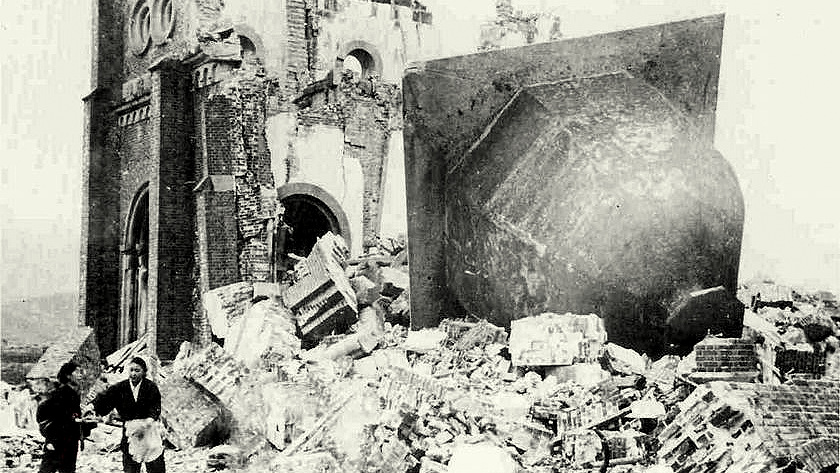
By the way, Nagasaki was home to thousands of Japanese Catholics. Nagasaki was where famed Jesuit missionary Francis Xavier built a mission church nearly 400 years earlier. Christianity came to Nagasaki in 1543. The atomic bomb exploded directly over the Urakami Cathedral, killing 8,500 of its 12,000 members, either directly from the blast or later on through radiation sickness. In fact, Nagasaki was the most Christian city in Japan, and the massive cathedral had been the largest Christian church building in all of the Orient.
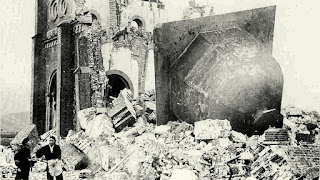 The ruins of the Urakami Cathedral in Nagasaki, Japan, as shown in a photograph dated Jan. 7, 1946.
The casualties from the 2 atomic bombs were terrible, but I feel the Allies, significantly the United States and President Truman, made the right call by dropping the bombs. There was already a proposed plan underway to invade the Japanese home islands, called Operation Downfall. This would have resulted in at least 1 million Allied casualties, as well as 5 to 10 million Japanese casualties. Prior to the atomic bombs dropping on Hiroshima and Nagasaki, Japanese War Minister Anami said the military could commit 2,350,000 troops to continue fighting. In addition, commanders could call on 4 million civil servants for military duty! Without the 2 atomic bombs, the war would have dragged on until 1947 or even later possibly. A protracted, brutal land invasion of the Japanese home islands would have resulted in horrific casualties for both the Allied and the Japanese. The Japanese literally worshiped Emperor Hirohito as a god, and would have tenaciously fought to the last man as they did on Okinawa and other islands.
A few years after the atomic bomb was developed, the hydrogen bomb (thermonuclear) was developed by the United States. It used a combination of nuclear fission and fusion to produce far more energy. The first atomic bomb released an amount of energy approximately equal to 20,000 tons of TNT or 84 terajoules. Whereas the first thermonuclear (“hydrogen”) bomb released energy approximately equal to 10 million tons of TNT or 42 petajoules. One petajoule is 10^15 joules (1 million billion) or 278 gigawatt hours. This is equivalent to the electricity used by 2,354,000 televisions in a year!
The first thermonuclear bomb was developed by the United States under the code name Ivy Mike. It was detonated on November 1, 1952, on the island of Elugelab in Enewetak Atoll, in the now independent island nation of the Marshall Islands, as part of Operation Ivy.

It’s scary living under the constant threat of nuclear annihilation. But, as a Christian, I have faith that God is sovereign and under full control of everything that will happen to me. And death is not the end, but only the beginning of an eternity with Him!
The Bulletin of Atomic Scientists keeps a doomsday clock of how close we are to doomsday. And it’s currently at 100 seconds to midnight. In other words, we are extremely close to a doomsday scenario involving the use of nuclear weapons.
Here are some photos of atomic and thermonuclear explosions.
-
Christian Persecution
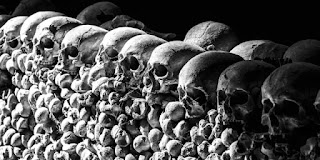
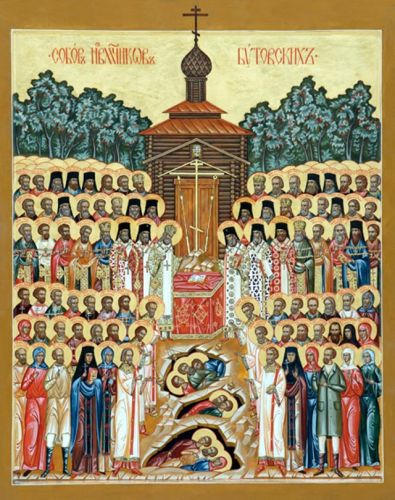
Martyrdom is no stranger to the Church. During the 1st century at the birth of the Church, and on through the next nearly 3 centuries the Christian community of believers was persecuted and martyred by the Roman government. Their martyrdom was the life blood of the Church. For all the persecution, the Church only grew. Today Christians are the most persecuted religious group in the world.
Then with the advent and rise of Islam in the late 7th century we saw a high number of Christian martyrs as Islam spread by the sword, conquering one Christian nation after another in the Middle East. The Middle East was for at least 6 centuries Christian.
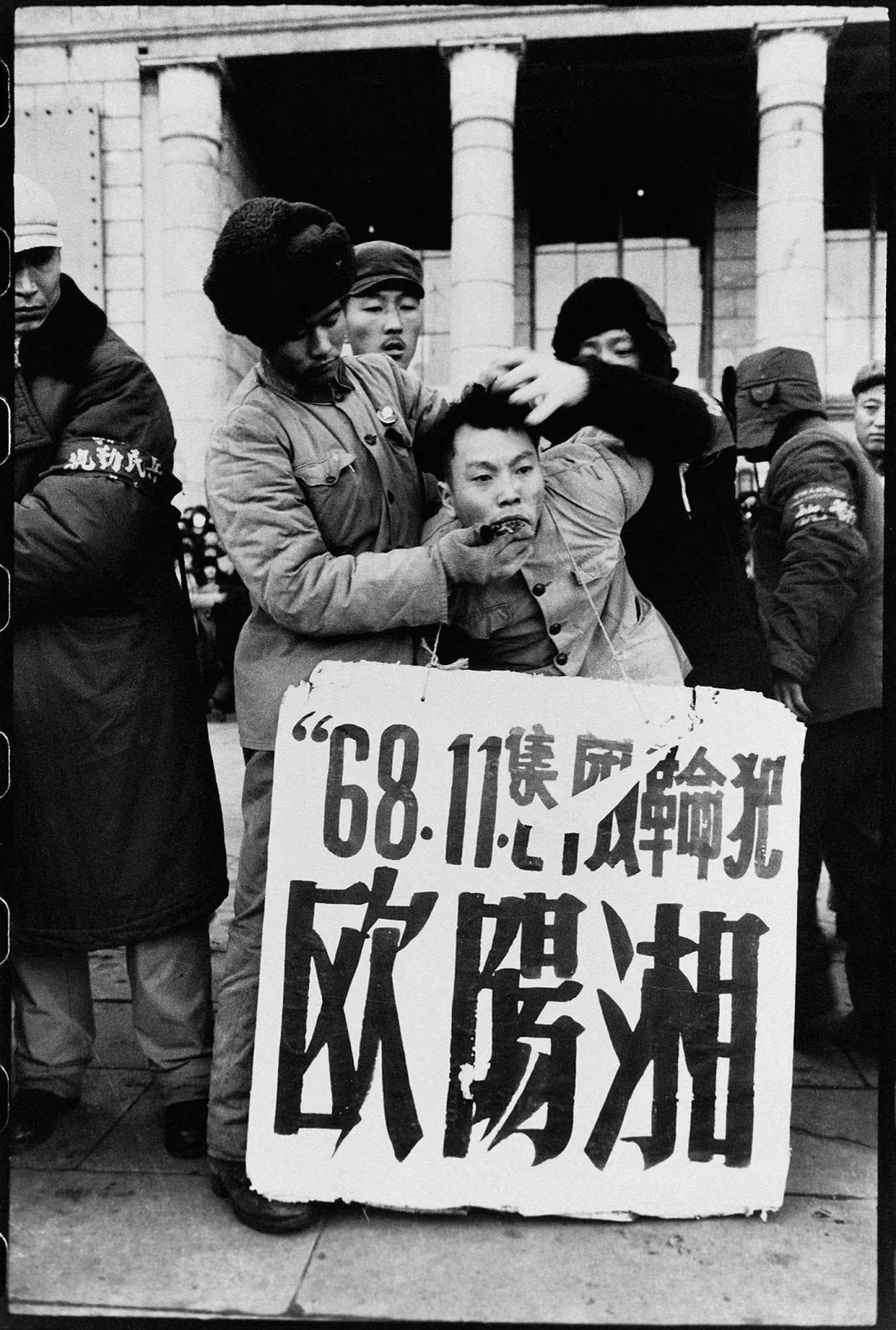
In modern times, during the 20th century we saw widespread martyrdom happen associated with the 2 World Wars, and the rule of the Communists in Russia and China. Tens of millions of Christians were martyred. The 20th century began with the genocide of the Armenian Christians beginning on April 24, 1915 and continuing in the years after World War I. The Muslim government in Turkey (formerly the Ottoman Empire) killed at least 1.5 million Christian Armenians. In Russia, the atheist Communists persecution of Christians began March 8, 1917.During their 70 years in power, the Soviet government killed 20 million Christians (17 million Russian Orthodox and 3 million Roman Catholic). Many of these deaths occurred during the time of dictator Joseph Stalin. In China, the ruthless atheist Communist dictator Mao Zedong killed an estimated 45-70 million Chinese during the time of the decade long Cultural Revolution (1966-1976) alone.


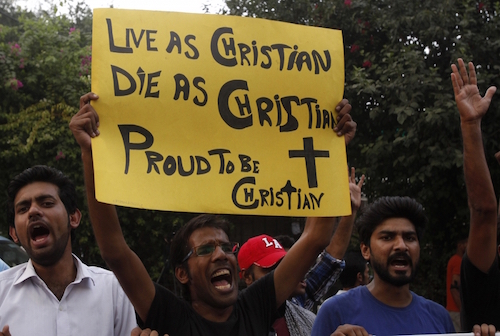
During the 21st century we’ve again seen widespread persecution of Christians due to mainly Muslims. Also there has been significant persecution from Communist, Hindu, and Buddhist groups. According to a report by The Center for the Study of Global Christianity, at Gordon-Conwell Theological Seminary, 900,000 Christians have been martyred in the last decade leading up to mid-2021. That’s 90,000 a year and works out to one Christian martyred every six minutes! And it’s predicted there will be 900,000 more martyrs per 10 years by 2025 and 1,000,000 every 10 years by 2050.
Dr. Todd M. Johnson, Professor of Global Christianity and Mission at Gordon-Conwell Theological Seminary estimates that more than 70 million Christians have been martyred over the last 2,000 years. With more than half of those deaths occurring during the 20th century alone.
According to Open Doors‘ World Watch List 2021, 340 million Christians live in places where they experience high levels of persecution and discrimination, just for following Jesus. That’s 1 out of every 8 Christians globally! There was also a 60% increase in the number of Christians killed for their faith in the past year. 66% of the 2.3 billion Christians in the world today are in jeopardy. They live in dangerous communities, and they’re often poor and belong to linguistic, ethnic and cultural minorities.
Here‘s Open Doors’ World Watch List 2021 showing the top 50 countries worldwide for Christian persecution.
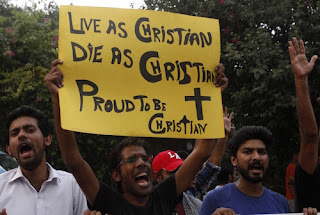
1 Corinthians 12:26 If one part [of the Body of Christ] suffers, every part suffers with it.
Please remember to pray for persecuted Christians worldwide. And help in a material way if the Lord places the opportunity before you! Let us live as they did, with a singular devotion to Christ and an active living faith of obedience. Philippians 1:21 says, “For to me, to live is Christ and to die is gain.” May we live a sanctified life, of continual repentance, obeying Christ’s commandments to us, and living for Him by the power of the Holy Spirit!
-
Elvis
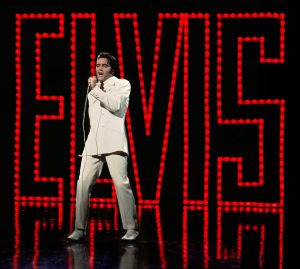
From the time I’ve been a small boy, about 5 years old, I’ve been an Elvis fan! My parents played his records on our old stereo. I’ve come across few male vocalists who have a combination of sheer power in their voice, the ability to convey emotion and feeling, the mastery of phrasing and intonation, and possessing a magnetic charisma which truly made them a superstar performer. Elvis had all of these in abundance.
Here is Elvis’ performing one of my favorites, “An American Trilogy”. The sheer power and command of his voice is dazzling! Elvis poured his heart and soul into every performance.
Here is a nice article on Elvis’ lifelong love of gospel music. “It was the gospel music that he turned to for inspiration and consolation. He was a person who appeared to be in conflict; he was not doing what he loved for a living … he had a career that had just taken him captive,” said Gospel Music Association President Frank Breeden.
Here’s my favorite Elvis gospel song, “How Great Thou Art”, which he won his first Grammy for.
When Elvis’ beloved mother died, he was absolutely devastated and never got over it. It would haunt him until his last days. Elvis died tragically, at the age of only 42. Years of an unhealthy diet with high fat, high cholesterol, and high calories, and abuse of prescription drugs culminated in his death from heart failure. There’s still controversy over exactly what Elvis died from. You can read about it here. One startling fact from the Wikipedia article: In the first eight months of 1977 alone, George Nichopoulos, Elvis’ main physician, had prescribed more than 10,000 doses of sedatives, amphetamines, and narcotics!
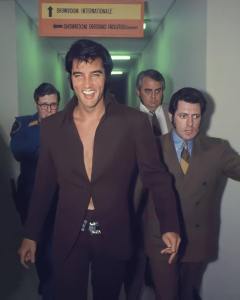
And here is my favorite Elvis’ song, “If I Can Dream” which was written after Dr. Martin Luther King, Jr. was assassinated. Elvis delivers a huge emotional impact, singing powerfully!
-
Baptism

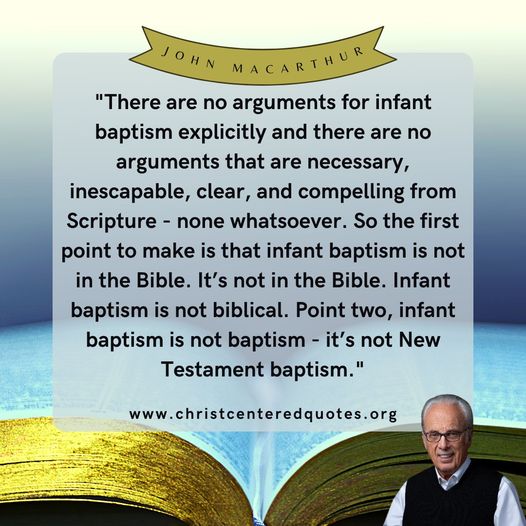
I am a credobaptist. That means I believe that a believer should only be baptized once they come to genuine faith in Christ following repentance and acceptance of the Gospel. This is known as believers’ baptism.The opposing viewpoint is paedobaptism.This is known as infant baptism, here a young child is baptized whilst still an infant. They have no repentance, and no belief.
There is not a single instance of infant baptism in the New Testament. The Old Covenant was entered into through circumcision (for males only, females were left in the lurch), and the vast majority of Israelites who were circumcised were not saved. The New Covenant is wholly different and better. The entrance into the new covenant is the baptism of the Holy Spirit (spiritual) not water baptism (physical). And unlike the Old Covenant, all members under the New Covenant are saved.
Roman Catholics, Orthodox, Lutherans and some Anglicans, further believe that baptism is salvific. This theological position is known as baptismal regeneration. I reject this position in the strongest possible terms. It betrays a lack of understanding of the nature of salvation. No act of man (work) can force the Holy Spirit to regenerate someone. According to baptismal regeneration even if an atheist were baptized with the proper form, using the phrase “I baptize you in the name of the Father, the Son, and the Holy Ghost” and administered water, God would be obligated to regenerate that person! Such a position is utter blasphemy and makes a mockery of Scripture.
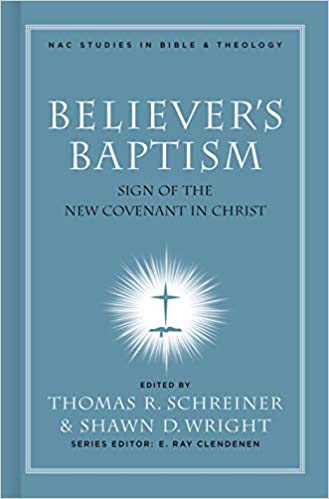
The best book I’ve ever read explaining believers’ baptism is: “Believer’s Baptism: Sign of the New Covenant in Christ” by

Another related book I highly recommend is “The Distinctiveness of Baptist Covenant Theology” by Pascal Denault. In this book Denault demonstrates, using Scripture, that credobaptism best fulfills the covenants. He meticulously contrasts Baptist covenant theology with Paedobaptist covenant theology and shows that the distinct baptist position best fits the substance of the New Covenant. He does this within the context of 17th century sources.

By the way just to show there is no love lost for my paedobaptist brothers and sisters, here is an very good article written by Guy M. Richard at Ligonier making the case for paedobaptism. If you’re interested in learning more about the case for credobaptism, here is an excellent article written by Dr. Sam Renihan.

Further, I am not just a Baptist, I am a Reformed Baptist. Here is a great article explaining what makes one a Reformed Baptist.
-
The Mission (1986) – Updated film review
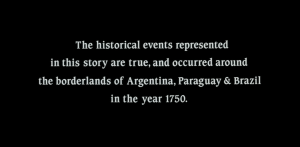
This is my second review of the 1986 film “The Mission”. It is much more extensive than my original review, which is also posted here on my blog.
IMDB:
https://www.imdb.com/title/tt0091530/RELEASED:
October 31st, 1986RUNTIME:
2 hoursGENERAL PLOT:
18th century Spanish Jesuits in Paraguay, South America, try to protect a remote South American Indian tribe in danger of falling under the rule of pro-slavery Portugal. The Spanish and Portuguese both captured Indians and forced them into slavery.ACTORS:
Robert De Niro as Br. Mendoza
Jeremy Irons as Fr. Gabriel
Ray McAnally as Altamirano
Aidan Quinn as Felipe
Liam Neeson as Br. Fielding
Ronald Pickup as Señor Hontar
Chuck Low as Señor CabezaThe Mission was written by Robert Bolt (A Man for All Seasons, Lawrence of Arabia, Doctor Zhivago) and directed by Roland Joffé (The Killing Fields, There Be Dragons).
The Jesuits who first went out to the remote Indian tribe met martyrdom. Fr. Gabriel’s character sent a priest who was killed by the tribe so he felt obligated to go reach them with the Gospel.
Fr. Gabriel made the arduous journey up the falls. Once he was in the jungle, he began playing the flute. The Guarani tribe was amazed and gradually accepted him. He established a mission, San Carlos, and many of the tribe accepted Christ and thus became Christians by God’s grace! To see this violent tribe looking with awe at Fr. Gabriel’s pictures of the Blessed Mother with baby Jesus and some of the saints were in profound contrast with their former way of life. Fr. Gabriel has a run-in with Captain Mendoza who captured and killed some of the tribe.
Back in town, Mendoza finds out the woman he loves is in love with his brother Felipe. After simmering in anger for the day and thinking things over, Mendoza decides to have a duel with his brother. Felipe was no match for him and is quickly killed.
Six months later Fr. Gabriel talks with Mendoza who is punishing himself for his brother’s death by not eating. Mendoza loved his brother. He feels there is no redemption for his sin against Felipe. Fr. Gabriel convinces him to try to do penance. Mendoza lugs a very heavy bundle of armor and swords (symbolic of his old life as a mercenary and slave trader) with him as Fr. Gabriel and he and other priests travel to the Gurani tribe above the waterfalls. Mendoza has an extremely arduous and taxing journey moving slowly up the falls.

When their party gets to the top of the falls they are met by Guarani tribesmen. Covered in mud and exhausted
Mendoza sits there. Suddenly an Indian confronts him, and after a tense standoff where he holds a sharp knife to Mendoza’s throat, he cuts the rope and the heavy bundle falls into the river. Mendoza sobs and Fr. Gabriel comes over and comforts him. The heavy bundle being which was cut represented his guilt and self-hate over killing his brother.
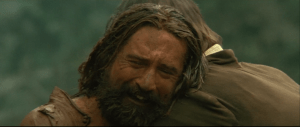
Back at the tribal camp, Mendoza helps build the new church being erected. He also becomes a novice in the Jesuits.
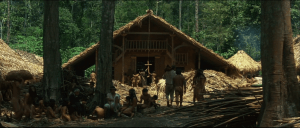
In town, we see that a high official of the Roman Catholic Church, His Eminence Cardinal Altamirano has been dispatched by Rome to settle the matter of who would control the territory. The Jesuit missions were originally built on Spanish lands, where slavery is illegal. But since a certain treaty was passed, the land has now been ceded to the Portuguese, where slavery is legal. The missions are the last refuge for the Guarani tribe, from the Portuguese slave traders. The Portuguese monarch wishes to expand his empire, and the Spanish monarch wishes to also prosper in the New World. Altamirano decides to visit the Jesuit missions before he decides the matter of who gets the land. The Portuguese put pressure on Cardinal Altamirano to judge in their favor. The Portuguese king listens to his trusted advisor who believes the Church is too powerful.
Cardinal Altamirano travels to the San Carlos mission and is amazed by the hospitality and close-knit Christian community that the Guarani have built. The Guarani sing Sancta Maria. In spite of what he saw, the Cardinal decides, tragically, that the Guarani must leave the missions and be at the mercy of the Portuguese. The king of the Guarani says they will not leave, they will fight. He says they were wrong to ever have trusted the Jesuits. Cardinal Altamirano tells Fr. Gabriel that he had already decided to give Portugal the mission territories before he came to San Carlos. His reasoning is that if the Church resists the Portuguese, the Jesuits will be kicked out of Portugal, and their order could then be removed from other European countries in a domino effect. So the missions were sacrificed.

Fr. Gabriel decides to stay at San Carlos, and remain with the tribe no matter what happens. Mendoza decides he will help the Guarani fight to live, two of the other priests will join him. The Guarani were wondering if God had abandoned him. Mendoza was showing them that he would fight as a priest to show them God’s, sacrificial love. Fr. Gabriel has a tense argument with Mendoza and tells him that what he’s about to do is deeply wrong and that fundamentally God is love.
The Portuguese military is making their way to San Carlos, with heavily armed men, cannons, and enslaved Guarani who are going to fight against their own people. Mendoza and a few men sneak into the Portuguese camp and steal kegs of gunpowder, rifles, and pistols. Mendoza is making homemade cannons to use against the Portuguese when they enter the San Carlos mission.
Mendoza and Fr. Gabriel meet for a final time, the Portuguese canoes were spotted approaching San Carlos. Fr. Gabriel poignantly says to Mendoza, “If might is right, then love has no place in the world. It may be so. But I don’t have the strength to live in a world like that.” They embrace, and Fr. Gabriel gives Mendoza his cross to wear. Mendoza and the tribesmen make some kills, but the Portuguese are too powerful and it’s asymmetric warfare. As the fighting goes on, Fr. Gabriel says mass with the women and children outside the front of the church where he has a makeshift altar set up.

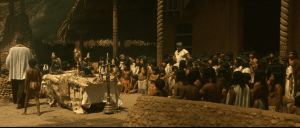
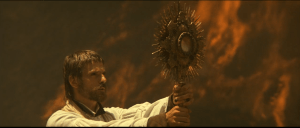
The Portuguese troops set the church and village on fire, and fire muskets and cannons at the helpless women and children as Fr. Gabriel holds the monstrance containing the Blessed Sacrament. It was really hard to watch this part of the movie. The Portuguese military was absolutely heartless and brutal.
Mendoza tries to explode keys of gunpowder on the approaching soldiers, but the musket doesn’t fire. He sees a young child laying injured, and he has the choice to save the child and let him escape with his tribesmen or else to explode the trap. He chooses life and saves the child. Seconds later, the Portuguese soldiers fire on Mendoza, striking him multiple dies, he collapses to the ground. He’s still alive though, and he watches as the soldiers kill a great number of women and children as Fr. Gabriel leads them holding the monstrance. Mendoza sees his old friend Fr. Gabriel. bravely carrying the monstrance as he walks forward, suddenly multiple Portuguese soldiers fire on Fr. Gabriel killing him instantly. That was the final thing Mendoza saw, he closes his eyes and dies. We see a Guarani man pick up the monstrance and walk forward with it. At this point, I lost it and was sobbing like a baby.
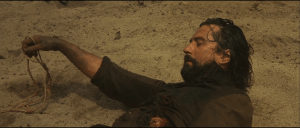
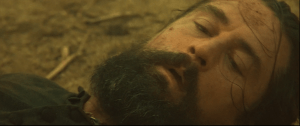
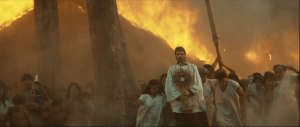
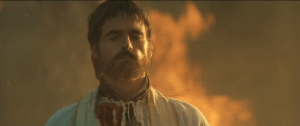
Cardinal Altamirano, Señor Hontar, and Señor Cabeza (who ordered the slaughter of the Guarani) were discussing the next day what happened. The Cardinal questions Cabeza asking if such genocide was necessary and he says it was. Then Hontar says, “We must work in the world. The world is thus.” And the Cardinal, with tears in his eyes, replies “No Señor Hontar, thus have we made the world. Thus have I made it.”

We see a group of survivors, young children, get in a canoe and make their way up the river, thus returning to the jungle. One girl brings a violin she found floating in the river. Their only remains of contact with the so-called civilized world. Cardinal Altamirano says, dictating a letter to the Pope, “So Your Holiness, now your priests are dead. And I am left alive. But, in truth, it is I who am dead. And they, who live. For as always Your Holiness, the spirit of the dead will survive, in the memory of the living.”

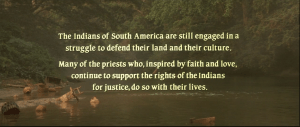
The last thing message to us is a quote from Scripture, John 1:5 – “The light shines in the darkness and the darkness has not overcome it.”
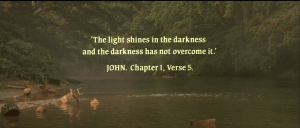
This film showed, in my view, in a very visceral and moving way that what matters is our relationship with Christ. And if need be, we should be willing to become martyrs as Mendoza, Fr. Gabriel, the other priests, and the Guarani did. For us, death is not the end, but rather the beginning of an eternity with our Lord.
In the end, Mendoza got the redemption he was seeking, Fr. Gabriel sacrificially laid down his life for his brothers and sisters in Christ. The Guarani died as true martyrs for Christ. Theirs was a simplicity and purity of faith, that was both profound and sublime. Also, we saw a cautionary tale of when the Church gets too involved in worldly political affairs of the state.
I can say, without a hint of doubt, that this film is easily in my top 5 of my favorite films of all time. It’s not easy to watch, but it’s worth it.
A closing thought of mine expressed in a quote:
“…Often, Christians of the present day discuss the “problem of evil.” Why does a good, loving, and all-powerful God allow evil in the world? Perhaps this question itself is misguided or based on a false premise. Not only does it presume humanity is the innocent victim of evil, but also that evil is an external force from which, it is imagined, God is failing to protect us. The reality is precisely the reverse—evil enters creation as a result of humanity’s collusion with evil spiritual forces. Humanity is the vehicle through which evil comes into the world, and it is most often directly inflicted by humans upon one another rather than by impersonal forces of nature. God’s merciful and gracious action is why this evil does not consume the creation entirely.
Nevertheless, God does allow the consequences of sin and corruption to at least partially play out in His creation. What is often labeled as God’s judgment, wrath, or punishment is really His allowing the perpetrators of iniquity to experience the full consequences of their sin. As always, this judgment is not punitive, though we may experience it as the punishment or the price of sin. Rather, to truly restore justice and order requires either repentance of the sin and evil that have disrupted the good order of creation or the removal of the unrepentant sinner.”—Fr. Stephen De Young, God is a Man of War: The Problem of Violence in the Old Testament
The cinematography of this film was stunning! Excellent directing by Roland Joffé! The ensemble cast of actors was brilliant.
Jeremy Irons and Robert DeNiro did some of their best work. Even the people playing the Guarani were good and believable.
I’ve never seen a film score so beautifully and richly complement the action and mood of a film as I did with Morricone’s music for The Mission. It evokes a range of emotions and also helps pace the film.
Here is my favorite musical piece from Ennio Morricone’s magnificent film score: The Mission – Main Theme.
Maestro Ennio Morricone conducts the music he composed for the film “The Mission”. This selection is known as Gabriel’s Oboe. In my view and the view of many other learned men in music, Morricone is considered the greatest composer of film music ever.The Mission won an Academy Award for Best Cinematography – Chris Menges. It also won several BAFTA awards. For a complete list of awards click here.
Here is the Catholic Film Podcast discussion of the film presented by Catholic Culture.
If you can’t watch the entire film, see this 4 minute clip which gives an overview.
-
Say no to Harry Potter!

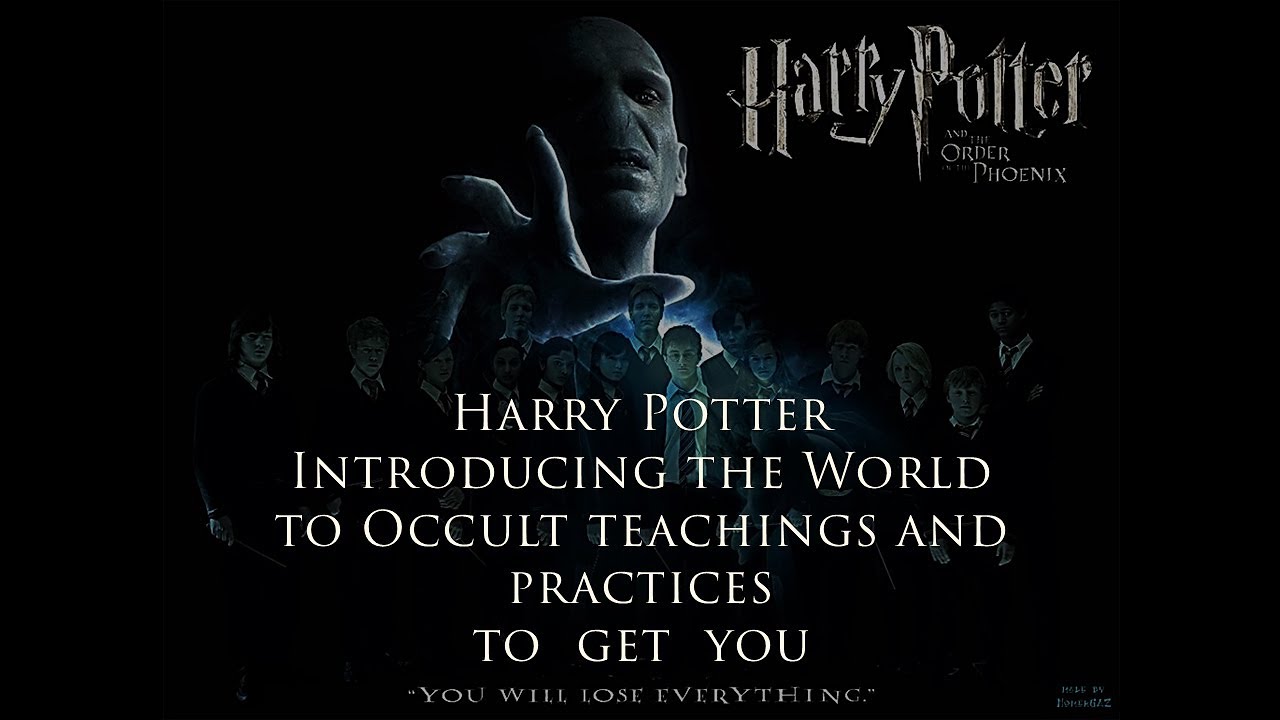
The Harry Potter books/movies use spells adapted from actual magic spells, and contain the names of actual demons! It is a gateway for our kids and grandkids into the occult. We should burn the Harry Potter books and melt the DVDs of the movies! Filth. Look how it spread as a worldwide phenomenon and made Rowling a billionaire! Definitely Satan at work. And I get tired of hearing clueless Christian parents say, “At least my child is reading!” As if there is nothing else they can read but demonic filth!
Harry Potter has popularized occult teachings and practices. The Harry Potter books have sold over 500 million copies. And the movies have been viewed hundreds of millions of times earning more than $9 billion USD at the box office. It has introduced a generation to magic and has normalized occult beliefs and practices. Harry Potter has taught children that magic and witches and wizards and the occult, in general, are cool and fun and good. It taught them to not fear magic, and to be magically minded. This is extremely dangerous!
Here is a complete list of the spells used in Harry Potter!
Please listen to this short video of Fr. Chad Ripperger talking about the Satanic aspects of Harry Potter!
Both Fr. Ripperger and Zachary King (a former Satanist) say that at least some of the spells are real. The fire spell is the main example they use. Spells are worked by the presence of a demon. This witchcraft is utterly demonic! They are real because when she did research for the books, Rowling used real spell manuals so that they would be authentic. According to Fr. Ripperger at least 60% of the demons named in Harry Potter are actual demons that he and fellow exorcists have cast out of possessed people.
-
Death of the Apostles
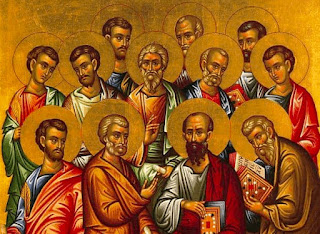
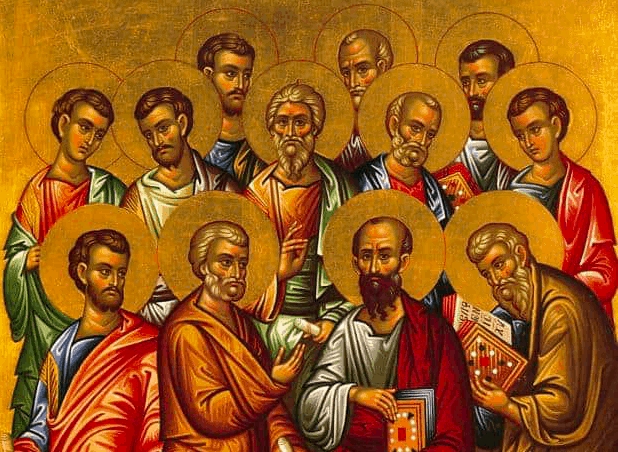
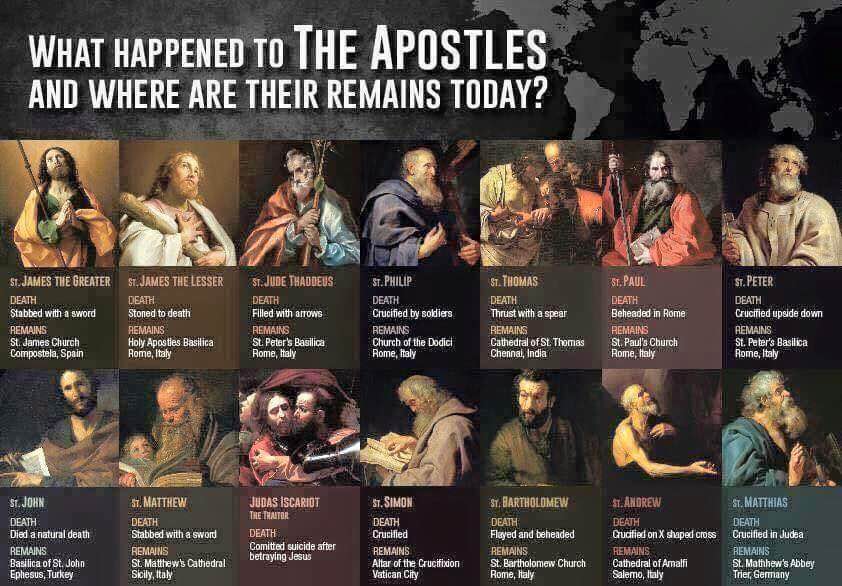
Most of the Apostles of the New Testament died as martyrs, knowing even as their bodies would fall asleep, they would rise with Christ! Here is a list of how the Apostles died. If you have corrections or further details to add please leave a comment!
1. Matthew. Suffered martyrdom in Ethiopia, Killed by a sword wound.
2. Mark. Died in Alexandria, Egypt , after being dragged by Horses through the streets until he was dead.
3. Luke. Was hanged in Greece as a result of his tremendous Preaching to the lost.
4. John. Faced martyrdom when he was boiled in huge Basin of boiling oil during a wave of persecution In Rome. However, he was miraculously delivered From death.
John was then sentenced to the mines on the prison Island of Patmos. He wrote his prophetic Book of Revelation on Patmos . The apostle John was later freed and returned to serve As Bishop of Edessa in modern Turkey . He died as an old man, the only apostle to die peacefully
5. Peter. He was crucified upside down on an x shaped cross. According to church tradition it was because he told his tormentors that he felt unworthy to die In the same way that Jesus Christ had died.
6. James. The leader of the church in Jerusalem , was thrown over a hundred feet down from the southeast pinnacle of the Temple when he refused to deny his faith in Christ. When they discovered that he survived the fall, his enemies beat James to death with a fuller’s club.
This was the same pinnacle where Satan had taken Jesus during the Temptation.
7. James the Son of Zebedee was a fisherman by trade when Jesus Called him to a lifetime of ministry.
As a strong leader of the church, James was beheaded at Jerusalem. The Roman officer who guarded James watched amazed as James defended his faith at his trial.
Later, the officer Walked beside James to the place of execution. Overcome by conviction, he declared his new faith to the judge and Knelt beside James to accept beheading as a Christian.
8. Bartholomew. Also known as Nathaniel. He Was a missionary to Asia. He witnessed for our Lord in present day Turkey. Bartholomew was martyred for his preaching in Armenia where he was flayed to death by a whip.
9. Andrew. He Was crucified on an x-shaped cross in Patras, Greece. After being whipped severely by seven soldiers they tied his body to the cross with cords to prolong his agony.
His followers reported that, when he was led toward the cross, Andrew saluted it in these words, “I have long desired and expected this happy hour. The cross has been consecrated by the body of Christ hanging on it”. He continued to preach to his tormentors For two days until he expired.
10. Thomas. He Was stabbed with a spear in India during one of his missionary trips to establish the church in the Subcontinent.
11. Jude. He Was killed with arrows when he refused to deny his faith in Christ.
12. Matthias. The apostle chosen to replace the traitor Judas Iscariot. He was stoned and then beheaded.
13. Paul. He Was tortured and then beheaded by the evil Emperor Nero at Rome in A.D. 67. Paul endured a lengthy imprisonment, which allowed him to write his many epistles to the churches he had formed throughout the Roman Empire. These letters, which taught many of the foundational Doctrines of Christianity, form a large portion of the New Testament.
 For more detailed information please consult “Fox’s Book of Martyrs“, chapter 1, here.
 -
Capitalism Defended
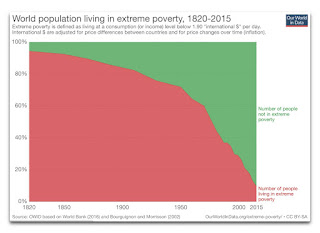
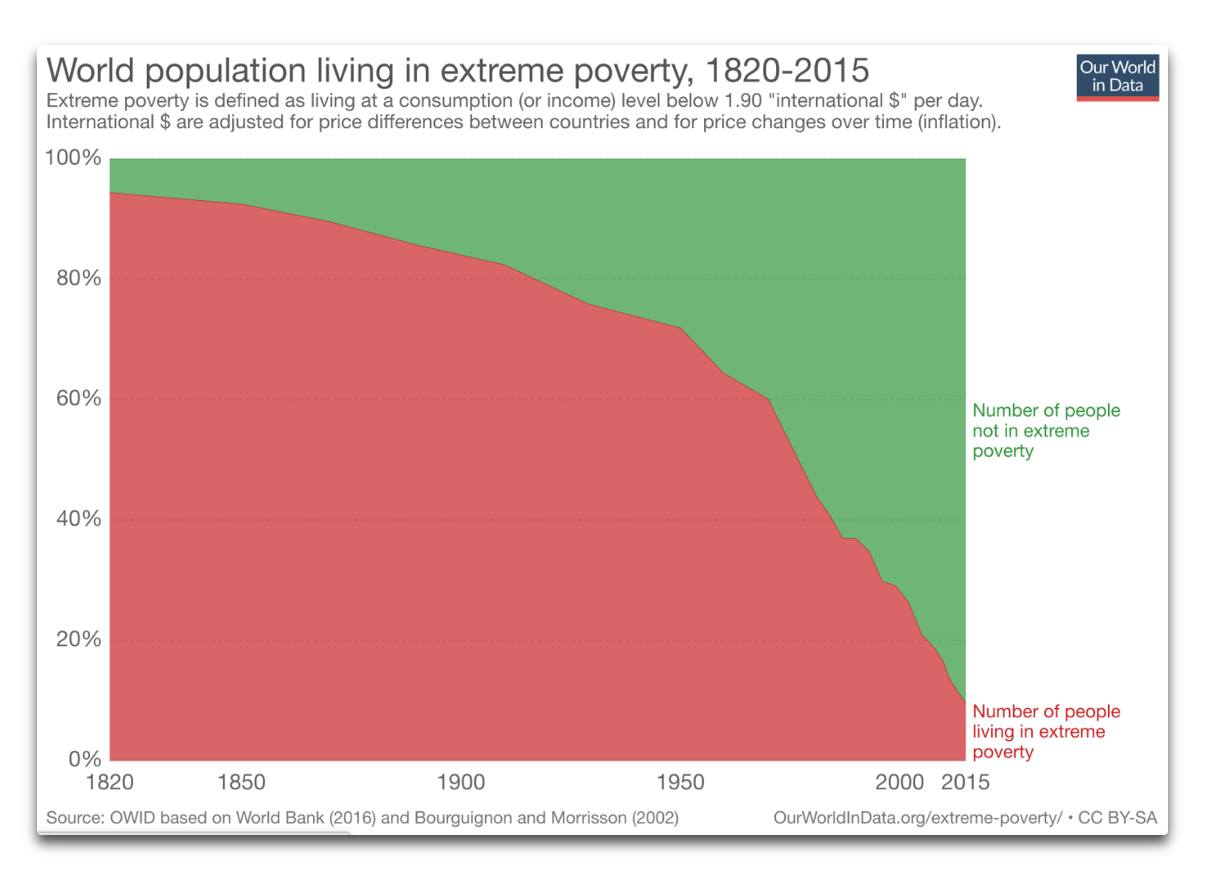
According to increasingly many Democrats in America, who fancy themselves as ‘Democratic Socialists’, the free market, using capitalist principles, has brought oppression, racism, income inequality, and poverty. This is a popular refrain from socialists like AOC, Bernie Sanders, and Elizabeth Warren. Is the free market actually guilty of so much evil? Not at all! While it certainly has problems, free-market capitalism has raised more people out of poverty than ANY OTHER ECONOMIC SYSTEM in history! I am against crony capitalism. I favor morally restrained capitalism, contra the “Greed is good.” of the 1980s Wall Street yuppies!
All the data we have is clear that in the past 200 years (1820 – 2020), the rates of poverty globally have been reduced dramatically thanks to capitalism. Both baseline poverty rates, as well as extreme poverty rates, have decreased sharply under capitalism.
Millennials and Gen-Z are being brainwashed by socialist teachers to believe that socialism/communism is superior to free-market capitalism! Nothing could be further from the truth!
According to the following article:
In 1820, the total world population numbered around 1 billion people. Out of that 1 billion, demographers and economic historians have estimated that about 95 percent lived in poverty, and 85 percent in abject poverty. Only a small fraction of the human race had any form of material comfort, though we need to keep in mind that what was considered a comfortable existence in 1820 would be viewed as material wretchedness by most in the 21st century.
The world population has increased to over 7.6 billion people in 2018. The World Bank calculated that less than 10 percent lived in serious poverty in 2015. In 200 years, the population has grown by more than 6.5 billion people while poverty has sensationally fallen to less than 10 percent of the much larger total. If this trend continues, it is not unreasonable to anticipate that before the end of the 21st century, poverty will be a thing of the past.
All might not have the same standard of living in, say, 2075 or 2090. But the differences will likely be reduced to degrees of comfortable material enjoyment of life, not the dichotomy in which some have it while others do not. – https://www.aier.org/article/the-rise-of-capitalism-and-the-dignity-of-labor/That is a dramatic, even miraculous, transformation!! In the past 20 years, nearly 1 billion people have been taken out of poverty thanks to capitalism! Listen to Bono, not AOC!
-
William Tyndale defended

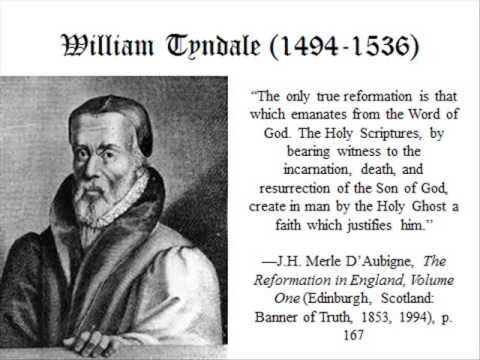
Catholic apologists online, make a habit, I’ve noticed, of discrediting the great Reformed Martyr William Tyndale. They use fraudulent revisionist history to do this. I’ve lost count of the times I’ve seen Catholics dismiss Tyndale’s work as 3rd rate or “riddled with errors”. The truth is that Tyndale was a consummate scholar and ranked as the preeminent translator of his day. He was the Jerome of his generation! A master scholar of eight languages, Tyndale was meticulous in his translation of the Bible’s original Greek and Hebrew, and his style of English was uncommonly beautiful.Tyndale’s translation of the Bible was simple but elegant. As his translation spread, his plain rhetorical style also spread and began to form the basis of a new English style, one that took common speech and elevated it into comprehensible prose. Some of the most famous phrases in the English language can still be attributed to Tyndale, including “and the truth shall make you free;” “eat, drink, and be merry;” and “the powers that be.”

New translations made few changes to Tyndale’s work and wording. The Great Bible of 1539 was published by the royal authority of King Henry VIII just three years after Tyndale’s death. Ironically, this Bible was based on Coverdale’s Bible, which was essentially Tyndale’s translation with the parts of the Old Testament that Tyndale had not translated filled by translations of Latin and German versions.The Geneva Bible was the first complete English translation of the Bible from the Greek and Hebrew. The Geneva Bible translators also consulted Tyndale’s earlier work, as would the translators of the 1611 King James Version of the Bible. In fact, 83 percent of the King James Version is based on Tyndale’s translation. Tyndale’s influence is evident in nearly every English Bible translation available today. The New International Version is based on the same principles demonstrated in Tyndale’s work—accuracy, beauty, clarity—and is inspired by his style and language.
Background on Tyndale’s work.Here is a wonderful film adaptation about Tyndale’s life and work translating Scripture, “God’s Outlaw”. -
The further exploits of Sherlock Holmes
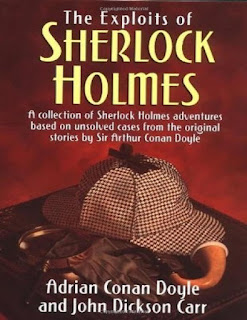
For detective/mystery lovers here is a free ebook you’ll love! It is further exploits of Sherlock Holmes written by Sir Arthur Conan Doyle’s son Adrian together with John Dickson Carr! The 12 stories feel a bit more updated, and yet they still ring true of Sir Arthur Conan Doyle’s voice. Click the link below to download in various ebook formats.
https://archive.org/details/TheExploitsOfSherlockHolmes
The stories contained in the collection are:
- “The Adventure of the Seven Clocks” – post-scripted as “The Case of the Trepoff Murder” mentioned in “A Scandal in Bohemia”
- “The Adventure of the Gold Hunter” – post-scripted as “The Camberwell Poisoning Case” mentioned in “The Five Orange Pips”
- “The Adventure of the Wax Gamblers” – post-scripted from “The Case of the Darlington Substitution Scandal” mentioned in “A Scandal in Bohemia” (however, this exploit is not the one mentioned in the Doyle story, but is instead a second one. It does refer to the previous one, though.)
- “The Adventure of the Highgate Miracle” – post-scripted as “The Tale of Mr. James Phillimore” mentioned in “The Problem of Thor Bridge”
- “The Adventure of the Black Baronet” – post-scripted as the affair of “The Unfortunate Madame Montpensier” mentioned in “The Hound of the Baskervilles”
- “The Adventure of the Sealed Room” – post-scripted as the case of “Colonel Warburton’s Madness” mentioned in “The Adventure of the Engineer’s Thumb”
- “The Adventure of Foulkes Rath” – post-scripted as the account of “The Addleton Tragedy” mentioned in “The Adventure of the Golden Pince-Nez”
- “The Adventure of the Abbas Ruby” – post-scripted as the affair of “The Famous Card Scandal of the Nonpareil Club” mentioned in “The Hound of the Baskervilles”
- “The Adventure of the Dark Angels” – post-scripted as “The Case of the Ferrers” mentioned in “The Adventure of the Priory School”
- “The Adventure of the Two Women” – post-scripted as “The Scandal of the Blackmailer” mentioned in “The Hound of the Baskervilles”
- “The Adventure of the Deptford Horror” – post-scripted as two cases “The Sudden Death of Cardinal Tosca” and “Wilson the Notorious Canary-trainer” mentioned in “The Adventure of Black Peter”
- “The Adventure of the Red Widow” – post-scripted as “The Arnsworth Castle Business” mentioned in “A Scandal in Bohemia”











-
Subscribe
Subscribed
Already have a WordPress.com account? Log in now.
 Zach Uram's Blog