• Christmas Under Attack!

    Adoration of the Shepherds
    Domenico Ghirlandaio
    1485

    It’s Christmas Eve night, a holy night as we sit under eager expectation to celebrate our Lord and Savior Jesus Christ’s birth. You’d think this special time of the year is for joyous celebration and quality time spent with friends and family observing holiday traditions, going to church, eating a delicious fine meal, and exchanging gifts. Yet for most Reformed, Christmas, and Easter celebrations illicit feelings that are akin to a pre-conversion Scrooge from Charles Dicken’s wonderful book “A Christmas Story“. To them, these are just ordinary days on the calendar with no special significance whatsoever. I disagree strongly with this view. These people believe the only lawful and proper holiday for Christians to observe is the Christian Sabbath (Sunday). I have no problem with observing the Lord’s Day, but I don’t believe it is the only possible holiday we have the freedom to observe as believers.

    It is utterly fallacious for opponents of Christians observing holidays, such as Christmas, to assert that these are not holy days since they are not explicitly defined as such in Scripture. That very narrow-minded definition is not biblical at all. What could be more holy than Jesus’ birth, death, and resurrection?! We know these are holy days and are fit for a celebration. It’s ridiculous to assert that Scripture must explicitly designate a certain day to be holy for it to be so.

    Making an extra special celebration for Christ’s birth is VERY BIBLICAL and VERY NECESSARY in my view. It is an exaggerated and reactionary Reformed response to the Roman Catholic church calendar which is behind most Reformed not celebrating Christmas or Easter. I think it’s stupid! The Puritans went so far as to condemn those that celebrate Christmas and Easter as being guilty of sin. They often banned such holidays from being observed in their jurisdictions.

    Christians from the time of the EARLY CHURCH to the present have been celebrating Christ’s birth, death, and resurrection continuously for nearly 2,000 years!! Yes, December 25th, and Easter, are very momentous, significant, and special days. I believe ALL CHRISTIANS should honor Christ on these days and celebrate!!

    The other root cause of this problem, besides a reactionary response to all things Roman Catholic, is the regulative principle of worship (RPW). It dictates that we may only worship God in ways He has delineated in Scripture. I have several objections to this principle. First, observing holidays like Christmas does not fall under the rubric of worship so the RPW does not apply. Second, even if observing Christmas does fall under the category of worship there is nothing in Scripture that explicitly commands us to only worship God as defined in Scripture. I believe the normative principle of worship (NPW) is a far more biblical and balanced view. The NPW says that anything which is not sinful and is not explicitly condemned or forbidden in Scripture is permissible.

    A problem here is believers not comprehending how better a covenant the New Covenant is, and the freedom to worship we have in Christ. So no I absolutely do not believe that a Christian who sets up a Christmas tree, watches a Christmas movie, sings carols, has a fine family meal, or any of the other traditions associated with Christmas makes us somehow guilty of offering Strange Fire unto the Lord.

    There is, sadly, often a highly legalistic and self-righteous spirit behind these objections to Christmas and Easter. I actually feel sorry for such Christians, and I pray God would open their eyes someday. It would be one thing if they choose to not observe Christmas or Easter, but they aren’t content with that and frequently feel compelled to criticize, falsely judge, ridicule, mock, and lambast those of us who do observe such holidays. I’ve seen some very ugly behavior on Facebook in particular. This controversy does not honor Christ! I will step back and try to not let such people get me too upset and disturbed.

  • Transgender insanity

    It is a simple biological fact that you cannot change your sex. Gender = biological sex. There are only 2 sexes, male and female, and thus only 2 genders. This has been the accepted wisdom until the past 20-25 years. Slowly, but surely, as the LGBT movement has grown and become powerful and widely accepted by the government, academia, big business, K-12 schools, and across the mainstream media and entertainment industry, there are more and more people identifying as transgender. A transgender is a person who believes they were born as the wrong sex. A man may feel like a woman and so on. However, your feelings don’t dictate or change your biology.

    Transgenderism is the latest manifestation of the Emperor With No Clothes phenomenon. Every sane and rational person can see that a transgender man is just pretending he’s “really” or “truly” a woman! Within my parents’ lifetimes, transgenders were rightly recognized as suffering from severe mental illnesses such as body dysmorphic disorder (BDD) and gender dysphoria. Homosexuality also up until the mid-1970s was classified as a mental illness in the DSM book which is the standard source where mental illnesses are defined. These people are sick and need help. What they don’t need is for society to coddle them and entertain their perverse delusions. Yet, sadly, that is precisely what we’ve seen happen.

    Your sex/gender is literally encoded in your chromosomes in every single cell in your body. So it’s impossible to change!!! This is a scientific fact.

    Brainwashing and indoctrination into LGBT and gender insanity is happening right now in public schools. They start as early as possible such as in preschool or kindergarten. Girls are given male hormones (testosterone) so they develop facial and chest hair, boys are given hormone blocks and take female hormones (estrogen) so they develop breasts. Even horrific surgeries are performed that mutilate their bodies! This is sexual abuse and child abuse! It is absolutely wicked.

    In less than 70 years (within my parents’ lifetimes), transgenderism and homosexuality went from being on the fringe of society, where it was universally reviled and shunned, to mainstream acceptance by all strata of society. LGBT as a set of beliefs has become so dominant that now, one can be fired from their workplace, expelled from their school, have their small business sued, lose tenure as a professor, be censored, or forced to resign their executive position all for merely not assenting to LGBT propaganda. Donald Trump even courted the LGBT vote and recently many Republicans in Congress sided with Democrats to pass the bill enshrining homosexual marriage into federal law. Absolutely disgusting!

    When I was in kindergarten and grade school there was no story time with so-called Drag Queens (male transvestites who dress as women), and there were no books such as “My Two Mommies” about lesbian relationships. Looking back now, I can clearly see how God sheltered and protected my sisters and me from the LGBT insanity.

    Today LGBT ideology is indoctrinating kids are early as preschool! If you attend public schools you’ll be brainwashed by LGBT ideology for 13 years. It’s even more blatant in colleges and universities. There, supported by most of the liberal professors and the administration, LGBT students and faculty are quite aggressive. They make all types of demands and take sanctions and target any students or faculty who challenge LGBT ideology.

    Now we see transgenders in the Biden administration, in state and local government offices. We see transgender judges, professors, K-12 teachers, actors, singers, and in many other positions. They are given maximum exposure by the mainstream media, and they are championed by academia. The entertainment industry has LGBT content now in just about every TV show or movie, even ones made for kids such as Disney films. Popular music also pushes LGBT ideology. To put it bluntly, they are loud and in your face. Just as all LGBT are today in the West. This degeneracy and lack of belief in biblical values have truly engulfed the Western world. Only in the East and in Africa do we see much resistance and people fighting back against these Satanic ideologies.

    Make no mistake about it, this is a spiritual battle. Satan’s goal is to undermine and destroy the traditional family with a heterosexual biological father, and a heterosexual biological mother.

    God made two genders and only two genders. Gender is not ‘fluid,’ nor should we misidentify our gender

    By Elizabeth Prata

    In Genesis 1:26, God made man in His image. We don’t look like God nor do we possess His incommunicable attributes, but ‘in His image’ means as Phil Johnson preached:

    “Humanity bears the stamp of God’s likeness. No other creature, not even the highest archangel, was made in God’s image. We can see the image of God imprinted on the human soul in humanity’s unique moral and spiritual attributes, those things that set us apart from the animals.”

    For example, the human intellect is uniquely capable of self-reflection. We’re creative. We are moved by beauty. We speak a variety of complex languages. Our moral instinct (that innate sense of right and wrong) is unparalleled in the animal kingdom. We have a conscience that declares our guilt when we do wrong. And no other creature manifests anything like the human craving for communion with God. Animals don’t practice religion of any kind.” end Phil Johnson excerpt from sermon “What Creation Reveals

    Then God made woman, Genesis 2:22. God made male and He made female. He made only two genders. He didn’t make another Adam and then change that Adam into Eve. He used one rib, and fashioned a woman, distinct from a man. He did this for a purpose. First, to be a helper suitable for man. Second, so that the two would come together and populate the earth.

    In the New Testament, Jesus affirmed God’s design of the two genders in Matthew 19:4 and 5. Jesus replied to the Pharisees’ question about marriage this way, “And He answered and said, “Have you not read that He who created them from the beginning MADE THEM MALE AND FEMALE,” and said, ‘FOR THIS REASON A MAN SHALL LEAVE HIS FATHER AND HIS MOTHER AND BE JOINED TO HIS WIFE, AND THE TWO SHALL BECOME ONE FLESH’?” emphasis Bible’s.

    Jesus’ reply in a few short words covers a lot. It affirms God’s design for human kind- two genders. It affirms that marriage is between one man and one woman. It affirms two genders again, noting that there is a father and a mother, from which a child issued. In other words it intends two specific genders that comprise family units. It affirms that in marriage, the two genders become one flesh. That last bit refers to the sexual act, but overall it also refers in general that the two genders become one unit. I.E. that marriage is permanent between two opposite-sex individuals.

    Even where polygamy is recorded in the Bible, it’s a man married to multiple women. You note that even though polygamy is sinful, that when it is pictured in the Bible, it’s opposite genders married, not same genders married to multiples of the same gender. The creation mandate to multiply cannot happen between same genders.

    But speaking of the one flesh as the marital physical act, there is no other configuration from which two people become one flesh.

    The human reproductive system is designed by God. It’s designed to be incomplete without the other gender. Humans were given a mandate to go forth and multiply (Genesis 1:28). They were given that mandate again after the flood (Genesis 9:7). The human reproductive system was designed to produce a human, which cannot happen when the sexes are the same. Homosexuality is evidence that God has given them over to their unwholesome and depraved desires, (Romans 1:26-27), and it rejects the marriage mandate and the multiplication mandate. It is a total rejection of God’s created order.

    Though in the Bible times they did not have the medical capability to change a person from one gender to another like we do now, God called the outward expression of a person presenting the inward desire to be another gender via cross-dressing, an abomination in Deuteronomy 22:5. Going the extra step nowadays using medical technology to actually change genders and not simply dress like the opposite gender, would also be an abomination. Even more so.

    They are suppressing their own biology. All they need to do is examine their own body and understand they are a boy or a girl. A man or a woman. God does not make mistakes and He didn’t put the wrong ‘heart’ into the wrong body. There are two genders and they are as solid as cement, not fluid, not changeable, but one OR the other. What you are is what you are and what God intended them to be when He formed them in the womb.

    If one rejects one’s own gender, it is an ultimate rejection of God, because He is creator not just of the world but of each person. It’s a supreme rejection of God because if I can change my own gender, adjust my own biology, I am my own god.

    All creation groans under the curse set upon it by man’s first sin. (Romans 8:22). Yet all creation is doing what it’s supposed to, while suffering. Only man is the rebel. Humans who desire to switch from one gender to another are living with a deep inward delusion. They are living in the darkness, and we should have compassion on someone who is so burdened with perverted desires. We should pity the person who is under such judgment from God that He gave them over. We should be righteously angry with parents who act as in Romans 1:32, they heartily applaud such craven desires and allow their precious children to be pushed further into the evil dark.

    For the person sadly seeking some sort of ‘liberation’ from being ‘trapped’ in the wrong body, there is liberation. It’s liberation from the power of sin, by repenting of our sin and appealing to Jesus Christ and His death on the cross and resurrection. He died for sinners, and has released those already who will repent of their sin and acknowledge Him. True liberation comes from Jesus, not a different gender. The pursuit of liberation, satisfaction, settled happiness, comes not under the surgeon’s knife but under the sharp sword of the Word of God. The word promises-

    So then, brothers and sisters, we are under obligation, not to the flesh, to live according to the flesh— 13for if you are living in accord with the flesh, you are going to die; but if by the Spirit you are putting to death the deeds of the body, you will live. 14For all who are being led by the Spirit of God, these are sons and daughters of God. 15For you have not received a spirit of slavery leading to fear again, but you have received a spirit of adoption as sons and daughters by which we cry out, “Abba! Father!” 16The Spirit Himself testifies with our spirit that we are children of God, 17and if children, heirs also, heirs of God and fellow heirs with Christ, if indeed we suffer with Him so that we may also be glorified with Him. (Romans 8:12-17).

    https://the-end-time.org/2021/07/21/god-made-two-genders-and-only-two-genders-gender-is-not-fluid-nor-should-we-misidentify-our-gender/

    There is also a profit motive driving the transgender insanity:

    Data show that “socially transitioned” children are far more likely to go on to medical interventions. And perhaps this is the point: After all, transgender is big business. Gender-transition surgery can cost upward of $100,000. The US gender-surgery market was valued in 2021 at $1.9 billion, with predicted annual growth of more than 10%. And when hormone therapy costs $1,500 a year, for the rest of a patient’s life, no wonder entrepreneurial medics want kids on the treatment treadmill as young as possible. Clinics are popping up like mushrooms to take advantage of this new business opportunity: The first American pediatric gender clinic opened in 2007, and there are now more than 50 nationwide.

    https://nypost.com/2022/08/24/boston-childrens-hospitals-transgender-insanity-elites-profit-from-kids/

    The parents of these so-called transgender kids are destroying their children’s lives! They will answer to God. All the educators, doctors, surgeons, nurses, psychiatrists, and others who are harming these children shall likewise be held to account!

  • Two Songs by Elvis about Love

    Here are two songs performed by Elvis that describe diametrically opposed ways of experiencing love. One is about losing love, and the other is about falling in love.

    What Now My Love

    Elvis conveys deep anguish and heartache. The emotional turmoil is palpable. The man loses everything and he loses the will to live. When Elvis sings “no one would care, no one would cry, if I should live or die” seems oddly prophetic since less than 4 years later he’d be dead. This song was recorded live in Honolulu, Hawaii for the special concert “Aloha From Hawaii”, which was broadcast by satellite to homes all across the globe, to 1.3 billion people in 1973.

    Lyrics

    What now my love
    Now that you left me
    How can I live through another day
    Watching my dreams turn into ashes
    And all my hopes into bits of clay
    Once I could see, once I could feel
    Now I’m a numb
    I’ve become unreal

    I walk the night, oh, without a goal
    Stripped of my heart, my soul
    What now my love
    Now that it’s over
    I feel the world closing in on me
    Here comes the stars
    Tumbling around me
    And there’s the sky where the sea should be

    What now my love
    Now that you’re gone
    I’d be a fool to go on and on
    No one would care, no one would cry
    If I should live or die

    What now my love
    Now there is nothing
    Only my last goodbye
    Only my last goodbye

    Can’t Help Falling In Love (Plaisir D’Amour)

    This is a very touching song about falling in love. Elvis sings it perfectly!

    Lyrics

    Wise men say
    Only fools rush in
    But I can’t help falling in love with you
    Shall I stay?
    Would it be a sin
    If I can’t help falling in love with you?

    Like a river flows
    Surely to the sea
    Darling, so it goes
    Some things are meant to be

    Take my hand
    Take my whole life, too
    For I can’t help falling in love with you

    Like a river flows
    Surely to the sea
    Darling, so it goes
    Some things are meant to be

    Take my hand
    Take my whole life, too
    For I can’t help falling in love with you
    For I can’t help falling in love with you

  • Some Reformed utter “Bah Humbug!” and seek to cancel Christmas!

    Dear fellow Reformed:

    Stop saying it’s a sin to celebrate Christmas, or that such a celebration is unbiblical.

    You do things every single day not explicitly commanded in Scripture.

    It is a gross misapplication of the regulative principle which itself is problematic. I favor the normative principle. Unless something is SINFUL OR EXPRESSLY FORBIDDEN by Scripture then doing so is not a sin.

    You can’t get more biblical than celebrating the Lord’s incarnation!

    Christmas has been celebrated continuously by the Church for the past 2,000 years. It is only in the 1500s (some 1,500 years later) that we see some Reformed saying we should cancel Christmas because it has too close an association with the Catholic church! By that reasoning, we Reformed might as well cancel baptism, communion, etc. How stupid! I love the Puritans and appreciate their insights, but their desire to cancel Christmas and other holidays such as Easter was dead wrong and unbiblical.

    I will keep celebrating the Lord Jesus’ birth and I call upon those who wish to cancel Christmas to examine Scripture closely and realize that celebrating holidays such as Christmas and Easter is very proper and quite thoroughly biblical!

  • What Does It Mean to Be Reformed?

    In my years of being involved in Christian discussion and debate online (nearly 30 years), I’ve noticed that many Reformed Presbyterians seem to look down on us Reformed Baptists (aka Particular Baptists) and say we aren’t “Really Reformed” or we’re not “Truly Reformed”.

    I maintain that infant baptism is not the sine qua non of Reformed theology. One can disagree with infant baptism and still be Reformed.

    What markers or distinctive make a Christian Reformed? I’d argue for the following:

    Affirm the great “Sola’s” (Latin for “only”) of the Reformation.

    • Sola Gratia…Grace Alone
    • Sola Fide…Faith Alone
    • Solus Christus…Christ Alone
    • Sola Scriptura…Scripture Alone
    • Soli Deo Gloria…To the Glory of God Alone

    To summarize, salvation by Grace Alone, through Faith Alone, in Christ Alone, according to the Scriptures Alone, to the Glory of God Alone.

    Affirm and promote a profoundly high view of the supremacy and sovereignty of God in all things and sees God as actively involved in His creation, governing and overseeing all the affairs of men. cf. Psalm 115:3; Job 34:14-15; 37:6-13; Daniel 4:35.

    Affirm the utter dependence of sinful man, upon God, in all things, especially concerning salvation.

    Affirm the Doctrines of Grace (commonly referred to as Calvinism), which display God as the author of salvation from beginning to end.

    The acrostic TULIP (which is a summation of the Canons of Dort) is the most familiar way of delineating the doctrines of Grace. TULIP is made up of 5 points that define Calvinism, which are:

    • T – Total Depravity
    • U – Unconditional Election
    • L – Limited Atonement
    • I – Irresistible Grace
    • P – Perseverance, and Preservation, of the Saints

    Creedal – To affirm the great creeds of the historic, orthodox church.

    • The Apostles’ Creed
    • The Nicene Creed
    • The Definition of Chalcedon

    Confessional – To affirm one, or more, of the great confessions of the historic orthodox church.

    The Westminster Standards:

    • The Westminster Confession of Faith
    • The Westminster Longer Catechism
    • The Westminster Shorter Catechism

    Reformed Baptist Standards:

    • 1644 London Baptist Confession of Faith
    • 1689 London Baptist Confession of Faith
    • The Baptist Catechism
    • Orthodox Catechism

    The Three Forms of Unity:

    • The Belgic Confession of Faith
    • The Heidelberg Catechism
    • The Canons of Dortrecht

    A high view of Scripture, in its necessity, infallibility, sufficiency, and internal consistency, and our dependence upon it to learn what God has revealed about Himself, His commands, and His way of salvation.

    A high view of the church, in preaching (the exposition and application of God’s Word), the ordinances, discipline, prayer, worship, fellowship, and evangelism, all encompassed in the keeping of the Christian Sabbath, commonly called the Lord’s Day (Sunday).

    A distinctly Biblical, Christian worldview that permeates all of life, a life lived in the world, but at the same time, a life not oriented to the world and its standards, but oriented to God’s Word.

    A clear understanding of the distinction between, and relationship of, Law and Gospel.

    The Law has Three Uses:

    • The civil use. The law serves the commonwealth or body politic as a force to restrain sin. The law restrains evil through punishment. Though the law cannot change the heart, it can inhibit sin by threats of judgment, especially when backed by a civil code that administers punishment for proven offenses.
    • The pedagogical use. The law also shows people the perfect righteousness of God, and their sinfulness which deserves punishment, and points them to mercy and grace outside of themselves, found in the Gospel alone.
    • The moral, normative, sanctifying use. The moral standards of the law provide guidance for believers as they seek to live in humble gratitude for the grace God has shown us. This use of the law is for those who trust in Christ and have been justified by grace alone, through faith alone, apart from works.

    The 2nd use of the Law and its perfect requirement points us to the Gospel (good news) of the purchased redemption and free grace of the Son, for God’s people, and the Gospel, once applied by the Holy Spirit, then points us back to the third use of the Law in delight to obey its commands to the glory of God as a new creation in Christ Jesus.

    If one affirms all this, they are truly Reformed, regardless of what some Reformed Presbyterians may assert. We must not tolerate unwarranted theological bigotry under the ruse of being “biblical”. It is a haughty and smug spirit that such Presbyterians have, one which makes them feel superior to Reformed Baptists. We must not be afraid to challenge and confront this bigotry when we encounter it. It has no place in the Body of Christ!

    By the way, you may be interested in reading the other two blog posts I’ve written which are related to the idea of Reformed identity. They are linked below:

    Many thanks to Joseph Trost Jr. for contributing content to this post.

  • Charles Finney: Agent of Satan

    Charles Finney popularized the altar call and decisional salvation (decision theology), which is making a decision for Christ by praying and asking Jesus into your heart. It’s synergistic Arminian soteriology. He also advocated for revivals. The true Gospel is one in which God regenerates a believer, through effectual calling, grants them repentance and faith in Christ alone.

    It wasn’t long before his altar call experience became the norm in evangelical churches in America.

    His theology had a poisonous and disastrous effect on society. It inoculated many people against the true Gospel, making millions of false converts who thought they were saved but never regenerated!

    Salvation is strictly monergistic, not synergistic as Finney asserted.

    Finney’s impact on the evangelical church was devastating. Even today we deal with its corrosive effects and rotten fruit.

    The Disturbing Legacy of Charles Finney

    by Michael Horton

    No single man is more responsible for the distortion of Christian truth in our age than Charles Grandison Finney. His “new measures” created a framework for modern decision theology and Evangelical Revivalism. In this excellent article, Dr. Mike Horton explains how Charles Finney distorted the important doctrine of salvation.

    Jerry Falwell calls him “one of my heroes and a hero to many evangelicals, including Billy Graham.” I recall wandering through the Billy Graham Center some years ago, observing the place of honor given to Charles Finney in the evangelical tradition, reinforced by the first class in theology I had at a Christian college, where Finney’s work was required reading. The New York revivalist was the oft-quoted and celebrated champion of the Christian singer Keith Green and the Youth With A Mission organization. He is particularly esteemed among the leaders of the Christian Right and the Christian Left, by both Jerry Falwell and Jim Wallis (Sojourners’ magazine), and his imprint can be seen in movements that appear to be diverse, but in reality are merely heirs to Finney’s legacy. From the Vineyard movement and the Church Growth Movement to the political and social crusades, televangelism, and the Promise Keepers movement, as a former Wheaton College president rather glowingly cheered, “Finney, lives on!”

    That is because Finney’s moralistic impulse envisioned a church that was in large measure an agency of personal and social reform rather than the institution in which the means of grace, Word and Sacrament, are made available to believers who then take the Gospel to the world. In the nineteenth century, the evangelical movement became increasingly identified with political causes-from abolition of slavery and child labor legislation to women’s rights and the prohibition of alcohol. In a desperate effort at regaining this institutional power and the glory of “Christian America” (a vision that is always powerful in the imagination, but, after the disintegration of Puritan New England, elusive), the turn-of-the century Protestant establishment launched moral campaigns to “Americanize” immigrants, enforce moral instruction and “character education.” Evangelists pitched their American gospel in terms of its practical usefulness to the individual and the nation.

    That is why Finney is so popular. He is the tallest marker in the shift from Reformation orthodoxy, evident in the Great Awakening (under Edwards and Whitefield) to Arminian (indeed, even Pelagian) revivalism. evident from the Second Great Awakening to the present. To demonstrate the debt of modern evangelicalism to Finney, we must first notice his theological departures. From these departures, Finney became the father of the antecedents to some of today’s greatest challenges within evangelical churches, namely, the church growth movement, Pentecostalism and political revivalism.

    Who is Finney?

    Reacting against the pervasive Calvinism of the Great Awakening, the successors of that great movement of God’s Spirit turned from God to humans, from the preaching of objective content (namely, Christ and him crucified) to the emphasis on getting a person to “make a decision.”

    Charles Finney (1792-1875) ministered in the wake of the “Second Awakening,” as it has been called. A Presbyterian layover, Finney one day experienced “a mighty baptism of the Holy Ghost” which “like a wave of electricity going through and through me … seemed to come in waves of liquid love.” The next morning, he informed his first client of the day, “I have a retainer from the Lord Jesus Christ to plead his cause and I cannot plead yours. “Refusing to attend Princeton Seminary (or any seminary, for that matter). Finney began conducting revivals in upstate New York. One of his most popular sermons was “Sinners Bound to Change Their Own Hearts.”

    Finney’s one question for any given teaching was, “Is it fit to convert sinners with?” One result of Finney’s revivalism was the division of Presbyterians in Philadelphia and New York into Arminian and Calvinistic factions. His “New Measures” included the “anxious bench” (precursor to today’s altar call), emotional tactics that led to fainting and weeping, and other “excitements,” as Finney and his followers called them.

    Finney’s Theology?

    One need go no further than the table of contents of his Systematic Theology to learn that Finney’s entire theology revolved around human morality. Chapters one through five are on moral government, obligation, and the unity of moral action; chapters six and seven are “Obedience Entire,” as chapters eight through fourteen discuss attributes of love, selfishness, and virtues and vice in general. Not until the twenty-first chapter does one read anything that is especially Christian in its interest, on the atonement. This is followed by a discussion of regeneration, repentance, and faith. There is one chapter on justification followed by six on sanctification. In other words, Finney did not really write a Systematic Theology, but a collection of essays on ethics.

    But that is not to say that Finney’s Systematic Theology does not contain some significant statements of theology.

    First, in answer to the question, “Does a Christian cease to be a Christian, whenever he commits a sin?”, Finney answers:

    “Whenever he sins, he must, for the time being, cease to be holy. This is self-evident. Whenever he sins, he must be condemned; he must incur the penalty of the law of God … If it be said that the precept is still binding upon him, but that with respect to the Christian, the penalty is forever set aside, or abrogated, I reply, that to abrogate the penalty is to repeal the precept, for a precept without penalty is no law. It is only counsel or advice. The Christian, therefore, is justified no longer than he obeys, and must be condemned when he disobeys or Antinomianism is true … In these respects, then, the sinning Christian and the unconverted sinner are upon precisely the same ground (p. 46).”

    Finney believed that God demanded absolute perfection, but instead of that leading him to seek his perfect righteousness in Christ, he concluded that “… full present obedience is a condition of justification. But again, to the question, can man be justified while sin remains in him? Surely he cannot, either upon legal or gospel principles, unless the law be repealed … But can he be pardoned and accepted, and justified, in the gospel sense, while sin, any degree of sin, remains in him? Certainly not” (p. 57).

    Finney declares of the Reformation’s formula simul justus et peccator or “simultaneously justified and sinful,” “This error has slain more souls, I fear, than all the Universalism that ever cursed the world.” For, “Whenever a Christian sins he comes under condemnation, and must repent and do his first works, or be lost” (p.60).

    Finney’s doctrine of justification rests upon a denial of the doctrine of original sin. Held by both Roman Catholics and Protestants, this biblical teaching insists that we are all born into this world inheriting Adam’s guilt and corruption. We are, therefore, in bondage to a sinful nature. As someone has said, “We sin because we’re sinners”: the condition of sin determines the acts of sin, rather than vice versa. But Finney followed Pelagius, the fifth-century heretic, who was condemned by more church councils than any other person in church history, in denying this doctrine.

    Finney believed that human beings were capable of choosing whether they would be corrupt by nature or redeemed, referring to original sin as an “anti-scriptural and nonsensical dogma” (p.179). In clear terms, Finney denied the notion that human beings possess a sinful nature (ibid.). Therefore, if Adam leads us into sin, not by our inheriting his guilt and corruption, but by following his poor example, this leads logically to the view of Christ, the Second Adam, as saving by example. This is precisely where Finney takes it, in his explanation of the atonement.

    The first thing we must note about the atonement, Finney says, is that Christ could not have died for anyone else’s sins than his own. His obedience to the law and his perfect righteousness were sufficient to save him, but could not legally be accepted on behalf of others. That Finney’s whole theology is driven by a passion for moral improvement is seen on this very point: “If he [Christ] had obeyed the Law as our substitute, then why should our own return to personal obedience be insisted upon as a sine qua non of our salvation” (p.206)? In other words, why would God insist that we save ourselves by our own obedience if Christ’s work was sufficient? The reader should recall the words of St. Paul in this regard, “I do not nullify the grace of God’, for if justification comes through the law, then Christ died for nothing.” It would seem that Finney’s reply is one of agreement. The difference is, he has no difficulty believing both of those premises.

    That is not entirely fair, of course, because Finney did believe that Christ died for something—not for someone, but for something. In other words, he died for a purpose, but not for people. The purpose of that death was to reassert God’s moral government and to lead us to eternal life by example, as Adam’s example excited us to sin. Why did Christ die? God knew that “The atonement would present to creatures the highest possible motives to virtue. Example is the highest moral influence that can be exerted … If the benevolence manifested in the atonement does not subdue the selfishness of sinners, their case is hopeless” (p.209). Therefore, we are not helpless sinners who need to,’ be redeemed, but wayward sinners who need a demonstration of selflessness so moving that we will be excited to leave off selfishness. Not only did Finney believe that the “moral influence” theory of the atonement was the chief way of understanding the cross; he explicitly denied the substitutionary atonement, which

    “assumes that the atonement was a literal payment of a debt, which we have seen does not consist with the nature of the atonement … It is true, that the atonement, of itself, does not secure the salvation of any one” (p.217).

    Then there is the matter of applying redemption. Throwing off Reformation orthodoxy, Finney argued strenuously against the belief that the new birth is a divine gift, insisting that “regeneration consists in the sinner changing his ultimate choice, intention, preference; or in changing from selfishness to love or benevolence,” as moved by the moral influence of Christ’s moving example (p.224). “Original sin, physical regeneration, and all their kindred and resulting dogmas, are alike subversive of the gospel, and repulsive to the human intelligence” (p.236).

    Having nothing to do with original sin, a substitutionary atonement, and the supernatural character of the new birth, Finney proceeds to attack “the article by which the church stands or falls”— justification by grace alone through faith alone.

    Distorting the Cardinal Doctrine of Justification

    The Reformers insisted, on the basis of clear biblical texts, that justification (in the Greek, “to declare righteous,” rather than “to make righteous”) was a forensic (i.e., legal) verdict. In other words, whereas Rome maintained that justification was a process of making a bad person better, the Reformers argued that it was a declaration or pronouncement that had someone else’s righteousness (i.e., Christ’s) as its basis. Therefore, it was a perfect, once and-for-all verdict of right standing.

    This declaration was to be pronounced at the beginning of the Christian life, not in the middle or at the end. The key words in the evangelical doctrine are “forensic” (legal) and “imputation” (crediting one’s account, as opposed to the idea of “infusion” of a righteousness within a person’s soul). Knowing all of this, Finney declares,

    “But for sinners to be forensically pronounced just, is impossible and absurd… As we shall see, there are many conditions, while there is but one ground, of the justification of sinners … As has already been said, there can be no justification in a legal or forensic sense, but upon the ground of universal, perfect, and uninterrupted obedience to law. This is of course denied by those who hold that gospel justification, or the justification of penitent sinners, is of the nature of a forensic or judicial justification. They hold to the legal maxim that what a man does by another he does by himself, and therefore the law regards Christ’s obedience as ours, on the ground that he obeyed for us.”

    To this, Finney replies: “The doctrine of imputed righteousness, or that Christ’s obedience to the law was accounted as our obedience, is founded on a most false and nonsensical assumption.” After all, Christ’s righteousness “could do no more than justify himself. It can never be imputed to us … it was naturally impossible, then, for him to obey in our behalf ” This “representing of the atonement as the ground of the sinner’s justification has been a sad occasion of stumbling to many” (pp.320-2).

    The view that faith is the sole condition of justification is “the antinomian view,” Finney asserts. “We shall see that perseverance in obedience to the end of life is also a condition of justification. Some theologians have made justification a condition of sanctification, instead of making sanctification a condition of justification. But this we shall see is an erroneous view of the subject.” (pp.326-7).

    Finney Today

    As the noted Princeton theologian B. B. Warfield pointed out so eloquently, there are throughout history only two religions: heathenism, of which Pelagianism is a religious expression, and a supernatural redemption.

    With Warfield and those who so seriously warned their brothers and sisters of these errors among Finney and his successors, we too must come to terms with the wildly heterodox strain in American Protestantism. With roots in Finney’s revivalism, perhaps evangelical and liberal Protestantism are not that far apart after all. His “New Measures,” like today’s Church Growth Movement, made human choices and emotions the center of the church’s ministry, ridiculed theology, and replaced the preaching of Christ with the preaching of conversion.

    It is upon Finney’s naturalistic moralism that the Christian political and social crusades build their faith in humanity and its resources in self-salvation. Sounding not a little like a deist, Finney declared, “There is nothing in religion beyond the ordinary powers of nature. It consists entirely in the right exercise of the powers of nature. It is just that, and nothing else. When mankind becomes truly religious, they are not enabled to put forth exertions which they were unable before to put forth. They only exert powers which they had before, in a different way, and use them for the glory of God.” As the new birth is a natural phenomenon for Finney, so too a revival: “A revival is not a miracle, nor dependent on a miracle, in any sense. It is a purely philosophical result of the right use of the constituted means—as much so as any other effect produced by the application of means.”

    The belief that the new birth and revival depend necessarily on divine activity is pernicious. “No doctrine,” he says, “is more dangerous than this to the prosperity of the Church, and nothing more absurd” (Revivals of Religion [Revell], pp.4-5).

    When the leaders of the Church Growth Movement claim that theology gets in the way of growth and insist that it does not matter what a particular church believes: growth is a matter of following the proper principles, they are displaying their debt to Finney.

    When leaders of the Vineyard movement praise this sub-Christian enterprise and the barking, roaring, screaming, laughing, and other strange phenomena on the basis that “it works” and one must judge its truth by its fruit, they are following Finney as well as the father of American pragmatism, William James, who declared that truth must be judged on the basis of “its cash-value in experiential terms.”

    Thus, in Finney’s theology, God is not sovereign, man is not a sinner by nature, the atonement is not a true payment for sin, justification by imputation is insulting to reason and morality, the new birth is simply the effect of successful techniques, and revival is a natural result of clever campaigns. In his fresh introduction to the bicentennial edition of Finney’s Systematic Theology, Harry Conn commends Finney’s pragmatism: “Many servants of our Lord should be diligently searching for a gospel that ‘works’, and I am happy to state they can find it in this volume.”

    As Whitney R. Cross has carefully documented, the stretch of territory in which Finney’s revivals were most frequent was also the cradle of the perfectionistic cults that plagued that century. A gospel that “works” for zealous perfectionists one moment merely creates tomorrow’s disillusioned and spent supersaints. Needless to say, Finney’s message is radically different from the evangelical faith, as is the basic orientation of the movements we see around us today that bear his imprint such as: revivalism (or its modern label. the Church Growth Movement), or Pentecostal perfectionism and emotionalism, or political triumphalism based on the ideal of “Christian America,” or the anti-intellectual, and antidoctrinal tendencies of many American evangelicals and fundamentalists.

    Not only did the revivalist abandon the doctrine of justification, making him a renegade against evangelical Christianity; he repudiated doctrines, such as original sin and the substitutionary atonement, that have been embraced by Roman Catholics and Protestants alike. Therefore, Finney is not merely an Arminian’, but a Pelagian. He is not only an enemy of evangelical Protestantism, but of historic Christianity of the broadest sort.

    Of one thing Finney was absolutely correct: The Gospel held by the Reformers whom he attacked directly, and indeed held by the whole company of evangelicals, is “another gospel” in distinction from the one proclaimed by Charles Finney. The question of our moment is, With which gospel will we side?

    (Reprinted by permission from Modern Reformation.)

    Unless otherwise specified, all quotes are from Charles G. Finney, Finney’s Systematic Theology (Bethany, 1976).

    Dr. Michael S. Horton is Member of the Alliance of Confessing Evangelicals and cohost of the popular White Horse Inn radio program.

    https://www.monergism.com/disturbing-legacy-charles-finney

    Today, Finney’s dangerous theology has spread throughout the entire world. It holds preeminence if you look at the numbers. We as Reformed believers must fight against this destructive and damning theology.

    Looking back, we can clearly see how Satan used Finney to pervert the true Gospel, to lead hundreds of millions of people into a false sense of security in terms of their salvation, it drew many away from sound biblical teaching.

  • Free Time

    I’m glad I’m not busy. I was busy enough when I was younger. I’m enjoying my time of rest and relaxation that God has given me.

    My favorite thing to do is to stay at home. I don’t like leaving home unless it’s an absolute necessity.

    I see most men my age are so busy they don’t even have time to think. I have no deadlines or tasks I must complete. I am not beholden to a boss.

    I believe time is the most precious commodity we have. By that reckoning, I’m a very rich man! Thank You, Jesus!

    If I want to spend 8-10 hours reading or 6 hours watching movies I can do it. I don’t have to wake up early. I’m very content with my life and I thank God for it!!

    I feel sorry for adults who have no time for leisure. Slavishly toiling away each day the best years of their life just to make someone else rich! NO THANK YOU!

  • Sexual Immorality & The Church

    According to an article in Relevant magazine, a Christian magazine, that has an analysis of a study done by the National Campaign to Prevent Teen and Unplanned Pregnancy in December 2009 on sexual activity among those who identify as evangelical Christians, aged 18 to 29, in America, a staggering 80% admit to having sex before marriage. Keep in mind that the true number is likely higher as some people may have been too ashamed to admit to their ungodly behavior. So fornication is now the majority position, and those living biblical sexual morality and abstaining from sex until marriage is in the minority.

    Of those 80 percent of Christians who said they have had sex before marriage, 64 percent have done so within the last year and 42 percent are in a current sexual relationship, said Relevant writer Tyler Charles, analyzing the study that did not look into religious identification initially.

    What’s perhaps even more disturbing, Charles noted, is that 65 percent of the women obtaining abortions identify themselves as either Protestant (37 percent) or Catholic (28 percent). “That’s 650,000 abortions obtained by Christians every year.”

    https://www.christianpost.com/news/are-most-single-christians-in-america-having-sex.html

    We have millions of so-called Christians, who are satisfying the lusts of the flesh and have a carnal mindset, fornicate, and then rather than accepting the consequence of their actions murder their unborn children. So we have a generation of so-called evangelicals who are fornicators and murderers!

    This shows just how sick the evangelical church in America has become. For more on this topic see my post “The Sad State of American Evangelicalism” below.

    Below are the results from several studies on premarital sex.

    Kahn and London, 1991

    Data from the National Survey of Family Growth indicate that “women who are sexually active prior to marriage faced a considerably higher risk of marital disruption than women who were virgin brides.” These scholars explain that even when controlling for various differentials between virginal and non-virginal groups — such as socio-economics, family background as well as attitudinal and value differences — “non-virgins still face a much higher risk of divorce than virgins.” Joan R. Kahn and Kathryn A. London, “Premarital Sex and the Risk of Divorce,” Journal of Marriage and the Family, 53 (1991): 845-855.

    Laumann, Gagnon, Michael and Michaels, 1994

    The massive and highly respected National Health and Social Life Survey, conducted at the University of Chicago, was the first serious, fully reputable study of sexual behavior in America. It found a marked connection between premarital sex and elevated risk of divorce. The authors explain:

    “For both genders, we find that virgins have dramatically more stable first marriages…” Edward O. Laumann et al., The Social Organization of Sexuality: Sexual Practices in the United States, (Chicago: University of Chicago Press, 1994), p. 503.

    “The finding confirms the results reported by Kahn and London…those who are virgins at marriage have much lower rates of separation and divorce.” Laumann, 1994, p. 503-505.

    Additionally, “Those who marry as non-virgins are also more likely – all other things being equal – to be unfaithful over the remainder of their life compared with those spouses who do marry as virgins.” Laumann, 1994, p. 505.

    This higher prevalence of marital infidelity among the non-virginal is assumed to be an important factor in their higher likelihood of divorce, while “those who are virgins at marriage are those who go to greater lengths to avoid divorce.” Laumann, 1994, p. 505. Essentially, non-virgins typically appear to do more to harm their marriages and virgins do more to strengthen them.

    Heaton, 2002

    In a study looking at factors impacting increased marital stability, Brigham Young sociologist Tim Heaton examined how premarital sexual experience, premarital child-bearing, cohabitation and marrying someone of a different religious faith were all associated with greater risk of divorce. Heaton explains, “Dissolution rates are substantially higher among those who initiate sexual activity before marriage.” Heaton asserts that divorce is more likely among the sexually active and cohabitors because they have established their life together on “relatively unstable sexual relationships.” Tim B. Heaton, “Factors Contributing to Increasing Marital Stability in the United States,” Journal of Family Issues, 23 (2002): 392-409, p. 401, 407.

    Teachman, 2003

    Sociologist Jay Teachman examined how both premarital sex and cohabitation impacts risk of divorce among women. He found that “[i]t remains the case, however, that women with more than one intimate relationship prior to marriage have an elevated risk of marital disruption.” Jay Teachman, “Premarital Sex, Premarital Cohabitation, and the Risk of Subsequent Marital Dissolution Among Women,” Journal of Marriage and Family 65 (2003): 444-455, p. 454.

    Paik, 2011

    This newest study looks specifically at first sexual experience in adolescence and was conducted by Professor Anthony Paik at the University of Iowa. He explains that his “research shows that adolescent sexuality/premarital sex is associated with marital dissolution” and that a significant factor is whether the sexual experience in later adolescence was welcomed by the girl. He explains, “Adolescent sexual debut that is not completely wanted is both directly and indirectly linked to marital dissolution” which are the overwhelming majority of adolescent sexual experiences for girls.Anthony Paik, “Adolescent Sexuality and Risk of Marital Dissolution,” Journal of Marriage and Family 73 (2011): 472-485, p. 483, 484. Seldom do they report not being pressured or forced into sex.

    Paik also found that females who first had sex in their teens had roughly double the risk of divorce later in life compared to women who had their first unmarried sexual experience in their adult years.

    He found that teen girls who experienced their first sexual experience with a young man who would eventually be her husband did not have particularly elevated risk of divorce. However, very few of girls who lose their virginity in their teens end up having only had sex with their husband. The overwhelming majority of non-virginal adolescent girls – nearly all – end up having had sex with multiple partners before marriage, thus increasing their later risk for divorce. Paik, 2011, p. 479.

    https://www.focusonthefamily.com/marriage/premarital-sex-and-greater-risk-of-divorce/

    As you can see, the studies demonstrated that people who have sex before marriage are more likely to divorce when they marry, and also they are more likely to be unfaithful when married and commit adultery.

    It should be noted that studies show that marriages, where both partners were virgins, reported the most satisfying sex lives.

    There is a systemic and widespread lack of holiness amongst those who identify as evangelical Christians. The sad truth behind this is that in fact, the vast majority of these people are not Christians at all, but rather they are reprobates who were never regenerated!

    There is also a lack of sanctification and personal holiness amongst evangelicals who are regenerated. This speaks to a widespread apostasy in the Church and a lukewarm backslidden church.

    The new mission field, in this post-Christian society, is right here in America. We need to begin evangelizing our children and teaching them the gospel, as well as biblical morality, from a young age. That is the only hope to reverse these sad statistics.

    On a personal note, as a 47 year old single Reformed male who is a lifelong virgin, it is very depressing to see how few women professing faith in Christ practice biblical purity. There are virtually no Christian women left who are lifelong virgins. By God’s grace, I’ve been able to abstain from sex until marriage. So I don’t think it’s unloving or unreasonable to require the same in my future bride. Sex bonds people together emotionally, physiologically, and spiritually. I could not be intimate with a woman who had prior sexual partners. There would be way too much baggage and the likelihood it would negatively impact our marriage is too high. If you are a Christian man and that doesn’t bother you that’s fine. But I must be honest. It saddens me greatly to see how far America has gone from biblical sexual morality.

  • Justification: On What Basis?

    Therefore being justified by faith, we have peace with God.

    Romans 5:1

    Knowing that a man is not justified by the works of the law, but by the faith of Jesus Christ, even we have believed in Jesus Christ, that we might be justified by the faith of Christ, and not by the works of the law: for by the works of the law shall no flesh be justified.

    Galatians 2:16

    Therefore by the deeds of the law there shall no flesh be justified in his sight: for by the law is the knowledge of sin.

    Romans 3:20

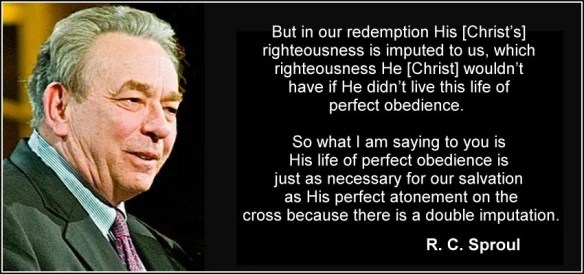
    We Reformed believe we are justified by faith alone (Sola Fide). We are justified solely on the basis of Christ’s perfect works which are imputed to us just as our sins had been imputed to Him.

    Catholics and even some Protestants believe we are justified on the basis of our works. We cooperate with the grace given to us, they teach, and these works of love (charity) are the ground of our justification. As we shall see this is an erroneous view of justification.

    Catholics conflate justification with sanctification. Scripture is clear that the two processes are distinct and totally separate.

    Justification by faith alone is a vitally important doctrine. Luther said it was on the basis of this doctrine that the Reformation stood or fell.

    The Reformed Protestant understanding of the relationship between faith and works is that salvation comes by faith in Christ alone, and the good works performed by believers aren’t the basis of salvation but should be understood as the necessary evidence of that salvation.

    We are saved by grace alone, through faith alone in Christ alone. We are forensically justified by faith alone in the imputed righteousness of Christ. Our justification is grounded solely on the condition of our faith.

    To the Roman Christians, Paul said, “For by works of the law no human being will be justified in his [God’s] sight” (Romans 3:20). To the Galatian believers: “We know that a person is not justified by works of the law but through faith in Jesus Christ” (Galatians 2:16; cf. 3:5). To justify one is to declare them righteous.

    The “works of the law” are the actions performed to fulfill the Mosaic Law found in the first five books of the Old Testament. Keeping the Sabbath, being circumcised (the issue before the Galatian churches), eating “clean” foods, and other ceremonies are powerless to justify us in the sight of God. In addition, following the morality of the law (not murdering, not committing adultery, not stealing) is insufficient to make us right in God’s eyes. No action on the part of sinful creatures can result in God’s declaring them to be righteous in His sight.

    Thus we see Paul condemn the notion of works-righteousness, of earning our way to heaven by our works.

    When Paul condemns reliance upon the “works of the law” he quotes from Deuteronomy in Galatians 3:10: “Cursed be everyone who does not abide by all things written in the Book of the Law, and do them” (emphasis mine; see Deut. 27:26). Paul not only condemned relying upon circumcision, food laws, and Sabbath, but he also included everything written in the Law. That is, anyone who tries to offer his own obedience to the Law in the effort to be approved and declared as righteous (as obedient) in God’s sight would instead bring a curse upon himself.

    We can only be declared righteous “by faith apart from works of the law” (Romans 3:28), and that faith must rest in the only Savior, the Lord Jesus Christ: “Salvation is found in no one else, for there is no other name under heaven given to mankind by which we must be saved” (Acts 4:12). To continue to attempt to earn a place in heaven through the works of the law is to ignore the sacrifice of Christ: “If righteousness could be gained through the law, Christ died for nothing!” (Galatians 2:21).

    Also, when Paul illustrates what it means to rely upon works versus faith, he appeals to a time before God instituted circumcision, food laws, and the Sabbath. Paul appeals to Abraham and Sarah’s sinful efforts to bring about the divine promise by their sinful efforts rather than by faith alone in the seed who was to come — Jesus Christ (Gal. 3:16; 4:21–31).

    “For by grace you have been saved through faith. And this is not your own doing; it is the gift of God, not a result of works, so that no one may boast” (Eph. 2:8–9). In a word, it is Christ’s works that are the legal ground of our declaration of justification, not our own good works. The proper definition of the works of the law means the difference between justification and condemnation, heaven and hell.

    The question of the relationship between faith and works is central to the division between Protestants and Roman Catholics. Throughout the Bible, we see that salvation is received not on the basis of works but on the basis of faith in God alone. Jesus himself emphasizes this through many parables and sayings, and Paul argues explicitly against the inclusion of works in the basis of our salvation. James, though arguing that justification is by works “and not by faith alone,” can be harmonized with the rest of the New Testament when it is realized that James still expects us to sin—he is combatting faith without works, not faith alone as the basis of salvation. So, the entirety of the New Testament teaches that we are justified by faith alone, but the faith that justifies necessarily flowers into good works.

    One of the most important questions in biblical theology is the relationship between faith and works. Indeed, different understandings of the role of faith and works have divided faithful Protestants from Roman Catholics since the time of the Reformation. I will present here a traditional Reformed understanding of faith and works from the Scriptures.


    The notion that we are saved by faith alone is anchored in the teaching of Jesus. For instance, Jesus commends the faith of the centurion, noting that he did not find such faith in Israel (Matt. 8:5–13; Luke 7:1–10). We see in the account of the sinful woman who broke into Jesus’s dinner with Simon the Pharisee a stunning reminder of saving faith (Luke 7:36–50). This woman was well-known for her sin, and she expressed her sorrow with the tears that fell on Jesus’s feet, with her hair with which she washed them dry, and with the kisses and perfume lavished on his feet. Jesus commended her love, but her love flowed out of the forgiveness freely received. Hence, the story concludes with the declaration, “Your faith has saved you. Go in peace” (Luke 7:50). We have a dramatic indication in this story that forgiveness is by faith alone, and such faith brings peace.

    The story of the Pharisee and tax collector also indicates that forgiveness and justification are not granted to the Pharisee who was so proud of his acts of religious devotion (Luke 18:9–14). Instead, Jesus pronounces that the one who is right before God is the tax collector who realizes that his only hope is God’s mercy. Jesus also teaches that blessing belongs to the poor in spirit (Matt. 5:3), to those who mourn over their sin (Matt. 5:4), to those who are humble (Matt. 5:5), to those who hunger for a righteousness that isn’t their own (Matt. 5:6). Jesus’s meals with sinners and tax collectors (e.g., Matt. 9:9–13) point to the same truth. Such meals in the ancient world signified social acceptance, and by eating with tax collectors Jesus communicated acceptance, forgiveness, and love to those who had repented of their sins.

    The Gospel of John emphasizes the importance of faith, using the verb “believe” (pisteuō) 98 times to underscore the importance of faith. At one point the Jews ask what they have to do to perform God’s works (John 6:28). Jesus replies that they are to “believe in the one he has sent” (John 6:29). John emphasizes repeatedly that those who believe enjoy eternal life (John 1:12; 3:16; 5:24, etc.). One is not saved by working for God but by believing in God.

    Paul teaches that justification and the gift of the Spirit are received by faith instead of by works of law (Rom. 3:20, 28; Gal. 2:16; 3:2, 5, 10). Luther rightly translates Romans 3:28 to say that we are justified “by faith alone,” and not by works of law. Some have argued that “works of law” refers to the ceremonial law or to the boundary markers of the law, but it is much more natural to understand works of law to refer to the whole law. In other words, justification doesn’t come through doing the law but by faith.

    Such a reading is confirmed by other texts which teach that justification is by faith instead of works. English readers may fail to notice that Paul shifts from “works of law” in Romans 3 to “works” in Romans 4. We see in Romans 4 that Abraham was not justified by works but by faith (Rom. 4:1–5). The word “works” is fitting with respect to Abraham since he didn’t live under the Mosaic law. The case of Abraham validates the reading proposed for Romans 3 above. Justification can’t be obtained by works but only by faith. Works or works of law can’t bring justification since all people without exception are sinners (Rom. 1:18–3:20; Gal. 3:10). It is a staple of Pauline teaching that justification is by faith instead of through works (Phil. 3:2–9; Eph. 2:8–9; 2 Tim. 1:9; Titus 3:5).

    We should not think that the intrinsic virtue of faith saves as if faith is our righteousness as if faith is a good work. What saves is the object of faith, which for Paul is Jesus Christ as the crucified and risen one (Rom. 3:21–26; 2 Cor. 5:18–21; Gal. 1:4; 2:21; 3:13). Faith unites believers to Christ, who became sin for our sakes, who has taken the curse we deserve, who has absorbed the wrath in our place. Paul clearly teaches, then, that salvation comes by believing not achieving, by resting in Christ instead of working for him, by trusting instead of performing.
    Works and Salvation

    This raises the question, however, of the role of works in salvation, for we see in a number of texts that works are necessary for eternal life. For instance, Jesus teaches that those who refuse to forgive others will not be forgiven by God (Matt. 6:14–15; 18:31–35), that those who practice lawlessness will not enter the kingdom (Matt. 7:21–23), that only those who bear good fruit are truly saved (Mark 4:1–20), that only true disciples belong to him (Luke 9:57–62; 14:25–35), and that those who practice good will be raised to life (John 5:29).

    We find the same emphasis in Acts. Those who want to escape God’s wrath must repent of their sin (Acts 2:38; 3:19; 17:30), and they must “do works worthy of repentance” (Acts 26:21). Simon, for instance, isn’t truly saved since he hasn’t truly repented of his sins (Acts 8:9–24). Paul also says that those who practice the things of the flesh will not enter God’s kingdom (Gal. 5:19–21; cf. 1 Cor. 6:9–11). God is impartial and fair; those who do good will be rewarded with eternal life and those who practice evil will face final judgment (Rom. 2:6–11). Only those who sow to the Spirit will enjoy eternal life, while those who sow to the flesh will be destroyed (Gal. 6:8). Paul reminds his readers that God avenges evil (1 Thess. 4:6), that those who do what is good will be rewarded (2 Cor. 5:10).
    Paul and James

    James, at first glance, seems to contradict Paul’s theology of justification. Paul affirms that believers are justified by faith and not by works. James says that justification is by works “and not by faith alone” (James 2:24). James refers to the same verse about Abraham’s faith (James 2:23; Gen. 15:6) that Paul cites (Rom. 4:3; Gal. 3:6), but he seems to apply the verse in a radically different way, arguing that the works which followed Abraham’s faith justified him, while Paul contends that Abraham was justified by his faith, and not by his works.

    Some scholars claim that Paul and James contradict one another, but such a view contradicts the inspiration of Scripture, and there is a plausible solution to our dilemma. We have already seen that both Jesus and Paul teach salvation by faith, and yet also emphasize the necessity of good works for salvation. The good works necessary for salvation can’t be the basis of one’s salvation since God is infinitely holy and demands perfection. Thus, the good works performed by believers aren’t the basis of salvation but should be understood as the necessary evidence of salvation. Such works are the fruit and product of our new life in Jesus Christ. We have an important confirmation that James himself believed this, for he says in James 3:2 that “we all stumble in many ways.” James means by this that we all sin in many ways. And he makes this comment immediately after insisting on justification by works (James 2:24)! Apparently, the works that justify are quite imperfect, and thus they could never be the basis of our justification since God demands perfection. Since we continue to stumble in a myriad of ways, our works function as evidence and indication that we have a new life. Justification is by faith alone, as we put our trust in Christ alone, and thus our salvation is by grace alone and for the glory of God alone, and our good works demonstrate that we are trusting in Christ for our salvation.

    [I] answer, that not only works done before faith are excluded, but also works that follow faith and are done in the estate of grace. For Paul here reasons thus: If no flesh be justified by works, then not we believers; but no flesh at all is justified by works; therefore not we believers. David reasons of the same manner: “No flesh shall be justified in thy sight” (Ps. 143:2); therefore I cannot, though otherwise I be Thy servant in keeping Thy commandments. When Abraham was the father of all the faithful, and was come to the highest degree of faith, and abounded in good works, yet was he not then justified by works (Rom. 4:1–2). Paul kept “a good conscience before God and men” (Acts 23), and yet was he “not justified thereby” (1 Cor. 4:4). And he says that “we are not saved by the works which God hath ordained, that we should walk in them” (Eph. 2:9–10). And the works that God has ordained for us to walk in are the best works of all, even works of grace. Again, he says that ‘we are not saved by works of mercy’ (Titus 3:5). It may be objected that there is a cooperation of works and faith (James 2:22). I answer that this cooperation is not in the act of justification, nor in the work of our salvation, but in the manifestation of the truth and sincerity of our faith without hypocrisy. And for the declaration and approbation of this, faith and works jointly concur. Here then we see it is a pestilent and damnable doctrine of the papists when they teach justification by the works of the law. Let us here be warned to take heed of it.

    William Perkins, Commentary on Galatians, in Works, 2:112–13

    Paul writes in Galatians 2:16, “…a person is not justified by the works of the law, but by faith in Jesus Christ. So we, too, have put our faith in Christ Jesus that we may be justified by faith in Christ and not by the works of the law, because by the works of the law no one will be justified.” In response, some people think we are justified by works, just not works of the Law. This means that Paul is excluding the works that are outlined in the Old Testament as capable of saving. But other works, such as the fruit of the Spirit (Galatians 5:22-23) can save. Are they right? Are we justified by works?

    Most good works are in the Law. If we are justified by works, but not works of the Law, that would assume that there are some works that one can perform which are not found in the Law. It is these works that justify. But if you are performing works that are in the Law, and you think that they justify you, then you are guilty of precisely what Paul argued against when he said that we are not justified by works of the Law. The question is, what sort of works are we justified by? Are we justified when we love our neighbor as ourselves? Leviticus 19:8 (the Law) reads, “You shall love your neighbor as yourself.” Are we justified when we “love the Lord your God with all your heart, with all your soul, and with all of your mind”? That commandment is in the Law as well (Deuteronomy 6:5). This means that if you are trying to be justified by works, you would have to do that without being justified by loving God or loving your neighbor as yourself. How would one do that? Some people think we are justified by works, just not works of the Law, and this overlooks the fact that the good works that one would seek to be justified by being in the Law.

    Paul only refers to the ceremony of circumcision? Some people think that we are justified by works, just not works of the Law, those works specifically being the ceremony of circumcision. Paul is arguing that we are not justified by our circumcision. A Christian can be saved without undergoing the process of circumcision. However, Paul often refers to the moral aspects of the Law while saying that we are not justified by the Law. In Romans 3:20, he writes, “…by the works of the Law no flesh will be justified in His sight; for through the Law comes the knowledge of sin.” If through the Law comes the knowledge of sin, then he is clearly referring to the moral precepts of the Law. He expands this point in Romans 7:7-12, where he uses the law against covetous as his example. Further, he often makes distinctions between the Law and circumcision. In 1 Corinthians 7:19, “Circumcision is nothing, and uncircumcision is nothing, but what matters is the keeping of the commandments of God.” In Romans 2:25, “Circumcision has value if you observe the law, but if you break the law, you have become as though you had not been circumcised.” Thus you will know that Paul is referring to circumcision when he mentions circumcision. But when he says that no flesh will be justified by works of the Law, he is referring to the moral aspects of the Law.

    Is there a “higher order” morality? If we are justified by works, but not works of the Law, that would entail that there was a higher standard of morality that transcends the standard given by God. There are moral precepts that are of more value than that which is found in the Law. The question is where we can find them. They cannot be to love God or love their neighbor, because these are laws. It seems that the only answer that is forthcoming is that it is written on our conscience. So we are called to follow a standard of morality that is different for everybody, that can be changed based on culture and comported to circumstances as opposed to God’s perfect standard of morality. What good reasons are there to think that God would replace his law with our conscience? Why would that even be necessary, when Paul wrote in Romans 7:12, “So then, the Law is holy, and the commandment is holy and righteous and good.” Some people think we are justified by works, just not works of the Law. But if the Law is holy and the commandment is holy, righteous, and good, then why should we think that there is a higher-order system of morality that justifies us? Why would we not be justified by the Law if the Law is holy, righteous, and good?

    God justifies the ungodly. When people say that we are justified by works, just not the works of the Law, they are forgetting the positive argument that Paul makes. Paul says more than what we are not justified by. He has more to say about justification than “we are not justified by the works of the Law.” He tells us how we are justified. He writes that God justifies the ungodly (Romans 4:5). If God justifies the ungodly, then in what sense could a person be justified by their works? Further, Paul writes in Ephesians 2:5 that God “even when we were dead in our transgressions, made us alive together with Christ (by grace you have been saved)…” God justifies the ungodly and makes those who are dead in their trespasses into new creatures. Accordingly, God makes us new creatures when we are dead in our sins, when we are ungodly. When we come to him with an empty hand of faith, then he makes us new creatures and we become godly and righteous. But upon justification, all of our outward actions are only ungodly, and God still justifies us. Yet some people think we are justified by works, just not works of the Law. If that were true, this would mean that God justifies the righteous who are not dead in their transgressions.

    “For by grace you have been saved through faith; and that not of yourselves, it is the gift of God; not as a result of works, so that no one may boast.” Ephesians 2:8-9 Aside from Paul’s masterful treatise in the book of Romans and his impassioned rebuke in the book of Galatians, the second chapter of Ephesians is where the gospel is clearly presented. Paul explicitly denies that we are saved by grace through faith, and not of works. Of course, some people think that we are saved by works, just not works of the Law. The problem is that Paul negates any works by saying that this salvation is “not of yourselves.” If salvation is not of yourselves, all works are eliminated. Salvation is solely a gift of God.

    Here is an excellent video presentation by Dr. R. C. Sproul. He thoroughly explains justification by faith alone.

    The Reformed Doctrine of Good Works
    The Protestant Pulpit

    For by grace are ye saved through faith; and that not of yourselves: it is the gift of God: (9) Not of works, lest any man should boast. (10) For we are his workmanship, created in Christ Jesus unto good works, which God hath before ordained that we should walk in them. Eph 2:8-10
    

    Introduction

    With the rediscovery of the doctrine of justification by faith alone during the Reformation, there arose several controversies over the issue of Good Works. In many ways, these controversies have continued, though the Protestant churches –Lutheran, Anglican and Reformed –have had a single voice on this matter.

    Let us consider the controversy with Rome. Rome viewed works as essential to justification. While we must believe, we must also work to further our justification. In the words of Trent, a person, “through the observance of the commandments of God and of the Church, faith co-operating with good works, increase in that justice which they have received through the grace of Christ, and are still further justified” (Session Six, Chapter 10). In fact, Rome repudiates the idea that works are not involved: “If any one saith, that by faith alone the impious is justified, in such wise as to mean, that nothing else is required to cooperate in order to the obtaining the grace of Justification, and that it is not in any way necessary, that he be prepared and disposed by the movement of his own will: let him be anathema” (Session Six, Canon IX). To the Romanist, good works merit grace and eternal life:

    If any one saith, that the good works of one that is justified are in such manner the gifts of God, that they are not also the good merits of him that is justified; or, that the said justified, by the good works which he performs through the grace of God and the merit of Jesus Christ, whose living member he is, does not truly merit increase of grace, eternal life, and the attainment of that eternal life,—if so be, however, that he depart in grace,—and also an increase of glory: let him be anathema (Session Six, Canon XXXII)

    The Reformers steadfastly rejected this. The upheld the idea that we are justified apart from works, even as Paul teaches us. Luther explained this concept of “justification” in the Smalcald Articles:

    The first and chief article is this: Jesus Christ, our God and Lord, died for our sins and was raised again for our justification (Romans 3:24-25). He alone is the Lamb of God who takes away the sins of the world (John 1:29), and God has laid on Him the iniquity of us all (Isaiah 53:6). All have sinned and are justified freely, without their own works and merits, by His grace, through the redemption that is in Christ Jesus, in His blood (Romans 3:23-25). This is necessary to believe. This cannot be otherwise acquired or grasped by any work, law or merit. Therefore, it is clear and certain that this faith alone justifies us … Nothing of this article can be yielded or surrendered, even though heaven and earth and everything else falls (Mark13:31). Luther, Martin. “The Smalcald Articles,” in Concordia: The Lutheran Confessions. Saint Louis: Concordia Publishing House, 2005, 289, Part two, Article 1.

    However, because of this teaching and because of the way in which it was at times taught, papal apologists have made it seem that Protestants teach lawlessness. For example, Roberto Bellarmine in his book on Justification says that Protestants deny the necessity of good works (Book 4). But this can hardly be the case. And then Bellarmine goes on to say that Protestants lives and manners reveal that they believe themselves to be able to live wickedly, which is certainly not the case in contrast to the Romanists.

    The Reformers were very clear about the necessity of good works. For example, Luther on Galatians 5, writes, “Both subjects, even faith and works, ought to be diligently taught and urged; yet so that each may remain within its own limits. For if works alone are taught, as is the case in the Papacy, faith is lost sight of; if faith alone is taught, immediately carnal men imagine that good works are not necessary.” From this we can easily see that Luther plainly pleads for the necessity of works and ascribes the contrary error to carnal men. In his disputation against John Eck or Eccius, he says, “Eccius knows that it is not a sentiment of mine, that good works are not necessary.”

    Likewise, Calvin says in his Institutes (lib. 3. cap. 19. sect. 2), “The whole life of Christians indeed ought to be a sort of meditation of piety, since they are called to sanctification. The office of the law consists in this, namely, that by reminding us of our duty, it excites to the pursuit of holiness and innocence.” Many other statements by Calvin can easily cited here. Martin Chemnitz, often called the second Martin of the German Reformation says the same thing, remarking:

    We teach that God does not allow any licence to the justified, whereby they would venture freely and securely to indulge in their depraved lusts; but that he requires from them good works, or fruits of faith, neither will he suffer them to be idle, and not to produce good works. Besides, we teach, that God does not merely recommend this new obedience to the justified, nor propose it as if it were a matter indifferent or optional, but he requires it as fully necessary, on the ground of his own command and will (3 parte loc. Theolog. loco de Bonis Operibus, quaest. 1).

    I now select two other men, for they were influential in their own countries as well as in forming the 39 Articles of the English church. At the Conference at Ratisbon (pag. 537), Bucer observed, “Although life eternal is to be sought by us in the constant pursuit of good works, yet it is to be obtained altogether through faith by all who firmly believe in the Gospel of Christ.” He then writes in even clearer words:

    We agree with our adversaries in this, that the justified person must necessarily live righteously. We agree likewise that they will perish eternally, who do not perform good works. But the question is, whether our good works are of themselves worthy of that glory which God promises (Enarrat. Epist. ad Ephes. cap. 2, pag. 69).

    Peter Martyr, upon the 2nd chapter of the Epistle to the Romans, page 56, says, “God intended this connexion, namely, that blessedness should follow good works; yet not as the effect from its cause, but as something conjoined with them by the appointment of God.” The same author (ibid. pg. 58) goes on to say, “We must know that faith cannot be void of good works; therefore those who return at the last hour, if they believe, will not be destitute of good works.” As we see here, Peter Martyr maintains the necessity of good works in a twofold respect: one arising from the constitution or appointment of God himself, and the other from the very nature of faith.

    Now, I quote all of these men not merely so that I may overwhelm you with quotes from the past, merely dealing with a dead controversy. Rather, I do so with a real intent. After the Reformers left, there were numerous controversies within Lutheranism and the Reformed churches over this very matter. The Antinomian and Majoristic Controversies are part of this.

    In fact, we see the very same thing today in the Lordship Controversy that still affects our Evangelical churches. Now, the Non-Lordship position is that works are not necessary at all, and that by saying that they are is to destroy the doctrine of justification by faith alone. For example, one of the main proponents of this aberrant position states,

    If good works were necessary to obtain salvation, then why would Paul say that salvation is ‘not of works, lest anyone should boast’? And why would he speak of the salvation of the Ephesians as an already accomplished fact, ‘You have been saved’? The answers are simple. Good works are not a condition. Faith is the only condition and salvation occurs at the moment of faith. No subsequent sins can change this. Salvation is a done deal at the moment one believes in Christ for eternal life (Bob Wilkin, Confident in Christ, pg 52).

    In contrast, the Lordship position believes that good works are the necessary fruit of a living faith. Sam Storms writes:

    The doctrine of Lordship Salvation views saving faith neither as passive nor fruitless. The faith that is the product of regeneration, the faith that embraces the atoning sacrifice of Jesus on the cross energizes a life of love and obedience and worship. The controversy is not a dispute about whether salvation is by faith only or by faith plus works. All agree that we are saved by grace through faith, apart from works (Eph. 2:8-10). But the controversy is about the nature of the faith that saves. (The Lordship Salvation Debate, November 6, 2006).

    In all of these, there is decided parallel to the issue found in the Post-Reformation debates. And we are not left to decide what the Reformers thought about this. They were unanimous in their position. They believed that good works were necessary in some particular way; and the rejection of the necessity of good works is a rejection of what the Reformers clearly taught: good works are necessary in some way.

    Now, in an attempt to define the way in which they are necessary, we must first define good works before we can address the necessity of good works. These all are fraught with difficulties and complexities. In a two part series, I can hardly be expected to cover this in any satisfactory manner. Yet, I hope to outline the issues and provide some answers.

    Definition of Good Works

    Now, the issue over goods works must begin with their definition. What constitutes a good work? Well, we may say that there are two things that every good work possesses, and if any one of them is not included, then it is a not a good work. The first deals with a conformity to an outward standard, and the second deals with the inner disposition.

    Works Must Be Prescribed by Scripture

    First, in order for a work to be good, it must be something that is prescribed by Scripture alone. It is the absolute maxim of Protestantism that Scripture alone is the perfect rule of faith and practice. As the Westminster Confession of Faith, Savoy Declaration, and 2nd London Baptist Confession states, “the Scriptures are the only rule to direct us how we may glorify God.” We are not left to find out what God expects from us; “He hath shewed thee, O man, what is good; and what doth the LORD require of thee, but to do justly, and to love mercy, and to walk humbly with thy God?” (Micah 6:8).

    These Scriptures are the norm of the life of the believer; and, hence, they are also the rule for the good works which he is to do. Only those things which God has commanded are of the nature of good works. As A. A. Hodge says, “Every principle, every motive, and every end of right action, according to the will of God, may there be easily learned by the devout inquirer. God says to his Church: ‘What thing soever I command you, observe to do it: thou shalt not add thereto, nor diminish from it” (Deut. 12:32; cf. Rev. 22:18-19)’.”

    This is norm is all-sufficient. On the positive side, this means that we need nothing else to guide us in doing good works. We are told by Paul that the inspired Word of God is profitable “that the man of God may be perfect, throughly furnished unto all good works” (2Ti 3:17). On a negative side, this means that that we must not invent things to please God. As Hodge puts it, “God very energetically declares his abhorrence of uncommanded services, of ‘voluntary humility’ and ‘will-worship’ (Isa. 1:11-12; Col. 2:16-23).

    Now, in saying this, we must realize that we must stress three things. First, the standard of good works is not our reasons, our conscience, or any feelings that we might have. Rather, it is the revealed divine will; it is the personal authority without and above us –not in us.

    Well, in our day this cannot be expressed strong enough. People often act that they have some ability to discern what is acceptable to God by their own reasoning, their own conscience, their own ideals, and their own feelings. And this has even found expression in the teaching of some wherein love is the absolute and only standard of the Christian, seeing that the Law is now passé.

    But love is not the standard; it is a motive. A man say that something is good because love is his motive. But it may be a gross perversion. Obviously this is the case with same-sex marriages. Another example is the failed and flawed system of Situational Ethics, which says that the only absolute ethical standard is love.

    In a dialogue over what was termed the New Morality, Leon Morris, Carl F. H. Henry, James Daane, and John Warwick Montgomery addressed this issue. And what they said in part is very helpful here. First, they remind us that love is motive; it does not in itself define the nature of obligations. Second, the Scriptural teaching on love cannot be separated from total situation of Scripture. Third, the Scripture never allows us to divorce love from the Law itself and obedience to the Law. “If ye love me, keep my commandments” (John 14:15). “By this we know that we love the children of God, when we love God, and keep his commandments. For this is the love of God, that we keep his commandments: and his commandments are not grievous” (1 Jn. 5:2). For this reason, A. A. Hodge wrote:

    The law of absolute moral perfection to which we are held in subjection is not the law of our own reasons or consciences, but it is an all-perfect rule of righteousness, having its ground in the eternal nature of God, and its expression and obliging authority to us in the divine will.

    It is important for us to realize that the Gospel and the Law are both needed to guide the Christian unto good works. Writing on this, the Lutheran Reformers said:

    It is distinctly to be explained, what the Gospel contributes to the new obedience of believers, and what (as to the good works of believers) is the office of the Law. For the Law teaches that it is the will and command of God, that we should lead a new life; but it does not give us strength and faculties with which we can commence and afford the new obedience. But the Holy Spirit who is given and received by the preaching not of the Law but of the Gospel, renews the heart of man. Afterwards the same Spirit uses the ministration of the Law, that by it he may teach the regenerate, and show them in the decalogue what is that good and acceptable will of God (Rom. 12:2), that they may know that good works are to be observed, as those which God hath before ordained that we should walk in them (Eph. 2:10) (FORM. CONO. (Sol. Dec., VI, 10 seq.).

    Second, the standard of good works is not traditionalism. The idea that good works is based upon the revealed will of God necessarily combats all efforts to create manmade standards. Remember what our Lord said about the Pharisees, “But in vain they do worship me, teaching for doctrines the commandments of men” (Matt. 15:9). God only has a right to declare what shall be done in his service; but they held their traditions to be superior to the written word of God, and they taught them as doctrines binding the conscience. What J. C. Ryle says here should be repeatedly remembered and frequently reflected upon:

    We see this point brought out most strikingly in our Lord’s answer to the charge of the Pharisees against His disciples. He says, “Why do ye transgress the commandment of God by your traditions?” He strikes boldly at the whole system of adding anything, as needful to salvation, to God’s perfect word. He exposes the mischievous tendency of the system by an example. He shows how the vaunted traditions of the Pharisees were actually destroying the authority of the fifth commandment. In short, He establishes the great truth, which ought never be forgotten, that there is an inherent tendency in all traditions, to “make the word of God of none effect.” The authors of these traditions may have meant no such thing. Their intentions may have been pure. But that there is a tendency in all religious institutions of mere human authority, to usurp the authority of God’s word, is evidently the doctrine of Christ. It is a solemn remark of Bucer’s, that “a man is rarely to be found, who pays an excessive attention to human inventions in religion, who does not put more trust in them than in the grace of God.

    And have we not seen melancholy proof of this truth, in the history of the Church of Christ? Unhappily we have seen only too much. As Baxter says, “men think God’s laws too many and too strict, and yet make more of their own, and are precise for keeping them.” Have we never read how some have exalted canons, rubrics, and ecclesiastical laws above the word of God, and punished disobedience to them with far greater severity than open sins, like drunkenness and swearing?—Have we never heard of the extravagant importance which the Church of Rome attaches to monastic vows, and vows of celibacy, and keeping feasts and fasts; insomuch that she seems to place them far above family duties, and the ten commandments?—Have we never heard of men who make more ado about eating meat in Lent, than about gross impurity of life, or murder?—Have we never observed in our own land, how many seem to make adherence to Episcopacy the weightiest matter in Christianity, and to regard “Churchmanship,” as they call it, as far outweighing repentance, faith, holiness, and the graces of the Spirit?—These are questions which can only receive one sorrowful answer. The spirit of the Pharisees still lives, after eighteen hundred years. The disposition to “make the word of God of none effect by traditions,” is to be found among Christians, as well as among Jews. The tendency practically to exalt man’s inventions above God’s word, is still fearfully prevalent. May we watch against it, and be on our guard! May we remember that no tradition or man-made institution in religion can ever excuse the neglect of relative duties, or justify disobedience to any plain commandment of God’s word.

    Third, the standard of good works is not good intentions. Now, I realize that there is a bit of repetition here, but it is a slightly different emphasis. Too many will seek to argue that they will do things that merely voluntarily to help their piety. And this sounds feasible, and may even be true. Yet, great caution is required here. Voluntary worship or will worship, as Paul calls it in Colossians 2:23, is a dangerous thing. Albert Barnes explains:

    Voluntary worship; i. e., worship beyond what God strictly requires-supererogatory service. Probably many of these things they did not urge as being strictly required, but as conducing greatly to piety. The plea doubtless was, that piety might be promoted by service rendered beyond what was absolutely enjoined, and that thus there would be evinced a spirit of uncommon piety – a readiness not only to obey all that God required, but even to go beyond this, and to render him voluntary service.

    There is much plausibility in this; and this has been the foundation of the appointment of the fasts and festivals of the church; of penances and self-inflicted tortures; of painful vigils and pilgrimages; of works of supererogation, and of the merits of the “saints.” A large part of the corruptions of religion have arisen from this plausible but deceitful argument.

    God knew best what things it was most conducive to piety for his people to observe; and we are most safe when we adhere most closely to what he has appointed, and observe no more days and ordinances than he has directed. There is much apparent piety about these things; but there is much wickedness of heart at the bottom, and there is nothing that more tends to corrupt pure religion.

    It Must Spring from a Living Faith and Love for God and His Glory

    Now, we have said that there must be a conformity to an outward standard –the Scriptures alone. Yet, having said this, we must with equal force assert that any work that is to be considered good must have an inner disposition. It must spring from a living faith in Christ and a love for God and His glory. Mere conformity to an external standard is not enough. We must not have only outward formality, but we must have inward intention that is good.

    Now, we must all agree that for anything to be considered to be a good work, the act must spring for good motives. But as long a person does not believe that God is propitious to him, he cannot have pure motives. How can the human heart love God while it perceives Him to be dreadfully angry? We may fear God but we will not love Him. We will obey Him merely to gain His divine favor and escape wrath, not out of love for Him and desire to glorify Him. A. A. Hodge explains:

    All men recognize that the moral character of an act always is determined by the moral character of the principle or affection which prompts to it. Unregenerate men perform many actions, good so far as their external relations to their fellow-men are concerned. But love to God is the foundation-principle upon which all moral duties rest, just as our relation to God is the fundamental relation upon which all our other relations rest. If a man is alienated from God, if he is not in the present exercise of trust in him and love for him, any action he can perform will lack the essential element which makes it a true obedience.

    Therefore, God is not loved till after we have obtained mercy through faith. After we are justified by faith and regenerated, we begin to fear God, to love Him, to ask and expect assistance of Him; we begin likewise to love our neighbors, because our hearts have spiritual and holy emotions. These things cannot take place unless, being justified by faith and regenerated, we receive the Holy Spirit. Francis Beattie likewise highlights this, when he notes:

    Good works are at once the fruits and the evidences of a true and lively faith. Where there is such faith there is peace with God, and a filial spirit towards him, on the one hand; and on the other, union with Christ, and the renewal of the heart. Out of this renewed heart faith, the inner principle of good works, comes. Hence, good works are done only by a regenerate heart, and they are the fruits of the faith of such a heart.

    Now, this is vitally important to note. Only believers are able to produce good works because only they will love God and seek to glorify Him. The works of unbelievers have no value before God. This assertion caused no small among the Romanists. They flatly condemned it. At the Council of Trent, Romanists said:

    If any one saith, that all works done before Justification, in whatsoever way they be done, are truly sins, or merit the hatred of God; or that the more earnestly one strives to dispose himself for grace, the more grievously he sins: let him be anathema (Session 6, Canon VII).

    This is a real failure on the part of Rome to understand the nature of all work done outside of Christ. All our righteousness are filthy rags. As Bernard of Clarivuax

    Our Righteousness (if we have any) is of little value; it is sincere, perhaps, but not pure; unless we believe ourselves to be belter than our fathers, who no less truly than humbly said, All our righteousnesses are as filthy rags. For how can that righteousness be pure, which cannot yet be free from imperfection? Serm. 5 de Verbis Esaias Prophette, vi., 1, 2.

    Nothing pure comes from the unregenerate because their motives are impure. Faith has not purified their hearts. For this reason, the Lutheran Reformer John Andrew Quenstedt said:

    Although, therefore, some of the actions of unregenerate men are not vicious in themselves and as to their substance, they are, nevertheless, by way of accident vicious, viz., because they are devoid of the requisites of really good works before God. Wherefore, when even the virtuous actions of unbelievers are called sins by Augustine, Luther, and others, it is not in respect to the very matter or substance of the actions, nor so far as they are undertaken and performed according to the views of right and wrong remaining in this corrupt nature since the fall (for in this manner we grant that they are good), but in respect to the efficient, formal, and final cause of works, by which their good or bad quality is to be estimated in God’s judgment, to wit, because their works are polluted and contaminated by sins, as they are not performed by a person reconciled to God, and regenerated by the Holy Spirit, nor to the glory and honor of God (IV. 312).

    Now, this is important because it tells us that before any good work can be accomplished, the person must be converted. He must be right with God. We are told the plowing of the wicked is an abomination to the Lord. W. D Smith gives a wonderful illustration of this:

    In a gang of pirates we may find many things that are good in themselves. Though they are in wicked rebellion against the laws of the government, they have their own laws and regulations, which they obey strictly. We find among them courage and fidelity, with many other things that will recommend them as pirates. They may do many things, too, which the laws of the government require, but they are not done because the government has so required, but in obedience to their own regulations. For instance the government requires honesty and they may be strictly honest, one with another, In their transactions, and the division of all their spoil. Yet, as respects the government, and the general principle, their whole life is one of the most wicked dishonesty. Now, it is plain, that while they continue in their rebellion they can do nothing to recommend them to the government as citizens. Their first step must be to give up their rebellion, acknowledge their allegiance to the government, and sue for mercy. So all men, in their natural state, are rebels against God, and though they may do many things which the law of God requires, and which will recommend them as men, yet nothing is done with reference to God and His law. Instead, the regulations of society, respect for public opinion, self-interest, their own character in the sight of the world, or some other worldly or wicked motive, reigns supremely; and God, to whom they owe their heart and lives, is forgotten; or, if thought of at all, His claims are wickedly rejected, His counsels spurned, and the heart, in obstinate rebellion, refuses obedience. Now it is plain that while the heart continues in this state the man is a rebel against God, and can do nothing to recommend him to His favor. The first step is to give up his rebellion, repent of his sins, turn to God, and sue for pardon and reconciliation through the Savior. This he is unwilling to do, until he is made willing. He loves his sins, and will continue to love them, until his heart is changed.

    The good actions of unregenerate men, Smith continues,

    are not positively sinful in themselves, but sinful from defect. They lack the principle which alone can make them righteous in the sight of God. In the case of the pirates it is easy to see that all their actions are sin against the government. While they continue pirates, their sailing, mending, or rigging the vessel and even their eating and drinking, are all sins in the eyes of the government, as they are only so many expedients to enable them to continue their piratical career, and are parts of their life of rebellion. So with sinners. While the heart is wrong, it vitiates everything in the sight of God, even their most ordinary occupations; for the plain, unequivocal language of God is, ‘Even the lamp of the wicked, is sin,’ Proverbs 21:4.” (What is Calvinism. pp. 125-127; quoted in Boettner, Reformed Doctrine of Predestination).

    https://www.monergism.com/reformed-doctrine-good-works
  • Advent Poem

    It’s time for Christmas mirth
    Christ has won us second birth

    One of the most amazing events in history
    Come see baby Jesus in the nativity

    The God-Man has been incarnated
    We should be elated

    He will go on to defeat death and sin
    It’s our salvation He shall win

    So rejoice
    Lift up your voice

    In a humble manger, our Savior was born
    Out of love for us, He would face man’s scorn

    The animals witnessed this miracle sublime
    During the cold Bethlehem nighttime

    The Christmas star shined down below on the hay
    Over the place where Jesus lay

    To Egypt would Joseph, Mary, and baby Jesus soon flee
    Baby Jesus would survive a killing spree

    They escaped the murderous Herod’s wrath
    God would show them the right path

    Jesus grew into a man
    And enacted the Father’s plan

    To win us ransom from death and sin
    Christ would be our propitiation

    On that old rugged cross, He’d suffer and die
    There was fierce lightning in the sky

    But 3 days later, on a silent Sunday morn
    Jesus was reborn

    From that dark grave, He did rise
    There was no eternal demise

    Christ the King of Kings was triumphant
    In all of history, this was the greatest moment

    So be joyful and of good cheer
    As you celebrate our Savior’s birth this year

    Sing carols, dance and have a great feast
    And look for the Christmas star in the east

    Christmas is the beginning of our redemption
    Christ shall secure His elect without exemption

    So rejoice during this Christmas season
    In your heart know that Christ is the reason

    by Zachary Uram
    (c) 2022