-
God’s children: Natural Birth or New Birth
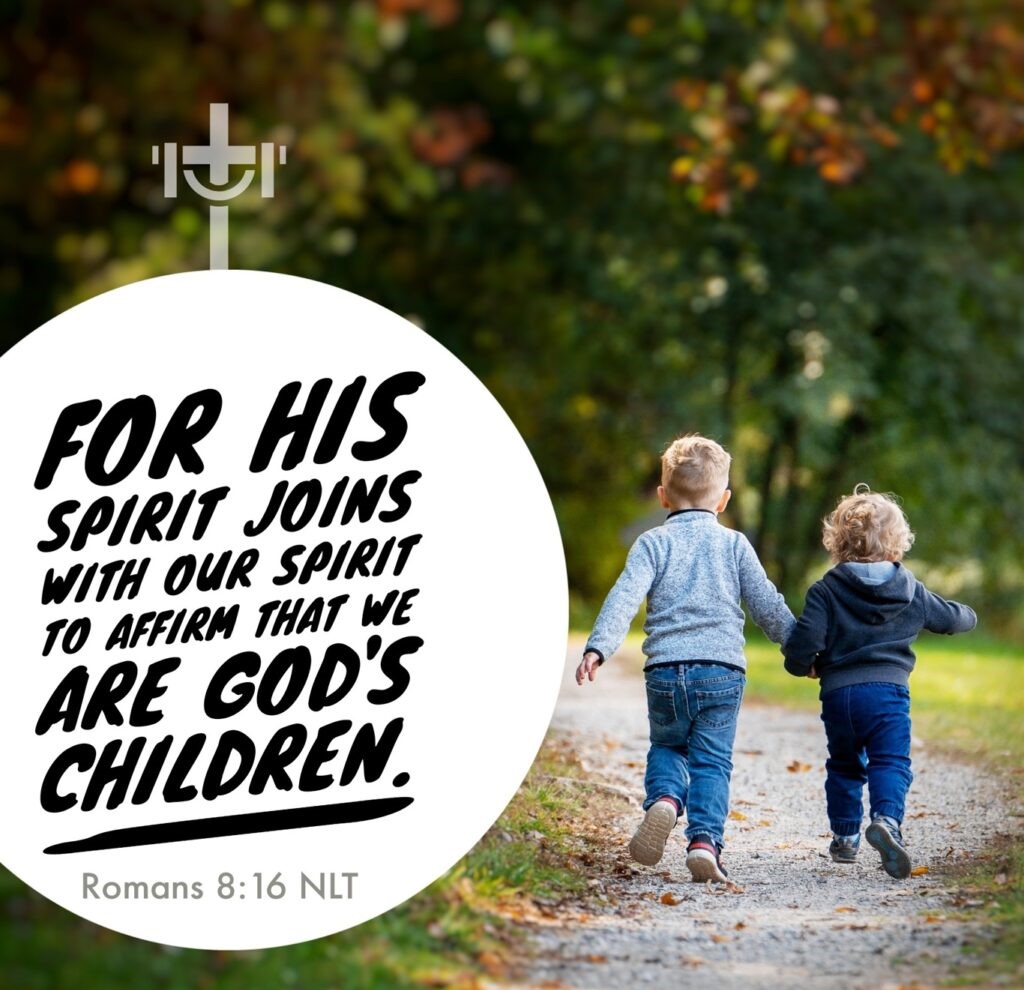
We’ve all heard the popular assertion, “We are all God’s children.”, but is this slogan really a true statement of fact according to Scripture?
In this article we shall examine that question and see what Scripture has to say about it.
If we carefully study and exegete Scripture relating to this topic, four things stand out in stark contrast:
- Scripture is clear, only regenerated, born again believers are God’s children.
At the time one is saved, they are adopted into God’s family. The context is we are spiritual children, not physical. The story of the Bible is the story of adoption. We Elect are adopted into God’s spiritual family as a chosen child of God. The logical inference we can make from these truth propositions from Scripture is that if only the Elect are God’s children, then all the non-Elect are not God’s children! So we are not God’s children by virtue of our natural birth (when we were born), but rather it is determined on the basis of our new birth in Christ. This makes some people uncomfortable. Nevertheless, as Christians we have a duty to stand on God’s Word. - Scripture is also clear that Satan is the father of the unregenerate.
For the totally depraved unregenerate, all their thoughts, ways, and inclinations are according to their nature. Thus they are wholly evil, all the time, and they are truly Satan’s children. They are God’s enemies, and they do his will, not God’s will. We can only do God’s will when we have been spiritually brought to life from being spiritually dead. - Scripture is clear that the unregenerate do not possess the image of God.
The number one rejoinder I hear, from people who believe every single person ever born are God’s children, is that we are made in the image of God; thus that proves we are God’s children. That is totally wrong. First being made in God’s image means we are created above mere animals (evolution is false and Satanic) and have self-perception and sentience. We can reason. We can create and destroy. However, as I argue in one of my blog posts (you can find it linked to below), I believe, as well as many of the leading Reformed thinkers, we lost this image in the Fall. The unregenerate do not have God’s image. This image is restored to us when we are regenerated. Certainly the unregenerate can reason. But they absolutely cannot reason and discern spiritual truths. - We can have absolute assurance we are God’s children.
Scripture says that the Holy Spirit communicates with our spirit that we are God’s children. This inner witness will be there for every regenerate person.
The Spirit himself bears witness with our spirit that we are children of God.
Romans 8:16This Scripture relates to point 4 above.
The natural person does not accept the things of the Spirit of God, for they are folly to him, and he is not able to understand them because they are spiritually discerned.
1 Corinthians 2:14This Scripture relates to point 3 above.
The god of this age has blinded the minds of unbelievers, so that they cannot see the light of the gospel that displays the glory of Christ, who is the image of God.
2 Corinthians 4:4This Scripture relates to point 3 above. This amazing Scripture informs us that God Himself has blinded the unbeliever’s (unregenerate) minds so that they cannot repent and have faith. Only when the Holy Spirit quickens their soul from a dead state to an alive state, and He imparts the gifts of repentance and faith, do they become regenerate and able to discern spiritual matters.
“But as many as received him, to them gave he power to become the sons of God, even to them that believe on his name.”
John 1:12This Scripture relates to point 1 above.
Speaking to a group of Jews, Jesus says:
“You belong to your father, the devil, and you want to carry out your father’s desires. He was a murderer from the beginning, not holding to the truth, for there is no truth in him. When he lies, he speaks his native language, for he is a liar and the father of lies.”
John 8:44This Scripture relates to point 2 above. Jesus was speaking to the Jewish Pharisees, but the truth He conveys to us is applicable to all unbelievers.
“God decided in advance to adopt us into his own family by bringing us to himself through Jesus Christ. This is what he wanted to do, and it gave him great delight.”
Ephesians 1:5This Scripture relates to point 1 above.
By this it is evident who are the children of God, and who are the children of the devil: whoever does not practice righteousness is not of God, nor is the one who does not love his brother.
1 John 3:10This Scripture relates to point 2 above.
adoption, article, assurance, believers, born again, Christ, Christian, Christianity, contrast, Devil, elect, evolution, faith, father, God, God the Father, God’s children, grace, Holy Spirit, Image of God, Jesus, Jesus Christ, natural birth, New Birth, regenerate, repentance, Satan, Satan’s children, sovereign grace, spiritual adoption, Trinity, Triune God, unbelievers, unregenerate - Scripture is clear, only regenerated, born again believers are God’s children.
-
A Rejoinder to Reformed Presbyterians and Reformed Baptists

Saints, for 20 years I’ve had only Presbyterians giving me hate, denigrating me, belittling me, ridiculing me, mocking me, being dismissive and haughty and insisting I am not Reformed. I finally got so sick of the abuse. I reached a breaking point, and that was the catalyst for my recent blog article on being Reformed.
When I shared my article, “A Response to Reformed Presbyterians: Semper Reformanda”, which you can view below at the link, on my Facebook timeline. It created a firestorm of controversy. I was mocked, insulted, belittled, my sanity was questioned, and my arguments were totally dismissed without being addressed. I’d say 95% of those Christians who responded failed to grasp the nuance of my arguments, and it went totally over their heads.
Despite literally dozens of people asserting that my article was garbage and that I was not Reformed, not a single one of them refuted a single argument I made. One person referenced the article, and was in error in what they said the article asserted.
I honestly believe the vast majority of people on Facebook who commented never read my article. Is it so much to ask for 20 minutes of their time to read it?
This blog post represents my final rejoinder to my critics and adversaries.
I’m getting tired of repeating myself, but I affirm a Reformed confession – the 1689 London Baptist Confession of Faith. I affirm 95% of it, I differ only on eschatology and covenant theology. I AM REFORMED! In fact, not only am I truly Reformed, but I’m more Reformed than Presbyterians because I adhere 100% to Sola Scriptura and I have a reformed eschatology (premillennialism), a truly reformed hermeneutic (a dispensational hermeneutic – historical-grammatic contextual literalism), and I agree with Scripture on the Church-Israel distinction. Also because I reject the unbiblical practice of infant baptism.
I had many people on Facebook assert I don’t hold to the 1689 LBCF when in fact I do, I just differ on eschatology and covenant theology. So it seems ridiculous and intellectually dishonest to assert I must have 100% conformance to the confession when I agree with virtually all of it (95%). It seems some people are so bigoted they must deny me what is my rightful and proper designation to describe my theological beliefs. How sad and pathetic.
By the way, I’m chided for holding to dispensational views (I’m actually a leaky dispensationalist like Dr. John MacArthur), yet covenant theology is less than a hundred years older than dispensationalism (in it’s fully realized and codified state – major tenets of dispensationalism date back to the Early Church period). In fact, not a single Magisterial Reformer, such as Luther or Calvin, held to covenant theology! Yet Presbyterians and some Reformed Baptists act as if covenant theology is the sine qua non of Reformed theology. It isn’t.
We should keep in mind that the Reformed Confessions, as useful as they may be, like the 1689 LBCF, or the Westminster Confession, are in fact secondary documents subordinate to Scripture. They are not perfect. They are not God-breathed. Secondary documents, like confessions, theological books, sermons, and commentaries, are profitable tools that we can utilize in understanding the Scriptures, as well as honing in on what we believe and sharpening our doctrine, but only to the extent that they accurately and faithfully represent the Scriptures. We must always be Sola Scriptura Bereans in our study of Scripture and in our formulation of doctrine whether it be confessions or creeds.
As I briefly mentioned earlier in this post, asserting that I must have 100% conformance with the 1689 confession in order to affirm it ,when in fact I do affirm 95% of it and differ only on eschatology and covenant theology, is akin to saying if I eat 95% of an apple I didn’t really eat an apple! If you assume one must have 100% conformity to a confession that is just stupid. I will repeat myself ONE MORE TIME: I AFFIRM 95% OF THE LBCF! If you keep insisting that I am not Reformed or that I don’t affirm the LBCF I will have nothing further to say to you. I’m not going to spend hours arguing in circles with any of you anymore. Life is too short. If you reject all my arguments in my blog article on being Reformed that’s your right, but my article is my fullest and final exposition on my reasoning and my position!!!!
I am FULLY and truly Reformed and FULLY and truly a Reformed Baptist. If you disagree, that’s your problem. Nothing you can say or do will convince me otherwise. The truth is on my side!
In conclusion, let me say that despite the massive amount of hate I’ve received, I forgive them and do not hate them. I pray the Lord would open their eyes and show them how they’ve wronged me – a faithful brother in Christ. I pray they would keep reforming and come fully into line with biblical truth.
Semper Reformanda!
apologetics, Bible, Christian theology, Christianity, covenant theology, dispensationalism, Eschatology, Protestant, Reformed, theologyattacks, Baptist, bias, bigotry, Calvin, covenant theology, CT, designation, dismissive, Dispensational, dispensationalism, Fully Reformed, God-breathed, hatred, hermeneutic, identity, label, Luther, Magisterial Reformers, personal, Presbyterian, reformation, Reformed, Reformed Baptist, rejoinder, ridiculing, Semper Reformanda, sine qua non, theology, Truly Reformed -
A Doxology
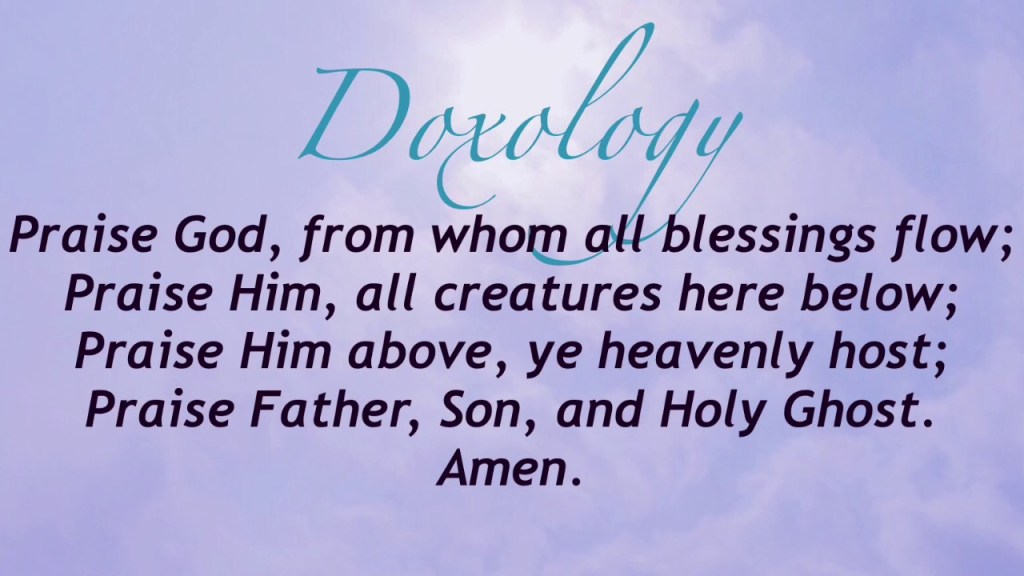
Now praise the Father
And the Son
With the Holy Spirit
Three in OneWe give to You
Our highest praise
We shall worship You
All our daysChrist ransomed us
From eternal perdition
You cannot be saved
By your own volitionWe are saved by
Grace alone
It was Christ
Who did atoneGod chose His elect
Before the world’s foundation
It was totally by His good pleasure
This act alone saved us from damnationWe Reformed affirm
The doctrines of grace
Otherwise known as Calvinism
We run the good raceSpread the gospel
To friend and foe
We plant the seed
The Holy Spirit lets it growOne must hear the gospel
And sincerely repent
They must then believe the gospel
This is a one time eventWe are justified
On the basis of faith alone
Works play no part
Christ is our cornerstoneTotally unmerited is
Sovereign grace
It alone can save
The human raceby Zachary Uram
(c) 2023 -
A Response to Reformed Presbyterians: Semper Reformanda

Background
The sine qua non of Reformed theology is soteriology. Covenant theology and certain types of eschatology are not essential core distinctives.
Sadly, the majority of Reformed Presbyterians seem to be so bigoted and locked into their infantile theological cliques that they look down upon and refuse to recognize believers such as Reformed Baptists as being worthy of the Reformed label. The arrogance and lack of charity is both astounding and nauseating.
Like the Pharisees, who Christ rebuked, they sat in the chair of Moses and demanded everyone obey them. The truth is that they were following man made traditions, rather than the Scripture alone.
These self-appointed haughty and smug gatekeepers of all things Reformed seem to take pleasure in informing other believers that they’re not Reformed! They need to humble themselves and repent!
Their argument for excluding folks like me is akin to arguing that only Germany is a European country!!
I have taken enough abuse from these myopic Presbyterians! I AM REFORMED!!!
Reforming What?
The principle of reforming comes directly from Scripture. The Reformers didn’t invent this concept, they recognized it and applied it. We should be continually reforming our doctrine to conform and match what Scripture teaches. Is there any Christians who are so arrogant they believe their interpretation of Scripture is perfect and infallible? I think not. If they did they’d be heretical and likely cultists.
For a detailed treatment of what it means to be Reformed please see my blog post referenced below, “What Does It Mean to Be Reformed?”.
Magisterial Reformers
Do the Reformers get to define what being Reformed means? No! They were a catalyst for theological discussion and rediscovery of doctrine, but they did not discover anything novel or new. The Reformation was a return to biblical orthodoxy. We should not confuse the non-essential distinctives the Reformers held, such as ecclesiology, the regulated principle of worship, eschatology such as amillennialism and postmillennialism, and covenant theology, with the essential core distinctives of Reformed theology which are defined by Scripture alone! Being good Bereans and Sola Scriptura adherents we know that ALL doctrine comes from careful study of the Scriptures.
Maybe being amillennial (a vestige left over from Roman Catholicism – seems in some areas the Reformers didn’t reform enough), and adhering to covenant theology was a popular position in the 16th and 17th centuries. However that doesn’t imply we modern believers must hold to it as if they are essential distinctives!
Confessions
These non-essential views made their way into Reformed confessions and once that happened the majority of Reformed believers became convinced that because a certain theological proposition was codified in a confession it must be both unchallengeable as well as an essential distinctive. This was a grave and tragic mistake.
Dispensational and Reformed?
As I argue in one of my blog posts, “Covenant Theology vs Dispensationalism: Towards a Definition of Reformed Essentials”, referenced below, one can be fully Reformed while holding to a dispensational premillennial eschatology. It is true that for some dispensationalists they have 2 different paths to salvation and a non-Reformed soteriology, but that is not so in my case. I consider myself to be a Reformed Baptist who agrees with 95% of the 1689 London Baptist Confession of Faith, and who holds to a premillennial eschatology.
So Much Hate
Such is the hatred and bigotry of many Reformed Presbyterians that they even refuse to allow the label of Reformed to be used by 1689 Reformed Baptists who DO hold to covenant theology!
Some Reformed Presbyterians seem to hold to infant baptism (paedobaptism) as an essential core distinctive, but if one is a careful student of Scripture they will see that is wrong, and that the credobaptist position (believer’s baptism) is correct.
Observations
In my interactions with hundreds of Reformed Presbyterians online I’ve noticed the following:
- Some will deny you the Reformed label if you do not hold to infant baptism.
- Some will deny you the Reformed label if you hold to a dispensational understanding of eschatology.
- Some will deny you the Reformed label if you don’t hold to one of the historic Reformed Confessions 100% with no disagreement.
I will continue to be Reformed and carefully examine my doctrinal beliefs and compare them with what the Holy Spirit shows me in Scripture.
Just Who Is Truly Reformed?
I maintain that those Reformed like me, who haven’t turned off their minds and hitched themselves to 100% adherence to a Reformed confession without any possible variance, are stuck in the 16th century and have sadly never advanced past the non-essentials held by the Magisterial Reformers, such as Luther and Calvin, which they conflate with essentials, are the truly Reformed. I have Reformed beyond their static and anachronistic theology in the areas of eschatology and baptism.
Sola Scriptura
Sadly, many of these Reformed Presbyterians are guilty of the Appeal to Authority logical fallacy. I think for myself, I hold to Sola Scriptura and get my doctrinal beliefs SOLELY from Scripture. At the end of the day every Reformed confession, and every theological opinion of Reformers is subordinate to the authority of Scripture. But Reformed Presbyterians know this, so it’s odd that they have painted themselves into a corner doctrinally and cannot further reform. Sadly this is precisely what the Roman Catholic church did, and what the Magisterial Reformers rightly protested and challenged, even at the risk of their own lives.
Conclusion
In conclusion, let me say that I love my Presbyterian brothers and sisters. And it’s my fervent desire that they will reform further. This post was a long time coming and reflects over 20 years of animosity and bigotry directed at me by Reformed Presbyterians for holding to what I believe are biblical theological positions. And intentionally excluding me from their club. So this post may be a bit strident and reactionary. If I have offended you please forgive me. I will keep contending for the truth as God leads me into all truth! Soli Deo Gloria.
My closing advice: Semper Reformanda (Always [Be] Reforming) saints! Don’t let Presbyterians or any Christian bully, denigrate, belittle, or be dismissive towards you for being truly Reformed!
apologetics, Bible, Catholic church, Catholicism, Christian theology, Christianity, covenant theology, dispensationalism, Eschatology, Evangelical, Lutheran, Protestant, Puritans, Reformed, theology, worship1689 London Baptist Confession of Faith, 5 Pillars of Reformed Theology, Always Reforming, amillennialism, arrogance, baptism, beliefs, believer's baptism, Berean, Bible, bigotry, Calvin, Christ, Christianity, Christians, cliques, club, confessions, core, covenant theology, covenants, credobaptism, CT, Dispensational, dispensationalism, distinctives, doctrine, essentials, gatekeepers, Germany, Jesus, Jesus Christ, labels, Luther, Magisterial Reformers, Moses, nonessentials, paedobaptism, Papist, postmillennialism, premillenialism, Presbyterians, primacy of Scripture, principle, Protestant, Reformed, Reformed Confessions, Reformed Presbyterians, Reformers, Roman, Rome, Romish, Scripture, Scripture Alone, Scriptures, semper reformanda, Sola Scriptura, Soli Deo Gloria, study, theological bigotry, theology, Truly Reformed -
Untitled poem by my sister Vi
When I visited,
my Gramma
always
smiled
at me
and
I always yelled,
“Hi Gramma!”
My Dad
would be
sitting on
the flowered couch,
bothered by
the hot weather,
the Pirates
were on,
the overhead fan
whirred
but
it was
so hot
it really
didn’t help
much
and
after I sat there
for a while,
my dear Gramma
would yell (because the TV was so loud),
“Hey Vi – go to the cellar
and get a pop!”
my Dad
protested,
and Gramma
always said,
“Aww, Joey,
let Vi
get a pop! It’s hot out
there today!”
so I walked down
the narrow steps
and
I opened the big Fridgedaire
fridge (from the 1940s)
and a blast of cold air hit me,
and I say there, on the
beat up old couch,
listening to my Dadby Violet Uram
-
My Dear Sister Vi
You help my back
When it goes out of whackYou are so kind and sweet
You can’t be beatYou cook me delicious food
It always puts me in a good moodYou do my laundry without complaint
Truly, you are a saintMy dear Posie
You make my life so rosyMy days are blue
Without youYou shop the supermarket for deals
And you cook me gourmet mealsYou vacuum, mop, and clean our home
From you I’ll never roamWhen I’m depressed like a sad pup
You cheer me upIf I hallucinate and am filled with fear
You comfort me with peace and cheerI will love you for eternity, don’t forget
My precious and dear Violetby Zachary Uram
(c) 2023 -
Sola Scriptura: Defined and Defended – A Study in Authority Structures

Background
Sola Scriptura, Latin for Scripture Alone, is part of the 5 Solas of the Protestant Reformation. They are a cornerstone of Reformed theology. Sola Scriptura simply means that Scripture is our highest authority in matters of faith and morals. As this statement implies, there are other lesser authorities, but they are always subordinate to Scripture. Sola Scriptura is thus the final and sole infallible source of authority for Christian faith and practice. Stated another way, Sola Scriptura simply means that all truth necessary for our salvation and spiritual life is taught either explicitly or implicitly in Scripture.
This does not mean that Scriptures are the only authority (nuda or solo Scriptura), as Protestants believe in the authority of tradition, reason, experience, and emotions to varying degrees (after all, “sola scriptura” itself is an authoritative tradition in Protestantism). It does mean that Scripture trumps all other authorities (it is the norma normans sed non normata Lat. “norm that norms which is not normed”).
The Problem
I frequently see Orthodox and Roman Catholic apologists proclaim that Sola Scriptura is false because Scripture doesn’t explicitly teach it. This is not so.
Preeminent Authority of Scripture
By its very nature, as the very Word of God (God-breathed literally), its status of preeminence in our life of faith is both self-evident and axiomatic! What could possibly hold higher authority than the Word of God?! It’s horrible and blasphemous to see Orthodox and Roman Catholics assert that other things such as fallible man made traditions or a Magisterium is on the same level as Scripture.
All Scripture is God-breathed (θεόπνευστος – theopneustos) and is useful for instruction, for conviction, for correction, and for training in righteousness, so that the man of God may be complete, fully equipped for every good work.
2 Timothy 3:16, 17Christ Himself articulates a nascent version of Sola Scriptura:
“Scripture cannot be broken“
John 10:35Here, as in other instances, Jesus gives full authority to the Bible as inspired of God, to the very words here but sometimes even the very letters and even to the smallest letter (Matthew 5:18). Because Jesus put His own stamp of approval on the concept that the Bible is inspired of the Holy Spirit and therefore without error, one who attacks the written Word must also attack the veracity of Jesus as the incarnate Word. If Jesus is right, then the Bible also is right.
Every Prophecy of the Bible, John F. WalvoordAll Authorities Aren’t Equal
For us Reformed and Evangelical Christians Scripture holds a special place of preeminence and is unique in its authority.
But the other major non-Protestant churches have differing levels of authority.
The Roman Catholic church has tradition and its Magisterium (the teaching authority) on EQUAL level with the authority of Scripture.
The Orthodox church has tradition on EQUAL level with Scripture.
It should be clear that both of these churches have serious doctrinal problems (outright false doctrines) because of their authority structures.
Roman Catholic church
With Catholics, they distort and upend the clear teaching of Scripture on numerous doctrines as they favor the ruling of the Magisterium (consensus opinion of bishops, Early Church Fathers (ECF) teachings, papal pronouncements, etc.) or tradition OVER Scripture. They symbolize their authority structure as a 3 legged stool with all legs being of equal length and at equal distance apart. But in practice the fallible teachings of men (tradition and Magisterium) take a place of preeminence in biblical interpretation in Catholic theology. So God’s Word is relegated to a secondary authority. This is both tragic and blasphemous heresy, it is simply untenable, and we as Protestants are duty bound to challenge these heresies.
Here is a meme with a quote by Roman Catholic Dr. Peter Kreeft. It sums up well the Catholic view.

This sentiment is absolute rubbish! The Roman Catholic church wants you to think that they alone have the authority to interpret the scriptures, so you won’t engage your mind, and will be helpless and dependent on them to spoon feed you what to believe! This is Satanic!
Orthodox church
The Orthodox church does a bit better in that they don’t rely on a Magisterium like Catholics. However they do give undo emphasis on tradition and the teachings of various saints it has proclaimed. They have the teachings of the Early Church Fathers as EQUAL to Scripture so they too have a 3 legged stool of tradition, ECF, and Scripture. In practice, like with the Catholics, the Orthodox place the fallible and easily corrupt traditions of men over the authority of Scripture.
Infallibility
Another topic related to authority which I must mention is infallibility in the Roman Catholic church. The Roman church believes its Magisterium is infallible (cannot teach error), and also, that under certain conditions when the Pope issues a declaration or theological statement it is also infallible.
The problem is that there is nothing in all of Scripture which promises or teaches an infallible interpreter, whether as a body or an individual. I believe if one is honestly studying Scripture and is born again the Holy Spirit will lead us into all truth. Most evangelical churches have a remarkable level of agreement on doctrine. In the non-essentials there is robust debate, sometimes fierce, but we must recognize the process of biblical interpretation is subjective. This is due to our human limitations of the mind. We aren’t archangels that have perfect knowledge of Scripture. Our epistemology (system of knowledge) will be incomplete until we reach Heaven.
The Gospel
Due to the problematic authority structures in the Roman Catholic and Orthodox churches, the gospel at times can be obfuscated or even corrupted.
As an illustration, let’s look at Catholic theology. It asserts that if a Catholic doesn’t believe in the Marian dogma, they are damned. Disbelieving church dogma puts one in a state of mortal sin. And it’s Catholic teaching that if one dies in such a state they go to Hell. Take someone who God has revealed that the Marian dogma are unbiblical and thus false. If they refuse to change their mind and attend confession, then they will be in a persistent spiritual state of mortal sin and will thus be damned.
Dogma in the Roman Catholic church
Further, according to Roman Catholic church teaching, a Catholic who fails to believe in ANY dogma of the church is damned as I mentioned above.
The dogmas of the faith
88 The Church’s Magisterium exercises the authority it holds from Christ to the fullest extent when it defines dogmas, that is, when it proposes, in a form obliging the Christian people to an irrevocable adherence of faith, truths contained in divine Revelation or also when it proposes, in a definitive way, truths having a necessary connection with these.
Catechism of the Catholic ChurchCan. 749 §1. By virtue of his office, the Supreme Pontiff possesses infallibility in teaching when as the supreme pastor and teacher of all the Christian faithful, who strengthens his brothers and sisters in the faith, he proclaims by definitive act that a doctrine of faith or morals is to be held.
§2. The college of bishops also possesses infallibility in teaching when the bishops gathered together in an ecumenical council exercise the magisterium as teachers and judges of faith and morals who declare for the universal Church that a doctrine of faith or morals is to be held definitively; or when dispersed throughout the world but preserving the bond of communion among themselves and with the successor of Peter and teaching authentically together with the Roman Pontiff matters of faith or morals, they agree that a particular proposition is to be held definitively.
§3. No doctrine is understood as defined infallibly unless this is manifestly evident.
Can. 750 §1. A person must believe with divine and Catholic faith all those things contained in the word of God, written or handed on, that is, in the one deposit of faith entrusted to the Church, and at the same time proposed as divinely revealed either by the solemn magisterium of the Church or by its ordinary and universal magisterium which is manifested by the common adherence of the Christian faithful under the leadership of the sacred magisterium; therefore all are bound to avoid any doctrines whatsoever contrary to them.
§2. Each and every thing which is proposed definitively by the magisterium of the Church concerning the doctrine of faith and morals, that is, each and every thing which is required to safeguard reverently and to expound faithfully the same deposit of faith, is also to be firmly embraced and retained; therefore, one who rejects those propositions which are to be held definitively is opposed to the doctrine of the Catholic Church.
Can. 751 Heresy is the obstinate denial or obstinate doubt after the reception of baptism of some truth which is to be believed by divine and Catholic faith; apostasy is the total repudiation of the Christian faith; schism is the refusal of submission to the Supreme Pontiff or of communion with the members of the Church subject to him.
Code of Canon LawThe Preeminence of Scripture
The Inspiration of Scripture
2 Timothy 3:16 – Every jot, tittle, chapter, verse, every book is God-breathed. It has come out of the mouth of God. It was not the authors who were inspired, but the Scripture that was inspired. The authors were the instruments in the hands of God who would record what God wanted them to write, using their own temperaments and vocabulary and background and experience.
Matthew 4:4 – Every word of Scripture comes out of the mouth of God. It is as though divine revelation in the Bible has come down from God above.
Hebrews 4:12 – It is living and active. This book is alive! This book has the life of God within it because it is the very breath of God. It is inspired by God.
John 6:63 – The words I am speaking to you are spirit and are life.
The Inerrancy of Scripture
Because the Bible is God-breathed, it is the Word of God. And because God is holy, God cannot lie. God is truth and so every word of God is true.
Titus 1:2 – God cannot lie. Are there some things God cannot do? Yes. God cannot sin, cannot deny Himself, cannot lie.
Hebrews 6:18 – It is impossible for God to lie.
John 17:17 – Your word is Truth
Proverbs 30:5 – Every word of God is tested
And so we uphold, with the Puritans, the very inerrancy of the Word of God. Let God be found true, and every man a liar.
The Infallibility of Scripture
All that is recorded in Scripture must come to pass. The word of the Lord cannot fail.
Isaiah 40:8 – The grass withers, the flowers fade, but the word endures forever.
Matthew 5:18 – Until heaven and earth pass away not the smallest letter or stroke shall pass from the law until all is accomplished.
John 10:35 – The Scripture cannot be broken
The Authority of Scripture
Because the word of God is inspired, infallible, inerrant, it comes with the authority of God Himself. When the Bible speaks, God speaks. And when God speaks, He speaks with sovereign authority in His Word.
Psalm 19:7 – The law of the lord is perfect. These are not the suggestions, options, or considerations of the Lord. This is the law of the Lord, and it its binding upon every man’s conscience.
Psalm 19:8 – The commandment of the Lord is pure. It is the very commandment of God to every man and every woman.
1 Thessalonians 4:15 – This we say to you by the Word of the Lord.
The Perspicuity of the Scripture
The Word of God is clear, understandable, a lucid revelation.
Matthew 22:31 – Have you not read? Do you have two eyeballs? Do you have two brain cells that are connected between your ears? Can you not process the clear revelation in the Word of God?
Matthew 19:4 – Have you not read?
Sola Scriptura in the Early Church
In the Early Church heresies arose, the truth needed to be defended and error challenged and exposed. How did Early Church leaders do this?
Was doctrine correct and thus worth defending because of a previous church council, oral tradition, or an edict from the bishop of Rome (the Pope)? No they defended the truth on the basis of Scripture!
In the 4th century, Gregory of Nyssa, a Cappadocian Father, was one of the few Early Church leaders who defended the Trinitarian position that Christ was fully divine, as well as fully man. The Arians disputed this and thus they became so popular that Arians soon were the dominant majority position. But Athanasius of Alexandria and Gregory of Nyssa and others challenged the Arians. What authority did they appeal to? Was it tradition? Was it a Magisterium? No, they appealed to the Scriptures.
Gregory understood that Scripture is a higher authority than tradition. He appealed to the Word of God as the final arbiter in the debate over Arianism.
Let us look at a letter Gregory wrote to Eustathius. You will see he makes his appeal to Scripture explicit. The Arians claimed that their tradition didn’t allow for the Trinitarian position. Gregory responded with the following:
What then is our reply? We do not think that it is right to make their prevailing custom the law and rule of sound doctrine. For if custom is to avail for proof of soundness, we too, surely, may advance our prevailing custom; and if they reject this, we are surely not bound to follow theirs. Let the inspired Scripture, then, be our umpire, and the vote of truth will surely be given to those whose dogmas are found to agree with the Divine words.
Dogmatic Treatises, Book 12. On the Trinity, To Eustathius.Here we see a vivid and clear illustration of the principle of Sola Scriptura, over 1,200 years before the Protestant Reformation! Gregory was one of many Early Church Fathers who believed in Sola Scriptura. It was not invented in the 16th century.
Many other examples could be cited, but here is a small sampling from eight Church Fathers who shared Gregory’s perspective on the authority of Scripture as expressed in the doctrine of Sola Scriptura.
1. Irenaeus of Lyons (d. 202)
We have learned from none others the plan of our salvation, than from those through whom the Gospel has come down to us, which they did at one time proclaim in public, and, at a later period, by the will of God, handed down to us in the Scriptures, to be the ground and pillar of our faith. (Against Heresies, 3.1.1)
2. Tertullian of Carthage (c. 160–235) [in defending the truth of the Trinity against the heretic Praxeas:]
It will be your duty, however, to adduce your proofs out of the Scriptures as plainly as we do, when we prove that He made His Word a Son to Himself. . . . All the Scriptures attest the clear existence of, and distinction in (the Persons of) the Trinity, and indeed furnish us with our Rule of faith. (Against Praxeas, 11)
3. Hippolytus (d. 235)
There is, brethren, one God, the knowledge of whom we gain from the Holy Scriptures, and from no other source. For just as a man if he wishes to be skilled in the wisdom of this world will find himself unable to get at it in any other way than by mastering the dogmas of philosophers, so all of us who wish to practice piety will be unable to learn its practice from any quarter than the oracles of God. Whatever things then the Holy Scriptures declare, at these let us look; and whatsoever things they teach these let us learn. (Against Heresies, 9)
4. Dionysius of Alexandria (ca. 265):
We did not evade objections, but we endeavored as far as possible to hold to and confirm the things which lay before us, and if the reason given satisfied us, we were not ashamed to change our opinions and agree with others; but on the contrary, conscientiously and sincerely, and with hearts laid open before God, we accepted whatever was established by the proofs and teachings of the Holy Scriptures. (Cited from Eusebius, Church History, 7.24.7–9)
5. Athanasius of Alexandria (296–373) [After outlining the books of the Bible, Athanasius wrote:]
These are fountains of salvation, that they who thirst may be satisfied with the living words they contain. In these alone is proclaimed the doctrine of godliness. Let no man add to these, neither let him take ought from these. For concerning these the Lord put to shame the Sadducees, and said, ‘Ye do err, not knowing the Scriptures.’ And He reproved the Jews, saying, ‘Search the Scriptures, for these are they that testify of Me.’ (Festal Letter 39, 6–7)
6. Cyril of Jerusalem (315–386) [After defending the doctrine of the Holy Spirit]:
We ought not to deliver even the most casual remark without the Holy Scriptures: nor be drawn aside by mere probabilities and the artifices of argument. Do not then believe me because I tell thee these things, unless thou receive from the Holy Scriptures the proof of what is set forth: for this salvation, which is of our faith, is not by ingenious reasonings, but by proof from the Holy Scriptures…Let us then speak nothing concerning the Holy Ghost but what is written; and if anything be not written, let us not busy ourselves about it. The Holy Ghost Himself spoke the Scriptures; He has also spoken concerning Himself as much as He pleased, or as much as we could receive. Be those things therefore spoken, which He has said; for whatsoever He has not said, we dare not say. (Catechetical Lectures, 4.17ff)
7. John Chrysostom (344–407)
Let us not therefore carry about the notions of the many, but examine into the facts. For how is it not absurd that in respect to money, indeed, we do not trust to others, but refer this to figures and calculation; but in calculating upon facts we are lightly drawn aside by the notions of others; and that too, though we possess an exact balance, and square and rule for all things, the declaration of the divine laws? Wherefore I exhort and entreat you all, disregard what this man and that man thinks about these things, and inquire from the Scriptures all these things; and having learnt what are the true riches, let us pursue after them that we may obtain also the eternal good things; which may we all obtain, through the grace and love towards men of our Lord Jesus Christ, with Whom, to the Father and the Holy Spirit, be glory, might, and honor, now and ever, and world without end. Amen.” (Homily on 2 Corinthians, 13.4)
8. Augustine of Hippo (354–430)
Whereas, therefore, in every question, which relates to life and conduct, not only teaching, but exhortation also is necessary; in order that by teaching we may know what is to be done, and by exhortation may be incited not to think it irksome to do what we already know is to be done; what more can I teach you, than what we read in the Apostle? For holy Scripture establishes a rule to our teaching, that we dare not “be wiser than we ought;” but be wise, as he himself says, “unto soberness, according as unto each God hath allotted the measure of faith.” Be it not therefore for me to teach you any other thing, save to expound to you the words of the Teacher, and to treat of them as the Lord shall have given to me. (The Good of Widowhood, 2)
Augustine (again):
For the reasonings of any men whatsoever, even though they be [true Christians], and of high reputation, are not to be treated by us in the same way as the canonical Scriptures are treated. We are at liberty, without doing any violence to the respect which these men deserve, to condemn and reject anything in their writings, if perchance we shall find that they have entertained opinions differing from that which others or we ourselves have, by the divine help, discovered to be the truth. I deal thus with the writings of others, and I wish my intelligent readers to deal thus with mine. (Augustine, Letters, 148.15)
Thus we see clearly that the doctrine of Sola Scriptura was upheld by Christian leaders long before the Reformation.
Sola Scriptura and the Puritans
The Puritans zealously defended and operated on the basis of Sola Scriptura.
While Roman Catholics deemphasized Scripture alone as the highest authority, the Puritans held that Scripture alone is the highest authority because it is the Word of God. The Puritans firmly believed that we cannot trust our hearts, our wills, or our own minds above Scripture. So if we don’t understand a certain passage or find a seeming paradox in the Word, they concluded the problem is with our minds, not with the Bible. Some Protestants subconsciously trusted the mind over the Word. But the Puritans were very careful to make Scripture the all-sufficient source for Christian life and worship.
https://www.mediagratiae.org/blog/puritan-sola-scriptura-and-conversionHere is a fantastic talk by Steve Lawson on “The Puritan Commitment to Sola Scriptura” from the Strange Fire Conference.
16th Century Reformed Confessions
Here is Sola Scriptura defined in several Reformed confessions.
The Theses of Berne (1528): The Church of Christ makes no laws or commandments without God’s Word. Hence all human traditions, which are called ecclesiastical commandments, are binding upon us only in so far as they are based on and commanded by God’s Word (Sec. II).
The Geneva Confession (1536): First we affirm that we desire to follow Scripture alone as a rule of faith and religion, without mixing with it any other things which might be devised by the opinion of men apart from the Word of God, and without wishing to accept for our spiritual government any other doctrine than what is conveyed to us by the same Word without addition or diminution, according to the command of our Lord (Sec. I).
The French Confession of Faith (1559): We believe that the Word contained in these books has proceeded from God, and receives its authority from him alone, and not from men. And inasmuch as it is the rule of all truth, containing all that is necessary for the service of God and for our salvation, it is not lawful for men, nor even for angels, to add to it, to take away from it, or to change it. Whence it follows that no authority, whether of antiquity, or custom, or numbers, or human wisdom, or judgments, or proclamations, or edicts, or decrees, or councils, or visions, or miracles, should be opposed to these Holy Scriptures, but on the contrary, all things should be examined, regulated, and reformed according to them (Art. V).
The Belgic Confession (1561): We receive all these books, and these only, as holy and confirmation of our faith; believing, without any doubt, all things contained in them, not so much because the church receives and approves them as such, but more especially because the Holy Ghost witnessed in our hearts that they are from God, whereof they carry the evidence in themselves (Art. V). Therefore we reject with all our hearts whatsoever doth not agree with this infallible rule (Art. VII).
Second Helvetic Confession (1566): Therefore, we do not admit any other judge than Christ himself, who proclaims by the Holy Scriptures what is true, what is false, what is to be followed, or what is to be avoided (Chap. II).
Apostolic Succession Examined
The power to bind and loose, as well as the power to forgive sins were given by Christ directly to the Apostles. It was used to authenticate them during the Apostolic era. The Roman Catholic and Orthodox doctrine of apostolic succession, whereby a bishop lays hands on a priest and passes on these powers is utterly false. There is absolutely nothing in the New Testament which even hints that Christ intended for these powers to be passed on perpetually or that such a thing were even possible. Thus we can see that the Roman Catholic and Orthodox churches lack proper authority. By refusing to make Scripture their ultimate and infallible authority (Sola Scriptura) they are like a boat adrift in the ocean without a sail.
Conclusion
We have seen what Sola Scriptura means and why it’s so vitally important, especially as a bulwark against error. We’ve also examined the various authority structures in the different churches. And we’ve seen that the doctrine of Sola Scriptura is a very old doctrine which was defined in the New Testament and prevalent in the Early Church. Now we have a duty to uphold and defend Sola Scriptura just as generations before us have done. This principle is supremely important in protecting the Gospel, guiding our interpretation of Scripture, and defending against error. Let us forever uphold the supremacy of Scripture!
Bible, Catholic church, Catholicism, Christian theology, Christianity, Evangelical, Orthodox church, Protestant, Puritans, Reformed, theology16th Century, 4th century, apostolic succession, Arians, authority, authority structures, Bible, bind and loose, Calvin, Cappadocian Fathers, Catholic, Catholic church, Catholic vs Protestant, Catholicism, Church councils, confessions, doctrine, dogma, Dr. Peter Kreeft, Early Church, Early Church Fathers, Eastern Orthodox, ECF, forgive sins, Gospel, Gregory of Nyssa, inerrancy, infallibility, Luther, Magisterium, oral tradition, Orthodox, Orthodox church, orthodoxy, perspicuity, pope, Protestant, Protestant Reformation, Puritans, RCC, reformation, Roman Catholic, Roman Catholic church, Scripture, Scripture Alone, Scriptures, Sola Scriptura, Solas, Steve Lawson, Strange Fire, supremacy, The 5 Solas, tradition -
Biblical Exegesis: Catholic and Protestant Methodologies Compared

Scripture several times explicitly lists Jesus’ brothers and names them, as well as referencing sisters. Yet despite the clear evidence and witness of Scripture, Catholic interpreters will assert that Mary and Joseph never had sex (Mary has the status of a consecrated virgin who remained a virgin throughout her whole life) and thus deny that Mary and Joseph had any children after Jesus was born. This is once again despite and in opposition to the fact that Scripture explicitly says they had sex once Jesu was born.
As a Protestant I am not bound by any pre-existing stipulations or pronouncements of a Magisterium, I am free to engage in honest and open exegesis of the texts of Scripture. Catholics. on the other hand, come to the text loaded with pre-existing assumptions and presuppositions imposed on them, which color how they see the text.
It’s obvious, and very sad, Catholics need for Mary to be ever virgin/consecrated virgin, because if they let the biblical texts speak for themselves they will be left with an inescapable conundrum: either Scripture is wrong, or their exegesis is wrong and the Magisterium is not infallible. That would be untenable and unthinkable for the Catholic mind, so since it is straightjacketed by prior theological commitments it will inevitably fall into eisegesis when it comes to the texts referencing Mary’s children or Joseph and Mary having sex.
This restrictive process of interpretation which Catholics are bound by severely limits and hampers proper exegesis of the biblical texts.
Further the Catholic assertion that they possess an infallible Magisterium (teaching authority) is fallacious. No such thing exists. There are no infallible interpreters of Scripture.
It should be apparent that Catholics cannot engage in open, honest, and direct exegesis of Scripture. Literally every single Catholic doctrine of faith is subject to eisegesis due to their interpretive methodology.
Further, Catholics, by rejecting the principle of Sola Scriptura, lay themselves open to distortions of the text and eisegesis. They elevate tradition to the same level of authority as Scripture. This is very wicked and unbiblical. Nothing should have the same exalted status as the very Word of God! By being bound by Sola Scriptura we have a safeguard against eisegesis and adopting errant doctrines. Catholics on the other hand have no such safeguard.
-
Warp Speed

Going faster
Beyond reason or rhyme
Violating the laws of physics
One at a timeI’m going faster than light
You see
I have no
Terminal velocityAt first traveling this way
Was a shock
If you don’t understand
Don’t mockI navigate hyperspace
Like a pro
Carefully planning
Where I’ll goI’m also able to travel
Backwards and forwards in time
Oh yes the feeling
Is sublimePhased mind warping
Is the way I go
Racing across the universe
I ride the spacetime flowI am
The superluminal explorer
Oh the adventures I have
It’s not because of a disorderby Zachary Uram
(c) 2023 -
My Fractured Mind

I lost my mind you see
Yes, it happened to meTwas a score and three
Years ago, since I began my miseryI was struck down in my prime
It happened in an instant of timeOne day I woke up hearing voices
My mind was in piecesVisual hallucinations followed soon
I was now a loonI was in a schizoid state
Which isn’t greatI also suffer from major depression
I have no energy or motivationAn anxiety disorder ails me too
My sanity I did eschewMy view of reality is disjointed
And fracturedI have episodes that are dissociative
Where I zone out and reality is alternativeI also have delusions and PTSD
I want to fleeIt’s been a protracted struggle long and hard
I envy the simple life of a bee in the yardWell, not truly, but at least I can dream
My life is too extremeBut I don’t want to complain
Even though I have a broken brainGod has been so good to me
Christ set me free from sin and saved meThere are many hell bound with a whole mind
But they are spiritually blindPerhaps in struggling with mental illness
I’ve found a divine peace and stillnessAt Calvary Jesus bore every single mind malady
He knows my suffering and set me freeI have a great Savior Who knows my pain
One day I’ll have a glorified brainSo I’ll go on living, one day at a time
Thus ends my rhymeby Zachary Uram
(c) 2023
-
Subscribe
Subscribed
Already have a WordPress.com account? Log in now.
 Zach Uram's Blog