
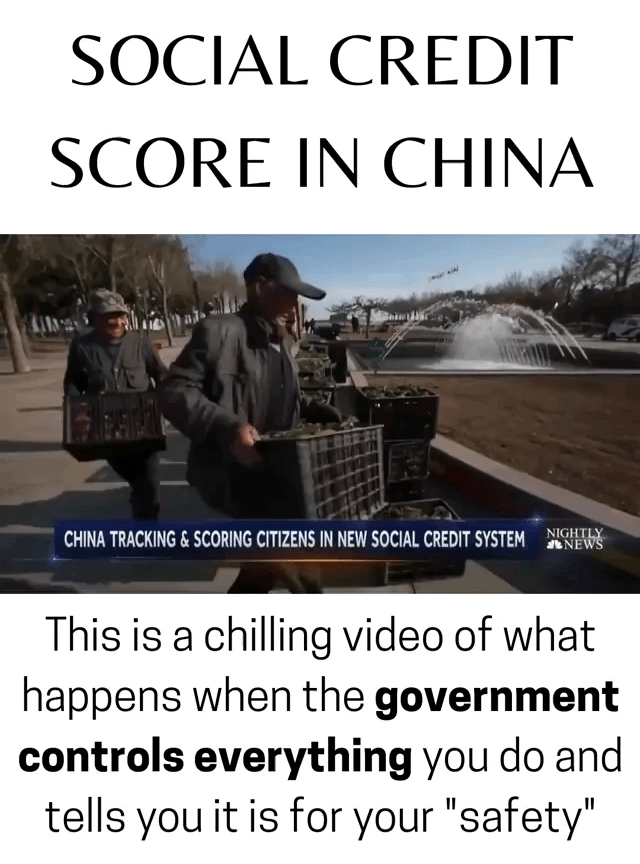
There was a time when a man’s word was good enough to get credit, but those days are long gone sadly.
Before 1989 there was no such thing in America as a FICO credit score. Before then if you went to a local bank and applied for a mortgage, they’d take into account how long you’d been a customer, your salary, and your monthly expenses. The same thing for buying a new car. One didn’t need a “credit score” to make use of credit.
It wasn’t until credit reporting became computerized in the 1960s that the industry would become consolidated.
In the 1960s, there were more than 2,000 credit bureaus across the U.S.. Over the course of the next 20 years, that number would shrink to five and, eventually, to the three major credit bureaus that exist today, Lauer explains.
“Before [the 1960s], all the files were in filing cabinets, on papers and cards,” says Lauer. “So we have these bureaus that have lots of money. They come into a town and buy up all the local credit bureaus with all [of] their information and then computerize it.”
It would take longer for credit scoring to gain widespread popularity in the U.S., however, as lenders were hesitant to give up their use of character assessments in the evaluation of someone’s creditworthiness.
Today, FICO scores are considered to be the most widely used type of credit score.
According to Sally Taylor, vice president and general manager of FICO Scores, the company was founded in 1956 and would initially work with business clients to develop credit scoring models that were specific to that company.
A company would hire FICO and then use the its customer files to produce an individualized model, which would then be used to calculate the credit risk level of its customers, explains Lauer.
In 1989, FICO worked with the national credit bureaus to create a credit scoring model that could be used to evaluate all consumers — this is when the first generalizable credit score was born.
“The idea that there’s a generic model means that lots of different companies can use a credit score for the first time and this makes credit scoring much more accessible and popular among lenders,” says Lauer.
FICO scores were then cemented as a crucial part of the financial decision-making process when Fannie Mae and Freddie Mac started requiring mortgage applicants to submit them in the mid-1990s.
https://www.cnbc.com/select/when-did-credit-scores-start/



Ever since the credit score was introduced it’s been increasingly used by credit card companies, car dealerships, and banks to block and marginalize low income workers and workers on fixed incomes (like me who is disabled), and bar them from getting the car loan, mortgage, or credit card they desperately need. And the galling thing is that while this is happening, the people who have the least need for credit (the wealthy) have the best credit scores and get the lowest interest rates.
Those who what are deemed poor or average credit scores are forced to take out secured cards with ridiculously high rates (18% to 32%) – loan shark rates if you wanna get real.
The existing credit score system routinely discriminates against, and thus disenfranchises, millions of low income workers and people on fixed incomes. It is a system rooted in bigotry!
Criticism of credit scoring systems in the United States
Credit scoring systems in the United States have garnered considerable criticism from various media outlets, consumer law organizations,[1] government officials,[2] debtors unions,[3][4] and academics. Racial bias,[5] discrimination against prospective employees,[6] discrimination against medical and student debt holders,[7] poor risk predictability, manipulation of credit scoring algorithms,[8] inaccurate reports,[9] and overall immorality are some of the concerns raised regarding the system. Danielle Citron and Frank Pasquale list three major flaws in the current credit-scoring system:[10]
- Disparate impacts: The algorithms systematize biases that have been measured externally and are known to impact disadvantaged groups such as racial minorities and women. Because the algorithms are proprietary, they cannot be tested for built-in human bias.
- Arbitrary: Research shows that there is substantial variation in scoring based on audits. Responsible financial behavior can be penalized.
- Opacity: credit score technology is not transparent so consumers are unable to know why their credit scores are affected.
The scoring system has also been critiqued as a form of classification to shape an individual’s life-chances—a form of economic inequality.[11] Since the 1980s, neoliberal economic policy has created an inverse correlation between the expansion of credit and a decline in social welfare—deregulation incentivizes financing for the consumption of goods and services that the welfare state would alternatively provide.[12] Credit scoring systems are seen as scheme to classify individuals creditworthiness necessitated by the loss of these collective social services.[11][13] The credit scoring system in the United States has been compared to, and was the inspiration for, the Social Credit System in China.[14][15]
The use of credit information in connection with applying for various types of insurance or in landlord background checks (for rental applications) has drawn similar amounts of scrutiny and criticism, because obtaining and maintaining employment, housing, transport, and insurance are among the basic functions of meaningful participation in modern society,[16] and in some cases (such as auto insurance) are mandated by law.[17]
Discriminatory effects
Credit scores are widely used as the basis for decisions to allow or deny individuals the opportunity to do things such as taking out loans, buy houses and cars, and open credit cards and other kinds of accounts. [18] This has been criticized as a practice having discriminatory effects.[19] Credit companies purport to measure creditworthiness by looking at information like: the number of accounts held, the age of associated credit accounts, consumer payment history of borrowed money, and the punctuality and consistency of payments.
As credit scores have become necessary to maintain credit and purchasing power, this system has been criticized as a wall between favored and disfavored classes of people.[11] The expansion of accessible credit can come with a downside of exclusion as people with poor credit (those that are considered high risk by credit scoring systems) become dependent on short-term alternatives such as licensed money lenders (the home credit industry), pawn brokers, payday lenders, and even loan sharks.[20] Credit scores can function as a form of social hierarchy that creates opportunities to exploit poor Americans. This can also prevent people from ever escaping their poverty or a poor financial past.[21]
Credit scoring systems also act as a way to treat individuals as objects that are subject to a particular set of quantifiable attributes.[22] In addition, they have a degrading potential that celebrates calculability over human needs.[23] Discriminatory responses to poor credit create a self-fulfilling prophecy as it raises costs for future financing which increases the likelihood of being unemployed or insolvent.[10] Since credit scores aim to classify people, other markets have expanded its applicability for use as a screening or assessment tool.[11] Credit is no longer used just for financial products such as mortgage loans, but is increasingly being applied cross-institutionally for other services such as:
- car insurance [17]
- health insurance[16]
- starting utilities (electricity, natural gas, water, etc.)[24][21]
- employment[5][25]
- rental housing[16]
- small purchase financing (e.g. cell phones, appliances, etc.)
Alternative credit scoring systems can use data such as rental payments, utility payments, subprime credit, and cell phone bills.[26] Other sources are social media activities, internet browsing history, employment history, student history, past loan application dates and locations, or the method one uses when purchasing gasoline.[27] Scores have also used for bespoke purposes such as dating.[28] Prior to the formation of the Fair, Isaac and Company (FICO) or the Fair Credit Reporting Act of 1970), early credit scoring systems such as the Retail Credit Company (now Equifax) in Atlanta, Georgia gathered information on individuals’ sexual lives, disabilities, their political ideologies, and social behaviors.[21] Today, some scoring systems such as those developed by Versium Analytics are moving far beyond scores for financial products to measure probabilities that a consumer will commit fraud, cancel a subscription, be at risk of identity theft, buy environmentally friendly goods, donate to charity, among others.[16][29]
https://en.wikipedia.org/wiki/Criticism_of_credit_scoring_systems_in_the_United_States

As you can see from this Wikipedia quote the current credit scoring systems in America are inherently unfair and broken. I’ve personally felt the negative effects of these systems. My sister and I were denied several apartment rentals because our credit scores were deemed too low. Also we are unable to obtain credit cards with sane and non-discriminatory interest rates!
It’s unnecessary
There’s no question that a computer can point out a person’s potential for future trouble. But so can a human who reviews a credit report. It should not take software to see if someone has the potential to go bad. Lenders are relying too heavily on scoring factors alone.
It’s unfairComputers don’t care about special circumstances. Everything is either black or white. There is no consideration of a person’s basic character or allowance for the fact that people can change their lives and their behaviors. A computer looks at data and assigns a number. Negatives stay on your credit report for seven years or longer. Murderers have been known to walk out of prison on appeal or probation in less time than it takes to clear one’s credit history.
It’s a conflict of interestFair Isaac sells its products and services to companies that issue personal lines of credit. On its Web site it boasts that it influences more than 13 billion credit decisions each year and has sold more than 10 billion FICO scores since 1985. To achieve a high credit score, Fair Isaac has programmed its scoring model to require multiple open lines of credit. It creates the problem for consumers (not enough credit), charges them a fee to diagnose it (credit score), and then prescribes a remedy (get more credit), which sends that consumer to the very industry that creates Fair Isaac’s income stream.
It’s punitiveJeffrey Strain of http://www.TheStreet.com says that a low credit score could cost individual consumers $1 million in their lifetimes.
https://www2.cbn.com/article/not-selected/credit-scoring-flawed-system
Mortgage. According to http://www.MyFico.com, someone with a good credit score between 760 and 850 can get a mortgage at 6.346 percent APR. But a person with a low score between 500 and 579 will pay 10.152 percent APR. Over the 30 years of the loan, the difference would be $288,000.
Auto loans. Good credit score? You can expect to pay around 7.2 percent APR at this time. But if you have a low score, expect that amount to be nearly double at 14.9 percent APR.
Credit cards. A poor credit score can translate to a credit-card interest rate close to 20 percent, or more.
Insurance. Now that insurance companies have jumped onto the credit score bandwagon, they have adopted their own similar type of scoring based on a person’s credit report. Low score? Expect to get socked with higher premiums —much higher.
Housing. Even landlords are now requiring credit checks as part of the application process for renting an apartment or other real estate. A low score can result in a hefty increase in the deposits required.
So we’ve seen that the current credit scoring system is broken, flawed, and highly biased! Here is an excellent article by a scholar from the CATO Institute discussing the issues and possible solutions.
Conclusion
The credit scoring system, which has its roots in a Chinese Communist social credit scoring system, ballooned into a systematic tool of discrimination which marginalizes and stigmatizes tens of millions of Americans every single day. We need to demand better. Change must come!
It’s like they are chaining people to their credit score!
Violet Uram
 Zach Uram's Blog