
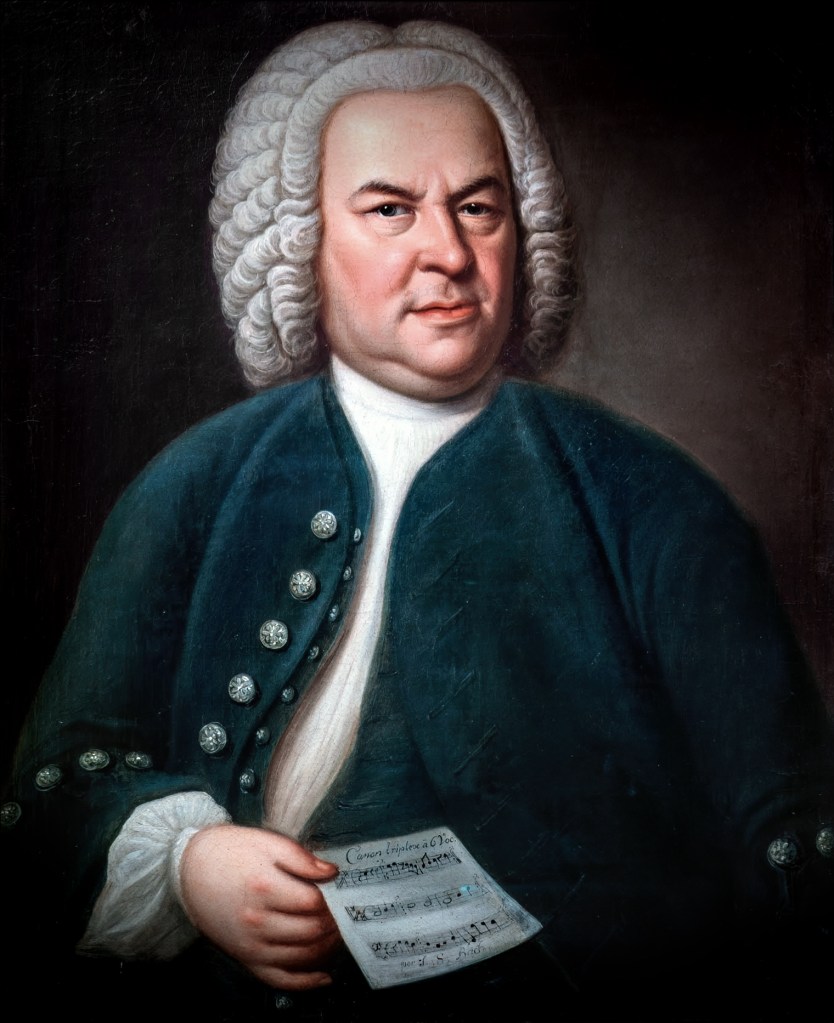
Johann Sebastian Bach’s Christian faith was not just a personal conviction; it was the foundational bedrock of his entire life and artistic output. As a devout Lutheran, Bach viewed music not as mere entertainment, but as a literal act of worship and a means to reflect the divine order of creation.
Here is a breakdown of his faith and how it directly shaped his timeless music:
An Orthodox Lutheran Conviction
Bach lived during a time of theological tension between strict Lutheran Orthodoxy (which emphasized traditional liturgy, doctrine, and objective biblical truth) and Pietism (which emphasized personal emotion, inward devotion, and often eschewed elaborate church music).
Bach firmly aligned with Lutheran Orthodoxy, but his music managed to bridge the gap. It possessed the rigorous, intellectual structure demanded by orthodox theology alongside the deeply personal, emotional intensity championed by the Pietists. His personal study Bible contained extensive handwritten notes, proving he was deeply engaged with scripture and theology.
How Faith Influenced His Music
1. The Theological Dedications
Bach literally dedicated his work to God. On the manuscripts of his sacred works—and even many secular ones—he routinely penned specific Latin abbreviations:
- S.D.G. (Soli Deo Gloria): “To God alone be the glory.” This was typically written at the very end of a composition.
- J.J. (Jesu Juva): “Jesus, help.” This was often written at the beginning of a piece as a prayer for inspiration and strength.
2. Music as a “Foretaste of Heaven”
In Bach’s view, music was inherently divine. He famously wrote in the margins of his Bible that “where there is devotional music, God with His grace is always present.” He believed the primary goal of music was twofold: to glorify God and to refresh the human spirit. Because God created an orderly universe, Bach saw complex musical harmony and counterpoint as a way to mirror that divine order.
3. Preaching Through Sound (Musical Theology)
Bach’s vocal works, particularly his over 200 surviving sacred cantatas, the St. Matthew Passion, the St. John Passion, and the Mass in B minor, act as musical sermons. He used a technique known as text painting (or the Affektenlehre) to vividly illustrate theological concepts:
- The Cross: When text referred to the crucifixion, Bach would often manipulate the musical notes to visually form the shape of a cross on the sheet music, or use sharp, agonizing dissonances.
- The Resurrection: Words about heaven or rising from the dead were accompanied by rapidly ascending melodic lines.
- Human Frailty: To represent sin or faltering faith, he would use unstable, chromatic rhythms and staggering basslines.
4. The Mathematical Divine
Bach’s use of complex structures like fugues and canons was deeply tied to his worldview. In a fugue, a single melodic theme is introduced and then masterfully woven across multiple voices, perfectly intertwining according to strict mathematical rules. To Bach, this intricate perfection was a way to express the flawless design of the Creator. He frequently hid numerical symbolism (gematria) in his music, using numbers that corresponded to biblical concepts or his own name.
“The aim and final end of all music should be none other than the glory of God and the refreshment of the soul.”
— Johann Sebastian Bach
Through his unparalleled genius, Bach transformed Lutheran theology into a tangible, auditory experience, creating a body of work where art and absolute devotion are entirely indistinguishable.

